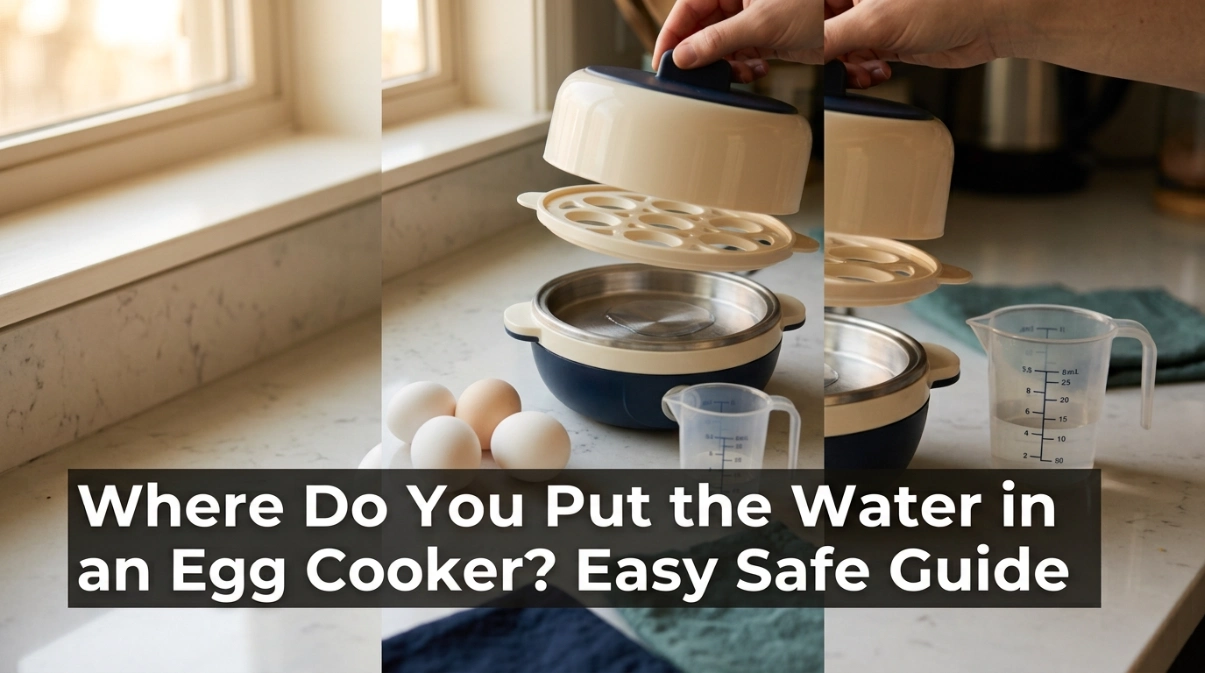
If you are asking where do you put the water in an egg cooker, the answer is simple. In most electric egg cookers, the water goes directly into the shallow heating basin on the base of the cooker.
The egg tray then sits above that water. You should not pour water into the egg holes, over the eggs, or into the lid.
I learned this after being unsure the first time I used a small electric egg cooker. The base looked so flat that I wondered if water was really meant to sit there. After checking the parts and testing a small batch, I found that the metal heating area was exactly where the water needed to go.
Once I understood that, the whole cooker made much more sense. In this guide, I will show you where to add water, how much to use, and what to check if the cooker does not work as expected.
Common Signs of the Problem
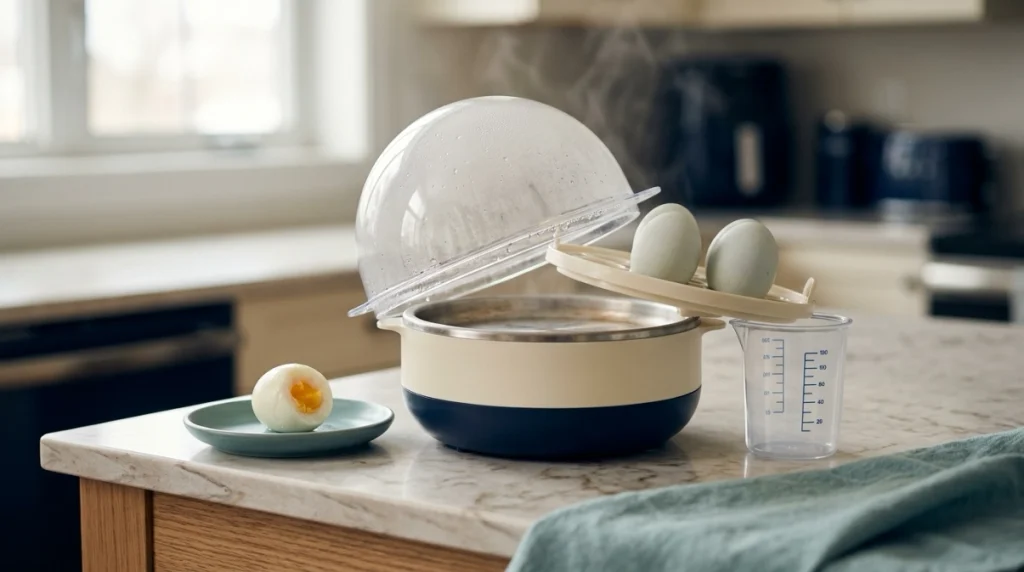
Putting water in the wrong place can cause more than simple confusion. It can also affect how well the eggs cook.
Here are some signs I noticed when testing different water amounts and tray positions.
| Symptom | Likely Cause | Quick Fix |
|---|---|---|
| Eggs stay undercooked | Too little water | Add the measured amount |
| Water leaks around the base | Water poured outside the basin | Unplug, dry, and refill correctly |
| No steam forms | No water on heating plate | Add water before starting |
| Eggs cook too hard | Too much water | Use less water next time |
| Cooker stops early | Water ran out | Check the measuring amount |
The most common issue is simply adding water to the wrong part. The water must normally touch the heated metal basin so it can turn into steam.
The steam rises through the egg tray. That hot steam is what cooks the eggs.
A measuring cup also matters more than I first expected. Many egg cookers come with a small marked cup for soft, medium, and hard eggs.
If yours is lost, a replacement measuring cup can be useful. I would choose one with clear milliliter marks rather than guessing with a kitchen glass.
Possible Causes
The focus keyword sounds like a simple setup question, but several small mistakes can cause trouble.
The most common causes are:
- Water was poured into the egg tray instead of the base.
- No water was added before switching on the cooker.
- Too little water was used.
- Too much water was added.
- The egg tray was not seated correctly.
- Mineral deposits covered the heating plate.
- The lid was not placed correctly.
- The steam vent was blocked.
I once added a little extra water because I thought more water would cook the eggs faster. It did not.
The cooker simply ran longer, and the eggs came out firmer than I wanted. Using the correct amount gave me much better results.
How to Fix Where Do You Put the Water in an Egg Cooker
The basic process is easy once you know how the parts fit together.
Most egg cookers have a powered base, a shallow heating plate, an egg tray, and a clear lid. The water normally goes on the heating plate before you install the tray.
Unplug the Cooker First
If the cooker was just used, unplug it and let it cool.
Do not pour fresh water onto a very hot heating plate. A sudden temperature change can cause steam to rise fast and may damage some surfaces.
I usually wait until I can safely touch the outer base before setting up another batch.
Find the Heating Basin
Remove the lid and egg tray.
Look at the base. You should see a shallow metal area or small recessed basin. This is normally the water reservoir and heating surface.
Pour the measured water into this area.
Do not pour water into openings around the electrical controls. Never fill the whole appliance body with water.
Some models use a separate removable reservoir, so check the manual if your cooker looks different.
Measure the Correct Amount of Water
The right amount depends on the cooker and how you want your eggs.
Many models include marks for:
- Soft-boiled eggs
- Medium eggs
- Hard-boiled eggs
Some cups also change the water amount based on how many eggs you are cooking.
I get the most even results when I follow the markings instead of filling the basin by eye. A few extra spoonfuls can change the cooking time.
| Egg Result | Water Approach | Difficulty |
|---|---|---|
| Soft | Use the soft setting mark | Easy |
| Medium | Use the medium mark | Easy |
| Hard | Use the hard mark | Easy |
| Unknown model | Follow its manual | Easy |
Do not assume every brand uses the same amount of water. Cooker size, heating power, and auto shut-off design can all change the amount needed.
Place the Egg Tray Above the Water
Once the water is in the heating basin, place the egg tray into its normal position.
The eggs should sit above the water. They should not be floating in it.
This was the detail that made everything click for me. An egg cooker is really a small steam cooker. The heating plate boils the water, and the steam moves through the tray.
Fit the Lid Correctly
Place the lid over the egg tray.
Make sure it sits flat. Keep the steam vent open and facing away from your hands and face.
Never block the steam hole with a towel, plate, or other object. Pressure and hot steam need a safe way to escape.
Start the Cooker
Plug the cooker into a dry wall outlet.
Start the normal cooking cycle. Many basic models have one button and shut off or beep when the water has evaporated.
I avoid moving the cooker once it starts. The heating plate and steam can become very hot.
Check the Heating Plate for Buildup
If you put water in the correct place but the cooker heats slowly, check the plate.
White or chalky marks are often mineral deposits left by water. A thick layer can make the surface harder to clean and may reduce even heating.
I usually wipe the cooled plate with a soft damp cloth. For stubborn mineral marks, a small amount of white vinegar can help if the manufacturer allows it.
Do not scrape the heating plate with a knife or metal scrubber. A non-abrasive sponge is much safer.
Check for Water Leaks
A small amount of condensation around the lid can be normal.
Water pouring from the electrical base is not normal.
If that happens, unplug the cooker. Let it cool and dry fully before using it again.
Check whether the tray or removable reservoir was fitted incorrectly. If the base itself is cracked or leaking near electrical parts, I would stop using the cooker.
Mistakes to Avoid
The biggest mistake is assuming water goes into the egg tray because that is where the eggs sit.
It does not. In most models, the tray needs to stay above the heating water so steam can move around the eggs.
Another mistake is adding far more water than the measuring cup suggests. More water normally means a longer steaming cycle, not faster cooking.
I also avoid adding water while the appliance is plugged in. It only takes a few seconds to unplug the unit first, and it lowers the risk of spilling water near live electrical parts.
Never open the sealed heating unit to repair wires, switches, or thermal protection parts yourself.
Do not bypass an auto shut-off, safety switch, or overheat protector. Those parts are there to reduce fire and burn risks.
Also keep your face away from the steam vent when lifting the lid. I tilt the lid away from myself so the hot steam escapes in the opposite direction.
When to Replace the Egg Cooker
A water-placement mistake does not normally mean you need a new cooker.
Most problems can be solved by drying the unit, using the correct amount of water, and placing the tray correctly.
Some faults are different.
| Repair Issue | What I Would Do | Replace Instead? |
|---|---|---|
| Lost measuring cup | Buy a marked replacement | No |
| Mineral buildup | Descale gently | No |
| Damaged egg tray | Replace tray if available | Usually no |
| Cracked lid | Replace correct lid | Usually no |
| Base leaks water | Stop using cooker | Often yes |
| Burning smell from base | Unplug immediately | Yes |
| Damaged power cord | Stop using cooker | Usually yes |
I would replace the unit if water has entered a sealed electrical section, the cord is damaged, the base is cracked, or there is a strong burning smell.
A cheap kitchen appliance is rarely worth an unsafe electrical repair.
My Personal Experience
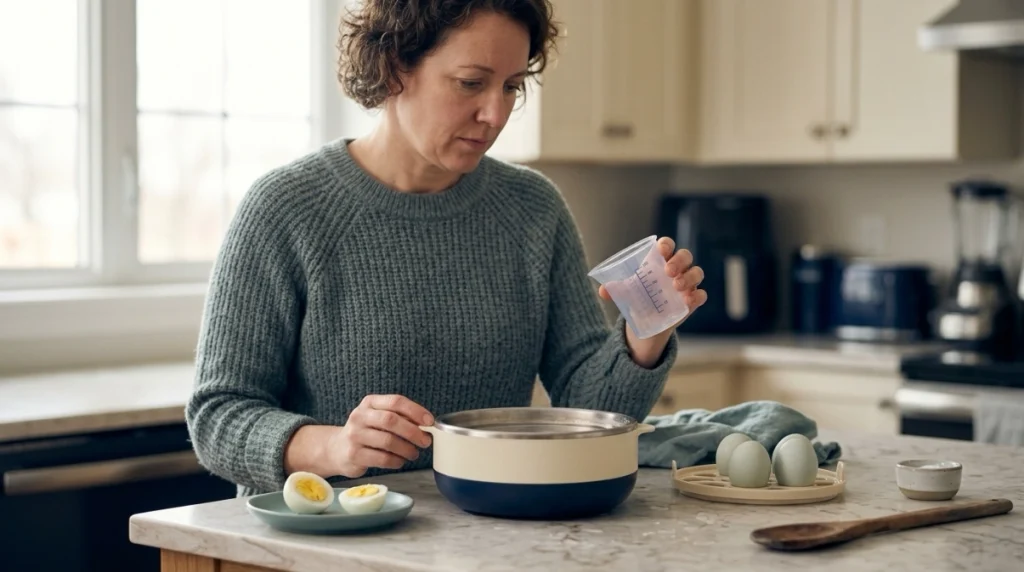
The first time I set up my egg cooker, I removed the clear lid and saw the egg tray sitting above a flat metal plate.
I expected to see a deep water tank. Because I did not, I wondered if the water should go into the tray.
I tested the setup with the cooker unplugged. I removed the egg tray and poured the measured water onto the shallow metal heating area.
Then I put the tray back, added the eggs, and fitted the lid.
That setup worked well. The water began to steam, the cooker ran through its cycle, and the eggs cooked evenly.
My biggest mistake came later when I stopped using the measuring cup. I added extra water by eye and ended up with eggs that were much firmer than I wanted.
After that, I went back to measuring every batch.
I also learned to wipe the heating surface after it cooled. That simple cleaning habit helped prevent white mineral marks from building up.
The main lesson was simple: the water belongs below the eggs, not around them.
Final Thoughts
So, where do you put the water in an egg cooker? In most electric models, pour the measured water into the shallow heating basin or metal heating plate in the base.
Then place the egg tray above it, add your eggs, fit the lid, and start the cooker.
Use the measuring cup that came with your machine when possible. The amount of water controls how long many egg cookers steam the eggs.
If your model has a separate water reservoir, follow its manual instead. Egg cooker designs can vary.
Most of all, keep water away from electrical controls, unplug the cooker before handling spills, and never bypass its safety features.
Once I started thinking of the appliance as a small steamer, the setup became easy to remember: water on the heating base, egg tray above the water, lid on top.