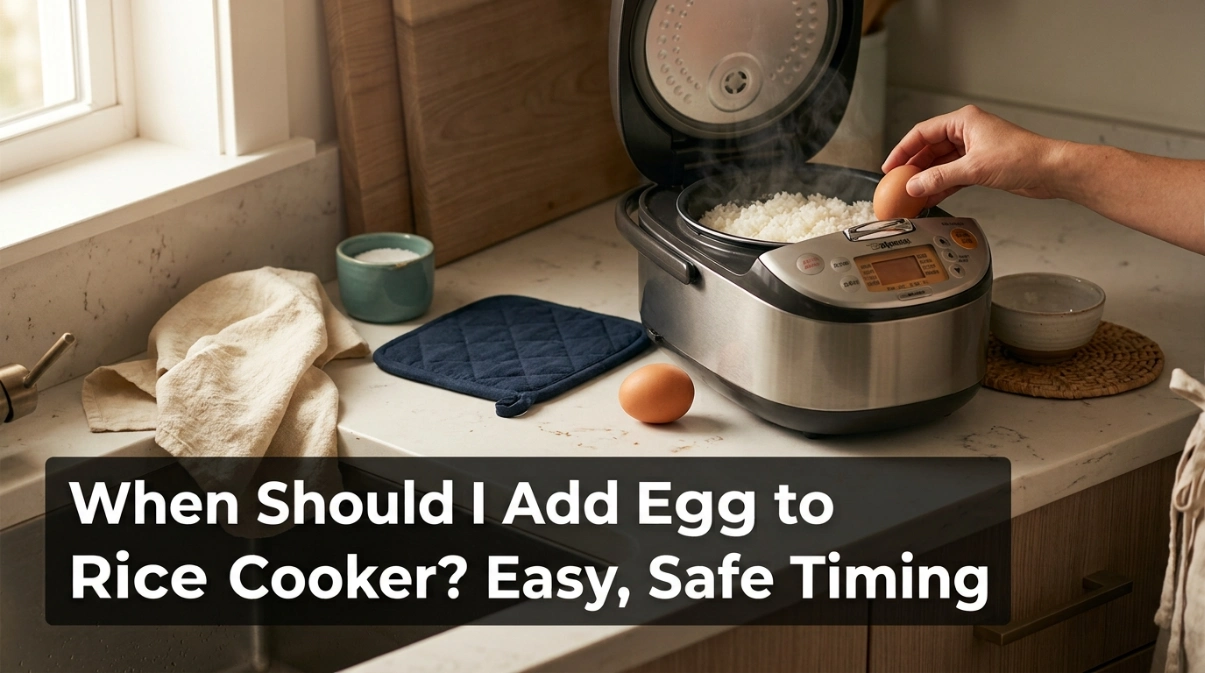
If you are wondering when should i add egg to rice cooker, the simple answer is near the end of the cooking cycle. In most cases, I recommend adding it while the rice is still steaming and most of the water is gone.
A good starting point is about 5 to 10 minutes before the rice finishes. The exact time changes based on whether you want a soft yolk, firm yolk, or egg mixed into the rice.
The key is not to wait until the cooker has been on Keep Warm for a long time. That setting may hold cooked food hot, but it may not cook a raw egg evenly.
Common Signs of the Problem
Bad timing is easy to notice. Your rice may look fine while the egg stays raw, turns rubbery, or leaves a wet patch on top.
I also see timing problems when people open the lid many times. Each time the lid opens, useful steam escapes.
| Symptom | Likely Cause | Quick Fix |
|---|---|---|
| Egg stays runny | Added too late | Add it a few minutes earlier |
| Egg turns rubbery | Added too early | Add closer to the end |
| Rice gets wet near egg | Too much moisture | Use normal rice water amount |
| Egg barely cooks | Cooker entered Warm mode | Add during active Cook mode |
If your rice cooker came with a steaming tray, it can help keep the egg separate. A compatible replacement steaming tray can also be useful if the original is lost or damaged.
Do not use a random accessory that blocks the lid or steam vent. Good steam flow matters for both cooking and safety.
Possible Causes
The biggest cause is adding the egg at the wrong point. Rice cookers also vary, so one exact minute will not work for every model.
The amount of steam matters too. A small cooker, loose lid, or frequent lid opening can slow the egg.
Common causes include:
- Adding the egg while lots of water remains
- Waiting until Keep Warm mode starts
- Opening the lid too often
- Using too much water
- Adding several cold eggs at once
- Blocking the steam vent
- Expecting a very runny yolk with a fully firm white
I focus more on the stage of cooking than the total cooking time. The best point is when the rice has absorbed most of its water but active steam is still present.
How to Fix the Timing: When Should I Add Egg to Rice Cooker?
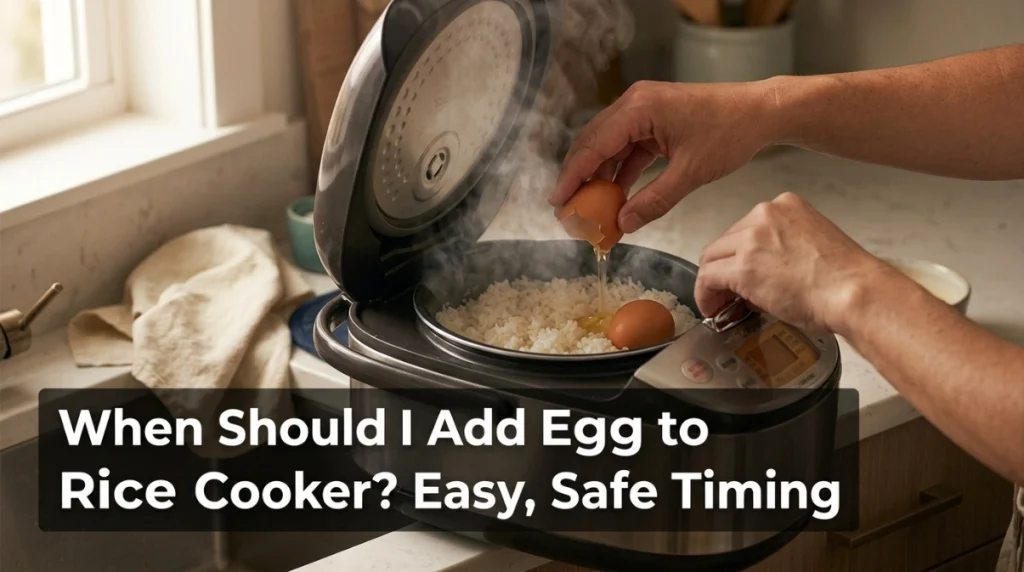
Start the rice as you normally would. Do not change the normal rice-to-water ratio just because you plan to add an egg.
Watch for the final part of the cooking cycle. Then choose your timing based on the egg texture you want.
Add 4 to 6 Minutes Before the End for a Soft Yolk
For a softer yolk, crack the egg over the rice about 4 to 6 minutes before cooking finishes. Close the lid right away so steam stays inside.
This should give the white time to set while keeping the yolk softer. Results vary because rice cookers heat at different rates.
If you prefer an undercooked or runny yolk, a pasteurized egg is the safer choice.
Add 7 to 10 Minutes Before the End for a Firm Egg
For a firmer egg, I would add it about 7 to 10 minutes before the end. The extra steaming time helps both the white and yolk set.
This is the better choice when food safety is your main concern. Cook the egg until the white and yolk are firm.
Do not depend on a low Keep Warm setting to finish a raw egg. It may not provide enough consistent heat.
Add Beaten Egg Near the End
You can also beat an egg before adding it. Wait until the rice is almost cooked and very little free water remains.
Pour the beaten egg over the rice and stir it in gently. Close the lid and let active cooking continue until the egg is fully set.
Adding beaten egg at the start often makes the rice sticky. It can also spread the egg unevenly through the pot.
| Egg Style | Best Time to Add | Result |
|---|---|---|
| Soft yolk | Last 4–6 minutes | Firm white, softer yolk |
| Firm yolk | Last 7–10 minutes | Firm white and yolk |
| Beaten egg | Near the end | Egg mixed through rice |
Keep the Normal Water Level
I would not add extra water for the egg. Too much liquid can leave the rice gummy and make the egg take longer to set.
Use the amount of water your rice normally needs. Adjust only after seeing how your own cooker performs.
Keep the Lid Closed
Steam is what cooks the top of the egg. Every time you open the lid, you lose heat and moisture.
Check the egg once near the end if needed. There is usually no benefit to checking it every minute.
Also keep the steam vent clear. Never place a bowl, cloth, or accessory over the vent.
Use Cook Mode, Not Keep Warm
Raw egg should be added while the cooker is still actively cooking. This gives you stronger and more reliable heat.
Keep Warm is designed mainly to hold cooked food. Its temperature varies from one rice cooker to another.
Cleaning After Adding Egg
Egg white can stick to the inner pot if it runs down the side. I find cleaning the pot soon after it cools makes the residue much easier to remove.
Use a soft cloth or non-abrasive sponge. Avoid metal scrubbers on a nonstick rice cooker pot because they can scratch the coating.
If egg gets into the removable lid or steam vent, wash those parts according to the manual. Never immerse the electrical cooker base in water.
Mistakes to Avoid
One common mistake is adding the egg at the very start. It may work for some recipes, but the egg can become tough long before the rice is ready.
Another mistake is cracking a raw egg onto finished rice after the cooker has switched off. Residual heat does not always cook it safely or evenly.
Avoid these mistakes:
- Do not place raw egg on the heating plate
- Do not block the steam vent
- Do not use badly cracked or spoiled eggs
- Do not keep lifting the lid
- Do not bypass a lid or safety switch
- Do not open the electrical heating unit
- Do not use a cooker with a damaged power cord
If you notice smoke, sparks, melted plastic, or a strong electrical burning smell, unplug the cooker. Egg timing is not the cause of those problems.
When to Replace the Rice Cooker
Poor egg results alone are not a reason to replace the cooker. In most cases, changing the timing solves the problem.
Replacement becomes more reasonable if the cooker no longer heats correctly, enters Warm mode far too soon, or has serious electrical damage.
| Problem | Recommended Action | Replace? |
|---|---|---|
| Weak heating | Check pot fit and manual | Maybe |
| Damaged power cord | Stop using it | Often |
| Badly damaged inner pot | Replace pot if available | Maybe |
| Burning smell from base | Stop and inspect safely | Often |
Never open a sealed heating unit or bypass its safety parts. A rice cooker combines electricity, heat, water, and steam.
My Personal Experience
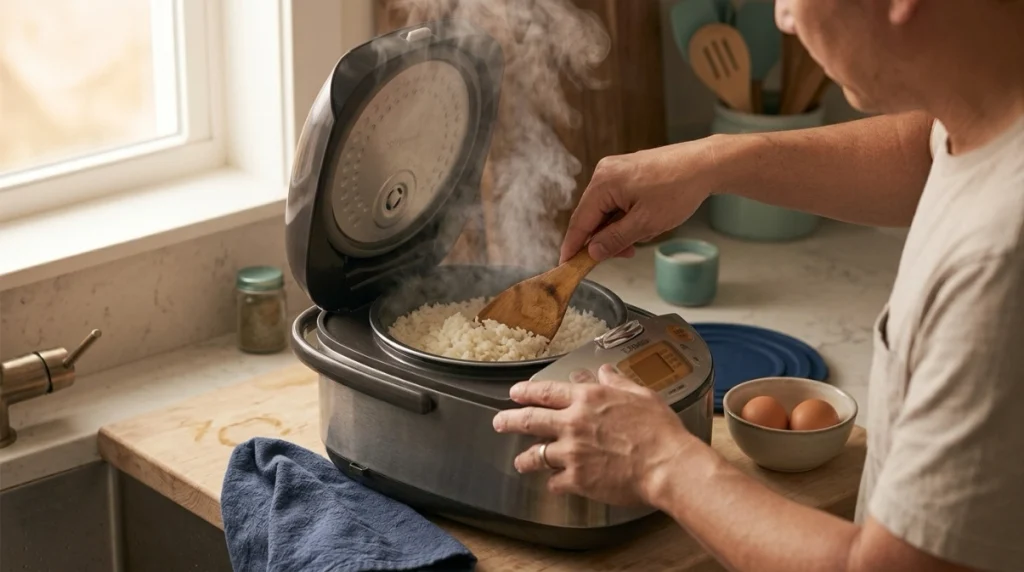
When I troubleshoot this timing question, I focus on one sign: how much water is still visible. A clock alone can be misleading because cooker cycles differ.
The method I recommend is to let the rice absorb almost all its water first. Then I add the egg while strong steam is still being produced.
For a soft result, I use the shorter timing range. For a firm egg, I allow closer to 7 to 10 minutes.
The main lesson is that active cooking matters more than leaving the egg sitting on hot rice afterward. Strong steam gives a much more predictable result.
Final Thoughts
So, when should i add egg to rice cooker? For most rice cookers, add a cracked egg during the final 5 to 10 minutes of active cooking.
Use about 4 to 6 minutes for a softer yolk. Give it around 7 to 10 minutes when you want the egg firm.
For beaten egg, wait until almost all the water is absorbed, mix it through, and cook until fully set. Keep the lid closed and the steam vent clear.
Most important, do not rely on Keep Warm mode to cook a raw egg. For the lowest food-safety risk, cook the white and yolk until firm.