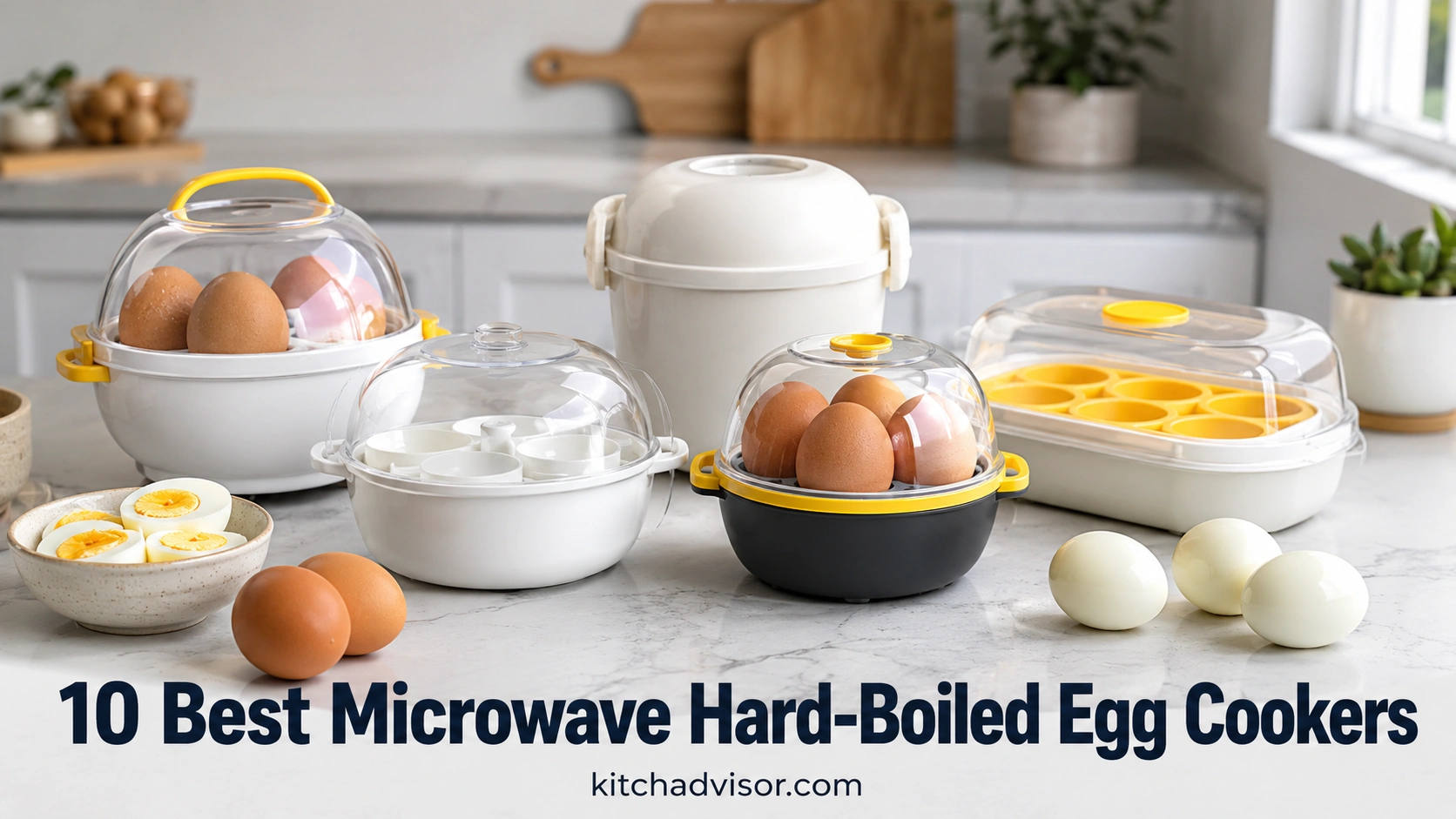
Boiling eggs on the stovetop takes water, a pot, a burner, and a timer you have to babysit. A microwave egg cooker skips most of that, cutting a ten-minute chore down to a few minutes of hands-off waiting. For anyone eating eggs on a weekday schedule, that difference adds up fast.
These cookers fall into two rough camps. Microwave-only boilers and poachers use steam trapped in a plastic or ceramic shell to cook eggs, while electric countertop units like the Dash and Elite Gourmet run their own heating element and don’t touch the microwave at all. Both approaches can produce a good hard-boiled egg, but they handle capacity, venting, and cleanup very differently.
The biggest variable with microwave egg cookers is water measurement and venting: too little water or a blocked steam vent is the most common cause of cracked shells or eggs that burst inside the cooker. Capacity matters too. A single-egg poacher suits one person’s breakfast, while a four- or seven-egg model works better for meal prepping a week’s worth of snacks. We looked at how each of these ten cookers handles doneness control, cleanup, and the practical quirks that don’t show up in the product photos.
Best for hands-off hard boiling: Nordic Ware Microwave Egg Boiler
Best for peeling ease: Eggpod by Emson Egg Cooker
Best compact import design: WAHEI FREIZ Microwave Egg Boiler
Best for poached and scrambled eggs: Sistema Easy Eggs Microwave Cooker
Best for single-serving ceramic cooking: wdcfxy Ceramic Egg Cooker
Best for omelets and egg bites: Cuisinart Microwave Egg Cooker
Best for fast breakfast sandwiches: OXO Good Grips Microwave Egg Cooker
Best electric option for larger households: Dash Rapid Egg Cooker
Best electric cooker for doneness control: Elite Gourmet 7-Egg Electric Cooker
Best budget microwave option: HEEPDD Microwave Egg Cooker
Nordic Ware Microwave Egg Boiler

This is a solid pick for anyone who wants a straightforward, no-frills four-egg boiler that has been on the market long enough to prove its durability.
Pros
- Cooks up to four eggs without piercing
- Long track record and five-year warranty
- Simple two-piece design with clear timing chart
Cons
- Hand wash recommended despite dishwasher-safe materials
- Timing needs adjustment for microwave wattage
- Plastic shell can eventually crack with heavy use
The design is basic: fill with water, snap the lid on, microwave. The included chart breaks cooking times down by wattage and desired firmness, which removes most of the guesswork after the first attempt or two. Owners who’ve used it for years report consistent results once they dial in their own microwave’s timing.
Steam escapes when the lid comes off, so a two-minute cooling period before opening isn’t optional. The aluminum insert holds up well, though the plastic housing has a lifespan and eventually needs replacing.
Eggpod by Emson Egg Cooker

This cooker suits people who prioritize easy peeling over anything else, thanks to its shake-to-crack method.
Pros
- Shake-to-peel feature saves time on shelling
- Precise 50 mL water measurement reduces guesswork
- Doubles as a steamer for small vegetables
Cons
- Requires exact water measurement to avoid cracked eggs
- Some owners report lingering plastic odor over time
- Interior liner is hard to fully remove for cleaning
The 50 mL fill line is strict, and skipping it is the top cause of exploded eggs reported by owners. Followed correctly, the nine-minute cycle produces hard-boiled eggs that shake loose from their shells with minimal fuss, a genuine time-saver for anyone who hates peeling.
A subset of buyers noticed a burnt-plastic smell developing after repeated use, and the interior shell doesn’t fully disassemble for a deep clean. Anyone sensitive to plastic odors in cookware should keep that in mind before relying on it daily.
WAHEI FREIZ Microwave Egg Boiler
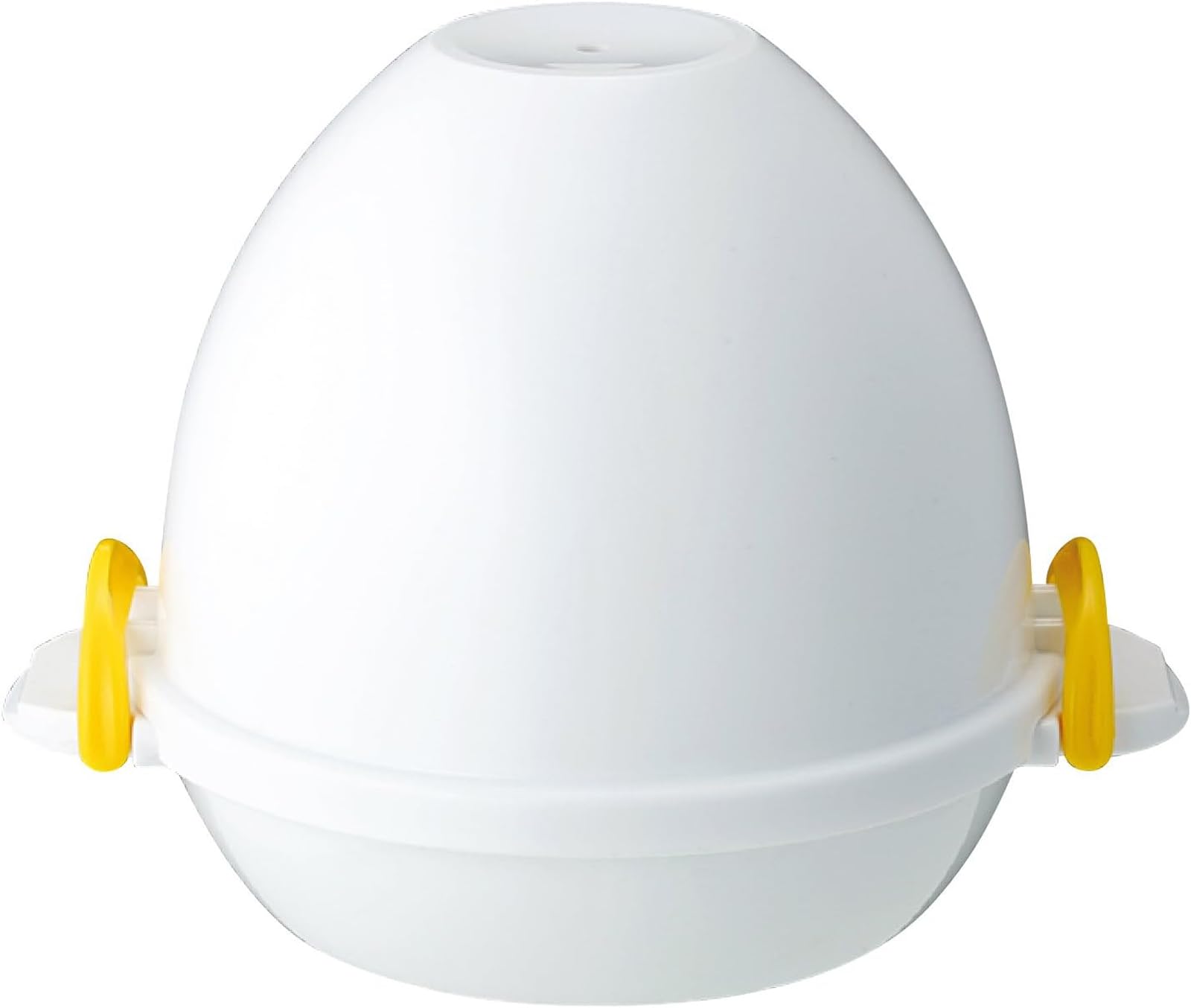
This import model appeals to shoppers who want a well-built, compact four-egg boiler and don’t mind that instructions arrive primarily in Japanese.
Pros
- Sturdy build quality with a secure locking clip
- Anodized aluminum insert holds up over years of use
- Compact footprint for storage
Cons
- Instructions are largely in Japanese
- No English wattage chart included
- Requires trial runs to dial in cook time
Build quality stands out here. The locking mechanism feels more secure than typical snap-together designs, and long-term owners report it outlasting cheaper alternatives after a decade of regular use.
The language barrier is real. Shoppers who don’t read Japanese will need to experiment with timing (roughly eight minutes for hard-boiled in many home microwaves) since there’s no printed English reference chart in the box.
Sistema Easy Eggs Microwave Cooker

This is the better choice for poached, scrambled, and omelet-style eggs rather than eggs still in the shell.
Pros
- Steam-release vent limits microwave splatter
- Hinged, always-attached lid is convenient
- Dishwasher, fridge, and freezer safe
Cons
- Not designed for whole eggs in the shell
- Dish runs a little large for a single poached egg
- Poaching results can turn out thin if overfilled
The hinged lid and side tabs make this easy to move straight from microwave to table, and the vent noticeably cuts down on splatter compared to uncovered bowls. For scrambled eggs and mini omelets, it performs reliably.
Poaching a single egg is where it falls short for some users, since the wide dish can spread the egg into a thin layer that overcooks before the center sets. It’s a stronger scrambled-egg tool than a poaching one.
wdcfxy Ceramic Egg Cooker

This ceramic single-serving cooker works well for scrambled or poached eggs and reheating small portions of soup or leftovers.
Pros
- Cool-touch hollow handle for safe handling
- Chimney lid vents steam automatically
- Dishwasher safe ceramic construction
Cons
- Sized for one serving, not a multi-egg batch
- Not intended for whole eggs in the shell
- Some buyers find it oversized for a single egg
Owners like the stay-cool handle, a detail that matters since ceramic retains heat longer than plastic. The chimney-style lid keeps steam moving out instead of building pressure, which lowers the risk of a mess inside the microwave.
It’s built for scrambled eggs, small vegetables, and reheating, not for hard-boiling whole eggs. A few reviewers found the interior a bit large for just one egg, better suited to two.
Cuisinart Microwave Egg Cooker

This cooker is best for poached eggs, omelets, and egg bites rather than shell-on hard boiling.
Pros
- Stay-cool handles for safe handling
- Backed by a lifetime warranty
- Dishwasher and microwave safe
Cons
- Poaching times need adjusting for microwave wattage
- Not designed for whole eggs in the shell
- Poached eggs can turn out runny at stated times
Add-ins like cheese, vegetables, or bacon work well for anyone building egg bites or a quick omelet. The lifetime warranty is a rare inclusion at this price point and signals the brand’s confidence in the build.
Cook times printed for the poaching insert assume a specific wattage, and several users found their results too runny at the suggested setting, needing extra seconds to firm up.
OXO Good Grips Microwave Egg Cooker

This is the pick for scrambled or fried eggs destined for a breakfast sandwich, cooked in about a minute.
Pros
- Very fast cook time for scrambled or fried eggs
- Removable base simplifies transferring eggs to bread
- Curved bottom helps center the yolk
Cons
- Not built for hard-boiling whole eggs
- Capacity limited to one or two eggs at a time
- Cook time needs calibration per microwave
Reviewers consistently praise how quickly it turns out breakfast-sandwich-ready eggs, often replacing a frying pan entirely on busy mornings. The removable base makes sliding the cooked egg onto an English muffin simple.
It’s a single-serving tool. Anyone needing a batch of hard-boiled eggs for the week should look elsewhere, but for one or two fried or scrambled eggs it’s efficient and easy to clean.
Dash Rapid Egg Cooker
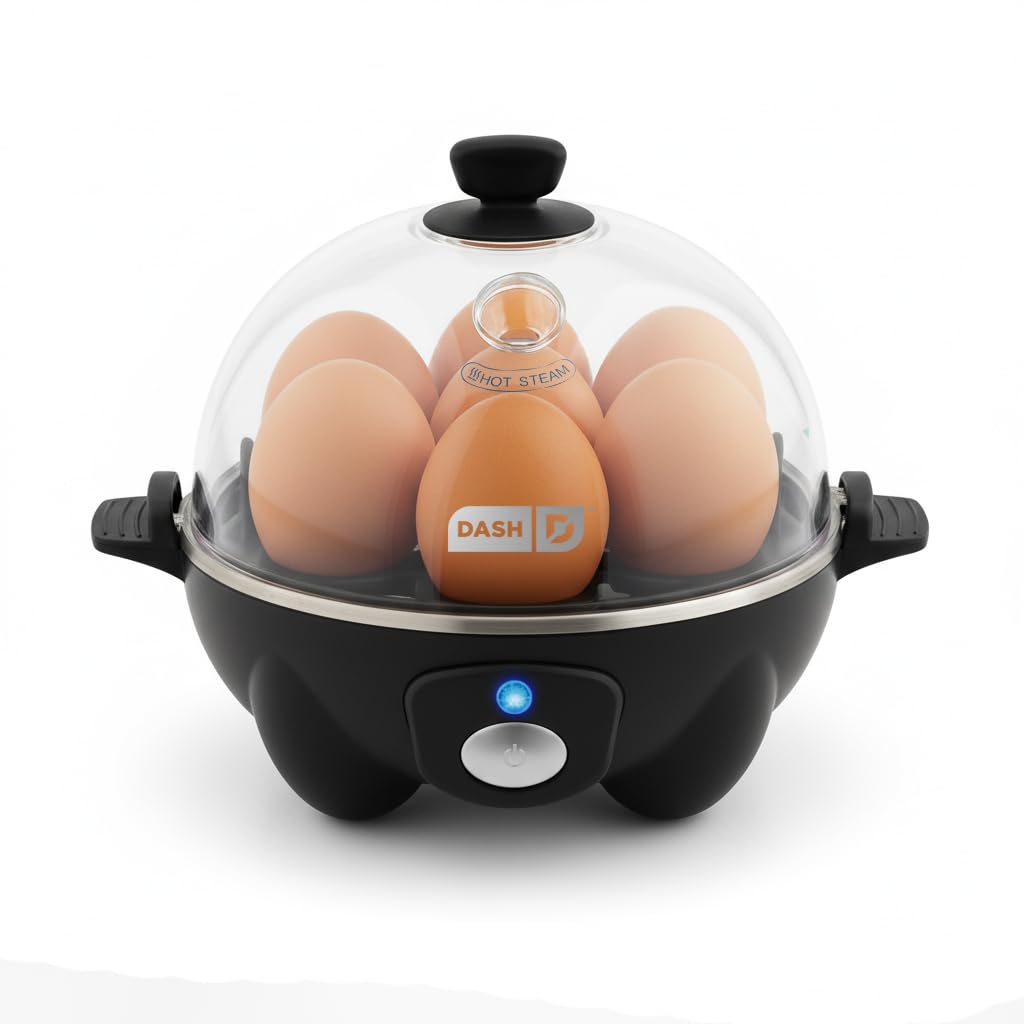
This electric cooker suits households that want to cook seven eggs at once without touching the microwave at all.
Pros
- Cooks up to seven eggs in one cycle
- Versatile: hard-boiled, poached, scrambled, or omelets
- Well-rated with a large base of long-term users
Cons
- No automatic shut-off, only an audible alert
- Requires piercing eggs and measuring water manually
- Not a microwave device, uses its own heating element
Unlike the other cookers on this list, the Dash plugs in and runs independently of a microwave, which makes it a fit for offices or dorms without microwave access. Its precision thermal sensor produces consistent results across soft, medium, and hard yolks.
It lacks true auto shut-off, continuing to beep rather than powering down on its own. International buyers should also check voltage compatibility before ordering, since it’s built for U.S. outlets.
Elite Gourmet 7-Egg Electric Cooker
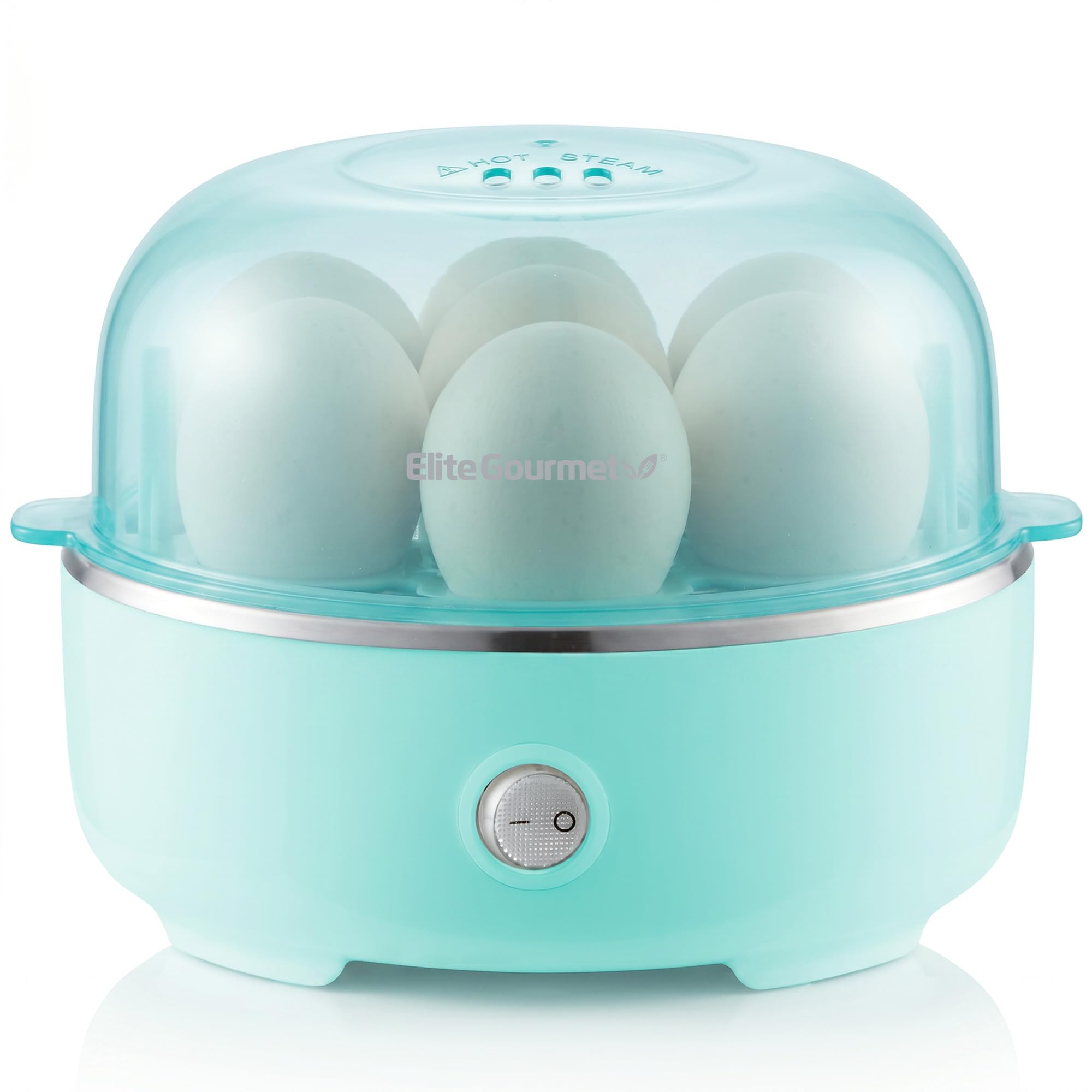
This budget-friendly electric cooker delivers reliable doneness control for households that want soft, medium, or hard eggs without babysitting a pot.
Pros
- Auto shut-off ends the cycle automatically
- Pre-marked measuring cup with built-in piercing pin
- Seven-egg capacity suits meal prepping
Cons
- Some batches only partially boil if water is off
- Plastic parts feel inexpensive to a few owners
- Piercing step adds an extra action per batch
The auto shut-off is a genuine advantage over the Dash, ending the cycle once eggs finish rather than just beeping indefinitely. The marked measuring cup takes the guesswork out of matching water volume to desired firmness.
Most owners report consistently easy-to-peel eggs, though a handful mention inconsistent results when water measurement is even slightly off. At this price, it remains a strong value for batch cooking.
HEEPDD Microwave Egg Cooker
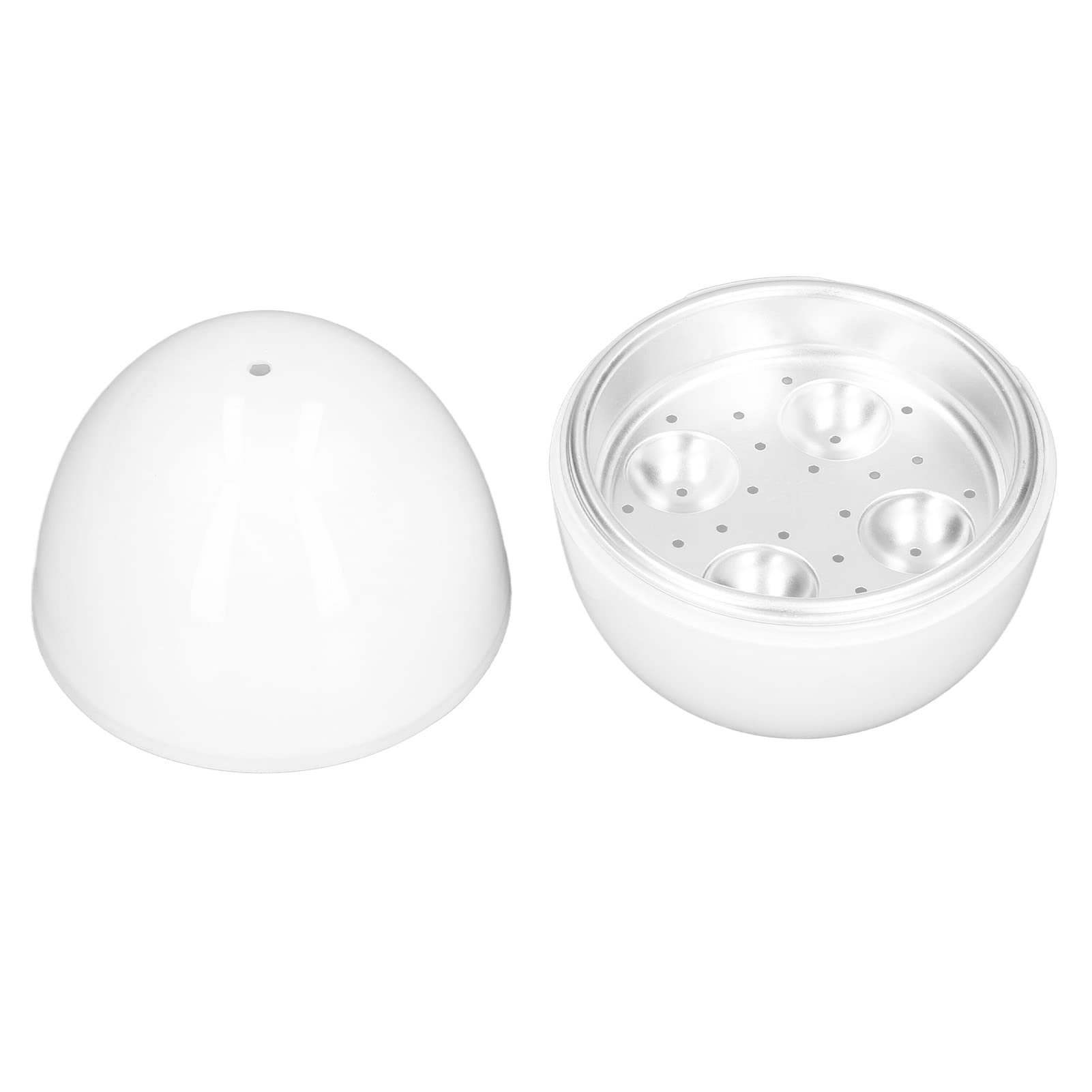
This budget four-egg microwave boiler works for shoppers who want a low-cost option and are willing to test their own timing.
Pros
- Low price point for a four-egg capacity cooker
- Individual compartments keep eggs stable while cooking
- Simple design with no electric parts to fail
Cons
- Very limited review history to judge long-term reliability
- Advertised “2-minute” cooking time is not realistic for whole eggs
- No printed wattage-specific timing chart
The compartmentalized tray keeps eggs from rolling around, and the design mirrors pricier boilers on this list at a fraction of the cost. One long-term owner reports dialing in seven minutes and fifteen seconds for hard-boiled eggs in a 1100-watt microwave.
The “2-minute cooking time” featured in the listing title doesn’t reflect real-world results for hard-boiled eggs; actual times run closer to seven to nine minutes depending on wattage and desired firmness. Treat marketing timeframes as a starting point, not a guarantee.
Buying Guide
Microwave-Only vs. Electric Cookers
Microwave egg cookers rely on the microwave’s own energy to heat water into steam, while electric cookers like the Dash and Elite Gourmet use a built-in heating element and don’t need a microwave at all. Microwave models are cheaper and more compact, but their cook times shift depending on your microwave’s wattage. Electric units cost more upfront but deliver more consistent results microwave to microwave, kitchen to kitchen.
| Feature | Microwave-Only Cookers | Electric Cookers |
|---|---|---|
| Power source | Home microwave | Wall outlet |
| Cook time consistency | Varies by wattage | More consistent |
| Portability | Very compact | Slightly bulkier |
| Typical capacity | 1-4 eggs | 4-7 eggs |
| Auto shut-off | Rare | Sometimes included |
Capacity and Household Size
Match capacity to how many eggs get eaten in a typical week. A single-serving poacher suits one person’s breakfast routine, while four-egg boilers work for couples or small households. Seven-egg electric cookers make sense for meal-preppers or families who go through eggs quickly.
Steam Venting and Cracking Risk
Steam management is the single biggest safety factor in microwave egg cooking. Cookers with a dedicated vent or chimney let pressure escape gradually, lowering the odds of a cracked shell or a burst egg inside the microwave. Always follow the manufacturer’s specified water amount exactly; too little water is the most common cause of failed batches.
Doneness Control
Look for either a clear wattage-based timing chart or a pre-marked measuring cup tied to soft, medium, and hard settings. Cookers without either require a few trial runs before results become predictable.
Material and Cleanup
- Plastic shells: lightweight and common, but many manufacturers recommend hand washing despite listing them as dishwasher safe.
- Aluminum inserts: conduct heat well and hold up over years of repeated use.
- Ceramic dishes: retain heat longer and typically go in the dishwasher without issue, but add weight and bulk.
Resting Time
Nearly every cooker in this category calls for a short resting period, usually one to two minutes, before the lid comes off. Skipping this step is a common reason eggs come out undercooked or shells crack during removal.
Editor’s Choice
The Dash Rapid Egg Cooker stands out as the strongest all-around pick for most households, thanks to its seven-egg capacity, thermal sensor, and versatility across boiled, poached, and scrambled styles. It sidesteps the wattage-dependent guesswork that comes with true microwave boilers.
For anyone who specifically wants a microwave-based solution without a countertop appliance, the Nordic Ware Microwave Egg Boiler remains a dependable, long-proven choice. Its simple design and long warranty make it a safe bet for four-egg batches.
Shoppers focused purely on speed for a single breakfast sandwich should consider the OXO Good Grips Microwave Egg Cooker, which delivers scrambled or fried eggs in about a minute with minimal cleanup.
Conclusion
Choosing between a microwave boiler and an electric cooker comes down to how much control and consistency matters for your routine. Microwave models cost less and take up less space, but results shift with wattage and require attention to water levels and venting. Electric cookers add a modest upfront cost in exchange for steadier results and larger batch sizes.
Whole-egg boiling and single-serving poaching are different jobs, and no cooker on this list handles both equally well. Matching the tool to the actual eggs you cook most often, whether that’s a daily hard-boiled snack or a fast scrambled sandwich, produces better results than chasing the fastest advertised cook time.
FAQS
Are microwave egg cookers safe to use?
Yes, when the manufacturer’s water measurements and venting instructions are followed. Skipping the water fill line or using a cooker without a steam vent raises the risk of a cracked shell or a burst egg inside the microwave.
Why do my eggs crack in a microwave egg cooker?
Cracking is usually caused by too little water, an unvented lid, or removing the lid before the recommended resting period ends. Cold eggs straight from the fridge also crack more often than room-temperature ones.
Can I make soft-boiled eggs in these cookers?
Most microwave-only boilers, including the Nordic Ware and WAHEI FREIZ models, include separate timing for soft, medium, and hard yolks. Electric cookers like the Elite Gourmet use a marked measuring cup to control firmness the same way.
Do electric egg cookers work faster than microwave models?
Not necessarily. Electric cookers like the Dash and Elite Gourmet typically run six to fifteen minutes depending on batch size and doneness, similar to microwave boilers, but they don’t depend on your microwave’s wattage for consistency.
Are these cookers dishwasher safe?
It varies by model. Several listings mark parts as dishwasher safe, but manufacturers like Nordic Ware still recommend hand washing to prevent warping or discoloration over time. Check the specific care instructions for each cooker before relying on the dishwasher.