
John Boos Chop-N-Slice Maple Cutting Board Review: A Classic Wood Board
KitchAdvisor is reader-supported. As an Amazon Associate we earn from qualifying purchases, at no extra cost to you.
John Boos has been making butcher blocks and cutting boards in the United States for generations, and its boards are a familiar sight in restaurant and home kitchens. The Chop-N-Slice series is the brand’s more affordable everyday line, and this 16 x 10-inch rectangular maple board is one of its most popular sizes.
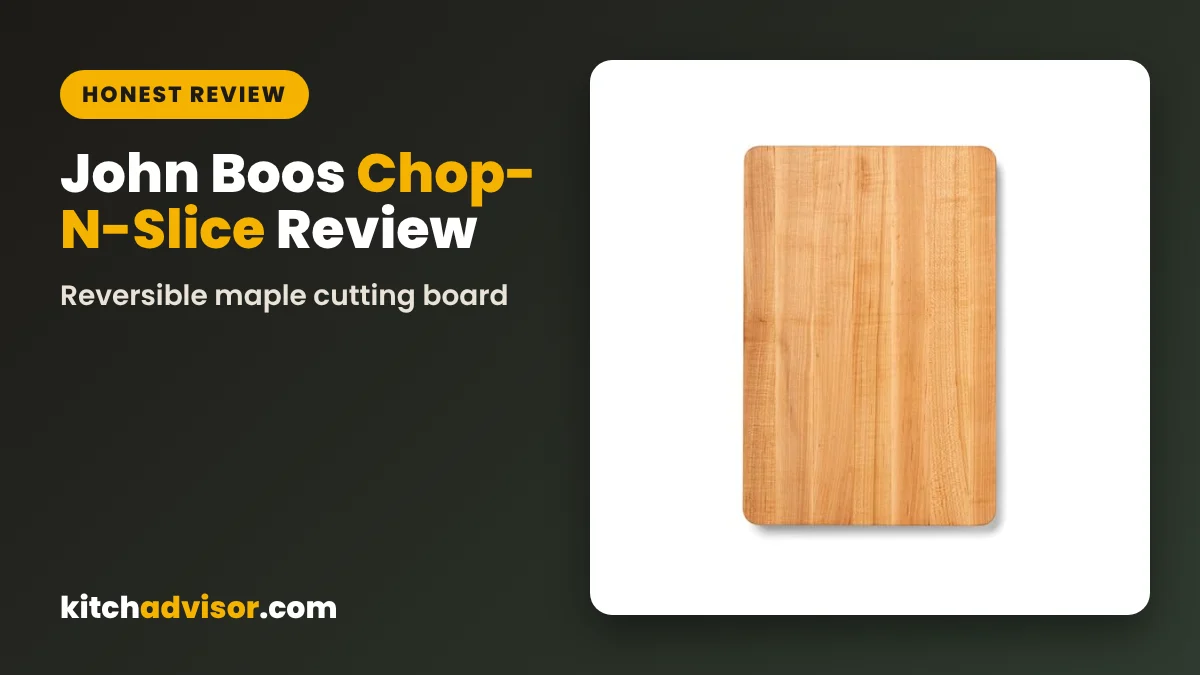
It is a reversible, 1-inch-thick edge-grain maple board with eased corners and an oil finish. It is big enough for most daily chopping but light enough to lift to the sink, and maple is famously gentle on knife edges.
In this review we explain what edge-grain means, how this board performs day to day, how to care for it so it lasts for years and who should buy it.
Reviewed Product
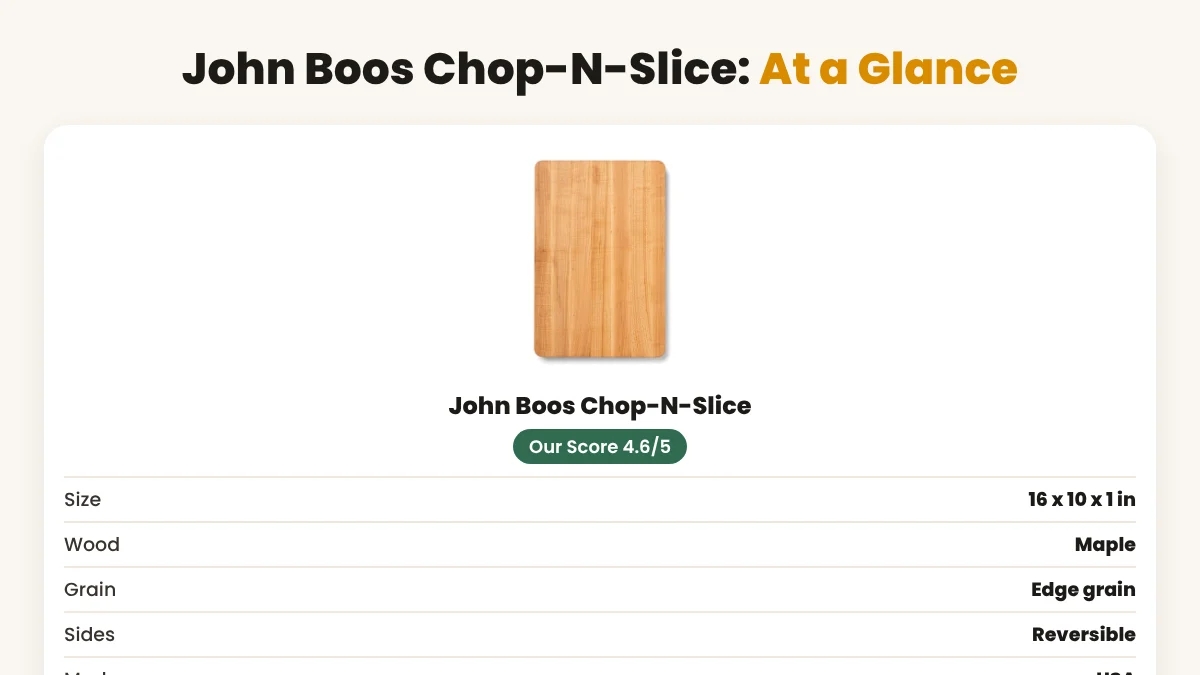
John Boos Chop-N-Slice Rectangular Maple Cutting Board

Rating: ★★★★½ 4.6/5
Research-based editorial score from verified specs, materials, design and buyer-use factors.
Best For: Home cooks who want a durable, knife-friendly wood board for daily prep.
Key Specs
16 x 10 x 1 in • About 4.5 lb • Edge-grain maple construction • Reversible: two usable sides • Eased corners • Oil-finished surface • Compatible with Boos Block Mystery Oil and Board Cream (sold separately) • Made in the USA • 1-year guarantee against defects
Key Advantage
Solid, knife-friendly maple in a practical everyday size, made in the USA.
Main Trade-off
No juice groove, and wood needs regular oiling and hand washing.
Quick Verdict
The John Boos Chop-N-Slice board is a simple, solid slab of maple. It measures 16 by 10 inches and 1 inch thick, which gives you enough room to chop an onion and a few carrots without crowding, while still fitting in most sinks for washing.
It is edge-grain construction, meaning strips of maple are glued side by side with the long edges facing up. Maple is a hard, tight-grained wood that resists deep cuts but is still kind to knife edges compared with glass, stone or bamboo.
Both sides are usable, so you can keep one side for raw ingredients like onions and garlic and the other for bread or fruit. The eased corners make it comfortable to handle. It arrives oil finished and is made in the USA, with a 1-year guarantee against defects in workmanship and material.
Pros
- Knife-friendly maple
- Reversible
- Practical size and weight
- Made in the USA
- Can be refinished for long life
Cons
- No juice groove
- Hand wash only
- Needs regular oiling
- Shows knife marks over time
How It Compares
| Board | Material | Construction | Size | Best For |
|---|---|---|---|---|
| John Boos Chop-N-Slice | Maple | Edge grain | 16 x 10 x 1 in | Everyday chopping |
| End-grain wood block | Maple or walnut | End grain | Varies | Heavy chopping, knife care |
| Plastic board | Polyethylene | Solid | Varies | Raw meat, dishwasher |
| Bamboo board | Bamboo | Laminated | Varies | Budget, light use |
Key Features
- 16 x 10 x 1 inch size.
- Edge-grain maple construction.
- Reversible with two usable sides.
- Eased corners for comfortable handling.
- Oil-finished surface.
- Made in the USA.
- 1-year guarantee against defects.
Edge Grain vs End Grain
Edge-grain boards are made from long strips of wood glued side by side. They are strong, stable and more affordable than end-grain boards. Knives cut across the wood fibers, which leaves fine marks over time.
End-grain boards show the ends of the wood fibers, like a checkerboard. Knife edges slip between fibers, so end-grain is even gentler on knives and hides cuts, but it costs more, weighs more and needs more oil. For most home cooks, an edge-grain maple board like this one is a sensible balance.
Why Maple?
Hard maple is the classic cutting board wood. It is dense enough to resist deep gouges, has a fine, closed grain that does not soak up juices quickly and is neutral in smell and color.
It is also softer than the steel of your knife, so it does not dull edges the way glass, marble or ceramic boards do. You can learn more about board materials on Wikipedia’s cutting board page.
Size and Daily Use
At 16 by 10 inches, this board handles most daily prep: dicing vegetables, slicing a loaf of bread, cutting up a chicken breast or trimming herbs. It is large enough to keep chopped food in piles without spilling over the edges.
At about 4.5 pounds and 1 inch thick, it is heavy enough to stay put but easy to lift. Put a damp towel underneath if your counter is very smooth.
How It Treats Your Knives
A good board protects your knife edge. Maple gives slightly under the blade, so your edge stays sharp longer than on harder surfaces. Pair it with a quality knife from our best chef knife guide.
Avoid using a serrated bread knife with a sawing motion too aggressively on the same spot, which can roughen the surface. Rotate where you cut so wear spreads evenly.
How to Oil and Condition the Board
- Oil the board when it looks dry or lighter in color, often every few weeks.
- Use food-grade mineral oil or a board oil; John Boos sells Mystery Oil and Board Cream.
- Apply a generous layer to all sides, including edges.
- Let it soak in for several hours or overnight.
- Wipe off any excess oil.
- Finish with board cream or a beeswax blend for extra protection.
Cleaning the Board
Scrape off food, then wash the board with hot water and mild dish soap. Rinse and dry it right away with a towel, then stand it on its edge to air dry so both sides breathe.
Never soak the board or put it in the dishwasher, which can crack and warp the wood. To freshen it, scrub with coarse salt and half a lemon, rinse and dry.
Food Safety With Wood Boards
Wood boards are safe when cleaned properly. Many cooks keep a separate plastic board for raw meat, poultry and fish, which can go in the dishwasher, and use the wood board for vegetables, bread and cooked foods.
If you do cut raw meat on wood, wash the board right away with hot, soapy water, and avoid letting meat juices pool on the surface.
Who Should Buy the John Boos Chop-N-Slice
- Home cooks who chop vegetables every day.
- Anyone who wants a long-lasting board that protects knives.
- People who like the look of real hardwood.
- Buyers who prefer products made in the USA.
Who Should Skip It
- Those who want dishwasher-safe boards; choose plastic.
- Cooks who carve a lot of roasts and need a juice groove.
- People who will not oil a board regularly.
Daily Use: What It Is Like to Live With
A wood board like this one quickly becomes the center of the kitchen. Many owners leave it out on the counter all the time, which also helps it dry evenly between uses. The warm maple tone looks good, and it doubles as a serving board for cheese, bread and charcuterie.
The main habit to build is quick care: wipe, wash and dry right after cooking, and oil it whenever it looks pale. That takes a few minutes a month and keeps the board smooth and resistant to stains and smells. Owners who skip oiling tend to see the board dry out and develop small cracks over time.
Long-Term Care and Refinishing
With regular oiling, a maple board can last many years. Knife marks are normal and can add character. If the surface becomes rough or deeply scored, you can lightly sand it with fine sandpaper, wipe off the dust and oil it again to restore a smooth finish.
If a board develops a crack or a wide split, replace it, since food can hide in the gap.
Is the John Boos Chop-N-Slice Worth It?
Yes, for most home kitchens. It is a well-made, knife-friendly maple board at a fair cost compared with premium end-grain blocks, and it can last for years with simple care.
If you want a bigger board or a juice groove, John Boos and other brands offer those options. Compare more choices in our guide to the best cutting board.
Frequently Asked Questions
Is the John Boos Chop-N-Slice board worth it?
Yes. It is a durable, knife-friendly edge-grain maple board made in the USA, in a practical everyday size.
What size is the John Boos Chop-N-Slice board?
This model measures 16 x 10 x 1 inches and weighs about 4.5 pounds.
Is the John Boos Chop-N-Slice reversible?
Yes. Both sides are usable.
Is it edge grain or end grain?
It is edge-grain maple.
Can I put a John Boos board in the dishwasher?
No. Wash it by hand with warm soapy water and dry it right away.
How often should I oil a John Boos board?
Whenever it looks dry or lighter, often every few weeks with regular use.
Does the John Boos Chop-N-Slice have a juice groove?
No. It has a flat surface on both sides.
Where are John Boos boards made?
This board is made in the USA.
Final Verdict
The John Boos Chop-N-Slice Rectangular Maple Cutting Board is a solid, knife-friendly board that suits most home kitchens. Its edge-grain maple, reversible design and practical size make it a reliable daily tool.
It needs hand washing and regular oiling, and it has no juice groove, but with simple care it will serve you for many years.
Related reading: