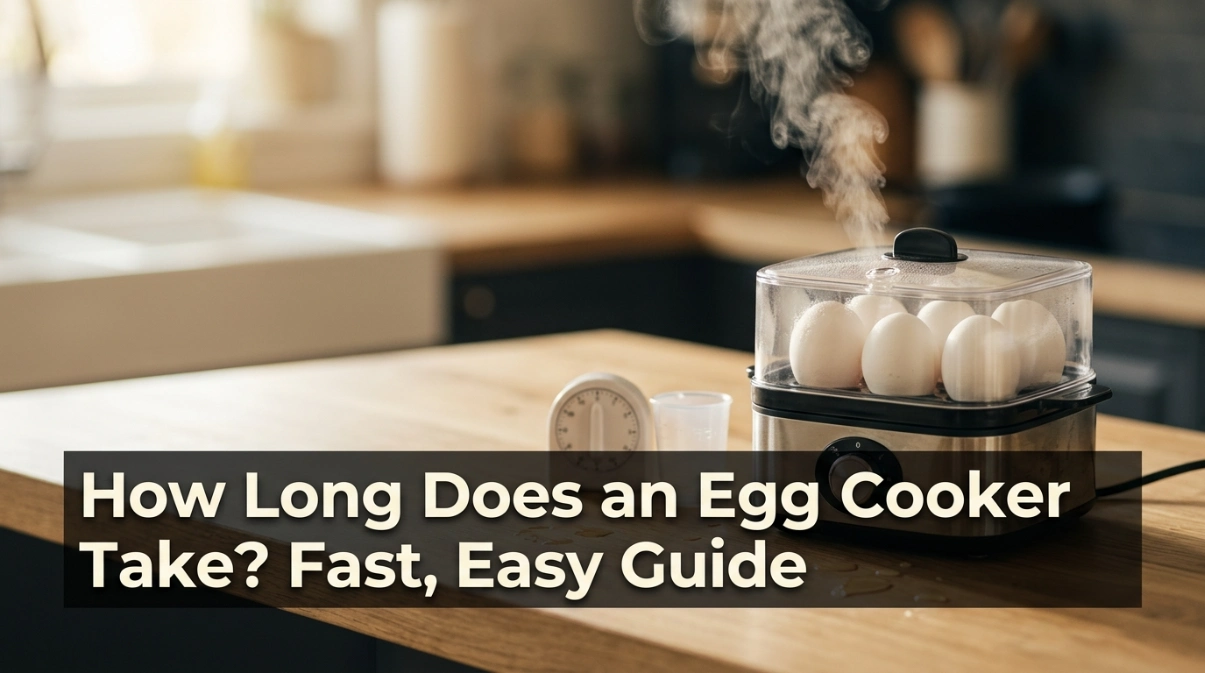
If you are wondering how long does an egg cooker take, the short answer is 6 to 16 minutes. Soft eggs cook fastest. Hard-boiled eggs take the longest.
My first batch took almost 20 minutes. I thought the cooker was faulty. The real cause was simple. I had added too much water and used cold, large eggs.
After testing several batches, I found that water level matters more than the timer. Egg size, starting temperature, mineral buildup, and the number of eggs also affect the result.
This guide explains normal cooking times. It also shows you what to check if your egg cooker seems too slow.
Common Signs of the Problem

Most egg cookers do not show a countdown. They keep heating until the measured water has turned into steam. The cooker then beeps or shuts off.
That design can make a normal cycle seem long. Still, some signs may point to a real issue:
- Soft eggs take longer than 12 minutes.
- Hard eggs need more than 18 to 20 minutes.
- The cooker heats, but the water barely steams.
- Eggs remain runny after the alarm.
- One egg cooks well while another stays soft.
- The cooker stops before the eggs are ready.
- Water remains on the heating plate.
- Steam escapes from the side of the lid.
Here is the timing range I use as a quick reference.
| Egg result | Usual cooking time | What to expect |
|---|---|---|
| Soft-boiled | 6–9 minutes | Runny or soft yolk |
| Medium-boiled | 9–12 minutes | Firm white, creamy yolk |
| Hard-boiled | 12–16 minutes | Fully set yolk |
| Poached egg | 7–11 minutes | Set white, soft center |
| Small omelet | 9–14 minutes | Fully set surface |
These times are estimates. A large batch may need a few extra minutes. High-altitude locations may also produce longer cooking times because water boils at a lower temperature.
I also learned not to guess the water amount. A replacement measuring cup can help if the original cup is lost or its markings are worn. Choose one made for your cooker model when possible.
Possible Causes of Slow Cooking
A slow egg cooker does not always have a broken heating element. Small setup errors are far more common.
Too much water
The cooker must boil away most or all of the water before it stops. More water creates a longer cooking cycle.
I once filled the base to what looked right. That batch took several minutes longer and produced dry yolks.
Cold or large eggs
Eggs taken straight from the fridge need more heat. Extra-large eggs also take longer than small or medium eggs.
A full tray of cold eggs may add two or three minutes to the normal time.
Too many eggs
One egg heats faster than six or seven eggs. A full tray absorbs more heat and can slow the process.
The difference should be small. A very large delay may signal another problem.
Mineral buildup
Tap water can leave a white or brown layer on the heating plate. This is limescale.
A thick layer blocks direct heat transfer. The cooker may still work, but it can take longer to create steam.
Poor lid or tray placement
The lid helps keep steam around the eggs. A tilted tray or loose lid lets steam escape.
A blocked steam vent can also cause poor results. Never seal the vent, though. Steam needs a safe way to leave the cooker.
Weak power supply
A loose plug or weak wall outlet may stop the cooker from heating well. Extension cords can also cause problems, especially if they are damaged or too light for the appliance.
Plug the cooker into a working wall outlet for testing. Do not use an outlet that sparks, feels loose, or becomes hot.
Heating or control failure
A worn heating plate may warm slowly. A bad control button or safety switch may also end the cycle too soon.
These faults are less common. They become more likely when the cooker has a burning smell, damaged cord, flashing light, or repeated early shutoffs.
How Long Does an Egg Cooker Take? Fix Slow Cooking
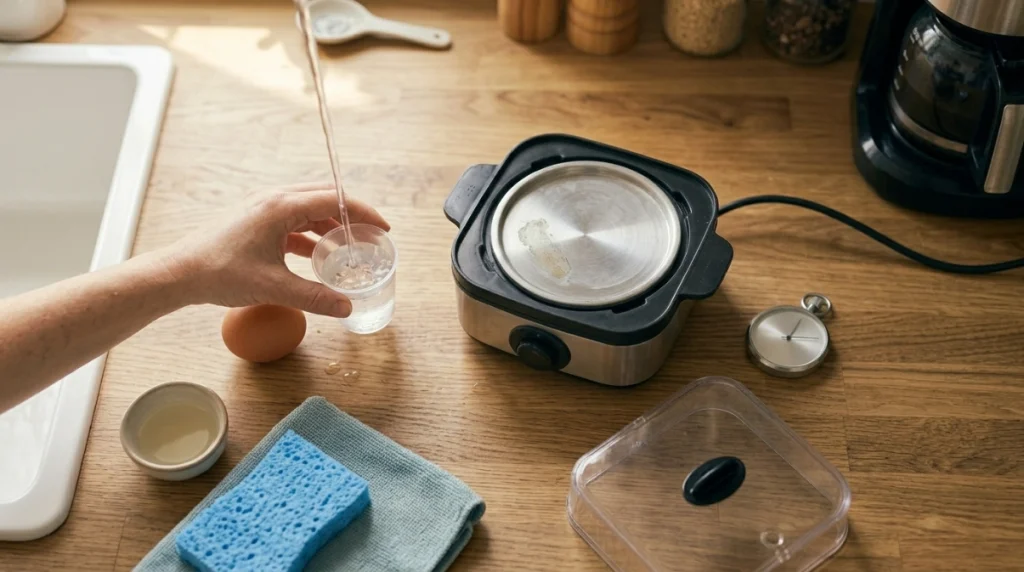
Start with the simple checks below. Let the cooker cool before touching the heating plate or moving its parts.
Measure the water correctly
Use the lines on the supplied measuring cup. Select the mark for soft, medium, or hard eggs.
Some cups work in a way that seems backward. The hard-egg line may use more water because a longer steam cycle is needed. Read the labels with care.
Do not fill the base to the top. Extra water does not make the eggs cook better. It only makes the cycle longer.
Use similar eggs
Try to use eggs of the same size. Mixing medium and extra-large eggs can give you uneven yolks.
For a fair test, I use eggs from the same carton. I also place them in the tray at the same time.
Room-temperature eggs may cook a little faster. However, do not leave eggs out for more than two hours. In hot rooms, keep that time under one hour.
Check the egg tray and lid
Place the egg insert flat on the base. Make sure it does not rock or sit above its normal position.
Set the lid on top without forcing it. Check that no egg, shell, or tray edge is holding the lid open.
Look at the steam vent too. Remove loose food or shell pieces with a soft cloth. Never cover the vent during cooking.
Remove mineral buildup
Unplug the cooker and let it cool. Then clean the heating plate with the method listed in its manual.
For many cookers, a small amount of white vinegar and water can soften limescale. Leave it on the cool plate for a few minutes. Wipe it away with a non-abrasive sponge or soft cloth.
Do not immerse the base in water. Avoid steel wool and sharp tools. They can scratch the plate or damage its coating.
| Problem | Recommended solution | Difficulty |
|---|---|---|
| Cycle takes too long | Use the correct water line | Easy |
| Uneven eggs | Use similar egg sizes | Easy |
| Steam leaks at the side | Reseat the tray and lid | Easy |
| White scale on plate | Descale the cool plate | Easy |
| Plate barely heats | Test another safe outlet | Easy |
| Burning smell or hot cord | Unplug and stop using it | Do not repair yourself |
Test the power source
Check the cord for cuts, crushed areas, or dark marks. Push the plug firmly into a safe wall outlet.
If possible, test the outlet with another small appliance. Do not keep using an outlet that works only when the plug is moved.
Avoid using a power strip during this test. The egg cooker should receive steady power from the wall.
Let the safety system reset
Some models have overheat protection. The cooker may stop if it runs dry or becomes too hot.
Unplug it and let it cool for at least 20 to 30 minutes. Add the correct amount of water before trying again.
Do not bypass the safety switch or hold down a button. That protection helps prevent heat and fire damage.
Run a one-egg test
Add the correct water amount for one medium egg. Start a timer when you press the cook button.
Note when steam appears and when the alarm sounds. If a hard egg takes about 12 to 16 minutes, the cooker is likely working as expected.
If it takes more than 20 minutes after descaling and setup checks, stop using it until you can confirm the model’s normal time in the manual.
Mistakes to Avoid
The biggest mistake is treating the water cup like a normal kitchen cup. Its lines are part of the cooker’s timing system.
Avoid these common errors:
- Adding extra water “just in case.”
- Blocking the steam vent with a towel.
- Opening the lid repeatedly during cooking.
- Mixing very small and extra-large eggs.
- Using the cooker on an uneven surface.
- Scraping limescale with a knife.
- Pouring water over the electrical base.
- Touching the lid or vent while steam is escaping.
- Running the cooker without water.
- Opening the sealed heating unit.
Use the lid handle when the cycle ends. Lift the lid away from your face and hands. Hot steam can cause a quick and painful burn.
Stop at once if you notice smoke, sparks, a melting smell, or a very hot cord. Unplug the unit only if you can do so safely.
When to Replace the Egg Cooker
Replacement makes sense when the cooker has an electrical fault or severe heat damage. A basic egg cooker is rarely worth an internal electrical repair.
A cracked removable lid or lost cup may be easy to replace. A damaged power cord, sealed heating unit, or control board is different.
| Repair issue | Typical choice | Replace cooker? |
|---|---|---|
| Lost measuring cup | Buy a matching cup | No |
| Cracked removable tray | Replace the tray | Usually no |
| Loose or damaged lid | Find a model-safe lid | Maybe |
| Damaged power cord | Stop using the unit | Usually yes |
| Weak heating after descaling | Compare repair cost | Often yes |
| Smoke or burning smell | Unplug immediately | Yes |
Only buy parts that fit the exact model. A tray or lid that almost fits may affect the safety switch or allow hot steam to escape.
My Personal Experience
My first timing test was not fair. I used seven cold, extra-large eggs and added more water than the hard-boiled line showed.
The cycle took close to 20 minutes. The eggs were safe to eat, but the yolks were dry. I first blamed the heating plate.
For my second test, I wiped away the mineral film with diluted white vinegar. I then used six medium eggs and measured the water at eye level.
That cycle ended in about 14 minutes. The eggs were firm, and the yolks were much better.
I also tested a loose lid position. Steam leaked from one side, and two eggs were softer than the rest. Seating the tray and lid correctly fixed the uneven result.
The most useful lesson was simple: the water amount acts like the timer. A little extra water can noticeably extend the cycle.
Final Thoughts
So, how long does an egg cooker take? Most models need 6 to 9 minutes for soft eggs, 9 to 12 minutes for medium eggs, and 12 to 16 minutes for hard eggs.
If yours is slow, measure the water again. Then check the egg size, tray, lid, heating plate, and wall outlet.
Descaling fixed the delay in my cooker. Correct water measurement made the biggest difference. If the cord overheats, the unit smells burned, or cooking still takes more than 20 minutes, stop using it and consider a replacement.