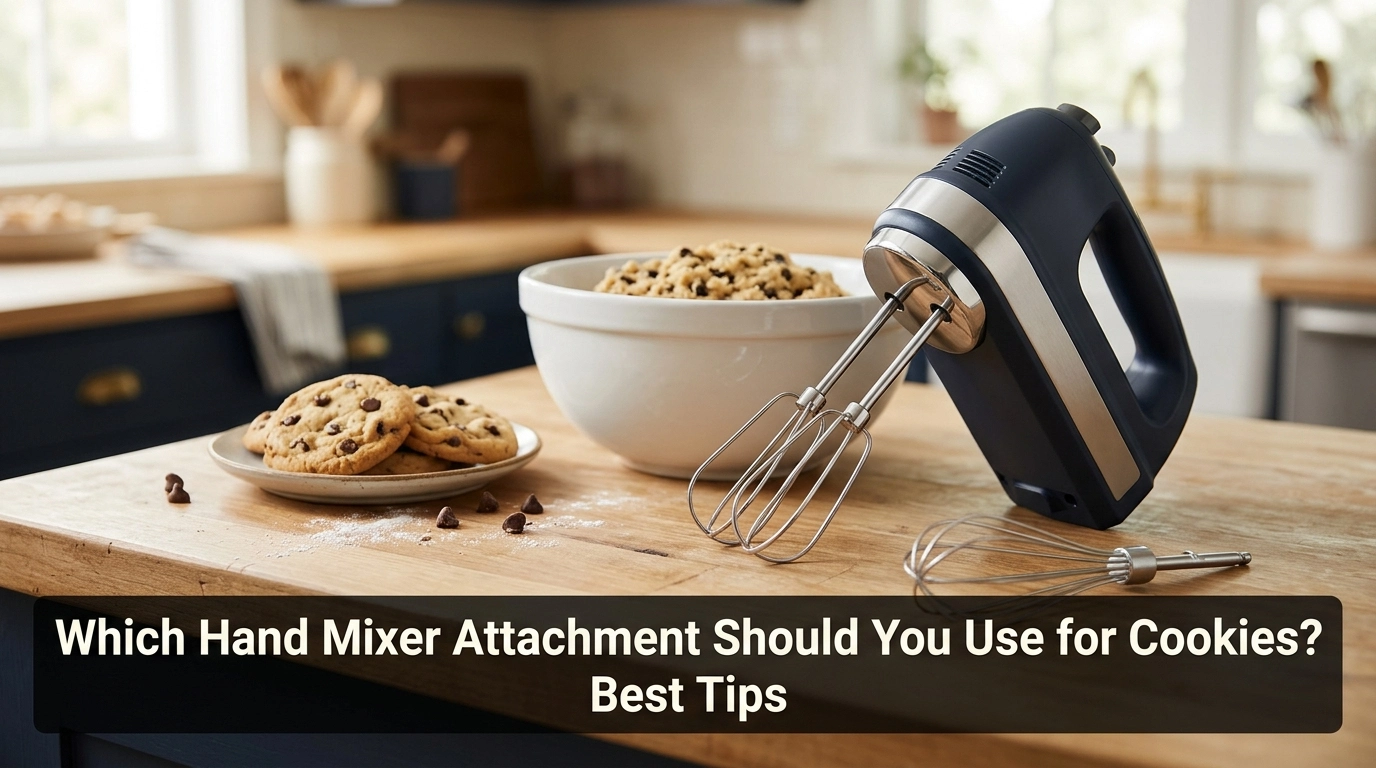
Which hand mixer attachment should you use for cookies? In most cases, use the regular beaters to mix cookie dough. They work well for creaming butter and sugar, adding eggs, and mixing flour into the dough.
I learned that the attachment matters more than I first thought. The wrong one can leave lumps or make mixing harder than it needs to be.
You do not need a stand mixer to make good cookies. A hand mixer and the right beaters can do the job with ease. Let me show you which attachment to use, when to switch it, and what mistakes to avoid.
Common Signs of the Wrong Hand Mixer Attachment
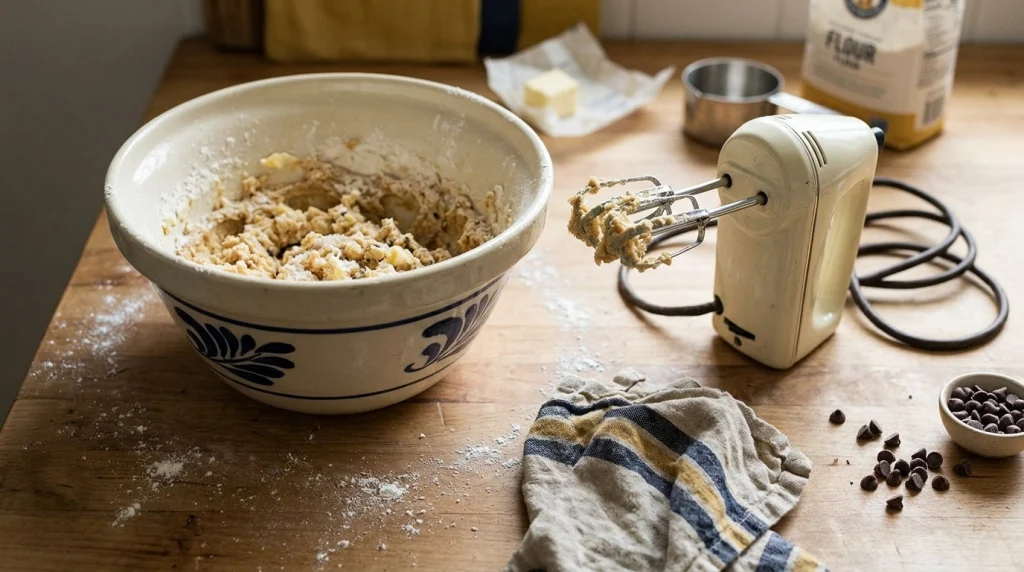
The wrong attachment can make cookie dough hard to mix. You may also notice that the dough looks uneven or the butter stays in lumps.
Here are some common signs to watch for.
| Sign | Likely Cause | Quick Fix |
|---|---|---|
| Butter and sugar stay lumpy | Butter is too cold | Let butter soften |
| Flour flies out of the bowl | Mixer speed is too high | Start on low speed |
| Dough looks uneven | Poor mixing or wrong attachment | Use regular beaters |
| Dough wraps around the beaters | Dough is too thick | Stop and finish by hand |
| Cookies turn out tough | Dough was overmixed | Mix only until combined |
These signs do not always mean the attachment is wrong. The temperature of your butter, the amount of flour, and the mixing time also affect the result.
Possible Causes
Before choosing an attachment, it helps to know what each one does. Most hand mixers come with regular beaters. Some also include whisk attachments or dough hooks.
Each tool has a different job.
- Regular beaters: Best for most cookie recipes. They mix butter, sugar, eggs, and other ingredients.
- Whisk attachment: Best for adding air to cream or egg whites. It is not the first choice for thick cookie dough.
- Dough hooks: Made for kneading bread dough. They are usually not suitable for standard cookie recipes.
Another common cause is using butter straight from the fridge. Cold butter is hard to cream with sugar, even with the right beaters.
Too much flour can also make dough thick and hard to mix. In that case, switching attachments will not solve the problem.
How to Choose the Right Hand Mixer Attachment for Cookies
The best choice for most cookies is the regular beater attachment. Follow these steps to get an even mix without making the dough tough.
1. Use Regular Beaters for Most Cookie Recipes
Fit the regular beaters into your hand mixer before you begin. Check that each one locks into place as the maker instructs.
These beaters are made for mixing thick batters and soft doughs. They are ideal for chocolate chip cookies, sugar cookies, oatmeal cookies, and many other common recipes.
Do not use a whisk just because you want light cookies. A whisk adds air well, but it is not built for thick dough.
2. Soften the Butter Before Mixing
Let your butter soften until it gives slightly when pressed. It should not look melted or oily.
Add the butter and sugar to a large bowl. Use the regular beaters on low speed at first, then increase the speed if needed.
This helps the two ingredients blend into a smooth, creamy mix. It also reduces the risk of sugar and butter flying out of the bowl.
3. Add the Eggs and Other Wet Ingredients
Once the butter and sugar are mixed, add the eggs as your recipe directs. Add vanilla or other liquid flavorings at this stage if the recipe calls for them.
Mix on low or medium speed until the wet ingredients look even. Stop and scrape the sides of the bowl with a spatula when needed.
Do not keep mixing for too long. The goal is to blend the ingredients, not whip lots of air into every part of the dough.
4. Add the Flour Slowly
Lower the mixer speed before adding flour. Add it in small amounts to help keep it inside the bowl.
This is also a good time to use a deep mixing bowl. It gives the beaters room to move and helps prevent spills.
Mix only until the flour is mostly combined. If the dough becomes too thick for your mixer, switch it off, unplug it, and finish mixing with a sturdy spoon or spatula.
Do not force the beaters through stiff dough. This can strain the motor and may damage the attachments.
5. Know When to Use a Whisk
A whisk attachment is useful for recipes that need air, such as whipped cream or beaten egg whites. It can also help mix some light liquid ingredients before the flour is added.
However, it is not the best tool for standard cookie dough. Thick dough can clog the whisk wires and make cleaning harder.
If your recipe asks you to beat eggs and sugar until fluffy, check the recipe instructions. A whisk may help with that step, but regular beaters are still a practical choice for most cookie recipes.
6. Use Dough Hooks Only When the Recipe Calls for Them
Dough hooks are mainly for kneading yeast dough, such as bread or rolls. They are not the usual choice for cookies.
Cookie dough does not normally need the same kneading action as bread dough. Too much mixing can develop gluten in the flour and make cookies less tender.
For most cookie recipes, stick with the regular beaters. If your dough is unusually firm, finish by hand rather than forcing the mixer to handle it.
7. Stop Mixing at the Right Time
One of the most useful lessons is to stop as soon as the ingredients come together. A few small streaks of flour can often be mixed in by hand.
Overmixing after adding flour may lead to dense or tough cookies. It can also make the dough warm, especially if you mix for a long time.
If the recipe says to chill the dough, cover it and place it in the fridge for the stated time. Chilling can help firm the butter and make some doughs easier to handle.
8. Clean the Attachments After Use
Turn off and unplug the mixer before removing the beaters. Release them according to the manufacturer’s instructions.
Wash removable attachments as directed in the manual. Some are dishwasher-safe, while others need hand washing.
Good cleaning habits help remove sticky butter, egg, and flour before they dry. Wipe the mixer body with a damp cloth, and never put the motor unit in water.
Mistakes to Avoid
A few small mistakes can affect both your cookies and your mixer.
- Using a whisk for thick dough: Use regular beaters for most cookie recipes.
- Starting at high speed: Begin slowly to prevent flour from scattering.
- Using melted butter by mistake: Unless the recipe calls for melted butter, use softened butter.
- Mixing for too long: Stop when the dough is combined.
- Forcing stiff dough through the mixer: Finish by hand if the dough is too thick.
- Changing attachments while the mixer runs: Turn it off and unplug it first.
Also, never open the mixer motor housing or try to alter its wiring. If it smells burnt, sparks, or makes unusual grinding sounds, unplug it and stop using it.
When to Replace the Hand Mixer or Its Attachments
You usually do not need a new mixer just because cookie dough is hard to mix. First, check the recipe, soften the butter, and use the correct attachment.
If a beater is bent, cracked, or badly rusted, replace it with a compatible part approved for your model. Do not use a damaged attachment.
| Repair Issue | Best Action | Replace Instead? |
|---|---|---|
| Bent or damaged beater | Find a matching replacement | No, if the mixer works well |
| Loose attachment fit | Check the model manual | Maybe |
| Motor smells burnt | Unplug and seek service | Often, depending on repair cost |
| Mixer repeatedly overheats | Stop and have it checked | Consider replacement |
| Dough is too thick | Finish by hand | No |
If the mixer has a damaged cord, exposed wires, or repeated electrical faults, do not keep testing it. Have it checked by a qualified repairer or replace it.
My Practical Experience
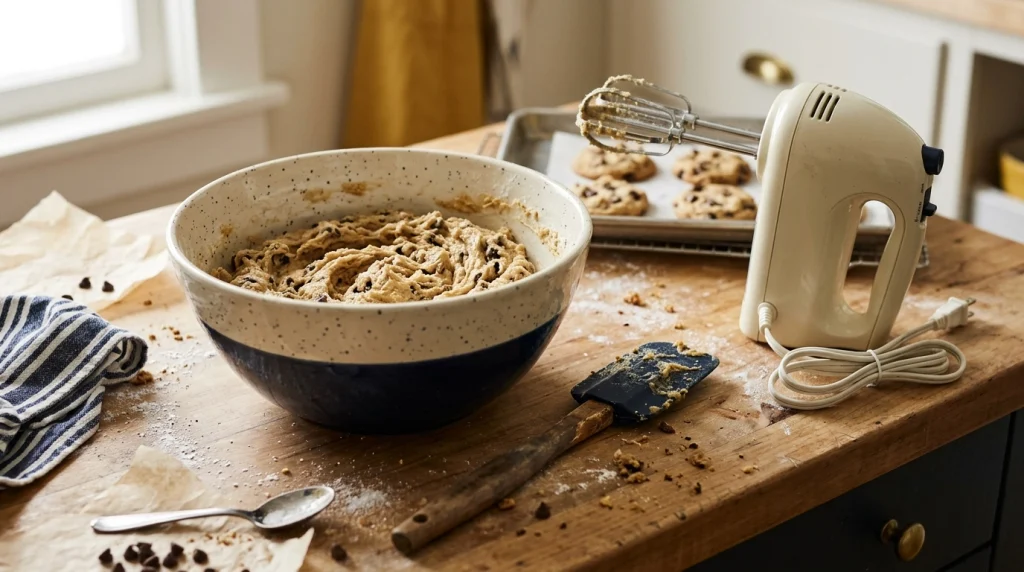
When making cookie dough, I would start with regular beaters and softened butter. I would mix the butter and sugar first, then add the eggs and vanilla before slowly adding the flour.
I would also keep the mixer on a low setting once the flour goes in. This helps keep the kitchen cleaner and makes it easier to see when the dough is ready.
The main lesson is that a stronger attachment is not always better. Dough hooks may look suitable for thick dough, but regular beaters are usually the right tool for cookies.
If the mixture gets too stiff, I would stop the mixer and finish with a spatula. This is easier on the motor and helps prevent overmixing.
These are practical preparation steps, not a claim that I tested every hand mixer model. Your mixer’s instructions and the recipe should guide you if they differ from these general tips.
Final Thoughts
Which hand mixer attachment should you use for cookies? For most recipes, the answer is regular beaters. They work well for creaming butter and sugar, mixing eggs, and bringing the dough together.
Use a whisk for lighter mixtures that need air. Save dough hooks for bread and similar yeast doughs.
Most of all, start slowly, use softened butter, and stop mixing once the flour is combined. These simple steps can help you make tender cookies while keeping your hand mixer in good shape.