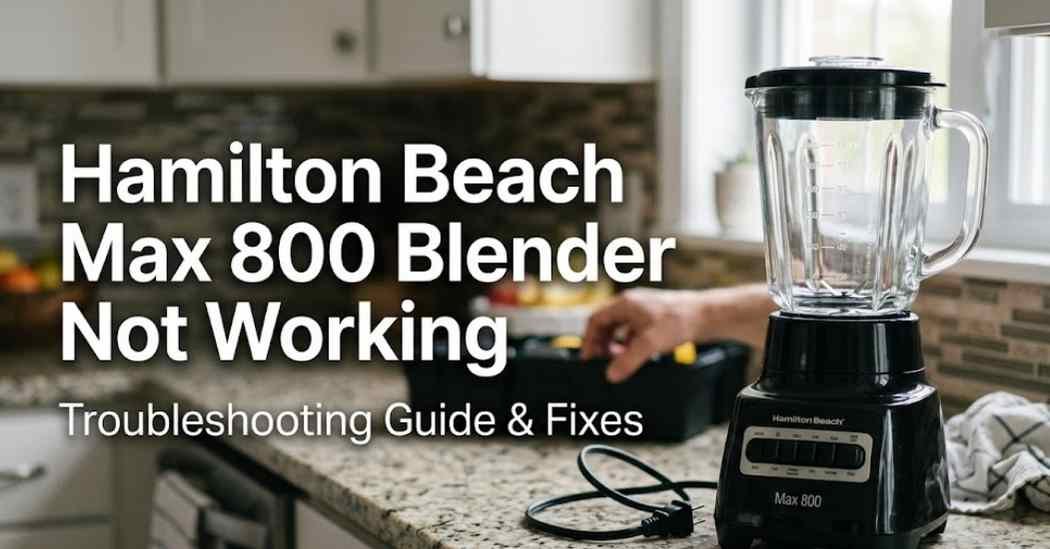
I love my morning green smoothies. They give me energy for the entire day. But yesterday morning, I ran into a very frustrating problem. My hamilton beach max 800 blender not working completely ruined my daily routine. It just sat there completely dead on my kitchen counter.
I pushed the power buttons multiple times. Nothing happened at all. I felt a wave of stress because I hate dealing with broken appliances. I did not want to spend money on a new one right away.
I decided to figure out what was actually wrong. I spent a few hours testing different parts to find the real issue. It turns out, fixing it is much easier than you might think.
In this simple guide, I will share my exact testing process. I will show you what went wrong and how I fixed it. You do not need to be an engineer to repair this yourself.
Common Signs of the Problem
When your machine fails, it rarely gives a clear warning. You might just press a power button and get zero response. This silent failure is a very common symptom. The control panel lights might not even turn on.
Sometimes, you hear a very low humming sound. The internal motor tries to turn, but the main blades refuse to spin. This means electrical power is flowing normally, but a physical part is stuck.
You might also notice a strange burning smell coming from the plastic base. This is a clear warning sign of heavy motor strain. If this happens, you must unplug the machine right away for safety.
When I first started fixing my own kitchen tools, I learned a lot. I realized many common issues stem from old, worn-out parts. A quick swap of replacement blades or drive couplings often solves everything easily. You might not even need to buy a whole new machine.
Possible Causes
Blenders are very simple machines at their core. When they suddenly stop, the root cause is usually easy to spot. The main power cord might just be slightly loose in the wall outlet.
Another common cause is a tripped overload protection switch. This internal safety feature stops the heavy motor from burning out. It triggers if you blend very thick frozen fruit for too long.
Sometimes, the plastic jar assembly is simply not seated right. The built-in safety switch will block the power completely. It does this if the base does not feel the heavy jar locked in place.
A sticky, wet mess under the jar can also freeze the drive coupling gear. Sweet smoothies easily leak into the lower base unit. This sticky liquid locks the moving parts tight when it finally dries.
| Symptom | Likely Cause | Quick Fix |
| No sound at all | Bad wall outlet | Try a different plug |
| Low humming sound | Jammed blender blades | Clear food blockages |
| Burning smell | Motor overheating | Unplug and let cool |
How to Fix Hamilton Beach Max 800 Blender Not Working
Let us get into the exact steps to repair your machine. You can do this at home with no special mechanical tools. Just go slowly and check one small thing at a time.
Your physical safety must always come first. Make sure your hands are completely dry before you start. Always unplug the power cord before you touch any sharp moving parts.
Check the Power Source and Wall Outlet
The simplest fixes are almost always the best ones. Check the kitchen wall outlet first. Plug a small lamp into the same exact spot on the wall.
If the lamp stays dark, your kitchen electrical breaker might be tripped. Go reset the correct breaker in your home electrical panel. If the lamp works perfectly, the main issue is the blender itself.
Look very closely at the thick power cord. Check for any deep cuts, animal bites, or severe bend marks. A badly damaged cord is highly dangerous and stops power flow completely.
Reset the Overload Protection Switch
Your machine has a smart built-in safety guard. This overload protection completely stops the motor if it gets too hot. It is a fantastic feature that saves your blender from dying forever.
If you recently smelled burning rubber, this thermal switch likely tripped. Unplug the machine from the wall right away. Move it to a cool, open spot on your kitchen counter.
You need to let the base rest for at least fifteen minutes. Sometimes it takes up to a full hour to fully cool down. After the base feels completely cool, plug it back in and try again.
Examine the Main Blade Assembly
The sharp blades do the hardest work in your busy kitchen. They chop solid ice and frozen fruit chunks every single day. Over time, the lower blade bearing can get totally stuck.
Take the glass jar off the base and empty it out. Carefully reach in with a long wooden spoon handle. Try to gently spin the blender blades manually.
If they feel very stiff or refuse to spin, they are badly jammed. You might have a tiny piece of hard ice blocking them. A deep clean is usually all you need to fix this problem entirely.
Inspect the Plastic Drive Coupling
The drive coupling is the small black gear on the motor base. It connects the spinning motor directly to the blender jar. This small part takes a huge amount of daily physical abuse.
Look very closely at the rubber teeth on this gear. If they are worn down flat or snapped off, the motor will spin freely. The heavy blades will not turn at all.
Luckily, these small drive couplings are very cheap and simple to swap out. You just pry the old broken one off with a flat tool. Then you press a brand new one tightly into place.
Check the Seals and Gaskets for Leaks
Leaks are a massive problem for small kitchen appliances. Over time, the rubber seals and gaskets get hard and brittle. When they fail, sticky liquids drip right down into the motor base.
This sweet liquid dries up and acts like strong glue. It can freeze the buttons on your front control panel. It can also lock up the main safety switch so the machine stays dead.
Always inspect the round rubber gasket at the bottom of your jar. If it looks cracked or feels stiff, replace it today. This tiny part prevents huge electrical messes and future breakdowns.
Test the Control Panel Buttons
Sometimes the main issue is not the heavy motor at all. The buttons on the front control panel can simply stop working. Sticky food often gets trapped right behind the plastic buttons.
When this happens, the button cannot make a proper electrical connection. The machine will act like it is completely dead. You might push hard, but absolutely nothing happens.
Take a slightly damp soft cloth and wipe the panel. Use a soft cleaning brush to gently scrub around the edges of the buttons. This removes hidden dirt and often fixes the poor connection.
Mistakes to Avoid
When we want a fast fix, we often rush the process. Rushing always leads to bad, costly mistakes. Never try to blindly bypass the important safety switch on your base.
Do not try to aggressively sharpen the blades yourself at home. They are set at a very specific angle from the factory. Messing with them will permanently ruin how the machine blends your food.
Never wash the heavy motor base in your sink water. Water will instantly destroy the sensitive internal electronics. Always use a damp, soft cloth to gently wipe it down instead.
Do not keep holding the power button if the blades are stuck. This forces strong electrical current into a locked motor. It will burn out the expensive motor in just a few short seconds.
| Problem | Recommended Solution | Difficulty Level |
| Won’t turn on | Check power cord and outlet | Very Easy |
| Blades won’t spin | Check coupling and bearings | Easy |
| Base gets too hot | Let the motor cool down | Very Easy |
When to Replace the Blender
Sometimes, a home repair is just not worth the effort. You have to value your personal time and energy. If the main motor is completely dead, finding a new replacement is better.
New internal motors cost almost as much as a brand-new machine. Plus, taking the sealed base apart is risky and voids your warranty. It is just not a smart financial move.
If you keep replacing small parts every single month, the hidden costs add up. A brand new model might actually save you money in the long run. Trust your gut feelings on this choice.
| Repair Issue | Estimated Cost | Replace Instead? |
| Jammed blades | Free to fix | No |
| Broken coupling | Under ten dollars | No |
| Burnt-out motor | Too high | Yes |
My Personal Experience
I rely very heavily on my favorite kitchen tools. When my blender stopped working, I felt totally lost and frustrated. I almost threw it straight into the trash out of pure anger.
I took a deep breath and started testing things logically. I checked the wall outlet first, but the power supply was perfectly fine. Then I looked at the bottom of the glass jar.
The lower blade gear was completely frozen from old dried smoothie leaks. I soaked the entire jar base in warm soapy water for an hour. Then I used a soft cleaning brush to scrub it gently.
It freed up the jammed blades perfectly in minutes. This taught me a huge, valuable lesson about daily routine maintenance. A quick, thorough rinse after every single use stops so many frustrating problems.
I also learned to listen to my machine very closely. When the motor starts to sound slightly different, I stop right away. Catching a small problem early prevents a total breakdown later.
Now, my favorite machine runs like it is brand new again. I save a lot of money by making my drinks at home instead of buying them. Taking great care of your kitchen tools really pays off.
Final Thoughts
Dealing with a suddenly broken kitchen gadget is never fun. But you really do not need to panic or stress out. Most common power problems have very simple, fast solutions.
Just start with the absolute basics like checking the power plug. Work your way up slowly to checking the sharp blades and gears. You will find the root cause very quickly.
I hope these simple tips help you get back to blending. A little patience always goes a very long way. Happy blending, and enjoy your delicious homemade smoothies!