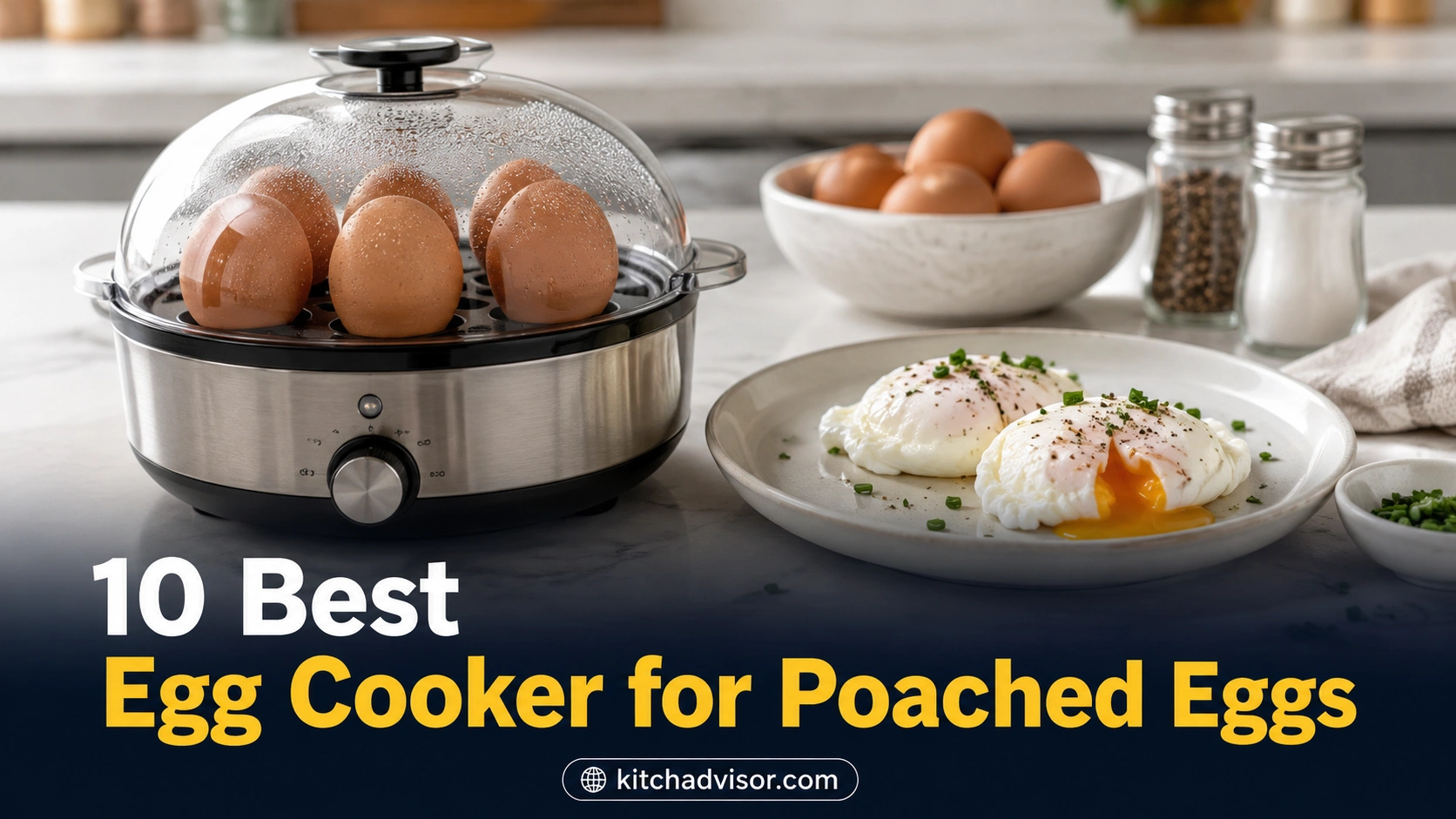
Poached eggs have a reputation for being finicky on the stovetop, between swirling water, vinegar splashes, and eggs that turn into wispy clouds instead of neat ovals. A dedicated egg cooker or poaching pan removes most of that guesswork by giving the egg white a defined space to set while the yolk stays soft. The right tool turns a dish people usually order at brunch into something doable on a Tuesday morning.
Two different approaches solve this problem. Electric egg cookers use steam and a timer to poach, boil, and sometimes make omelets in one countertop unit. Stovetop poacher pans and rack inserts use simmering water beneath nonstick cups, which gives more control over doneness but requires more attention. Neither style is universally better; the right pick depends on how often you’re poaching, how many eggs at once, and whether you want to babysit a pan or press a button.
Cup design and material matter more than wattage or price when it comes to actual poached-egg texture. Nonstick coating quality determines how cleanly the egg releases, while cup depth and shape affect whether whites stay tidy or run together. Look closely at capacity (how many eggs at once), whether the unit has an automatic shutoff or requires manual timing, how visible the cooking process is through a lid, and how easy the poaching cups are to clean afterward. We evaluated all ten products below specifically for poaching results, not just their marketed boiling capacity.
Best for hands-off poaching: Dash Rapid Egg Cooker
Best for precise doneness control: Elite Gourmet 7-Egg Rapid Egg Cooker
Best stovetop poacher for serious cooks: Eggssentials Poached Egg Maker
Best budget stovetop poacher: EXCELSTEEL Egg Poacher
Best for large family batches: BELLA Egg Cooker
Best for mixed egg-style households: Cuisinart CEC-10 Egg Central
Best for omelets and multitasking: Hamilton Beach 6-in-1 Egg Cooker
Best induction-compatible poacher: NutriChef Egg Poacher Pan Set
Best space-saving insert: Eggssentials Egg Poacher Insert
Best 2-in-1 poacher and skillet: Norpro Stainless Steel Egg Poacher/Skillet Set
Dash Rapid Egg Cooker
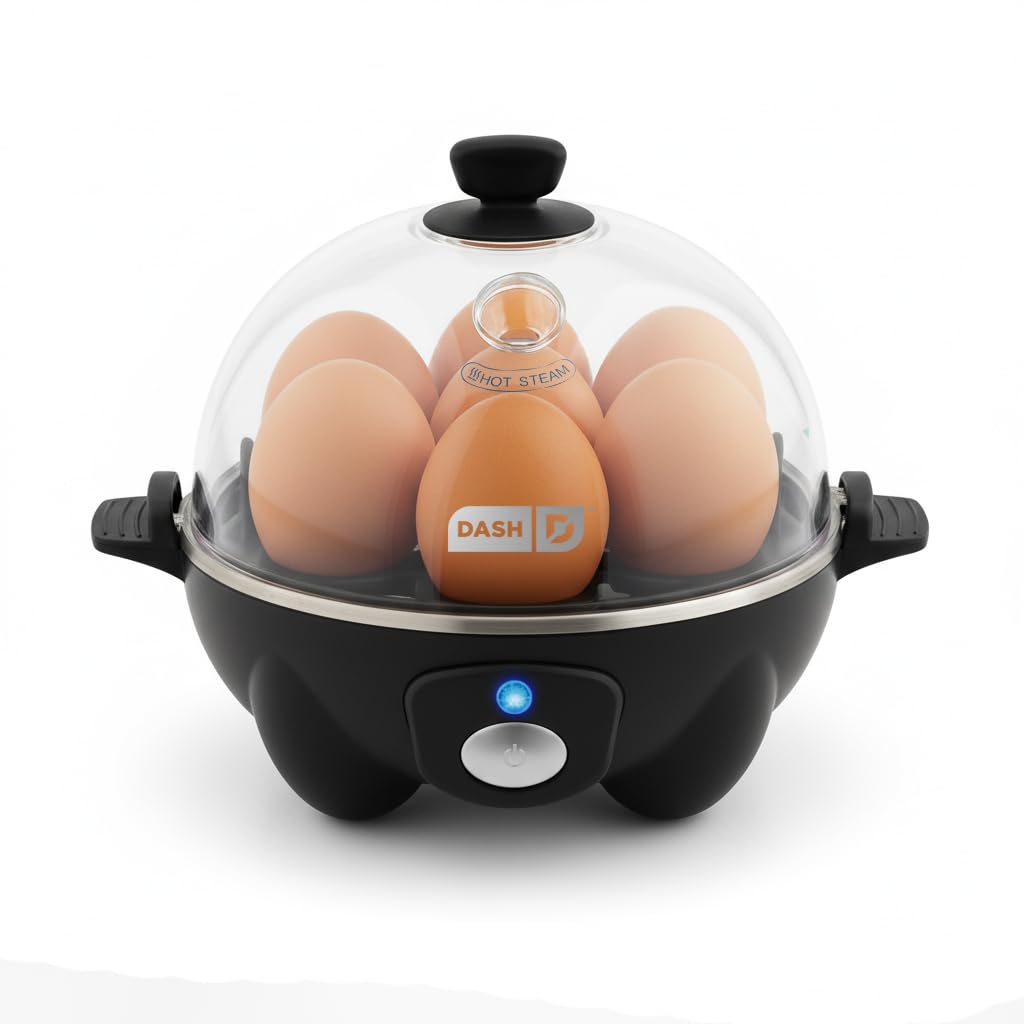
This is a solid pick for anyone who wants a countertop appliance that poaches eggs with minimal setup and even less attention.
Pros
- Included poaching tray produces consistent results without stovetop monitoring
- Compact footprint with accessories that store inside the unit
- Simple one-button operation with a thermal sensor for consistency
Cons
- Some buyers report the auto shutoff only beeps rather than powering off
- Poaching capacity is limited compared to its 7-egg boiling claim
- Plastic housing feels less substantial than stainless steel competitors
The poaching tray here handles two eggs at a time, which suits a couple’s breakfast better than a crowd. Whites come out set and rounded, without the stringy edges that plague loose stovetop poaching. Cleanup is straightforward since the tray lifts out and goes in the dishwasher. The main gripe from owners is that the “auto shut-off” branding oversells a unit that mostly relies on an audible alert rather than a true power cutoff.
Elite Gourmet 7-Egg Rapid Egg Cooker

This cooker earns its spot for shoppers who want a calibrated measuring cup that takes the guesswork out of poached-egg firmness.
Pros
- Measuring cup with firmness markings gives repeatable results
- Poaching tray handles two eggs with a genuine auto shut-off and buzzer
- Piercing pin built into the cup is a nice practical touch
Cons
- Poaching capacity is capped at two eggs per cycle
- Stainless steel accents are mostly cosmetic; body is largely plastic
- Voltage is fixed at 120V, so it won’t work with international outlets without a converter
The calibrated measuring cup is the standout feature for poaching, since it lets you dial in exactly how much water produces a runny versus firm yolk. Unlike the Dash model, this one has a legitimate automatic shutoff that actually stops the heating cycle instead of just sounding an alarm. For anyone who has ruined eggs by walking away for two extra minutes, that difference is meaningful. Two eggs per poaching cycle keeps it limited to smaller households.
Eggssentials Poached Egg Maker
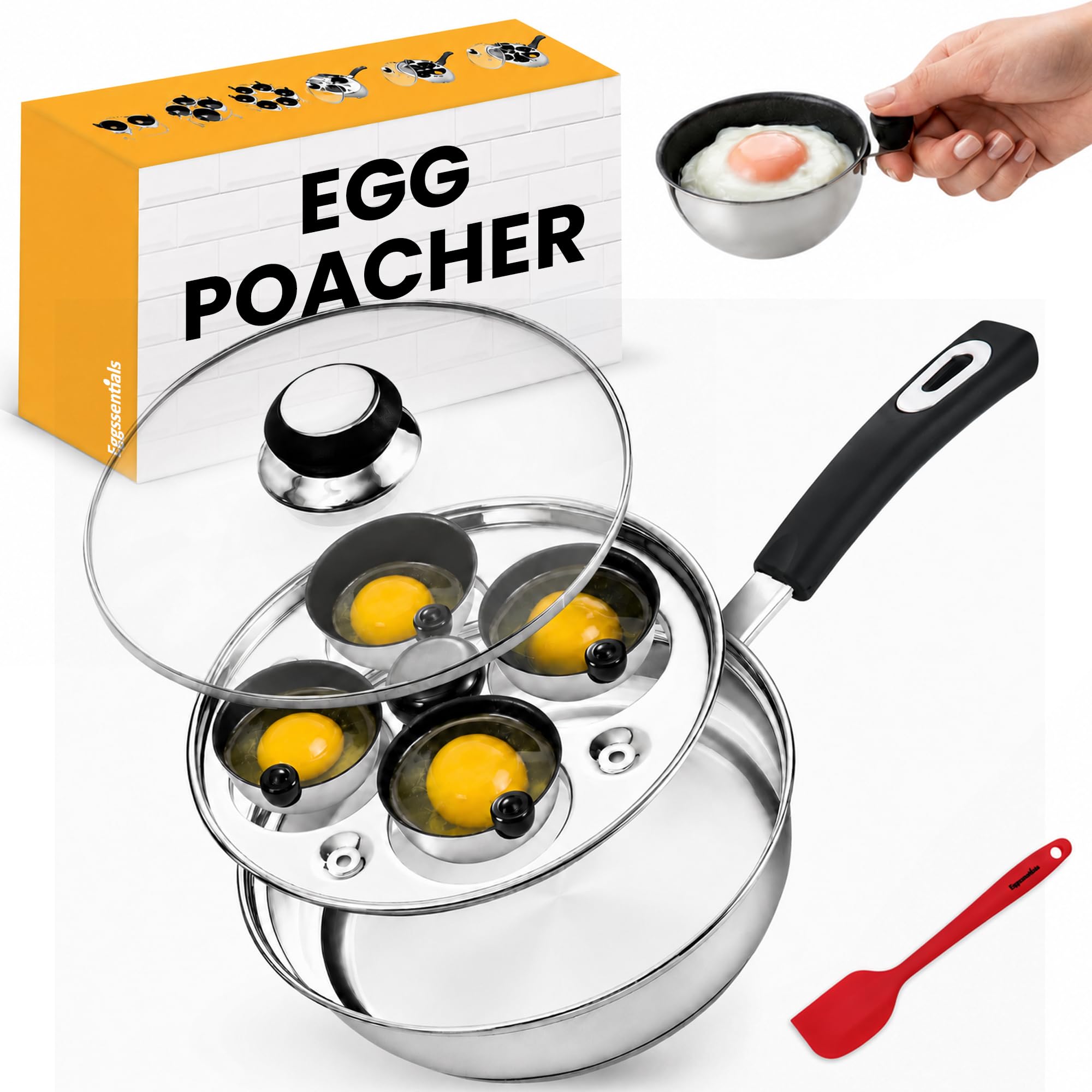
This stovetop pan is the choice for cooks who want restaurant-style poached eggs with more control than an electric unit allows.
Pros
- Four nonstick cups with genuine PFOA-free coating for easy release
- Tri-ply aluminum-encapsulated base heats evenly, even on induction
- Insert lifts out entirely, so the pan doubles as a sauté pan
Cons
- Requires monitoring the stovetop rather than a set-and-forget cycle
- Heavier than electric units, at roughly 3 pounds
- Hand-timing is needed since there’s no built-in buzzer
Four eggs at once makes this practical for a family breakfast, and the nonstick cups release cleanly without the torn edges you get from bare simmering water. The tempered glass lid lets you watch doneness without lifting it, which matters since poaching times vary by egg size and desired yolk consistency. Stovetop control means better texture accuracy for cooks willing to watch a timer, though it asks more attention than an electric cooker.
EXCELSTEEL Egg Poacher

This budget-friendly stainless steel pan delivers dependable poached eggs for cooks who don’t need extra accessories or electric controls.
Pros
- Six nonstick cups accommodate a larger group than most stovetop poachers
- Stay-cool handle and vented glass lid make monitoring safe and easy
- Competitively priced relative to other stainless steel poacher pans
Cons
- Some units arrive with a slightly warped rack that affects lid fit
- No timer or doneness markings included
- Hand-wash recommended despite dishwasher-safe claim on the listing
Six poaching cups is generous for the price, and reviewers consistently report eggs cooked in four to seven minutes with clean, rounded results. The water-level guide on the pan itself helps compensate for the lack of a measuring cup. Build quality is solid stainless steel, though a few buyers noted a warped rack that keeps the lid from sitting flush. For anyone poaching for a crowd on a budget, this earns consideration over pricier options.
BELLA Egg Cooker

This electric cooker suits households that want to boil a full batch of eggs for meal prep while also having a poaching option available.
Pros
- Marked measuring cup with piercing pin simplifies water calibration
- Clear lid lets you watch the cooking process without opening it
- Handles up to 7 boiled eggs alongside 2 poached eggs simultaneously
Cons
- Manual power switch needs to be turned off even after the buzzer sounds
- Poaching tray capacity remains limited to two eggs
- Plastic construction feels less premium than stainless steel poacher pans
Boiling capacity is this unit’s real strength, and the poaching tray functions as a useful secondary feature rather than the main draw. The clear lid is genuinely helpful for watching eggs without losing heat, and the piercing pin prevents shell cracking during boiling. Owners note the switch doesn’t fully power down on its own, so it requires a manual flip once the buzzer sounds. For someone who wants one device that meal-preps a week of boiled eggs and occasionally poaches two for brunch, this fits well.
Cuisinart CEC-10 Egg Central

This two-tiered cooker is built for households that want boiled, poached, and omelet-style eggs from a single higher-capacity machine.
Pros
- Four-egg poaching tray is larger than most electric competitors offer
- Ten-egg boiling capacity plus a separate three-egg omelet tray
- Brushed stainless steel lid and LED indicator give it a more polished feel
Cons
- Does not fully power off automatically; some units restart after a pause
- Bulkier footprint than single-tier electric egg cookers
- A few buyers reported early unit failures after limited use
A four-egg poaching tray sets this apart from the two-egg capacity common among electric cookers, making it a better fit for a household of four wanting poached eggs together. The measuring beaker system for calibrating water is precise once you find the right fill line for your egg size. Reviewers who’ve owned it for years praise its consistency, though the lack of a true automatic shutoff means eggs can occasionally restart cooking after a pause in the cycle.
Hamilton Beach 6-in-1 Egg Cooker

This is the most versatile electric option here, built for cooks who want poached eggs, egg bites, and a nonstick skillet in one unit.
Pros
- Four-egg poaching capacity matches larger stovetop pans
- Built-in nonstick skillet handles omelets, scrambled eggs, and fried eggs
- Multiple trays cover egg bites, poaching, and traditional boiling
Cons
- Water measurement markings are inconsistent according to several owners
- Poaching results can turn into egg bites if water levels are off
- No confirmed automatic shutoff despite marketing language
Four eggs per poaching cycle is competitive, and the added skillet function makes this the most multi-purpose device in the lineup rather than a single-trick poacher. The tradeoff is precision: several buyers found the measuring cup markings don’t reliably produce the intended texture, occasionally yielding firmer egg bites instead of a soft poach. Cooks willing to run a test batch or two to dial in their preferred water level will get the most from this one.
NutriChef Egg Poacher Pan Set
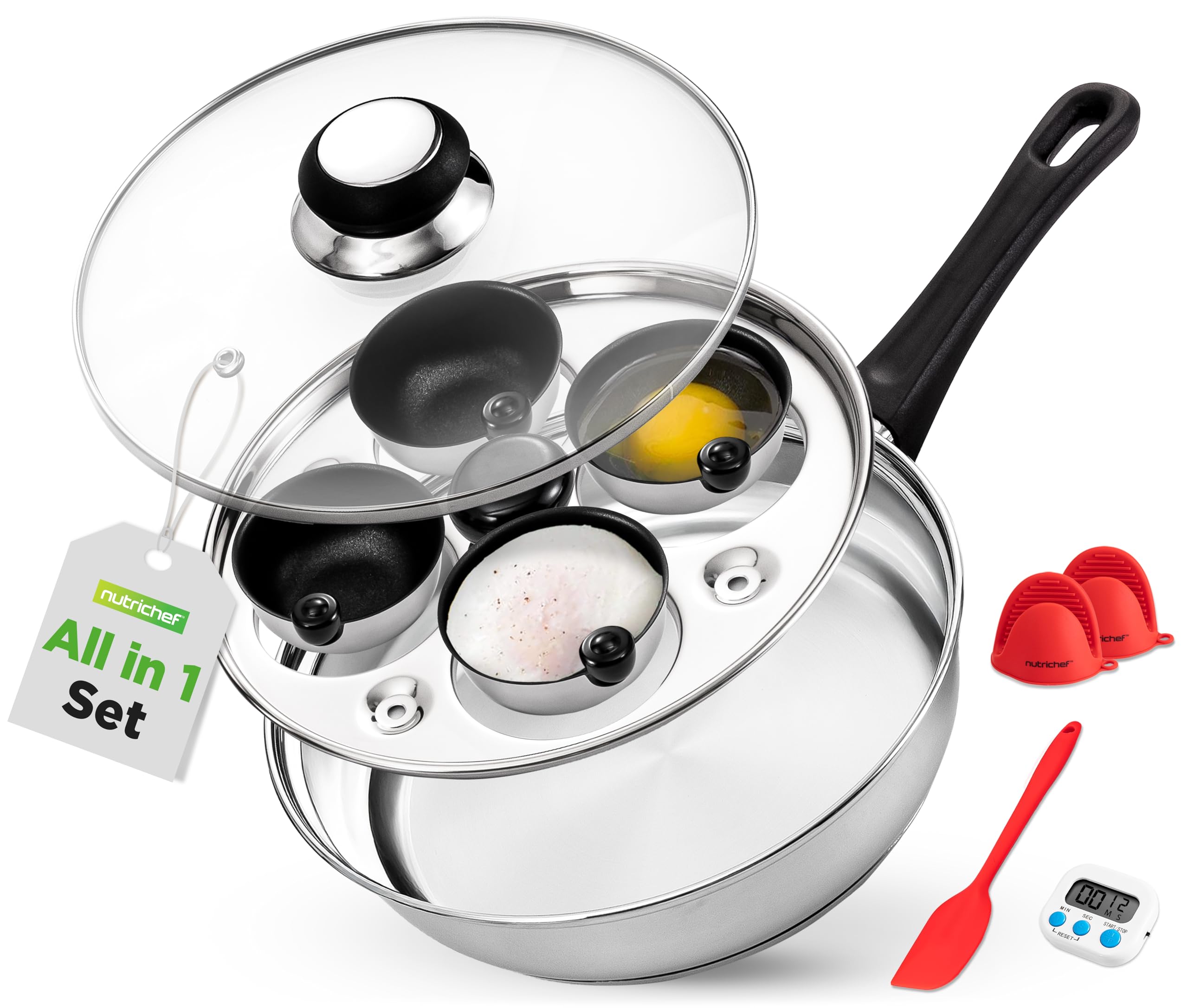
This stovetop pan is a strong option for induction cooktop owners who want a poacher built specifically to work with that heat source.
Pros
- Full 304 stainless steel construction is induction-compatible
- Includes a timer, oven mitt, and spatula as bundled accessories
- Four nonstick cups with steam vents for even cooking
Cons
- Cup handles get hot despite the stay-cool handle on the main pan
- Included oven mitts are described by owners as awkward to use
- Best results require oiling the cups before each use
Induction compatibility is the headline feature, and the mirror-polished stainless steel body holds up well across repeated use. The bundled timer takes some of the guesswork out of stovetop poaching, addressing one of the main complaints about pans like this. A light coating of oil in each cup before cooking makes a noticeable difference in how cleanly the eggs release, based on owner feedback.
Eggssentials Egg Poacher Insert
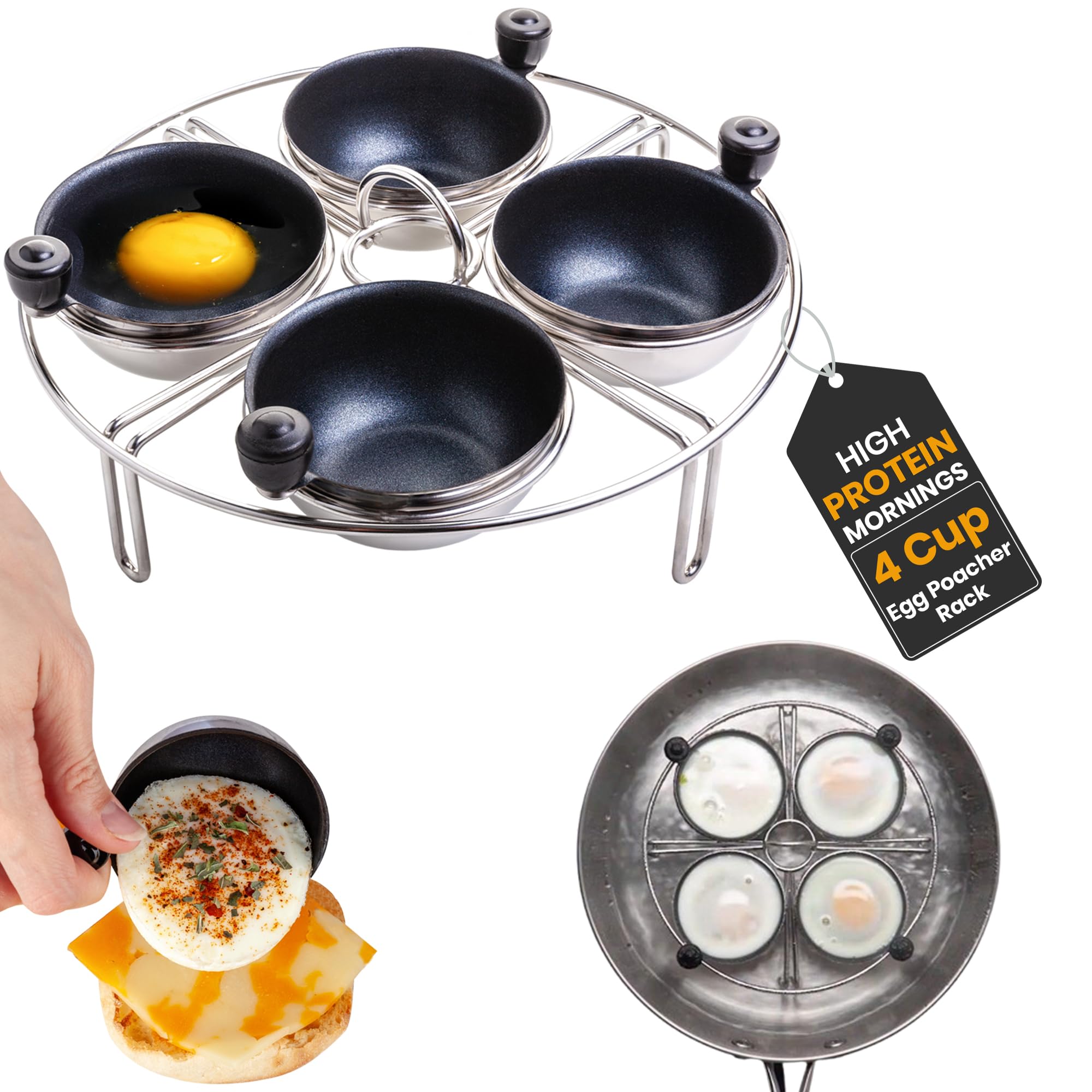
This rack insert is the right pick for anyone who already owns a pot, skillet, or Instant Pot and doesn’t want a dedicated poaching pan taking up cabinet space.
Pros
- Compatible with existing cookware, including 5, 6, and 8-quart pressure cookers
- Stainless steel cups outperform silicone inserts for even heat transfer
- Central handle lifts all four cups out of the pot at once
Cons
- Requires owning a compatible pot or pressure cooker with the right diameter
- No timer or lid included, so monitoring falls entirely on the cook
- A few users report uneven cooking across the four cups
At 7.25 inches in diameter, this insert fits inside most standard pots and pressure cookers with room to spare, which makes it one of the more space-efficient options in this roundup. Stainless steel cups cook faster and more evenly than the silicone poaching cups sold elsewhere, according to repeated owner comparisons. It skips the extras like timers and lids, so it rewards cooks who already have a poaching routine and just need better hardware.
Norpro Stainless Steel Egg Poacher/Skillet Set

This 10-inch pan works well for cooks who want a poacher that converts into a full-size skillet when the egg cups aren’t in use.
Pros
- Tri-ply construction with an aluminum core for even heating
- Five removable cups accommodate a slightly larger batch than most 4-cup pans
- Doubles as a standalone fry pan when cups are removed
Cons
- Egg cup handles can be awkward, occasionally causing cups to tip
- Hand wash only, despite the premium stainless steel build
- Heavier and bulkier than single-purpose poaching pans
Five poaching cups edge out the four-cup standard found on most competitors, useful for slightly larger households. The tri-ply base performs well across gas and other stovetop types, and the pan’s ability to function as a standalone skillet adds real value once the poaching cups come out. Some owners note the cup handles are top-heavy and prone to tipping, which takes a bit of care when removing hot eggs.
Buying Guide
Electric Cookers vs. Stovetop Poachers
Electric egg cookers automate the process with steam and a timer, which suits cooks who want consistent results without watching a stove. Stovetop poacher pans and rack inserts give more direct control over doneness but need active monitoring. Choose based on how hands-on you want to be each morning.
Poaching Capacity
Most electric cookers top out at two to four poached eggs per cycle, even when they advertise boiling capacities of seven or more. Stovetop pans commonly offer four to six cups. Match capacity to your household size rather than the headline egg count on the box, since boiling and poaching numbers often differ significantly on the same product.
| Capacity Need | Best Format |
|---|---|
| 1-2 eggs, occasional use | Electric cooker with poaching tray |
| 4 eggs, regular breakfasts | Stovetop poacher pan |
| 5-6 eggs, family or guests | Larger stovetop pan or rack insert |
Cup Material and Nonstick Quality
Stainless steel cups with a genuine nonstick coating release eggs more cleanly than silicone inserts. Silicone insulates rather than conducts heat, which slows cooking and can lead to uneven whites. Look for PFOA-free coatings specifically, since that detail is called out clearly on quality products and absent from vague listings.
Water Measurement and Doneness Control
A marked measuring cup with soft, medium, and hard settings removes most of the guesswork from poaching. Pans without this feature rely on visual judgment through a lid, which works but takes practice. A built-in piercing pin is a small but genuinely useful detail for cooks who boil eggs in the same unit.
Lid Visibility and Automatic Shutoff
A vented glass or clear plastic lid lets you check progress without losing heat or moisture. True automatic shutoff (not just a buzzer) prevents overcooking if you step away, though several electric models in this category only alert rather than power down. Read the fine print on shutoff claims before assuming hands-off operation.
Cookware Compatibility
Rack inserts depend on owning a pot or pressure cooker with a compatible diameter. Stovetop pans work on gas and electric burners, but only some are rated for induction, which requires a magnetic stainless steel base. Confirm induction compatibility specifically if that’s your cooktop type.
Cleanup
Removable, dishwasher-safe cups and trays save significant time. Nonstick surfaces that release eggs without oil are worth prioritizing, since sticky cups are the most common complaint across every poacher style.
Editor’s Choice
The Elite Gourmet 7-Egg Rapid Egg Cooker stands out as the best all-around pick for poached eggs among the electric options. Its calibrated measuring cup and genuine automatic shutoff solve the two biggest problems with electric poaching: inconsistent water levels and overcooked eggs from a buzzer nobody hears in time.
For cooks who prefer stovetop control, the Eggssentials Poached Egg Maker earns the top recommendation. Four nonstick cups, even heating from the tri-ply base, and the ability to double as a sauté pan make it the most practical stovetop poacher in this lineup, especially for anyone making eggs Benedict or brunch dishes regularly.
Buyers focused purely on capacity for a crowd should look at the Cuisinart CEC-10, which offers the largest poaching tray among electric units alongside a substantial boiling capacity.
Conclusion
Poached eggs reward the right tool more than most breakfast dishes. Electric cookers like the Elite Gourmet and Dash models remove the timing guesswork for one or two eggs at a time, while stovetop pans from Eggssentials, EXCELSTEEL, and Norpro give more control and often larger batches for the same or lower cost. Rack inserts like the Eggssentials Egg Poacher Insert make sense if kitchen storage space is limited and you already own compatible cookware.
Match your choice to how often you poach and how many eggs you typically need. Someone making a single poached egg for avocado toast a few times a week will get more value from a compact electric cooker than a five-cup stainless steel pan meant for weekend brunch crowds. Consider your existing cookware, your cooktop type, and how much hands-on attention you want to give the process before choosing.
FAQS
Do electric egg cookers poach eggs as well as stovetop pans? Electric cookers produce consistent results for one or two eggs at a time, using steam rather than simmering water. Stovetop pans generally offer larger capacity and slightly more control over exact doneness, since you can watch and adjust in real time.
Why do some poached eggs come out with ragged edges? Ragged edges typically happen when eggs are poached directly in simmering water without a cup or mold to contain the white. Every product in this roundup uses a defined cup or tray specifically to prevent that problem.
Is a nonstick coating necessary for a poaching cup? A quality nonstick coating makes a significant difference in how cleanly the egg releases without oil or butter. Stainless steel cups with nonstick coating outperform plain metal or silicone inserts for both texture and cleanup.
Can I use a poaching insert in an Instant Pot? Some rack inserts, including the Eggssentials Egg Poacher Insert, are sized to fit inside 5, 6, and 8-quart pressure cookers. Check the insert’s diameter against your pot’s interior before buying.
How long does it take to poach an egg in these devices? Most stovetop poacher pans in this roundup cook eggs in four to seven minutes once the water is simmering. Electric cookers with poaching trays generally finish in a similar window, though exact timing depends on water measurement and desired yolk firmness.