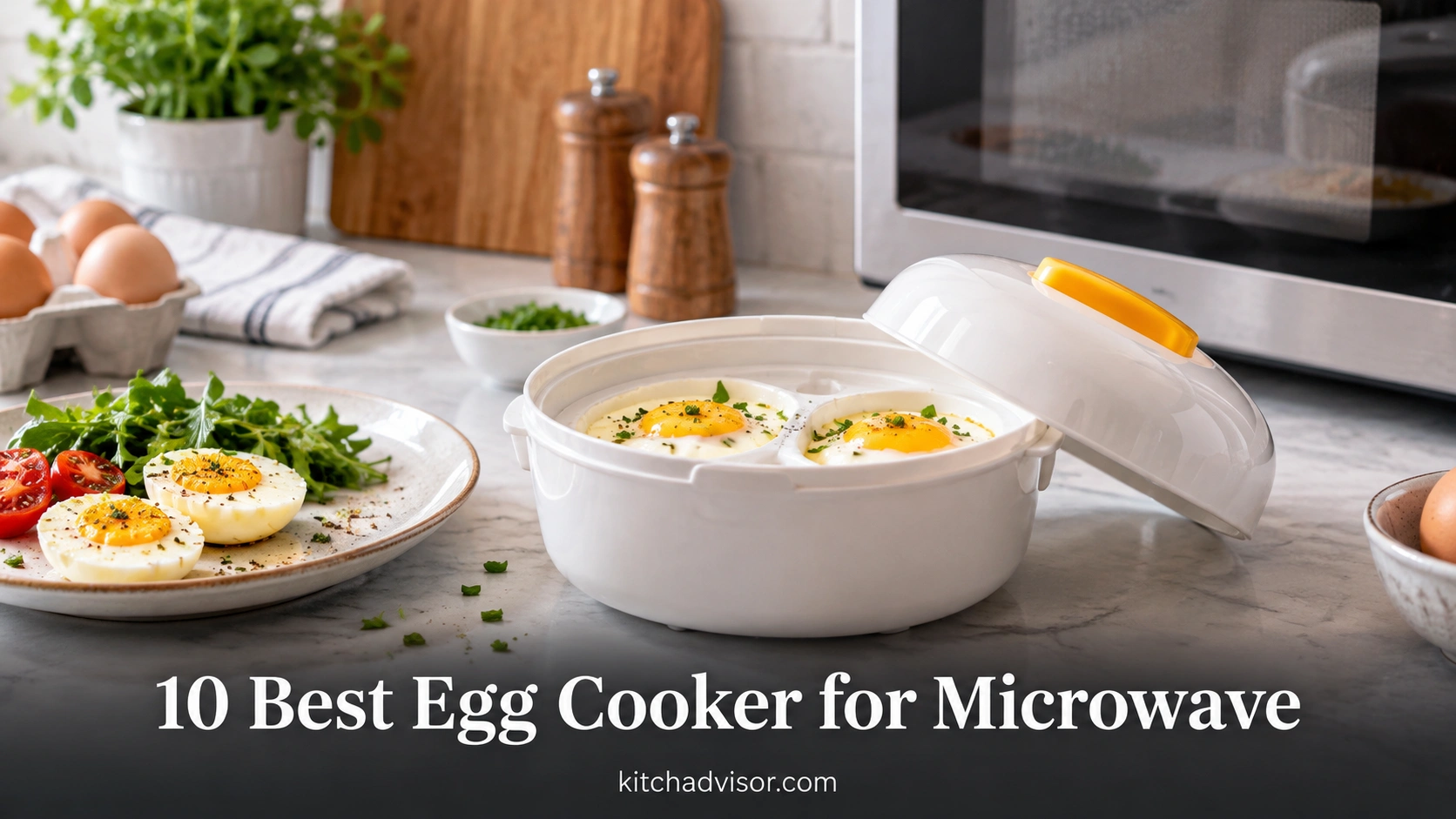
Cooking eggs on a stovetop means a pan to scrub, butter or oil to manage, and standing around while the whites set. A microwave egg cooker skips all of that. Crack an egg, add a splash of milk if you like, cover, and let the microwave do the work while you make coffee or pack a bag.
These cookers vary more than they look. Some use vented lids to stop steam explosions, others rely on ceramic for even heating, and a few are built specifically for poaching rather than scrambling. Wattage matters too: a cooker that produces a perfect egg in 45 seconds at 1100 watts might need closer to 90 seconds in an 800-watt dorm microwave.
Material and design decide how forgiving a cooker is when you overshoot the timer. Plastic tends to be lighter and cheaper but can warp or stain over time, while ceramic holds heat more evenly and resists scratching, at the cost of extra weight and fragility. Vent holes and removable handles change how easy cleanup and handling turn out to be. The right pick depends on whether you want a fast single scrambled egg, a proper poach, or enough capacity to feed more than one person. We tested and compared the leading options to see which ones actually deliver on their promises.
Best for scrambled egg sandwiches: OXO Good Grips Microwave Egg Cooker
Best for poached eggs: Sistema Easy Eggs Microwave Egg Cooker
Best for hard-boiled eggs: Nordic Ware Microwave Egg Boiler
Best budget pick: Classic Cuisine Microwave Egg Maker
Best for omelets: Cuisinart Microwave Egg Cooker
Best for dual breakfast servings: MKYSAIL Quick-Heat Egg Cooker
Best for households needing two poachers: KICOFIT Egg Poacher Set
Best for beginners: Trenton Gifts Microwave Egg Cooker
Best for multi-use cooking: wdcfxy Ceramic Egg Cooker
Best for feeding a family: ReneeChef Ceramic Egg Cooker
OXO Good Grips Microwave Egg Cooker

Buy this if you make breakfast sandwiches on a regular basis and want a single tool that scrambles or fries eggs with minimal fuss.
Pros
- Curved base centers the yolk for fried-style eggs
- Removable base slides eggs straight onto bread
- Stay-cool handles make it safe to grab from a hot microwave
Cons
- Egg can stick without a light oil spray
- Cook time needs calibration to your specific microwave
This cooker earns its reputation with a simple design that whisks, cooks, and serves without extra dishes. The wide opening lets you scramble directly inside the cup, and the curved bottom keeps a cracked yolk centered if you prefer a fried-style egg for a sandwich. Most testers land on 30 to 45 seconds for one egg, though higher-wattage microwaves finish faster and can produce rubbery edges if left too long. A light spray of oil solves the sticking that a few reviewers mention. The removable base is the standout feature, sliding a finished egg directly onto an English muffin without a spatula.
Sistema Easy Eggs Microwave Egg Cooker

Buy this if poached eggs are your priority and you want a hinged lid that never gets separated or lost.
Pros
- Steam release vent limits microwave splatter
- Hinged lid stays attached for easy storage
- Side tabs make it simple to lift when hot
Cons
- Single poached egg can spread thin and overcook
- Best results require added water and a pierced yolk
The hinged, one-piece lid sets this cooker apart from cups with loose tops that go missing in a drawer. Adding a splash of water and piercing the yolk before cooking produces a genuine poached texture, closer to what a saucepan delivers than most microwave methods manage. The dish runs on the wide side for a single egg, so the white can spread into a thin layer and firm up faster than expected. It handles scrambled eggs and mini omelets well too, and the fridge-and-freezer-safe construction makes it useful for meal prep beyond breakfast.
Nordic Ware Microwave Egg Boiler

Buy this if you want hard- or soft-boiled eggs without a pot of water on the stove.
Pros
- Cooks up to four eggs at once without piercing shells
- No guesswork on water level once you learn your microwave
- Shells peel cleanly according to longtime users
Cons
- Runs hot on the exterior, making removal awkward
- Not dishwasher safe despite plastic construction
This is the only cooker in the lineup built specifically for boiling eggs in the shell, and it holds up to four at a time using a measured water fill instead of full submersion. Cook times scale with wattage, running from about five minutes for soft eggs in an 1000-watt microwave up to ten minutes for hard eggs at 600 watts. Owners who’ve used it for years report consistent shell removal and note it beats standing over a stovetop pot. The exterior gets hot enough that a towel or mitt is worth keeping nearby, and hand-washing is recommended over the dishwasher despite the plastic build.
Classic Cuisine Microwave Egg Maker

Buy this if you want a no-frills, budget-friendly cooker for a dorm room or small kitchen.
Pros
- Cooks two eggs in well under a minute
- Compact and lightweight for storage in tight spaces
- Dishwasher safe on the top rack
Cons
- No printed instructions included in the box
- Lid can pop off under pressure with two eggs
At this price point, the Classic Cuisine cooker delivers exactly what a student or first apartment needs: fast eggs with almost no cleanup. Polypropylene construction keeps it light, and most users land on 30 to 75 seconds for a single egg depending on their microwave’s wattage. A few reviewers found the lid can blow off if two eggs build up too much steam pressure, so cracking the lid slightly or reducing cook time helps. A light coat of butter or spray oil prevents sticking better than running it dry.
Cuisinart Microwave Egg Cooker

Buy this if omelets loaded with cheese and vegetables are your go-to breakfast.
Pros
- Stay-cool handles for safe handling
- Backed by a lifetime warranty
- Handles mix-ins like cheese and bacon well
Cons
- Included poaching insert runs hot and can overcook eggs
- Printed cook times may cause exploding yolks if followed exactly
Cuisinart’s version brings a recognizable brand name and a lifetime warranty, which stands out in a category where most cookers carry no long-term guarantee. The main cavity handles scrambled eggs and omelets capably, especially with shredded cheese or diced vegetables folded in before cooking. The included poaching attachment draws mixed reactions: some testers get runny whites even after adjusting the timer, and the printed 45-second instruction has caused at least one egg to burst mid-cook. Treating the poaching function as a starting point rather than a fixed setting avoids that outcome.
MKYSAIL Quick-Heat Microwave Egg Cooker
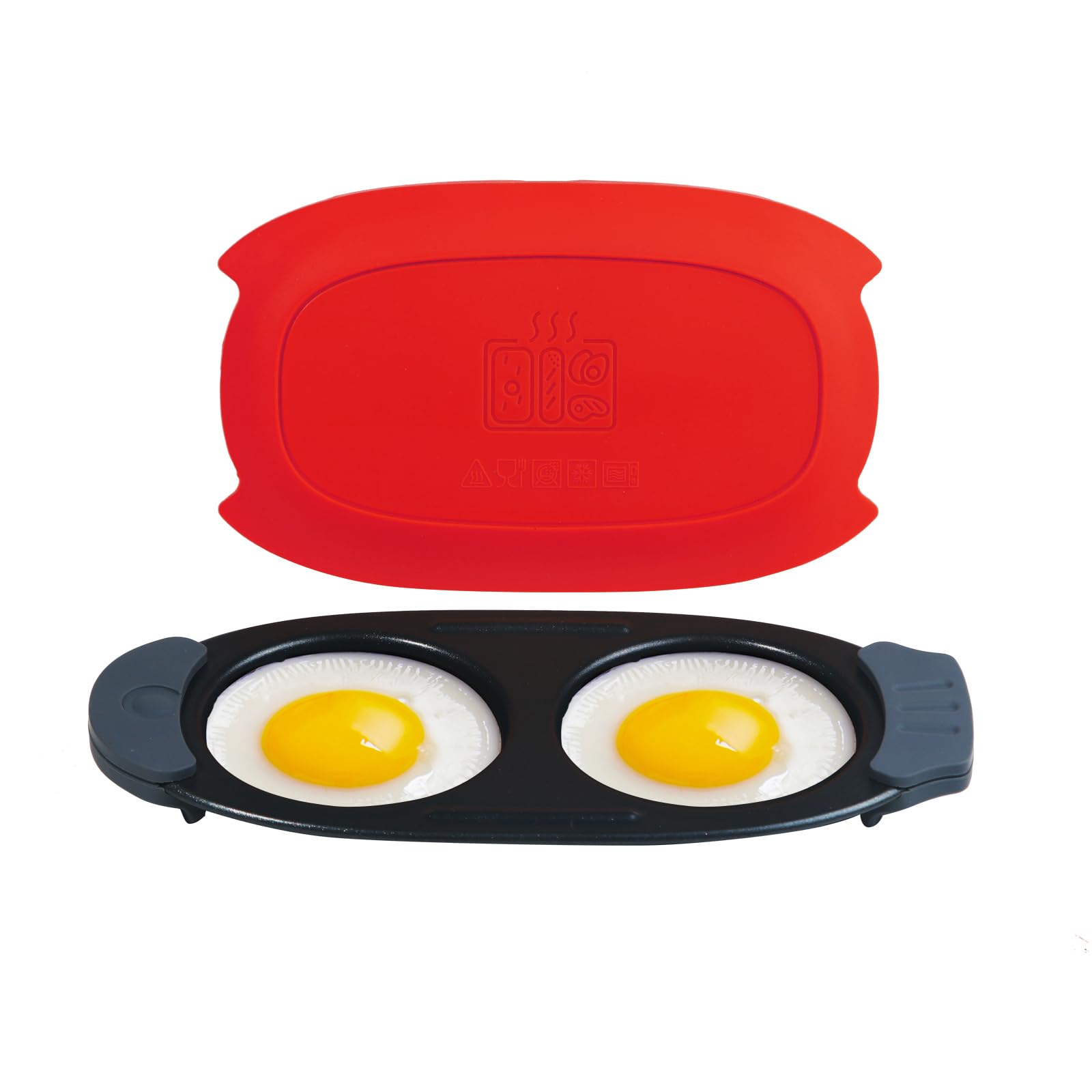
Buy this if you want to cook two eggs at once with separate chambers for eggs and sides like bacon or sausage.
Pros
- Dual chambers cook eggs and meat simultaneously
- Detachable handle simplifies cleaning
- Metal tray and cover retain heat well
Cons
- Gets noticeably hot, making removal tricky without a mitt
- Requires trial and error to nail down exact timing
The dual-cavity layout is the reason to consider this cooker over a single-cup design. One side handles a fried or scrambled egg while the other cooks a sausage patty or bacon strip, useful for anyone assembling a full sandwich. The metal-and-silicone build holds heat more effectively than thin plastic, which several users say produces a better sear on eggs, though it also means the whole unit runs hot enough to need a towel for handling. Expect a few test runs to dial in the right time for your microwave’s wattage.
KICOFIT Egg Poacher Set

Buy this if you want two poachers on hand, whether for a partner’s breakfast or a backup when one is in the dishwasher.
Pros
- Includes two poachers plus a measuring cup for water
- Three-layer design makes egg release easier
- Dishwasher safe for quick cleanup
Cons
- Getting firm whites without overdone yolks takes practice
- No printed instructions in some units
Buying a pair solves a problem other poachers create: only having one when you need two breakfasts made at the same time. The measuring cup takes guesswork out of the water level, which matters more here than in most designs since too little water leads to a dry, rubbery result. Cook times run from about 50 seconds at 1250 watts up to 90 seconds at 800 watts, and dialing in that number takes a few attempts. Silicone construction resists staining better than the plastic cookers in this lineup, and both pieces go straight into the dishwasher.
Trenton Gifts Microwave Egg Cooker
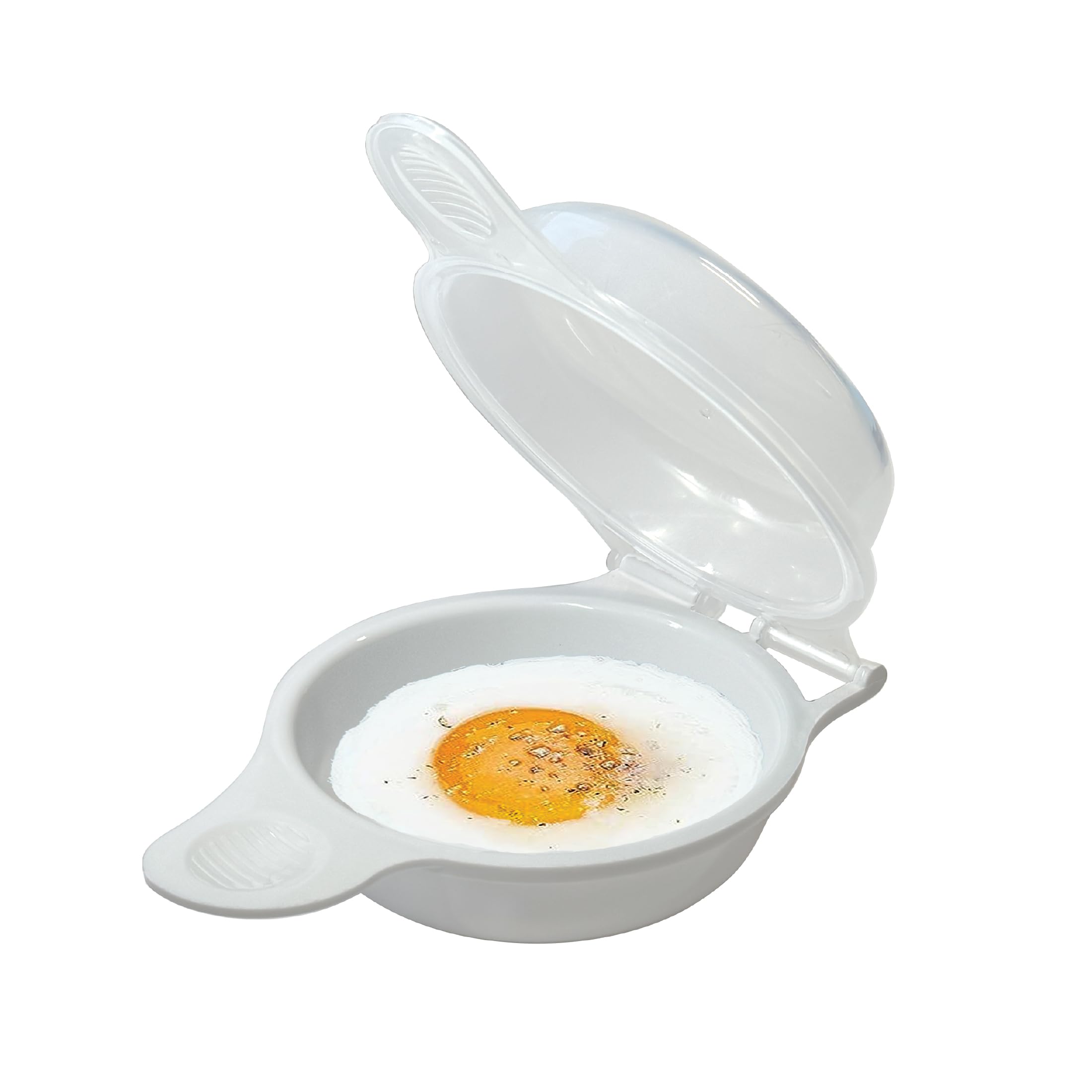
Buy this if you’re new to microwave egg cookers and want a simple, versatile option that handles poached, scrambled, and hard-boiled styles.
Pros
- Handles multiple cooking styles in one cup
- Non-stick surface releases eggs cleanly
- Compact footprint suits small kitchens and dorms
Cons
- Hinge can loosen and separate with repeated use
- Occasional unit arrives with a lid that won’t close
Reviewers consistently mention how fast this cooker turns out a finished egg, with several landing around 45 seconds to 90 seconds for one to three eggs. The stainless lid and non-stick interior make it simple to slide a cooked egg onto a muffin for a homemade sandwich. A recurring complaint involves the hinge loosening after months of daily use, which one owner fixed by notching the joint slightly to keep it snug. For the price, it’s a reasonable starting point for anyone testing whether a microwave egg cooker fits their routine.
wdcfxy Ceramic Egg Cooker

Buy this if you want a cooker that goes beyond eggs to handle soup, oatmeal, or small side dishes.
Pros
- Dome-shaped chimney lid circulates heat and vents steam
- Hollow handle stays cool to the touch
- Ceramic construction works for reheating beyond eggs
Cons
- Larger capacity than needed for a single egg
- Heavier than plastic alternatives, which matters for portability
Ceramic gives this cooker an edge in even heating compared to the thinner plastic cups in this roundup, and the chimney-style lid vents steam without letting it build up dangerously. Testers report success cooking eggs on low power settings, such as 90 seconds at 40 percent power for a soft, over-easy result. The 12-ounce capacity is generous enough for soup or reheated leftovers, though that same size makes it feel oversized for a lone egg. The stay-cool hollow handle is a genuine convenience, letting you skip the oven mitt entirely.
ReneeChef Ceramic Egg Cooker

Buy this if you regularly cook for more than one person and want the capacity to scramble up to four eggs at once.
Pros
- Holds up to four eggs for family-sized portions
- Silicone sleeve protects hands from a hot ceramic body
- Doubles as a mug cake or muffin maker
Cons
- Silicone seal can detach and is difficult to reattach
- No printed instructions in the box
Capacity is the main draw here, and reviewers who’ve owned several units say the fluffiness and evenness beat smaller plastic cookers. Shaking the sealed cup with a finger over the vent hole mixes the eggs without a separate bowl or whisk, and most people land on 50 seconds to 1 minute 10 seconds for two eggs with add-ins like milk or cheese. Ceramic holds heat evenly, though a few users note the silicone seal can pop loose over time and is fiddly to fix. Beyond eggs, it doubles as a mug cake maker, which extends its usefulness past breakfast.
Buying Guide
Material: Ceramic vs. Plastic
Ceramic cookers heat more evenly and resist staining from bacon grease or hot sauce, but they weigh more and can chip if dropped. Plastic cookers are lighter and often cheaper, though repeated microwave use can lead to warping, discoloration, or a slick coating that wears down over time. Choose ceramic for daily use at home and plastic for portability in a dorm or office.
Lid Design and Steam Venting
A vented lid or steam-release hole prevents the buildup of pressure that can cause an egg to burst mid-cook. Hinged lids stay attached to the base, which cuts down on lost parts, while separate lids can double as a small plate for serving.
Capacity
| Capacity | Best For |
|---|---|
| 1 egg | Solo breakfasts, dorm rooms, minimal cleanup |
| 2 eggs | Couples, breakfast sandwiches, small households |
| 4 eggs | Families, meal prep, boiled egg batches |
Handle and Removal Safety
Stay-cool or hollow handles matter more than they seem at first glance, since a cooker straight from the microwave can reach temperatures that make bare-hand removal uncomfortable. Removable or detachable handles also simplify dishwasher loading.
Cleaning and Dishwasher Compatibility
Most cookers list themselves as dishwasher safe, though some manufacturers recommend hand-washing to avoid warping or discoloration over repeated cycles. A non-stick coating combined with a light spray of oil before cooking cuts down on stuck-on egg residue regardless of material.
Cook Time Variability
Printed times like “45 seconds” or “1 minute” assume a specific microwave wattage, typically 1000 watts or higher. Lower-wattage microwaves common in dorms and older kitchens need 15 to 30 extra seconds, and egg size or added ingredients like milk or cheese shift the timing further. Testing your first egg in short increments avoids overcooking.
Editor’s Choice
The OXO Good Grips Microwave Egg Cooker earns the top spot for its balance of speed, simplicity, and cleanup. The curved base and removable bottom make it the easiest cooker in this lineup for turning out a breakfast sandwich egg without extra tools, and the stay-cool handles solve the safety problem that trips up several competitors.
For poached eggs specifically, the Sistema Easy Eggs cooker stands out with its steam-release vent and hinged lid that never separates from the base. Anyone feeding more than one person should look at the ReneeChef ceramic cooker, which holds up to four eggs and doubles as a mug cake maker on weekends.
Conclusion
A microwave egg cooker earns its keep by replacing a pan, spatula, and stovetop cleanup with a single dishwasher-safe cup. The right choice comes down to how you eat eggs most often: scrambled for a sandwich, poached for toast, or boiled in batches for the week ahead.
Capacity and material matter as much as advertised cook times, since a four-egg ceramic cooker suits a family while a compact plastic cup fits better in a dorm cabinet. Whichever cooker you choose, expect to run a test egg or two at short intervals to find the timing that matches your microwave’s wattage before committing to a daily breakfast routine.
FAQS
Do microwave egg cookers really work?
Yes, though results depend on wattage and egg size. Cookers with vented lids and curved bases produce consistent scrambled or fried eggs in well under a minute, while poaching takes more attention to avoid overcooked whites.
Why did my egg explode in the microwave?
Steam builds up inside an intact yolk membrane or a sealed cooker without ventilation. Piercing the yolk before cooking and using a cooker with a steam-release vent prevents this.
Is ceramic or plastic better for a microwave egg cooker?
Ceramic heats more evenly and resists staining, making it a better fit for daily use at home. Plastic is lighter and more portable, which suits dorm rooms, offices, and RV kitchens.
How long should I microwave an egg?
Most single eggs cook in 30 to 60 seconds in a 1000-watt or higher microwave, with lower-wattage models needing closer to 90 seconds. Starting with a shorter time and adding in small increments avoids rubbery or overcooked results.
Are microwave egg cookers dishwasher safe?
Most are top-rack dishwasher safe, though a few manufacturers recommend hand-washing to prevent warping. Checking the care label on your specific cooker avoids shortening its lifespan.
10 thoughts on “10 Best Egg Cooker for Microwave: 10 Top Picks for 2026”