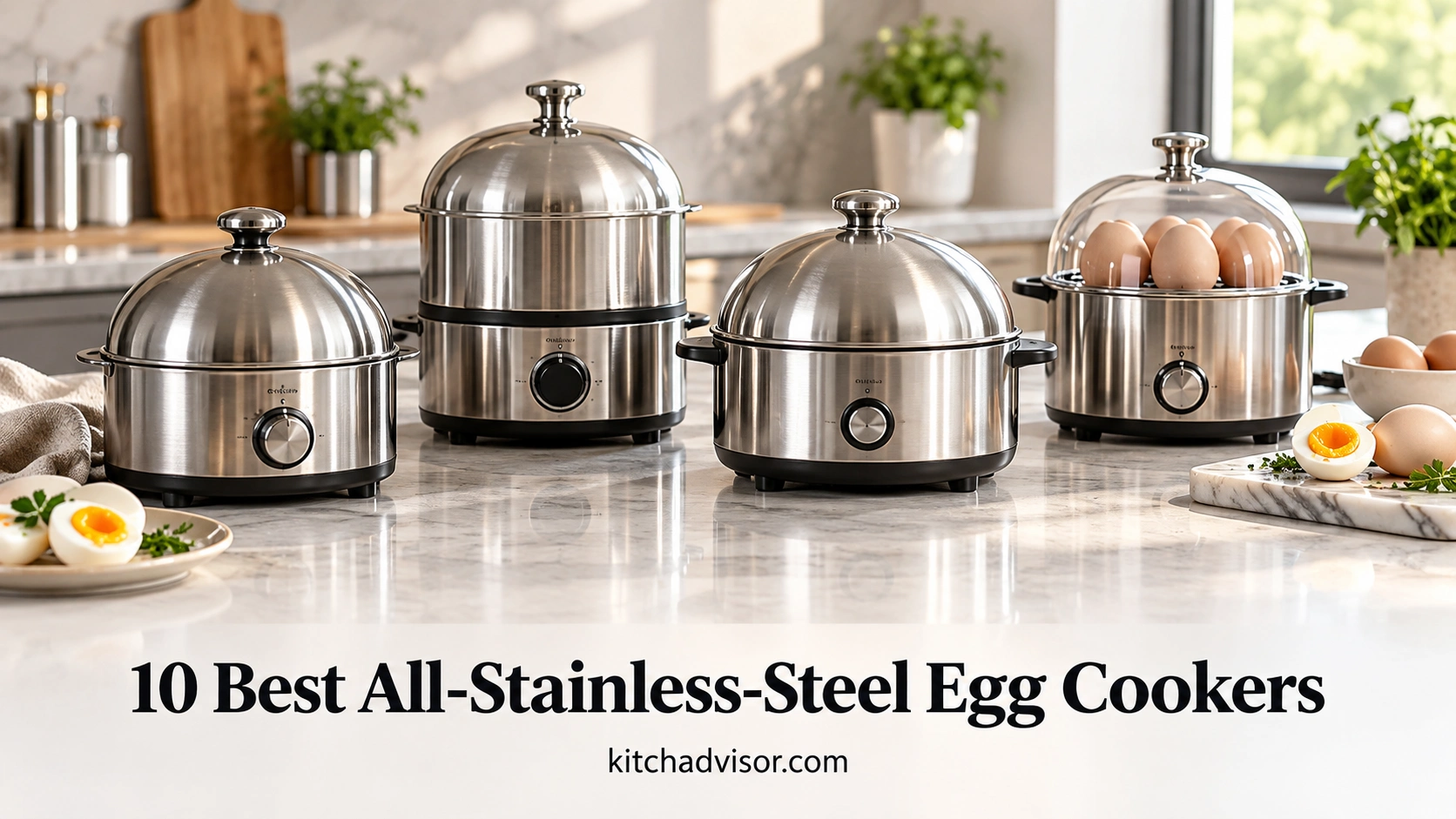
Eggs are simple to cook and surprisingly easy to ruin, which is why egg cookers exist at all. A pot of water on the stove works fine until the eggs crack, the yolks turn chalky gray, or the shells refuse to peel. Dedicated egg cookers and poachers solve that by controlling water volume, heat, and timing so the results come out the same way every time.
Material matters more than most shoppers realize here. Many “stainless steel” egg cookers use a metal lid or trim while the cooking bowl, heating plate, and egg trays underneath are plastic. That’s not necessarily a dealbreaker, but if avoiding coatings and minimizing plastic contact with hot food is a priority, it pays to know exactly which parts are steel and which aren’t before buying.
The best all-stainless-steel egg cookers combine a genuine metal heating surface or cooking vessel with dishwasher-safe parts and consistent, repeatable doneness, whether that’s an electric countertop unit or a stovetop poaching pan. Capacity, control style, and how much plastic touches the egg are what separate a good option from a merely adequate one.
Best for family-size batches: Cuisinart CEC-10 Egg Central Egg Cooker
Best for daily hard-boiled eggs: Dash Rapid Egg Cooker
Best for traditional stovetop poaching: Eggssentials Poached Egg Maker
Best for digital precision control: Elite Gourmet EggLogic Digital Egg Cooker
Best for large households or meal prep: CACHOO 14-Egg Boiler
Cuisinart CEC-10 Egg Central Egg Cooker

This is a solid pick for households that regularly cook a full dozen eggs at once and want a brushed stainless lid with reliable electronics underneath.
Pros
- Two-tier system cooks up to 10 eggs plus poaching and omelet trays
- Blue LED and audible alert prevent overcooking
- Built-in cord storage keeps the countertop tidy
Cons
- Cooking bowl and trays are plastic, not steel
- Some units restart cooking after standby instead of fully shutting off
- Bulkier footprint than single-tray cookers
The brushed stainless steel lid gives this unit a premium look, though the plastic body and trays do the actual cooking work. Capacity is the standout feature here. Ten eggs in one batch suits larger families or anyone meal-prepping for the week, and the poaching and omelet trays add real versatility beyond plain boiling.
Elite Gourmet 7-Egg Egg Cooker EGC855SS
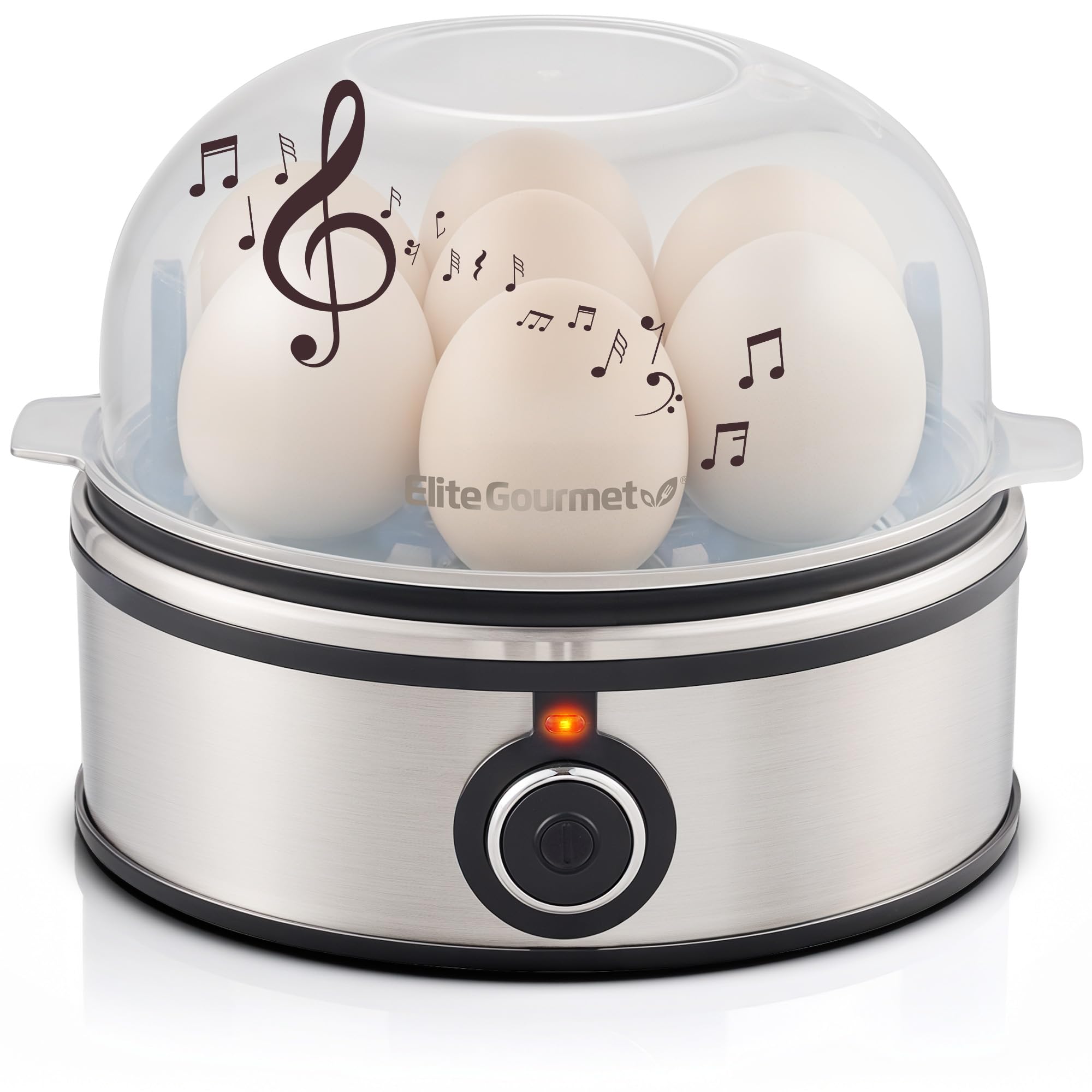
A well-rounded pick for anyone who wants boiling, poaching, and omelets from a single compact appliance with straightforward controls.
Pros
- Melody alert signals doneness without guesswork
- Top-rack dishwasher-safe trays despite manual saying otherwise
- Piercing pin improves yolk color and peel-ability
Cons
- Stainless steel is largely exterior; trays and bowl are plastic
- 7-egg capacity may be tight for larger families
- Auto shut-off timing can catch users off guard if left plugged in
The stainless steel housing looks clean on a counter, but like most electric egg cookers, the actual cooking surfaces are BPA-free plastic. What stands out is the versatility: the omelet tray and poaching insert turn this into a genuine breakfast station instead of a one-trick boiler. Cleanup is fast since parts go straight into the dishwasher’s top rack.
Dash Rapid Egg Cooker
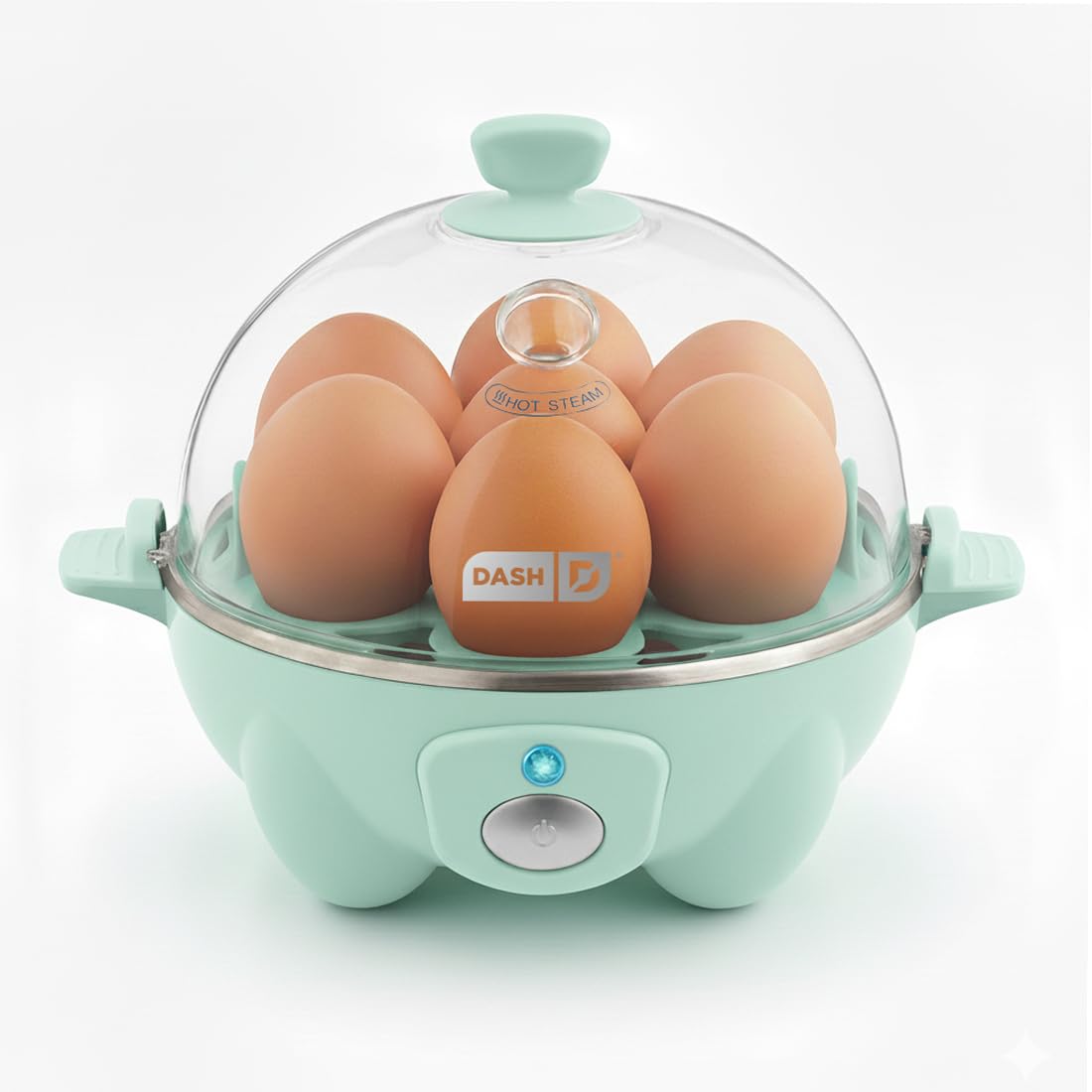
This compact 7-egg cooker earns its popularity through consistent results and dead-simple operation, even though its stainless steel presence is minimal.
Pros
- Precision thermal sensor delivers repeatable doneness
- Accessories nest inside the unit for compact storage
- Non-electric parts are dishwasher safe
Cons
- Mostly plastic construction with only light steel accents
- No true auto shut-off, just an audible alert
- Not intended for outlets outside North American voltage standards
Don’t expect much actual stainless steel on this one; the body and trays are plastic with steel used sparingly. What it delivers instead is speed and consistency. The thermal sensor reads water level accurately enough that eggs come out the same way batch after batch, which explains why it’s become a kitchen staple for so many buyers. Peeling is notably easier than stovetop boiling thanks to the steam method.
Eggssentials Poached Egg Maker
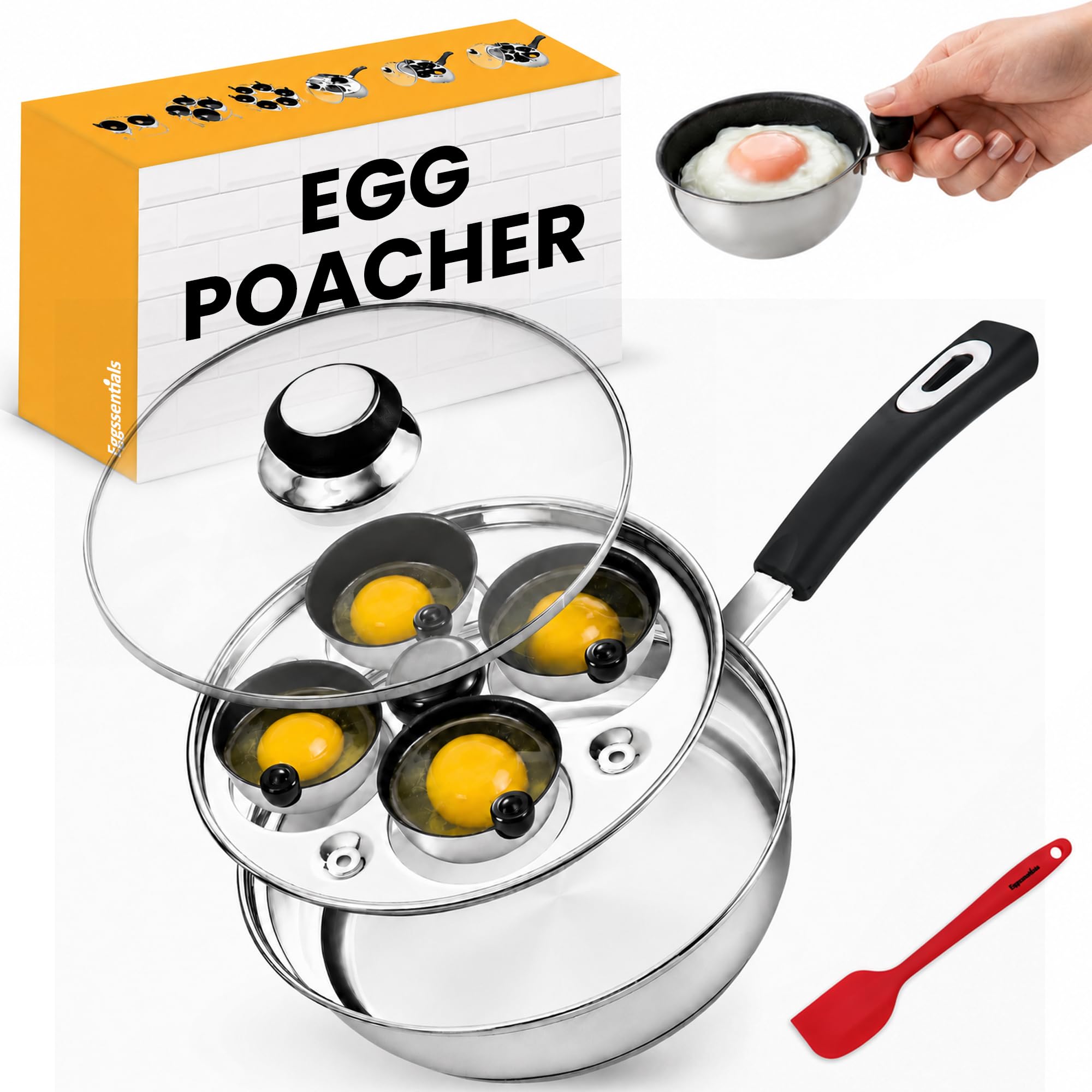
This stovetop poacher is the closest thing on this list to genuine all-metal construction, built around a heavy stainless steel and aluminum pan rather than an electric plastic housing.
Pros
- 3-ply aluminum-encapsulated bottom heats evenly on any stovetop, including induction
- Removable insert cups are dishwasher safe
- Doubles as a sauté pan once the insert is removed
Cons
- Insert cups have a nonstick coating, not bare steel
- Requires monitoring on the stovetop, unlike electric timers
- Only fits 4 eggs per batch
The stainless steel body here does real work, distributing heat evenly across the cooktop instead of just dressing up a plastic shell. Cooks who prefer stovetop control over electric presets will appreciate watching the eggs through the tempered glass lid. The nonstick-coated cups are the only compromise on the “bare steel” front, but they make food release notably easier than uncoated poaching pans.
Elite Gourmet EGC648 Egg Boiler Cooker
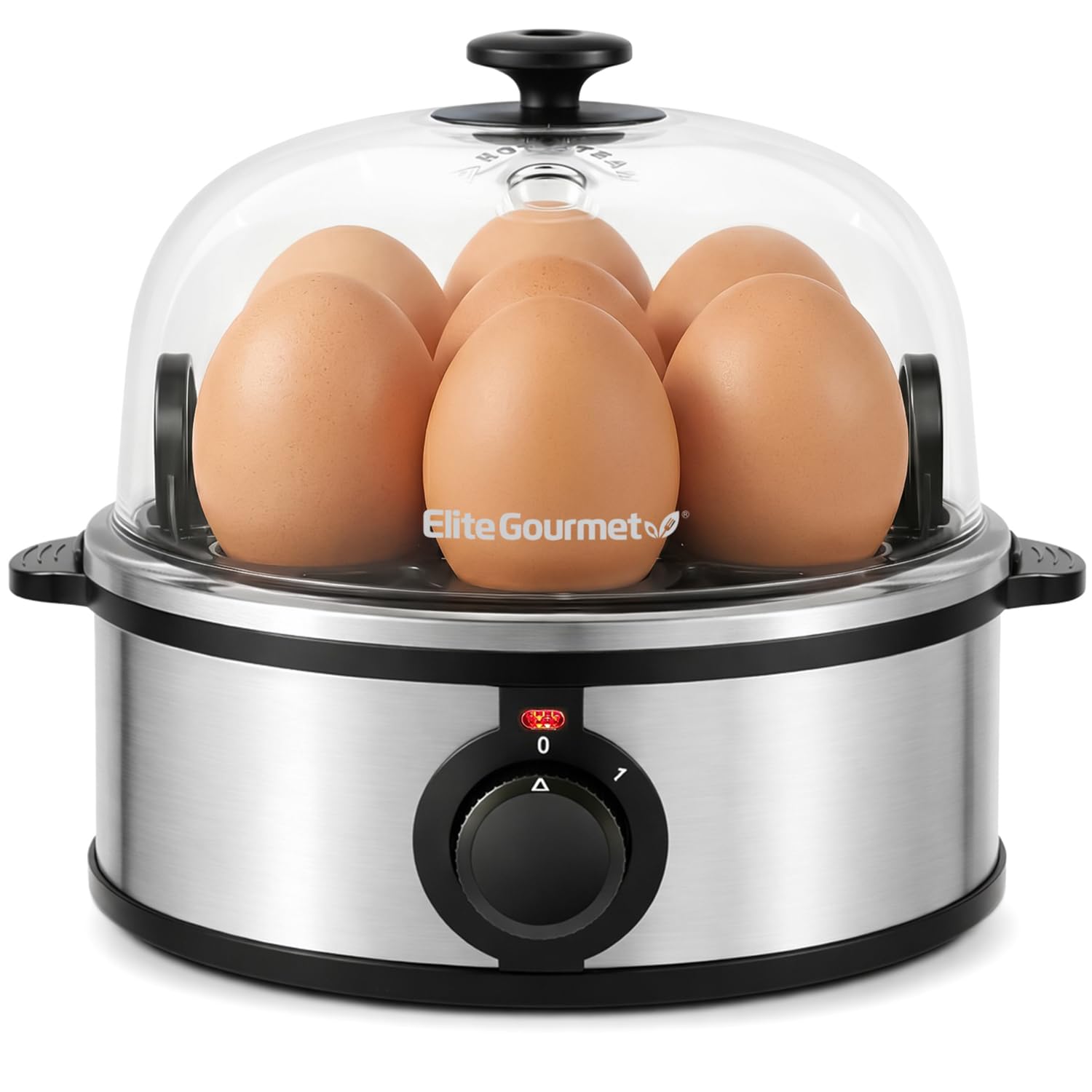
A budget-friendly 7-egg cooker that handles the basics well, though buyers should expect a mostly plastic interior behind the steel-colored shell.
Pros
- Auto shut-off with buzzer takes the guesswork out of timing
- Handles boiling, poaching, omelets, and scrambled eggs
- Compact enough for dorms, RVs, or small kitchens
Cons
- Steel is mostly cosmetic; cooking tray and bowl are plastic
- Some users report inconsistent doneness across egg sizes
- One-year warranty is shorter than some competitors
This model covers the same ground as pricier options, boiling, poaching, and omelets, at a lower cost. The auto shut-off and buzzer combo works reliably for hitting a preferred yolk consistency. Owners with backyard chickens note it handles fresh eggs (notoriously hard to peel) better than stovetop methods, which is a meaningful practical win.
Elite Gourmet EggLogic Digital Egg Cooker
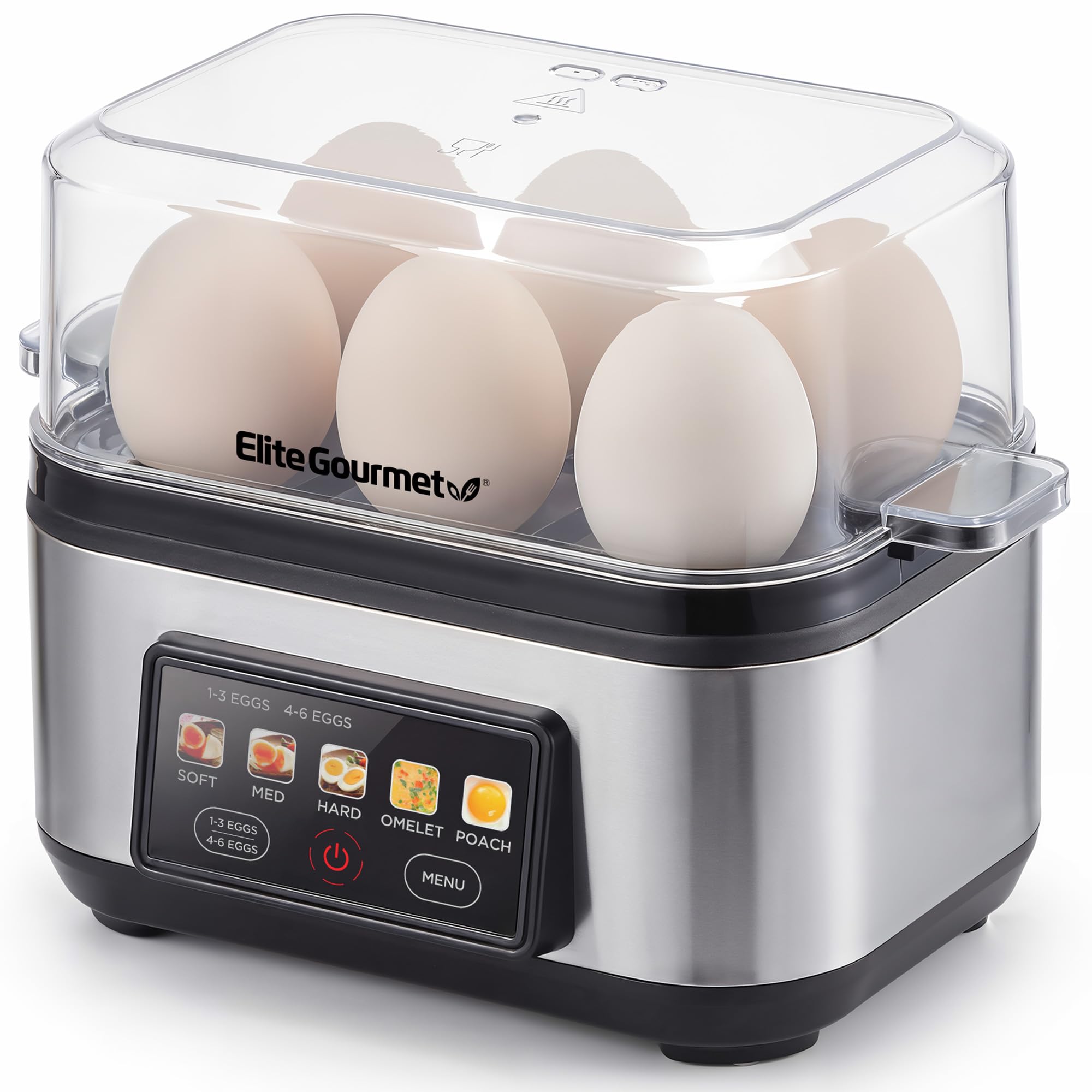
This digital model suits cooks who want push-button precision over guessing at water lines, backed by a stainless steel housing and heating plate.
Pros
- One-touch display selects egg count and doneness directly
- Stainless steel heating plate adds durability over plastic-only designs
- Poaching and omelet bowl is BPA-free
Cons
- No visible countdown timer during cooking
- Some early units have shown inconsistent results after repeated use
- 6-egg capacity trails larger stovetop-style units
The digital interface is the real draw, removing the measuring-cup guesswork found on analog models. Selecting eggs and doneness with a button press feels more foolproof than eyeballing water lines. The stainless steel heating plate is a genuine upgrade over units that rely entirely on a plastic base, even if the outer housing is doing some of the visual heavy lifting.
Better Chef Electric Egg Cooker

A no-frills 7-egg cooker with a durable stainless steel base, good for buyers who want simplicity over digital displays or multiple trays.
Pros
- Durable stainless steel base built to outlast plastic-bottomed units
- See-through lid lets you watch the cooking process
- Firmness-marked measuring cup simplifies water dosing
Cons
- No heat-resistant handle on the lid itself
- Instructions are described as sparse by some buyers
- Lid-to-base fit can feel loose, though it doesn’t affect operation
This one keeps things simple: no digital display, no omelet bowl, just a stainless steel base built to boil eggs reliably. The see-through lid is a nice touch for tracking progress without lifting it and losing steam. Buyers who only want hard-boiled and soft-boiled eggs, without poaching or omelet extras, get a durable option that skips the frills.
CACHOO 14-Egg Boiler
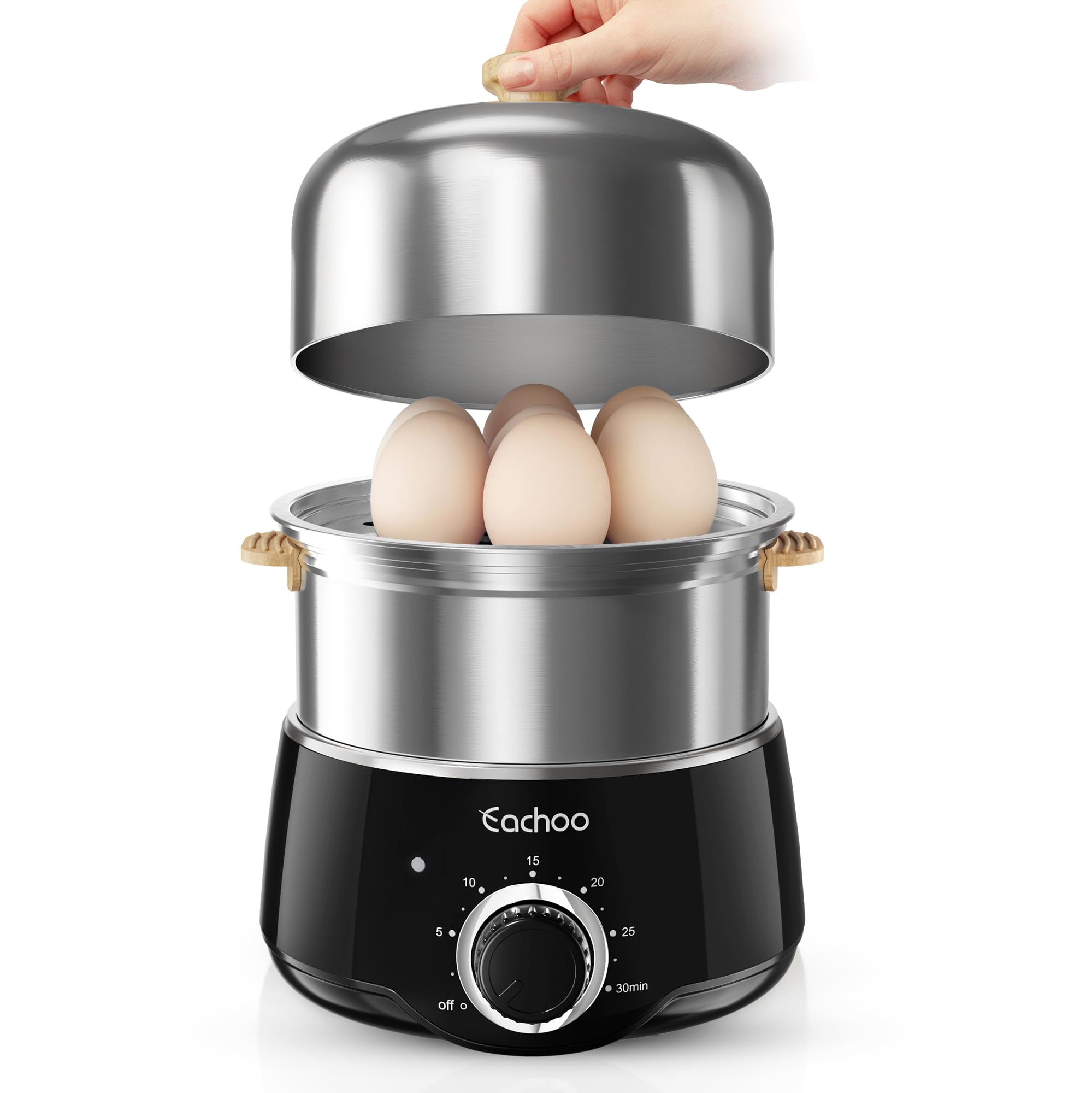
This two-tier cooker is built for bulk batches, handling up to 14 eggs plus vegetables, dumplings, or seafood in one session.
Pros
- Stackable trays cook 14 eggs or mixed foods simultaneously
- 30-minute timer with auto shut-off and boil-dry protection
- Doubles as a general steamer beyond eggs
Cons
- Stainless steel is limited; steamer racks and lid knob are polypropylene plastic
- Fixed temperature setting can’t be lowered mid-cycle
- A few reports of sharp edges on the tray slots
Bulk cooking is where this unit earns its spot. Fourteen eggs across two tiers suits families, meal preppers, or anyone hosting brunch. The boil-dry protection and 30-minute timer add a genuine safety net, though buyers seeking heavy stainless steel construction should note the racks and lid hardware are plastic, not metal.
GOVNPJ Stainless Steel Egg Poacher Pan

This uncoated stovetop poacher is a strong choice for anyone who specifically wants to avoid nonstick coatings entirely.
Pros
- Bare stainless steel cups with no nonstick coating
- Insert cups are dishwasher safe
- Glass lid allows visual monitoring while cooking
Cons
- Requires oiling cups thoroughly to prevent sticking
- No individual handles for lifting single cups out
- Tray can tip when removing just one poached egg
Skipping the nonstick coating means committing to a bit more technique. Oiling each cup from bottom to top before cracking in the egg is non-negotiable, based on repeated buyer feedback, but done properly it releases eggs cleanly. This is the pick for cooks who want stainless steel touching their food directly, coatings aside entirely.
Toyosport Stainless Steel Egg Poacher Pan
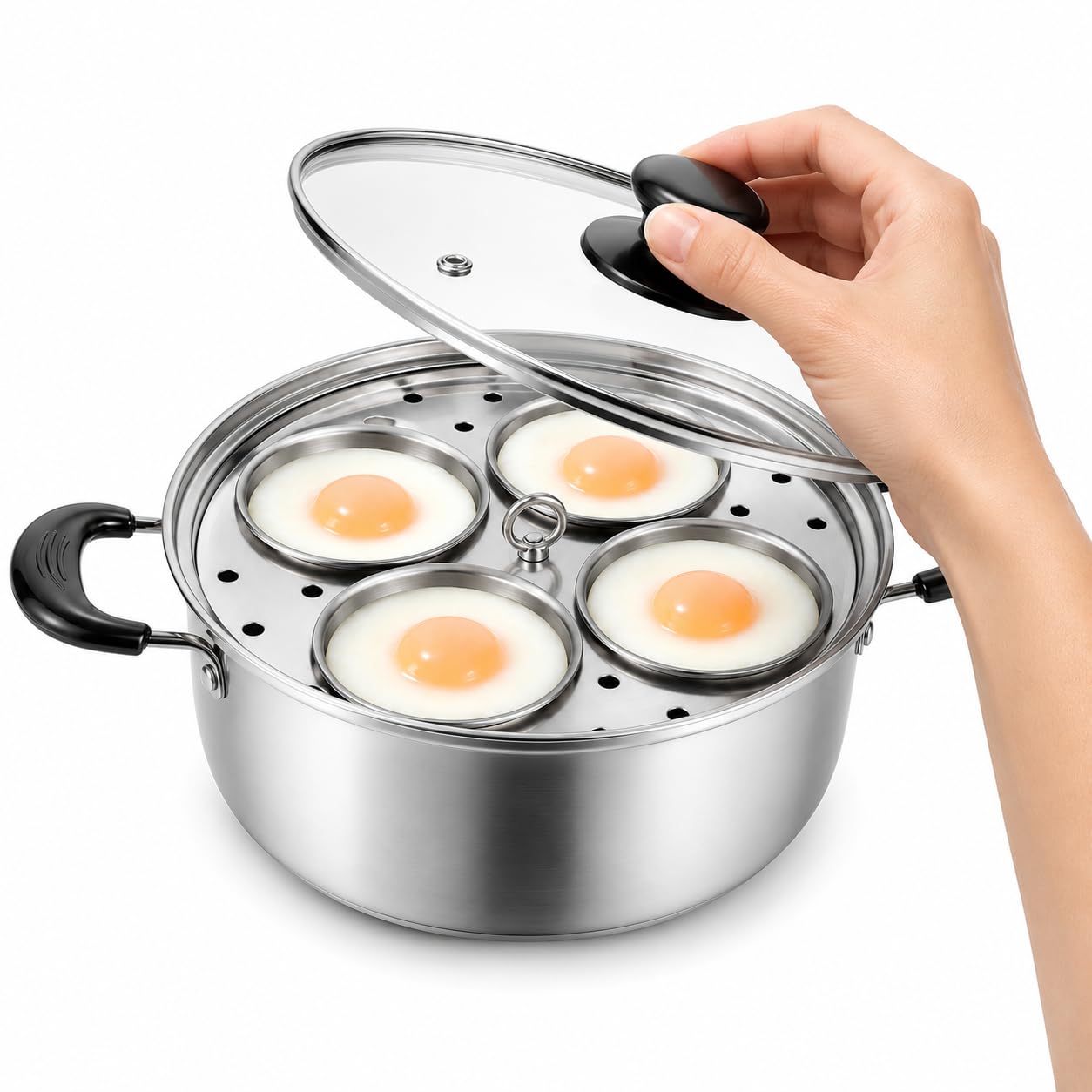
A compact 4-cup poacher that works across all stovetop types, including induction, for cooks who want a simple dedicated poaching pan.
Pros
- Compatible with induction, gas, electric, and ceramic stovetops
- Tempered glass lid with steam vent aids monitoring
- Removable tray doubles pan as a compact steamer
Cons
- Cups require greasing to prevent sticking despite steel construction
- Some buyers question the gauge and finish quality of the steel
- Smaller 4-cup capacity limits batch size
This poacher favors versatility, working on induction cooktops that many stainless steel pans skip entirely. The removable tray means the pot itself can steam vegetables or seafood once the poaching insert comes out. Buyers should still grease the cups before cracking in eggs; stainless steel alone doesn’t guarantee a clean release without that step.
Buying Guide
How Much Steel Is Actually Steel
Check which specific parts are stainless steel: the lid, the base, the heating plate, or the entire cooking vessel. Many electric egg cookers marketed as “stainless steel” use it only for the outer shell or lid trim, while the tray touching the eggs is BPA-free plastic.
Electric vs. Stovetop Operation
Electric cookers automate timing with sensors and alerts, useful for hands-off boiling. Stovetop poaching pans demand active monitoring but typically offer a heavier steel or steel-aluminum cooking surface throughout.
| Feature | Electric Cooker | Stovetop Poacher |
|---|---|---|
| Hands-off cooking | Yes, with auto alerts | No, requires monitoring |
| All-metal cooking surface | Rare | Common |
| Capacity | 6-14 eggs typical | 2-4 eggs typical |
| Poaching precision | Tray-dependent | Purpose-built |
Capacity and Household Size
Match capacity to how many eggs are cooked per session. A household of two rarely needs a 14-egg unit, while meal preppers or larger families benefit from higher counts and stackable trays.
Coatings and Cleanup
Nonstick-coated cups release eggs more easily but introduce a coating layer between the food and the steel. Bare steel cups need oiling before each use but avoid coatings altogether. Confirm which removable parts are dishwasher safe versus hand-wash only.
Controls and Doneness
Look at how doneness is set: measuring cups with fill lines, digital button presses, or manual timers. Audible alerts and auto shut-off reduce overcooking risk, though not every unit fully powers down after the buzzer.
Editor’s Choice
The Dash Rapid Egg Cooker earns the top spot for most households thanks to consistent results, fast cycles, and dependable peeling, even though its stainless steel use is limited to accents.
For buyers who want stainless steel doing the actual cooking work, the Eggssentials Poached Egg Maker stands out with its heavy aluminum-encapsulated steel pan and stovetop versatility. Anyone avoiding nonstick coatings entirely should look at the GOVNPJ Stainless Steel Egg Poacher Pan, which skips coatings in favor of bare metal cups.
Larger households cooking in bulk get the best value from the CACHOO 14-Egg Boiler, while cooks wanting digital precision without measuring cups should consider the Elite Gourmet EggLogic Digital Egg Cooker.
Conclusion
Choosing an egg cooker comes down to matching capacity and control style to daily habits, then confirming how much of the “stainless steel” claim holds up once the trays and bowls are examined closely. Electric cookers win on convenience and repeatable timing, while stovetop poaching pans deliver more genuine metal-to-egg contact for buyers avoiding plastic and coatings. Check the specific parts list on any listing before assuming a shiny lid means an all-metal interior.
FAQS
Are electric egg cookers really made of stainless steel? Most electric egg cookers use stainless steel only for the lid or outer housing. The heating plate, egg trays, and poaching bowls inside are typically BPA-free plastic, since plastic molds more easily into tray shapes.
Do stainless steel poaching cups need oil to prevent sticking? Yes, uncoated stainless steel cups need a light coating of oil or butter before adding the egg. Skipping this step makes cleanup difficult and can tear the egg white during removal.
How many eggs should a household cooker hold? Two to four people typically do well with a 6-7 egg capacity. Families or meal preppers benefit from 10-14 egg units with stackable trays.
Is a stovetop poacher better than an electric egg cooker? Stovetop poachers offer heavier all-metal construction and precise poaching results but require active monitoring. Electric cookers automate the process with sensors and alerts, trading some material purity for convenience.
Can these cookers handle other foods besides eggs? Several models double as steamers for vegetables, dumplings, or seafood once the egg tray is removed, particularly multi-tier units like the CACHOO cooker.