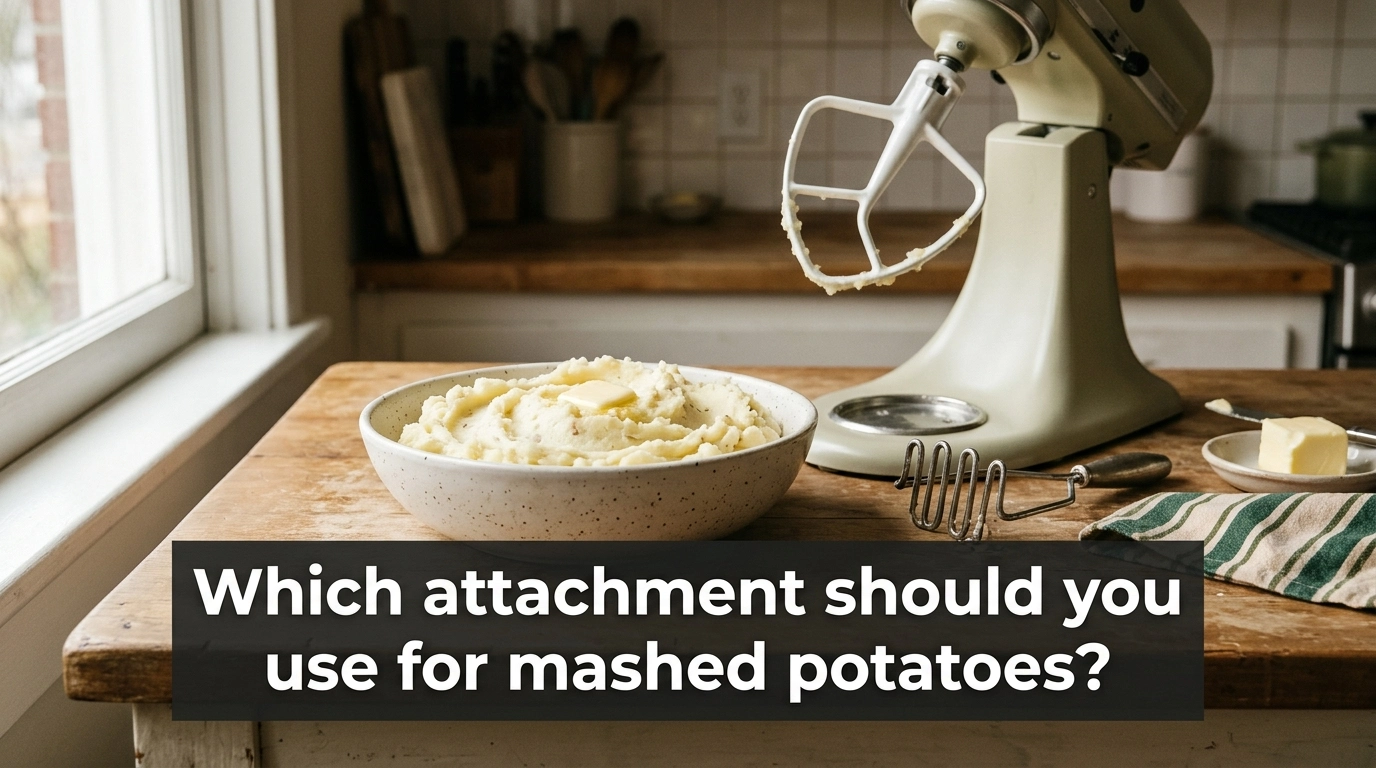
Which attachment should you use for mashed potatoes? The best choice is usually a paddle attachment or flat beater for a stand mixer. A hand masher also works well if you want a simple, hands-on way to mash your potatoes.
I learned that the tool matters just as much as the cooking method. The wrong attachment can leave lumps or turn soft potatoes into a sticky paste.
In this guide, I will explain which tool to use, how to get fluffy potatoes, and which common mistakes to avoid. I will also show you what to do if your mash turns out thick, gluey, or uneven.
Common Signs of the Problem
Choosing the wrong attachment can change the feel of your mashed potatoes. The good news is that most problems are easy to prevent.
Here are the signs to watch for:
- Lumpy potatoes: The tool may not reach all the pieces.
- Sticky mash: Too much mixing can release excess starch.
- Uneven texture: Some pieces may be soft while others remain firm.
- Watery potatoes: Too much liquid may have been added.
- Heavy mash: The potatoes may have been overworked or may not suit your preferred texture.
If your potatoes are already sticky, more mixing will rarely help. I would stop and check the texture before adding anything else.
Possible Causes
The attachment is only one part of the problem. Potato type, cooking time, and mixing speed also matter.
These are the most common causes of poor mashed potatoes:
- Using a whisk: A whisk adds air but can overwork cooked potatoes.
- Using a dough hook: It is designed to knead dough, not mash potatoes gently.
- Mixing for too long: Excess starch can make the mash gummy.
- Adding cold liquid: Cold milk or butter may cool the potatoes and make blending harder.
- Using firm potato pieces: Undercooked potatoes do not mash evenly.
- Adding too much milk: Extra liquid can make the mash thin and runny.
For fluffy results, cook the potatoes until they are tender. Drain them well, then mash while they are still hot.
How to Choose the Right Attachment for Mashed Potatoes
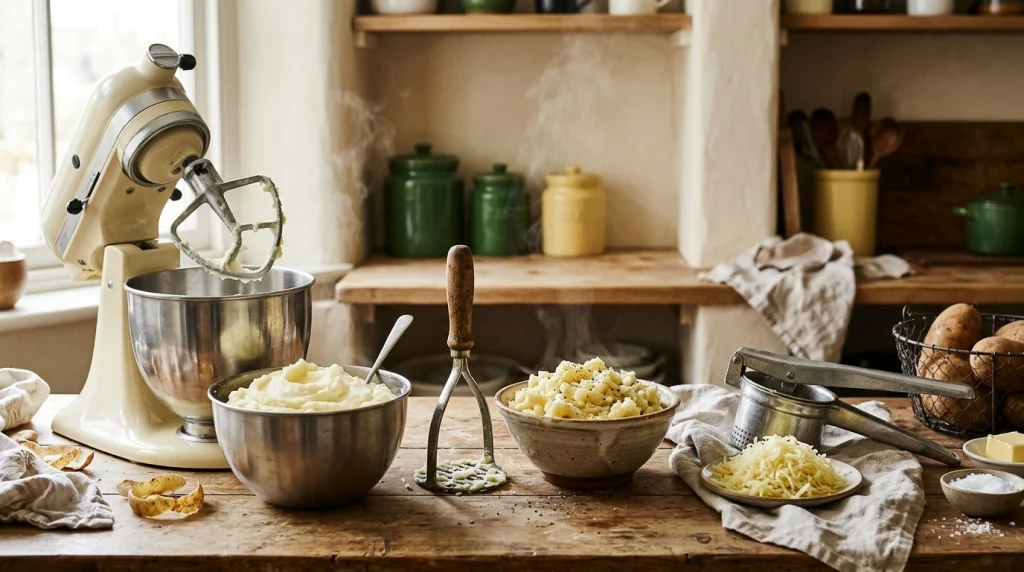
The best attachment depends on your kitchen tool and the texture you want. You do not need a special potato attachment for most home cooking.
1. Use a Paddle Attachment or Flat Beater
A flat beater is often the best stand mixer attachment for mashed potatoes. It breaks up soft potatoes and mixes in butter and warm milk.
I would start at the lowest speed and stop as soon as the potatoes look smooth enough. Long mixing can make them sticky.
A paddle attachment is useful when you are making a large batch. However, it is not ideal if you want to leave some potato chunks in your mash.
2. Use a Hand Masher for a Fluffy, Rustic Texture
A hand masher is one of the safest and easiest choices for everyday mashed potatoes. It gives you control over how smooth or chunky the final dish becomes.
Press down on the cooked potatoes with steady strokes. Stop when the texture suits you.
This method also helps you avoid the temptation to keep mixing. If you like homemade mash with a few small lumps, a hand masher is a great choice.
3. Use a Potato Ricer for Very Smooth Mash
A potato ricer presses cooked potatoes through small holes. It creates fine, even pieces without the heavy mixing that can make potatoes gummy.
For a smooth result, press the hot, drained potatoes through the ricer. Then gently fold in melted butter and warm milk with a spoon or spatula.
A ricer takes more effort to clean, but it is useful when texture matters most. You do not need one if a basic masher already gives you the results you like.
4. Avoid the Whisk and Dough Hook
A whisk is meant to beat and add air to food. It may work for a small amount of very soft potato, but it is not my first choice for regular mashed potatoes.
A dough hook is even less suitable. It can pull the potatoes around the bowl without mashing them evenly.
If your mixer has a flat beater, start there. If not, a hand masher is a better option than using the wrong mixer tool.
Attachment Comparison Table
| Attachment or tool | Best use | Main drawback |
|---|---|---|
| Paddle or flat beater | Smooth, fluffy mash | Can make potatoes gummy if overused |
| Hand masher | Chunky or rustic mash | Takes more hand effort |
| Potato ricer | Fine, even texture | Needs extra cleaning |
| Whisk | Light mixing in some recipes | Can overwork the potatoes |
| Dough hook | Not recommended | Does not mash potatoes well |
5. Check Your Potatoes Before Mixing
Even the right attachment cannot fix undercooked potatoes. Cut them into similar-sized pieces so they cook at about the same rate.
Test a piece with a fork. It should slide in easily, and the potato should break apart without much pressure.
Drain the water well after cooking. Let the potatoes sit in the hot pot for a short time so extra moisture can escape, taking care not to let them burn.
6. Add Butter and Milk Slowly
Once the potatoes are mashed, add butter first if that suits your recipe. Then add warm milk a little at a time until the texture is right.
Use a spoon or spatula to fold the liquid into the potatoes. Avoid running the mixer for a long time just to make the mash look smoother.
Cleaning the attachment after use also helps keep food from drying on the beaters. Wash it according to the maker’s instructions, and dry it before putting it away.
Mistakes to Avoid
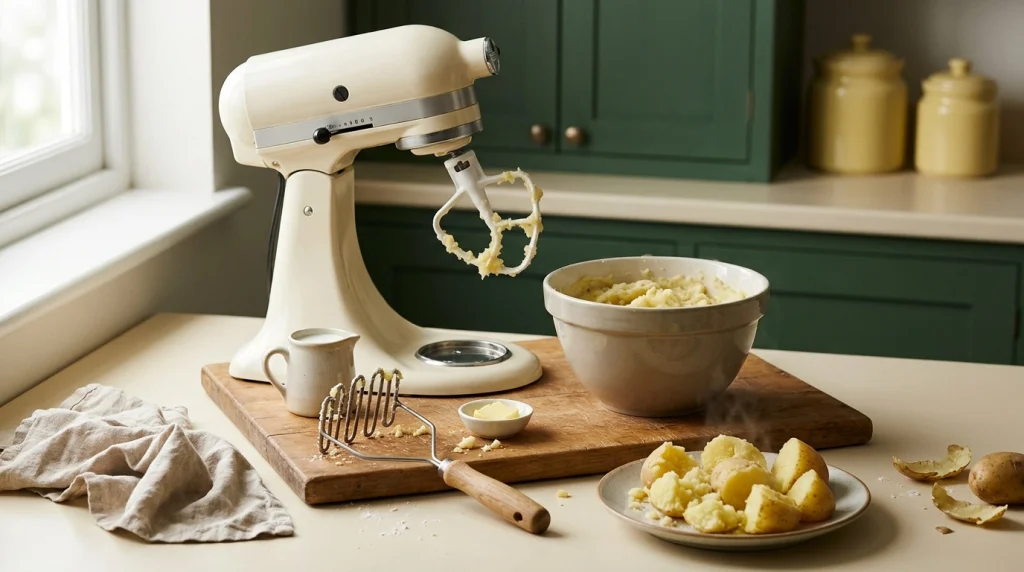
Small mistakes can change the texture of mashed potatoes. Keeping your method simple usually gives the best results.
Avoid these common errors:
- Starting at high speed: Potatoes can break down too much before you notice.
- Mixing for too long: Stop as soon as the mash reaches your preferred texture.
- Using a blender: High-speed blades can release too much starch and create a gluey texture.
- Adding too much liquid at once: It is easier to add more milk than to fix watery mash.
- Leaving large hard pieces: Cook the potatoes until they are fully tender.
- Forcing an attachment into place: Always switch off and unplug a mixer before changing tools.
Never touch moving beaters or reach into a running mixer. If the appliance smells burnt, sparks, or makes an unusual electrical noise, switch it off and unplug it if safe to do so.
Do not open the motor housing or try to repair internal electrical parts yourself.
When to Replace Your Kitchen Tool
You usually do not need to replace a mixer or masher just because your potatoes turn out badly. First, check that you are using the right tool and method.
Consider replacing an attachment if it is cracked, bent, badly worn, or no longer fits securely. Use only parts that the appliance maker lists as compatible.
| Repair issue | Recommended action | Replace instead? |
|---|---|---|
| Slightly bent hand masher | Check its stability and condition | If it is unsafe |
| Cracked plastic beater | Stop using it | Yes |
| Missing mixer attachment | Check the model’s approved spare parts | Only if a safe part is unavailable |
| Gluey mashed potatoes | Change the mixing method | No |
| Mixer sparks or smells burnt | Stop using it and seek qualified service | Possibly |
A replacement attachment is worth considering only when the original is damaged or missing. A new tool will not solve problems caused by overmixing or undercooked potatoes.
My Personal Experience
When working out which attachment to use, I would begin with a small batch rather than mixing a full pot at once. This makes it easier to see how quickly the potatoes break down.
First, I would cook the potatoes until a fork passes through them easily. After draining, I would use a hand masher or a flat beater on its lowest setting.
I would then add butter and warm milk in small amounts. Once the potatoes reached the texture I wanted, I would stop mixing instead of trying to make them perfectly smooth.
The key lesson is simple: the attachment helps, but the amount of mixing matters just as much. A potato ricer is useful for a fine texture, while a hand masher is often enough for a family meal.
Final Thoughts
So, which attachment should you use for mashed potatoes? For a stand mixer, choose the paddle attachment or flat beater and use a low speed. For simple homemade mash, a hand masher is an excellent choice, while a potato ricer is best for a fine, even texture.
Avoid the whisk and dough hook for routine mashing. Cook the potatoes until tender, drain them well, add warm liquid slowly, and stop mixing as soon as the texture is right.
These simple steps can help you make fluffy, tasty mashed potatoes without lumps or a sticky finish.