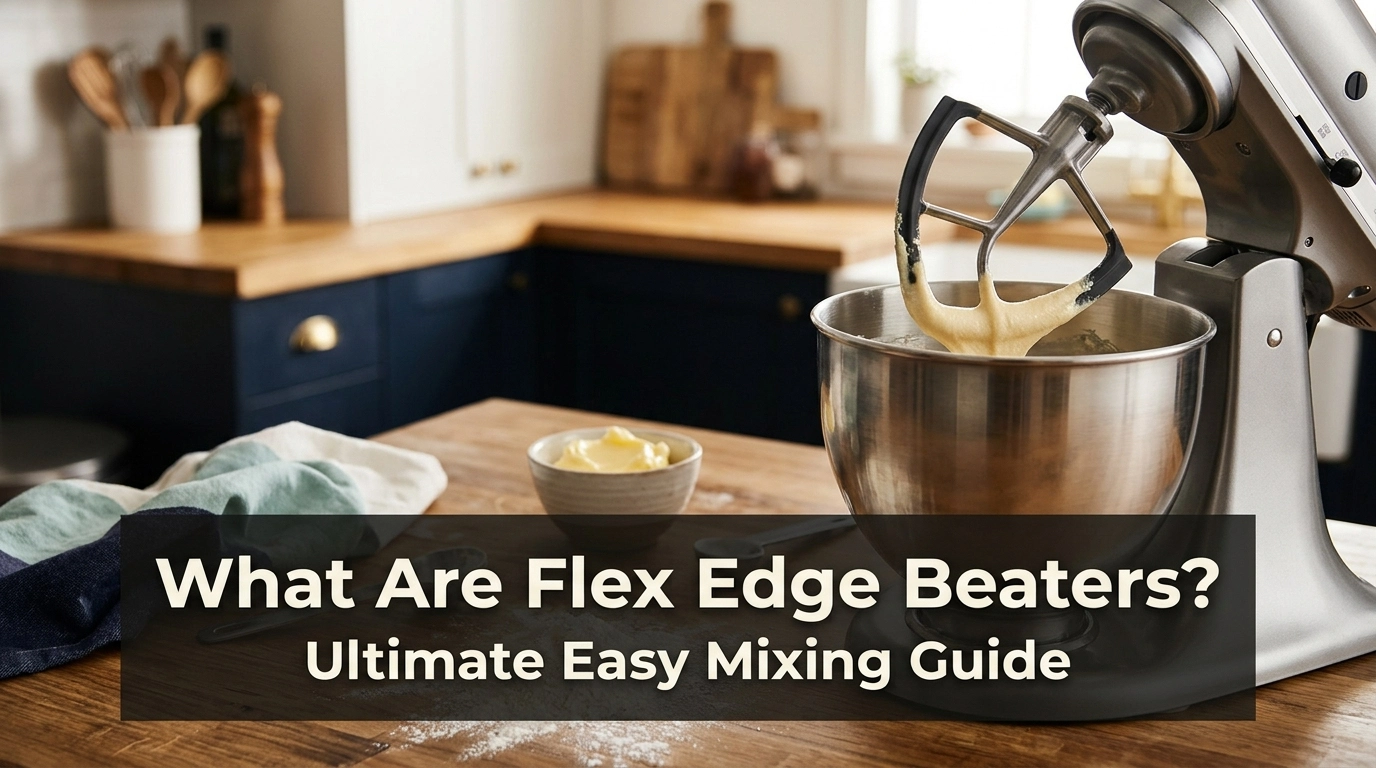
What are flex edge beaters? They are mixer attachments with flexible edges that help scrape the sides of a mixing bowl as you mix. They can help blend soft foods with less need to stop and scrape the bowl by hand.
These attachments are made for certain stand mixers and hand mixers. They are not parts of an egg cooker. If you are making cake batter, frosting, or cookie dough, the right beater can make mixing easier.
In this guide, I explain how flex edge beaters work, which foods suit them, how they compare with standard beaters, and how to care for them. I also cover common fit and mixing problems so you can choose the right attachment.
Common Signs You May Need Flex Edge Beaters
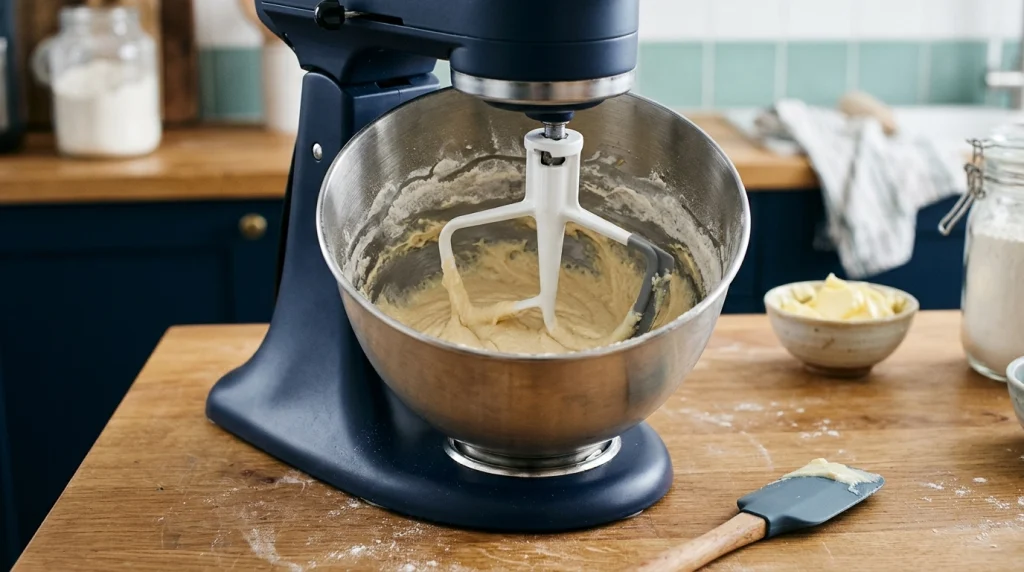
A standard beater can leave a thin layer of food stuck to the sides of a bowl. You may need to stop the mixer, scrape the bowl, and start again. This can slow down a simple recipe.
Flex edge beaters help with this issue by moving close to the bowl’s inner wall. Their soft edges sweep food back toward the main mixing area.
| Sign | Possible Cause | Helpful Step |
|---|---|---|
| Flour stays on the bowl wall | The beater does not reach that area well | Scrape the bowl or use a compatible flex edge beater |
| Soft butter sticks to the sides | The butter is firm or the bowl is not being scraped | Let the butter soften and mix at a suitable speed |
| Frosting looks uneven | Some ingredients remain unmixed | Stop the mixer and check the bowl |
| The beater rubs the bowl | The attachment may not fit or sit correctly | Stop and check the model and attachment fit |
A flex edge beater can reduce the need for manual scraping. It cannot guarantee that every ingredient will mix evenly without help.
Possible Causes of Mixing Problems
Not every mixing problem means you need a new attachment. The recipe, ingredient temperature, bowl shape, and mixer model can all affect the result.
- Wrong attachment: A standard beater may leave more food along the bowl’s sides.
- Cold ingredients: Hard butter or chilled cream cheese can be difficult to blend smoothly.
- Wrong speed: High speed can scatter flour or splash thin mixtures.
- Too much food: An overloaded bowl may prevent the ingredients from mixing well.
- Poor fit: A beater made for another mixer may sit too high, too low, or at an unsafe angle.
- Worn edges: Damaged or loose flexible parts may affect how the attachment moves against the bowl.
Check these simple causes before buying a replacement. A small change in ingredient temperature or mixing speed may solve the problem.
How to Use Flex Edge Beaters
1. Check That the Attachment Fits Your Mixer
Start with the mixer model number. Check the manufacturer’s guide or approved parts list to see whether a flex edge beater is available for your machine.
Do not assume that attachments fit every mixer from the same brand. The shape, size, and fitting can differ between models.
2. Fit the Beater With the Mixer Off
Turn off the mixer and unplug it before fitting or removing the attachment. Secure the beater as the manual explains, then check that it sits firmly in place.
If it feels loose or touches the bowl, do not switch the mixer on. Check the fitting instructions and use only an approved attachment.
3. Choose the Right Foods
Flex edge beaters are often useful for soft butter mixtures, cake batter, cookie dough, and frosting. They help move ingredients from the sides of the bowl back into the mixture.
They are not the best tool for every job. A whisk is often better for adding air to egg whites or cream, while a dough hook is usually better for kneading bread dough.
| Food or Task | Suitable Tool | Why |
|---|---|---|
| Cake batter | Flex edge beater | Helps scrape the bowl during mixing |
| Soft frosting | Flex edge beater | Helps blend soft ingredients |
| Whipped egg whites | Whisk attachment | Adds air to create volume |
| Bread dough | Dough hook | Designed for kneading |
| Very thick mixtures | Use the tool advised by the maker | Some mixtures can strain the motor |
4. Start at a Low Speed
Add the ingredients in the order given in your recipe. Start slowly, especially when adding flour or powdered sugar, then raise the speed as needed.
Watch the mixture through the bowl. If dry ingredients remain on the sides, stop the mixer before scraping them down by hand.
5. Check the Bowl Clearance
The flexible edge should move as intended without scraping hard against the bowl. If you hear unusual rubbing or see damage, stop the mixer and unplug it.
Do not bend the attachment or adjust the mixer mechanism yourself. Check the manual or contact the maker if the beater does not fit correctly.
6. Clean the Attachment After Use
Remove the beater after switching off and unplugging the mixer. Wash it according to the manufacturer’s instructions, paying attention to the flexible edge where food can collect.
Some attachments are dishwasher-safe, while others need hand washing. Check the care guide rather than guessing.
Good cleaning helps prevent dried batter and grease from building up. Dry the attachment fully before storing it, and replace it if the flexible edge cracks, splits, or comes loose.
Flex Edge Beaters vs. Standard Beaters
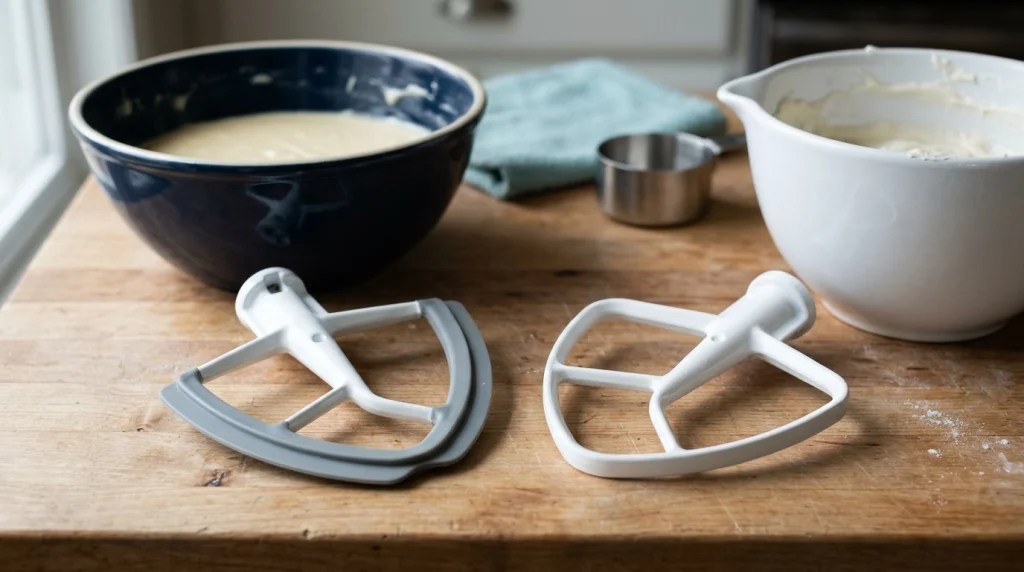
Both types mix many everyday ingredients, but their designs differ. A standard flat beater mixes food in the bowl, while a flex edge version also has a flexible edge designed to sweep the bowl’s sides.
| Feature | Flex Edge Beater | Standard Beater |
|---|---|---|
| Flexible edge | Usually included | Usually absent |
| Bowl scraping | Can reduce manual scraping | May need more manual scraping |
| Common uses | Soft batter, frosting, and similar mixtures | Many everyday mixing tasks |
| Compatibility | Depends on mixer model | Depends on mixer model |
| Care needs | Check the edge for wear | Check the whole attachment for wear |
A flex edge beater is not automatically better for every recipe. The best choice depends on the food, mixer, and result you want.
Mistakes to Avoid
- Buying without checking the model: Confirm compatibility before ordering a replacement attachment.
- Using a damaged beater: Cracks or loose parts can affect safe operation.
- Running the mixer at high speed too soon: This can scatter dry ingredients or splash liquid.
- Forcing the attachment into place: A correct attachment should fit as directed.
- Scraping while the mixer runs: Stop the mixer first and keep hands and utensils away from moving parts.
- Ignoring the care instructions: Heat or harsh cleaning methods may damage some flexible edges.
Never open the mixer’s motor housing or attempt unsafe electrical repairs to solve an attachment problem. Unplug the machine before checking the beater, and seek qualified service if the mixer itself appears faulty.
When to Replace Flex Edge Beaters
Replace the attachment if its flexible edge is torn, cracked, loose, or badly worn. You should also stop using it if the body is bent or it no longer locks into the mixer correctly.
Before buying a new one, check whether the maker sells the flexible edge separately. Some models use a replaceable edge, while others require a complete attachment.
Choose a genuine or manufacturer-approved part that matches your mixer model. A low-cost part that does not fit can damage the bowl or create a safety risk.
If the attachment is in good shape but mixing remains poor, review the recipe, ingredient temperature, speed, and bowl size first. The mixer may need service if it makes unusual noises or struggles with normal loads.
My Practical Checks Before Choosing a Beater
I would start by identifying the mixer model and checking its approved attachments. This avoids the common mistake of buying a beater based on appearance alone.
Next, I would compare how the recipe mixes with the current attachment. If soft batter stays on the bowl’s sides, I would stop the mixer, scrape the bowl, and check whether a compatible flex edge beater could help.
I would also inspect the flexible edge for damage and make sure the beater does not rub against the bowl. I cannot claim personal hands-on testing of a particular mixer here, so these are practical checks rather than test results.
The main lesson is simple: match the tool to the job. A flex edge beater may save time when mixing soft ingredients, but it will not replace a whisk or dough hook for tasks that need a different action.
Final Thoughts
Flex edge beaters are mixer attachments designed to mix ingredients while helping scrape the sides of a bowl. They can be useful for cake batter, frosting, and other soft mixtures that tend to stick.
Before choosing one, confirm that it fits your mixer, use it for suitable recipes, and follow the care instructions. Stop using it if the edge is damaged or the attachment rubs against the bowl.
If your goal is smoother mixing with fewer pauses to scrape the bowl, a compatible flex edge beater may be worth considering. For egg cooking, however, it is not a required part; it belongs to a mixer, not an egg cooker.