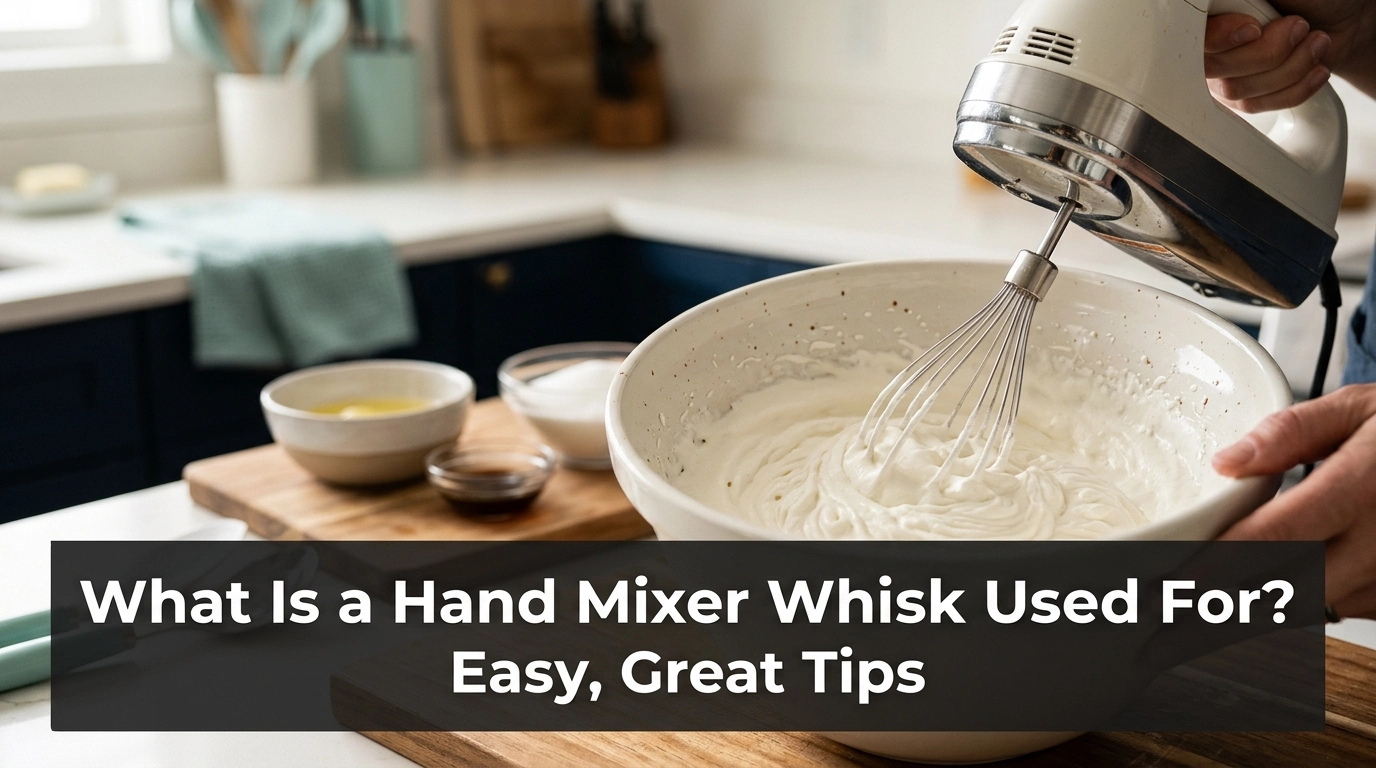
A hand mixer whisk is used to add air to food and make it light, smooth, and fluffy. It works well for whipping cream, beating egg whites, mixing thin batters, and making soft toppings.
I used to think the whisk was just another mixer attachment. But it has a different job from the usual beaters. Once I understood when to use each one, mixing became much easier.
In this guide, I’ll explain what a hand mixer whisk is used for, which foods suit it best, and how to use and care for it. I’ll also cover common mistakes that can leave you with flat cream or poor results.
Common Signs You Need a Hand Mixer Whisk
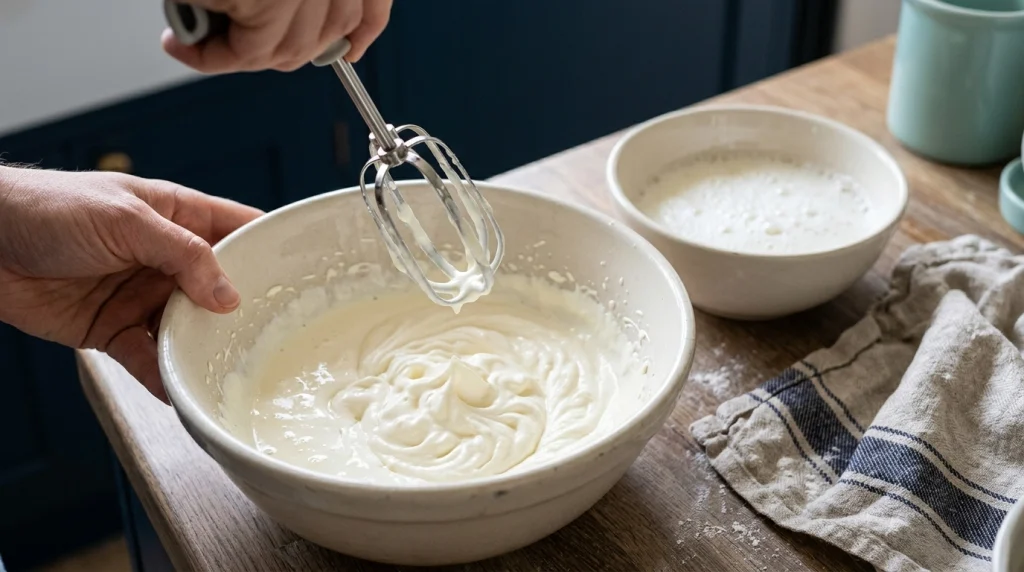
The whisk is best when you want to add air to a mix. It helps turn thin or soft foods into a light foam or a fluffy topping.
Here are some signs that it is the right tool for the job:
- Your cream stays runny when you want soft peaks.
- Your egg whites do not become light and foamy.
- Your topping lacks volume.
- You want to mix a thin liquid without using a spoon.
- Your recipe needs a light texture rather than a thick dough.
A whisk will not fix every mixing problem. The bowl, the food, and the mixer speed all matter.
| Symptom | Likely Cause | Quick Fix |
|---|---|---|
| Cream stays runny | Cream is too warm | Chill the cream and bowl |
| Egg whites stay liquid | Grease or yolk is present | Use a clean, dry bowl |
| Mixture splashes | Speed is too high | Start on the lowest setting |
| Foam loses shape | Mixture is overbeaten or unstable | Stop and check the texture |
What Is a Hand Mixer Whisk Used For?
A hand mixer whisk is made for light mixing and whipping. Its wire loops move through the food and help trap air as the mixer runs.
This makes it useful for foods that need volume. It is not the best choice for every recipe, especially thick dough or heavy mixtures.
1. Whipping Cream
Whipping cream is one of the best uses for a hand mixer whisk. It adds air to cold cream until the cream becomes thicker and forms soft or firm peaks.
I find it easier to start slowly and raise the speed as the cream thickens. Stop when it reaches the texture your recipe needs. Too much whipping can make the cream grainy and may turn it into butter.
2. Beating Egg Whites
The whisk helps egg whites become foamy and rise in volume. This is useful for meringues, soufflés, and some sponge cakes.
Use a clean, dry bowl with no trace of grease. Even a little egg yolk can make it harder for the whites to form a stable foam.
3. Mixing Thin Batters
A whisk can mix thin pancake batter, crepe batter, and some cake mixtures. It helps combine wet ingredients and break up small lumps.
However, avoid beating flour mixtures for too long. Too much mixing can make some baked foods tough. Use the whisk only when the recipe and the attachment suit the mixture.
4. Making Light Toppings and Sauces
You can use a whisk to blend soft toppings, light dessert mixes, and some thin sauces. It works best when the ingredients flow easily around the wires.
For thick mashed foods or heavy mixtures, use a more suitable attachment. The whisk may struggle, bend, or leave parts of the mixture unmixed.
Possible Causes of Poor Whisking Results
If your whisk does not give the result you expect, the attachment may not be the problem. Small changes in temperature, bowl choice, and speed can make a big difference.
Common causes include:
- Warm ingredients: Warm cream often takes longer to whip and may not hold its shape.
- A greasy bowl: Oil or fat can stop egg whites from forming a strong foam.
- Wrong speed: High speed from the start can cause splashes and uneven mixing.
- Wrong attachment: Standard beaters or dough hooks may not add air as well as a whisk.
- Overmixing: Too much whipping can spoil the texture of cream or egg whites.
- A loose attachment: A whisk that is not fitted correctly may wobble or fail to turn as expected.
Before buying a new attachment, check the mixer manual. Not every hand mixer supports a whisk, and some models use a special connector.
If the whisk is bent or does not lock into place, stop using it. A compatible replacement whisk may be all you need, but check the model number before ordering one.
How to Use a Hand Mixer Whisk
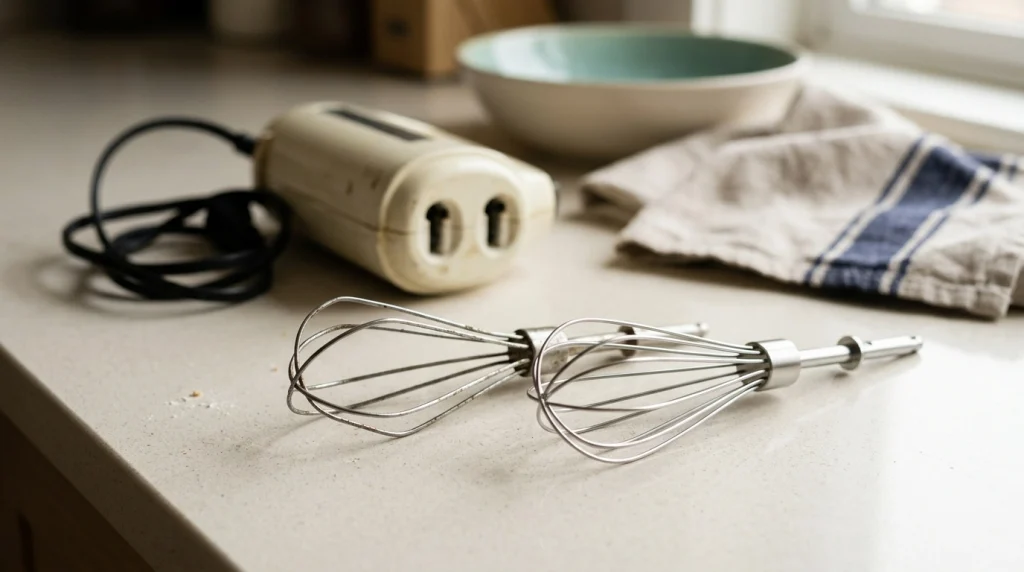
You do not need a complex method to get good results. The key is to match the speed and mixing time to the food.
1. Choose the Right Bowl
Use a clean bowl that gives the whisk enough room to move. A deep bowl helps reduce splashes when you first turn on the mixer.
For egg whites, make sure the bowl is free of grease and water. For cream, chilling the bowl can help keep the cream cold while you whip it.
2. Fit the Whisk Correctly
Unplug the mixer before fitting or removing the attachment. Check that the whisk is designed for your exact model and that it locks in place.
Do not force an attachment into the mixer. If it will not fit, check the manual rather than trying to change the connector.
3. Start at a Low Speed
Place the whisk into the bowl before turning the mixer on. Start at a low speed to keep the food in the bowl.
Raise the speed slowly as the mixture thickens. Keep the whisk below the surface when possible, and move it around the bowl to mix the food evenly.
4. Watch the Texture
Do not rely only on the clock. Cream, egg whites, and batter can change at different rates depending on the recipe and the mixer.
Pause the mixer when needed and check the texture. Switch the mixer off before lifting the whisk out to avoid splashes.
5. Stop When the Food Is Ready
For cream, look for the peaks described in your recipe. For egg whites, check whether they have reached the required foam or peak stage.
For thin batter, stop when the ingredients are combined. Extra mixing will not always improve the result.
6. Clean the Whisk After Use
Unplug the mixer before removing the whisk. Wash the attachment according to the manufacturer’s instructions, and dry it well before storing it.
Some whisks are dishwasher-safe, while others need hand washing. Never put the mixer body or its power cord in water.
Common Problems and Recommended Solutions
These simple checks can help you decide what to change when whisking does not go well.
| Problem | Recommended Solution | Difficulty Level |
|---|---|---|
| Cream will not thicken | Chill the cream and bowl | Easy |
| Egg whites stay flat | Remove grease and check for yolk | Easy |
| Food splashes out | Use a deeper bowl and lower speed | Easy |
| Whisk wobbles | Switch off and check the fit | Easy |
| Whisk does not turn | Unplug and inspect the attachment connection | Easy |
If the mixer makes a burning smell, sparks, or unusual grinding noises, stop using it and unplug it if safe to do so. Do not open the motor housing or attempt electrical repairs yourself.
Mistakes to Avoid
A few common errors can affect both your results and your safety.
- Starting too fast: This can send liquid across the counter.
- Using a whisk for heavy dough: Dough hooks are better for many thick doughs.
- Whipping for too long: Cream can become grainy, and egg whites may lose quality.
- Using the wrong attachment: Check the manual to see which attachments your mixer supports.
- Pulling out a moving whisk: Switch off the mixer and wait for it to stop first.
- Washing the mixer body: Clean the body with a suitable damp cloth, not under running water.
Never touch moving wires or try to remove a stuck attachment while the mixer is plugged in. If the whisk bends, cracks, or loosens during use, stop and replace it with a compatible part.
When to Replace the Hand Mixer Whisk
You may need a new whisk if the wires are bent, broken, badly rusted, or loose at the base. A damaged whisk can mix unevenly and may not be safe to use.
Check the attachment before replacing the whole mixer. If the motor still runs normally and the connector is sound, a compatible replacement may solve the problem.
| Repair Issue | Estimated Cost | Replace Instead? |
|---|---|---|
| Bent or damaged whisk | Depends on model | Usually replace the whisk |
| Missing compatible attachment | Depends on availability | Check the model first |
| Broken attachment connector | Depends on damage | Compare repair and replacement costs |
| Burning smell or failing motor | Varies widely | Seek professional advice |
Prices vary by brand and model, so check the manufacturer’s parts list before spending money. Do not use a whisk that needs force to fit or falls out during mixing.
My Personal Experience
When using a hand mixer whisk, I find it helps to think about the texture I want before choosing an attachment. A whisk is made to add air, while standard beaters are often better for general mixing.
For cream, keeping the ingredients cold and starting slowly are two useful habits. For egg whites, a clean bowl matters just as much as the mixer speed.
I would not use a whisk for every task. Thick dough needs a different tool, and heavy mixtures can put extra strain on an attachment that is not designed for them.
The biggest lesson is to watch the food instead of rushing. Stop when you reach the right texture, and clean the attachment after each use.
Final Thoughts
A hand mixer whisk is mainly used to whip cream, beat egg whites, add air to light mixtures, and mix thin batters. It is a useful attachment when you want a fluffy texture rather than a dense one.
For the best results, choose the right bowl, use a suitable speed, and stop when the mixture is ready. Keep the whisk clean, check that it fits your mixer, and replace it if the wires are damaged.
You will get better results when you use the whisk for the job it was designed to do.
“`