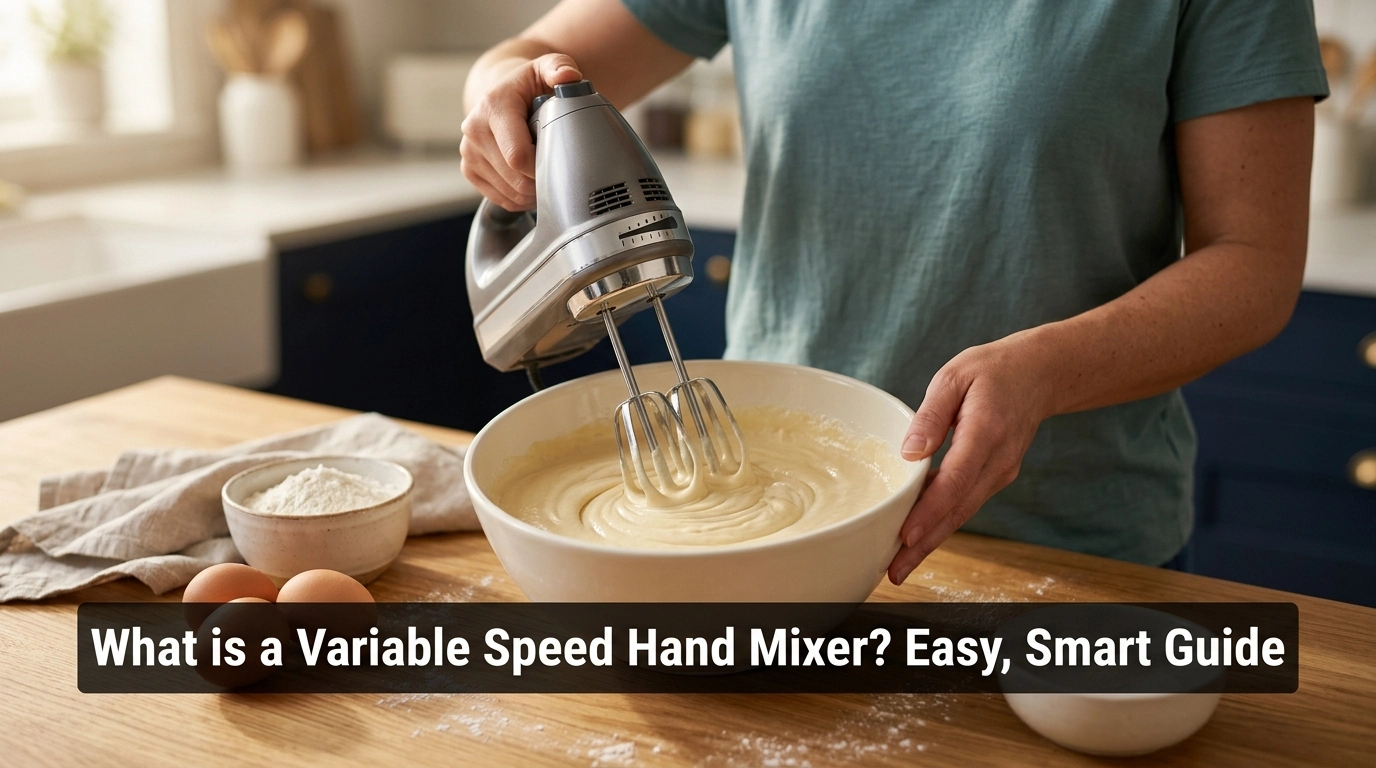
What is a variable speed hand mixer? It is a small kitchen tool that lets you change how fast the beaters spin. You can mix slow or fast to suit your food. This gives you more control when you bake or cook.
The main benefit is simple. You can start slow to keep flour in the bowl. Then, you can raise the speed to whip cream or beat eggs.
I think speed control is one of the first things to look at when you choose a hand mixer. It can make daily mixing much easier. But you also need to know how to use the settings well.
In this guide, I’ll explain how the mixer works, what each speed does, and how to deal with common problems.
What Is a Variable Speed Hand Mixer and How Does It Work?
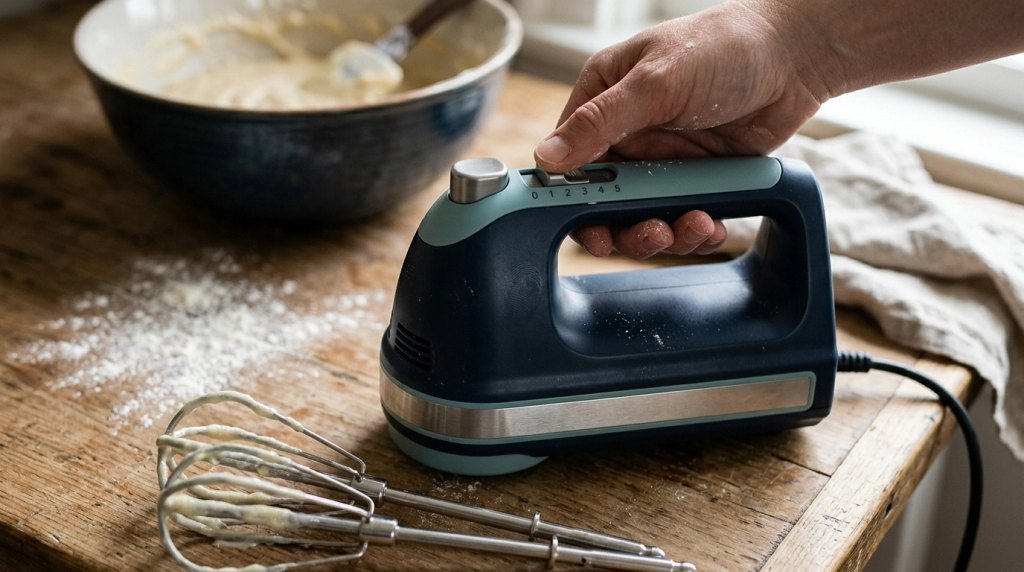
A variable speed hand mixer is an electric mixer with two or more speed settings. Most have a small switch, dial, or set of buttons. These let you change how fast the beaters turn.
The motor drives the beaters. At a low speed, they turn slowly. At a high speed, they spin much faster.
Some mixers have three speeds. Others have five, seven, or more. More settings can give you finer control, but they do not always mean better results.
The best speed depends on what you mix. Thick cookie dough needs a different action than soft whipped cream.
What Makes It Different From a Basic Hand Mixer?
A basic hand mixer may have only one speed or very few settings. This can make some jobs hard.
A variable speed model gives you more choice. You can start slow and raise the speed when the mix gets smooth.
This helps cut down on splashes. It also makes it easier to work with both dry and wet foods.
Common Signs of Variable Speed Hand Mixer Problems
A good hand mixer should run at a steady speed. It should also respond when you move the speed switch.
Sometimes, though, the mixer may not work as you expect.
Here are some common signs:
- The mixer will not turn on.
- The beaters move too fast at the lowest setting.
- The speed does not change when you move the switch.
- The motor slows down while mixing.
- The beaters shake or make loud sounds.
- The mixer feels too hot.
- The mixer stops during use.
These signs do not always mean the mixer is broken. Some problems come from the food you mix or how you use the tool.
Quick Troubleshooting Table
| Symptom | Likely Cause | Quick Fix |
|---|---|---|
| Mixer will not start | Power or cord issue | Check the outlet |
| Speed will not change | Faulty speed control | Stop using and seek service |
| Mixer slows down | Mixture is too thick | Use a lighter load |
| Beaters shake | Poor beater fit | Refit the beaters |
| Motor gets hot | Long or heavy use | Turn off and let it cool |
| Food splashes | Starting too fast | Begin at low speed |
I would check the simple causes first. A thick mix or loose beater may look like a motor fault.
Possible Causes of Hand Mixer Speed Problems
A variable speed hand mixer has several parts that work together. If one part does not work well, the mixer may act oddly.
The most common causes are easy to spot.
1. Wrong Speed Setting
One common mistake is using a fast speed too soon.
If you add flour and turn the mixer to high, the flour may fly out. A fast speed can also cause thin batter to splash.
Low speed is the best place to start for most jobs.
2. Mixture Is Too Thick
Some hand mixers are not made for stiff dough. A thick mix can put too much strain on the motor.
You may hear the motor slow down. The mixer may also shake or get warm.
A stronger mixer may handle more work, but you still need to follow its limits.
3. Beaters Are Not Fitted Well
The beaters must lock into their slots. If they sit loose, they may shake or fail to turn as they should.
I recommend checking each beater before use. Push it in as the manual shows.
Do not force the beaters into the wrong slots.
4. Power or Switch Problems
A loose plug or bad outlet can stop a mixer from working.
A worn speed switch can also cause trouble. If the switch does not respond, stop using the mixer.
Do not open the motor case to fix it yourself.
How to Use and Troubleshoot a Variable Speed Hand Mixer
The best way to use a variable speed hand mixer is to start slow. Then raise the speed in small steps.
Here is the method I recommend for safe, smooth mixing.
Step 1: Check the Power Source
First, make sure the mixer is turned off. Check that the cord has no cuts or bare wires.
Plug the mixer into a suitable wall outlet. If it does not start, test the outlet with another safe device.
Do not use a mixer with a damaged cord or plug.
Step 2: Fit the Beaters the Right Way
Unplug the mixer before you attach the beaters.
Check each beater for bent wires or signs of damage. Fit them into the correct slots until they lock.
Some mixers have two different beater stems. Follow the marks in the manual.
A spare set of beaters can help if the old ones are bent. Make sure the new set is made for your exact model.
Step 3: Start at the Lowest Speed
Place the beaters in the bowl before you start the motor.
Use the lowest setting first. This helps keep dry food and thin liquids from flying out.
Once the food starts to blend, raise the speed as needed.
Do not lift the spinning beaters out of the bowl.
Step 4: Choose the Best Speed for Your Food
Each speed has a use. You do not need the fastest one for every job.
| Speed Level | Best Use | Main Benefit |
|---|---|---|
| Low | Flour, dry mix, soft dough | Less mess |
| Medium | Cake batter, eggs | Even mixing |
| High | Cream, egg whites | Adds more air |
These are broad rules. The right setting can vary by model, food, and recipe.
For thick dough, check the manual first. Some hand mixers should not be used for bread dough at all.
Step 5: Watch for Heat and Motor Strain
Pay close attention to how the mixer sounds.
If the motor slows down, stop and check the mix. It may be too thick or too large for the mixer.
Turn the unit off and unplug it if it gets too hot. Let it cool as the manual says.
If you smell burning or see smoke, stop at once. Do not use the mixer again until it has been checked.
Step 6: Clean the Mixer After Use
Good cleaning can help keep your mixer in good shape.
Unplug the unit. Remove the beaters and wash them as the maker directs. Some are safe for the dishwasher, while others need hand washing.
Use a soft, damp cloth to wipe the mixer body. Keep water out of the motor vents and speed switch.
Never put the motor unit in water. Let all parts dry before you store them.
Step 7: Test the Speed Settings
If the mixer still works but seems odd, try a simple check.
With clean, dry beaters fitted, place them in a bowl with a small amount of water. Start at low speed and move up one step at a time.
You should notice a change in beater speed. Do not run the mixer for long just to test it.
If the speed stays the same at every setting, the control may need service.
Mistakes to Avoid When Using a Variable Speed Hand Mixer
It is easy to make small mistakes with a hand mixer. The good news is that most are simple to avoid.
Here are the ones I would watch for:
- Starting too fast: This can send flour and batter out of the bowl.
- Using a bowl that is too small: A deep, wide bowl helps reduce splashes.
- Mixing thick dough for too long: This can strain the motor.
- Changing beaters while plugged in: Always unplug the mixer first.
- Touching moving beaters: Keep hands, hair, and tools away.
- Washing the motor unit in water: Wipe it with a damp cloth instead.
- Ignoring a burning smell: Stop using the mixer if it smells hot or burnt.
One more mistake is using high speed for too long. Some foods can be overmixed.
Cake batter may turn dense if you beat it more than needed. Cream can also become grainy if you whip it too much.
Good speed control helps, but you still need to watch the food.
When Should You Replace a Variable Speed Hand Mixer?
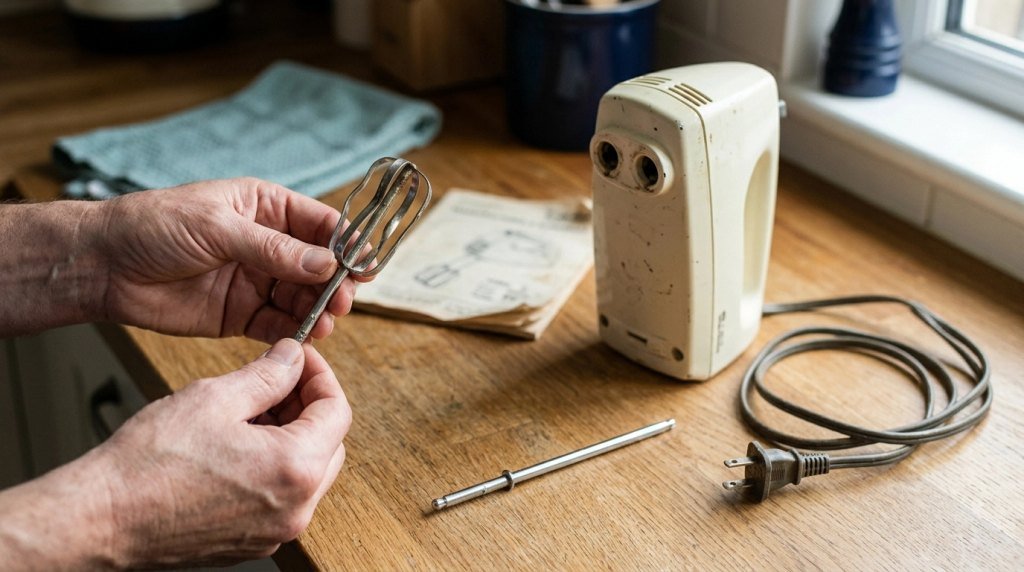
Not every mixer problem needs a new unit. A damaged beater may be easy to replace.
Motor and switch faults are more complex. Repair may not make sense for a low-cost mixer.
| Problem | Best Next Step | Replace Instead? |
|---|---|---|
| Bent beater | Buy a compatible beater | Usually no |
| Damaged cord | Seek qualified repair | Often |
| Bad speed switch | Ask about service | Maybe |
| Burning motor smell | Stop use and seek service | Often |
| Broken motor housing | Replace the unit | Yes |
I would also check the warranty before paying for repairs.
If a mixer has severe heat damage, smoke, or exposed wires, do not keep testing it.
Safety matters more than saving an old appliance.
My Personal Approach to Choosing and Using a Hand Mixer
When I assess a hand mixer, I focus on ease of control rather than the number of speed settings alone.
I would first check how slow the lowest setting runs. That matters when mixing flour or soft batter.
Next, I would look at the grip, weight, and beater release button. A light mixer with a good handle can be easier to use for longer tasks.
I also prefer controls that are simple to move with one hand.
For most home baking, a mixer with several clear speed steps is enough. You do not need the highest speed all the time.
The main lesson is to match the speed to the task. Start low, increase it only as needed, and stop if the motor struggles.
Final Thoughts
So, what is a variable speed hand mixer? It is a handheld electric mixer that lets you control how fast the beaters spin.
That simple feature makes a big difference. You can mix dry food slowly, blend cake batter at a steady pace, and whip cream at a faster speed.
The key is to use the right setting, avoid overloading the motor, and keep the mixer clean.
If your mixer has a problem, check the power, beaters, and mixture first. Stop using it if there are signs of an electrical fault.
For most home cooks, a variable speed hand mixer is a useful tool because it offers more control without taking up much kitchen space.