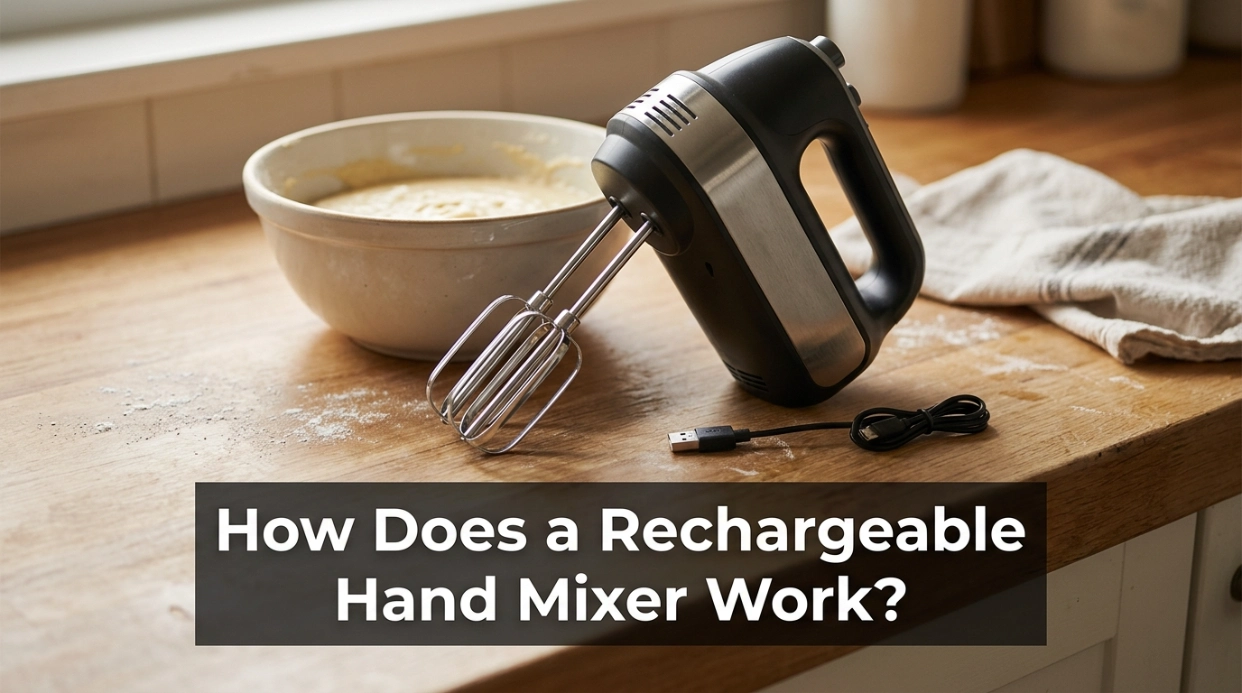
Quick Answer
A rechargeable hand mixer stores electrical energy in a rechargeable battery, then sends that energy to a small motor when you press the power or speed control. The motor turns gears connected to the beaters, creating the spinning action that mixes, whips, or beats ingredients. Battery-powered appliances also need proper charging and battery care, so it is worth following battery safety guidance and your mixer’s manual.
The process in five simple steps
- Battery stores energy: The rechargeable battery holds electrical energy until you need the mixer.
- Controls release power: Pressing the switch sends power through the mixer’s electronic controls.
- Motor starts turning: Electrical energy becomes rotational mechanical energy inside the motor.
- Gears transfer motion: An internal drive system transfers the motor’s rotation to the beater shafts.
- Beaters mix food: The rotating beaters move ingredients through the bowl until they reach the desired texture.
What changes as the battery drains?
- A well-designed mixer regulates motor speed during normal use, but available runtime still depends on battery condition, speed setting, and how difficult the mixture is to move.
If you’re wondering how a rechargeable hand mixer works, the basic idea is simpler than it looks. It combines a battery, electronic speed controls, a compact motor, gears, and removable beaters in one handheld appliance.
As of 2026, rechargeable models are useful mainly because they remove the power cord from the mixing process. That makes them easier to move around a counter, but it also means charging habits and battery condition matter.
In This Guide
- How Does a Rechargeable Hand Mixer Work?
- What Happens Inside a Rechargeable Hand Mixer?
- Rechargeable vs. Corded Hand Mixer: What’s Different?
- How Do You Charge and Use a Cordless Hand Mixer?
- What Can a Rechargeable Hand Mixer Handle?
- Why Is My Rechargeable Hand Mixer Not Working?
- Frequently Asked Questions
How Does a Rechargeable Hand Mixer Work?
A rechargeable hand mixer converts stored electrical energy into the mechanical rotation needed to spin its beaters. Instead of receiving electricity continuously through a wall cord, it draws energy from an onboard or removable rechargeable battery.
Definition: A rechargeable hand mixer is a handheld electric mixing appliance that powers its motor from a rechargeable battery rather than requiring a continuous connection to an electrical outlet.
- Battery: Stores the electrical energy needed to run the appliance.
- Speed control: Tells the electronics how fast you want the motor to operate.
- Electric motor: Converts electrical energy into spinning motion.
- Gear system: Transfers motor rotation to the beater shafts.
- Beaters: Move through the ingredients and create the mixing action.
When you select a speed, electricity flows from the battery through the control electronics to the motor. The exact control method varies between manufacturers and models.
The motor rotates much faster than you need the beaters to rotate. Internal gearing adjusts that movement and sends it to the two beater sockets.
- Low speed: Works well for starting dry ingredients or gently combining mixtures.
- Medium speed: Handles many cake batters, frostings, and everyday mixing jobs.
- Higher speed: Provides faster movement for tasks such as whipping cream or egg whites when the manufacturer’s instructions allow it.
The gears also help the appliance deliver useful turning force, or torque. Torque is the twisting force that helps the beaters move through thicker ingredients.
This basic operating system is similar to a corded hand mixer. The biggest difference is where the electrical energy comes from.
What Happens Inside a Rechargeable Hand Mixer?
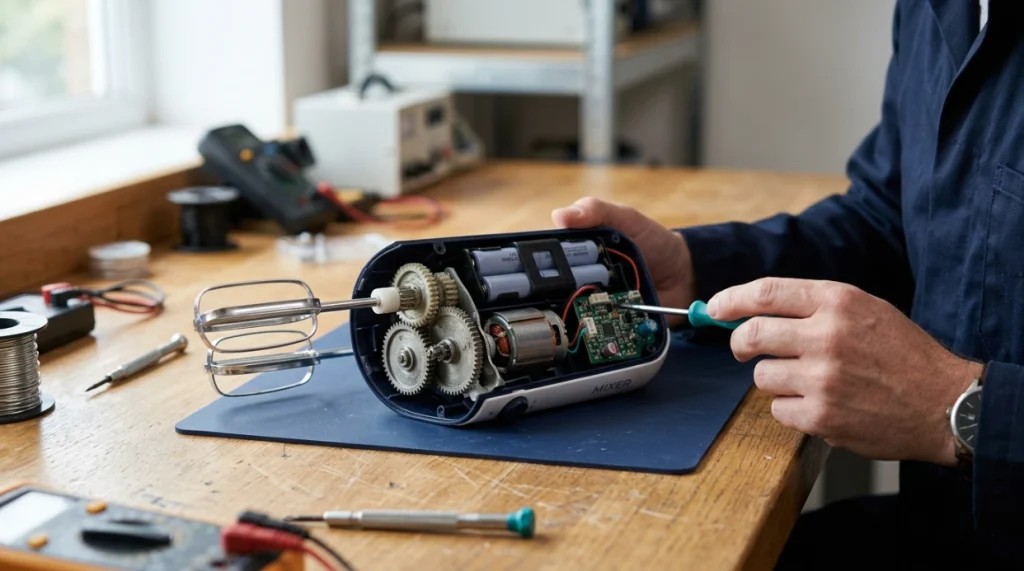
Pressing the controls starts a chain of electrical and mechanical events. Each component has a different job, and a problem anywhere in that chain can stop the beaters.
The rechargeable battery supplies electricity
Many modern cordless kitchen appliances use lithium-ion battery technology. Some mixers keep the battery inside the housing, while others use a removable battery pack.
A removable system can be convenient because one compatible battery may work with several appliances from the same product family. Always check the manufacturer’s compatibility information before swapping batteries.
The electronic controls manage speed
The speed buttons don’t mechanically force the beaters to spin faster. They signal the electronics to change how the motor receives power.
This gives manufacturers more control over starting behavior and available speed settings. Some mixers also gradually increase speed to reduce the burst of flour or liquid that can happen during startup.
The motor creates rotation
Inside the housing is an electric motor. Current from the battery creates magnetic forces inside the motor, causing its shaft to rotate.
That spinning shaft is the heart of the mixing process. Without the motor, stored battery energy never becomes useful mechanical movement.
The gear train drives both beaters
The motor connects to a small set of gears. Those gears transfer the rotation to the two beater attachment points.
The beaters then rotate through the bowl and repeatedly pull ingredients into their path. This movement combines ingredients while also introducing air during whipping tasks.
Rechargeable vs. Corded Hand Mixer: What’s Different?
A rechargeable and corded hand mixer perform the same basic job, but their power systems are different. A corded model draws electricity from an outlet whenever it runs, while a rechargeable model depends on stored battery energy.
| Feature | Rechargeable Hand Mixer | Corded Hand Mixer |
|---|---|---|
| Power source | Rechargeable battery | Household electrical outlet |
| Runtime | Limited by battery capacity, condition, speed, and workload | Can keep running while connected to power, subject to the appliance’s duty limits |
| Counter movement | No power cord during normal mixing | Movement depends on cord length and outlet location |
| Preparation | Battery must have enough charge | Needs an accessible outlet |
| Long-term wear item | Battery capacity can decline with age and use | No rechargeable battery to age |
The cordless design is most noticeable when I’m thinking about workflow rather than raw specifications. You can move between bowls or turn around an island without dragging a cable through the work area.
The tradeoff is planning. A corded mixer only needs an outlet, while a cordless mixer also needs enough stored energy for the recipe.
Manufacturers handle this differently. For example, KitchenAid’s current cordless range uses a removable battery platform, while other rechargeable hand mixers have used batteries built directly into the appliance.
You can check a manufacturer’s current cordless lineup and specifications before buying. KitchenAid maintains a cordless kitchen appliance section with model-specific information.
How Do You Charge and Use a Cordless Hand Mixer?
Charge the mixer according to the instructions for your exact model before relying on it for a recipe. Battery type, charger design, indicator lights, and charging procedure can differ.
- Check the manual. Confirm which charger, USB adapter, cable, or charging dock the manufacturer specifies.
- Charge in a dry location. Keep the appliance and charging connections away from sinks, wet counters, and standing water.
- Wait for the charge indicator. Use the manufacturer’s lights or display to judge when charging is complete.
- Insert the correct beaters. Push each attachment into the proper socket until it locks into place.
- Start at a low speed. This reduces splashing and helps dry ingredients stay inside the bowl.
- Increase speed gradually. Choose the speed that matches the recipe and attachment.
- Turn the mixer off before removing beaters. Wait for all movement to stop first.
I also recommend checking the charge before starting a time-sensitive recipe. Discovering a nearly empty battery after the cream and bowl are already prepared is an avoidable interruption.
Don’t assume every USB charger or battery pack is interchangeable. The safest choice is the charging equipment and battery specification listed by the manufacturer.
KitchenAid provides model-specific documentation through its manuals and literature center. Cuisinart also maintains a hand mixer manual library for current and older models.
What Can a Rechargeable Hand Mixer Handle?
A rechargeable hand mixer can handle many of the same everyday recipes as a corded hand mixer when the model is designed for the task. Think cake batter, pancake batter, frosting, whipped cream, eggs, and similar mixtures.
The important limit isn’t simply whether the mixer is cordless. Battery condition, motor design, gearing, attachments, speed, and ingredient resistance all affect how hard the appliance must work.
Good everyday uses
- Whipping cream
- Beating eggs
- Mixing many cake and cupcake batters
- Combining pancake or waffle batter
- Preparing frostings and softer icings
- Creaming softened butter and sugar when the model supports the task
Be careful with heavy mixtures
Dense dough creates much more resistance than whipped cream. That means the motor needs more torque and the battery can discharge faster.
Don’t use standard beaters for a heavy bread dough unless the manufacturer’s instructions specifically say the mixer and attachments can handle it. A stand mixer or properly rated dough attachment may be a better tool.
- Watch the motor: Stop if it stalls repeatedly or sounds unusually strained.
- Check the temperature: Give the mixer a rest if the housing becomes unusually warm.
- Reduce the load: Divide an oversized batch instead of forcing the beaters through it.
- Use softened ingredients: Rock-hard butter can place unnecessary strain on the motor and gears.
Battery runtime also changes with workload. Running at a higher speed or pushing through a thicker mixture can use stored energy faster than light mixing.
That’s why advertised maximum runtime should never be treated as a guarantee for every recipe. Real use depends on the ingredients, speed, battery age, and attachment.
Why Is My Rechargeable Hand Mixer Not Working?
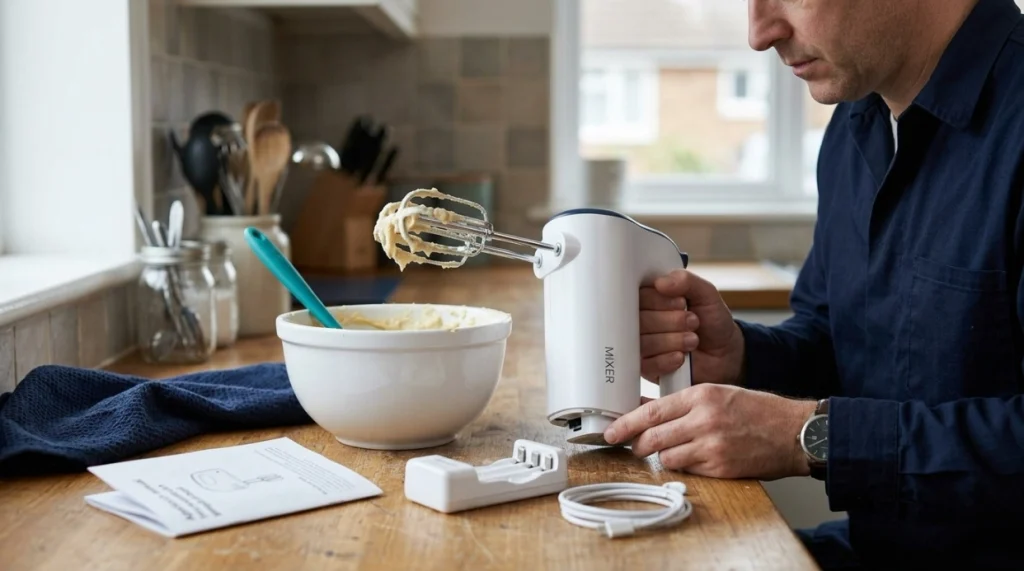
If a rechargeable hand mixer won’t turn on, start with the battery and controls before assuming the motor has failed. Many problems are caused by charging, attachment, overload, or protection issues.
The battery may be discharged
Connect the correct charger and check the indicator lights. A battery that has been stored for a long period may need charging before the mixer responds.
The battery may not be seated correctly
On models with a removable pack, remove it and reinstall it according to the manual. Make sure the contacts and locking mechanism are properly aligned.
The mixer may have been overloaded
Thick mixtures can demand more force than the appliance is designed to supply. Stop, remove some of the mixture, and allow the mixer to cool before trying again.
- No lights or response: Check the battery charge and charging connection.
- Motor runs but beaters don’t: Turn the appliance off and check whether the beaters are fully inserted.
- Mixer stops during thick batter: Reduce the load and let the appliance cool.
- Battery won’t charge: Check the specified charger, cable, charging temperature, and manual instructions.
- Unusual smell or heat: Stop using the mixer and disconnect it from charging.
Don’t open a sealed battery or motor housing yourself
Rechargeable batteries can store enough energy to create heat, fire, or injury if damaged or short-circuited. Don’t bypass switches, protection circuits, or battery terminals.
Pro tip: If troubleshooting would require opening the sealed housing, modifying wiring, or repairing the battery pack, stop and consult the manufacturer’s manual or a qualified appliance repair technician.
For broader information about consumer battery safety and applicable standards, the U.S. Consumer Product Safety Commission is a useful starting point.
Simple battery-care habits
- Use only compatible batteries and charging equipment.
- Keep battery contacts clean and dry.
- Don’t charge the appliance beside a wet sink.
- Don’t use a swollen, cracked, leaking, or badly damaged battery.
- Avoid exposing the battery to excessive heat.
- Follow the manufacturer’s storage instructions if the mixer will sit unused for months.
Frequently Asked Questions
Does a rechargeable hand mixer work as well as a corded mixer?
It can work well for normal household mixing when the model has enough motor power, battery charge, and suitable attachments. Corded models have the advantage of continuous outlet power, while rechargeable mixers offer easier movement without a cord.
How does a cordless hand mixer get power?
A cordless hand mixer gets power from a rechargeable battery. The battery sends electricity through the mixer’s controls to an electric motor, which turns an internal gear system connected to the beaters.
Can I use a rechargeable hand mixer while it is charging?
Don’t assume that you can. Some rechargeable appliances are designed only for cordless operation, so follow the instructions for your exact model rather than operating it while connected to a charger.
How long does a rechargeable hand mixer battery last?
Runtime varies by model and recipe. Speed setting, mixture thickness, attachment type, battery age, temperature, and battery condition can all change how long the mixer runs between charges.
Can a rechargeable hand mixer knead bread dough?
Only use it for bread dough if the manufacturer specifically rates the mixer and supplied attachments for that job. Dense dough puts much more load on the motor and gears than cake batter, eggs, or whipped cream.
Why does my rechargeable mixer stop while mixing?
The battery may be low, the mixture may be too heavy, or the appliance may be protecting itself from excessive load or heat. Turn it off, check the charge, reduce the batch if needed, and follow the troubleshooting steps in the manual.
Are rechargeable hand mixers and hand blenders the same?
No. A hand mixer normally uses two beaters to whip and combine ingredients in a bowl. A hand blender, also called an immersion blender, uses a high-speed blade at the end of a shaft to blend or puree food.
Final takeaway: A rechargeable hand mixer works by sending stored battery energy through electronic controls to a motor, gears, and rotating beaters. The mixing principle is familiar; the main difference is that you gain cordless movement while taking on the added job of charging and caring for the battery.
Before your next mixing session, check the battery level, use the correct attachments, and start slowly. Those simple habits make a cordless mixer easier to use and help prevent unnecessary strain on the appliance.