Quick Answer
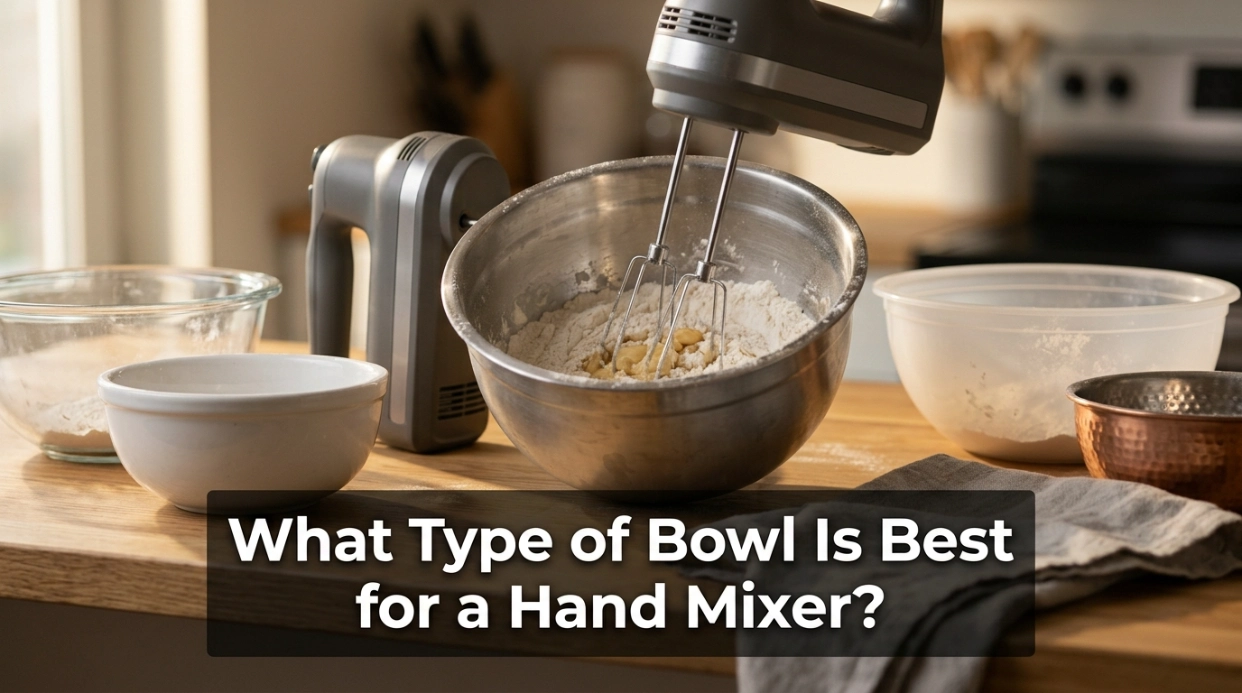
Stainless steel, glass, ceramic, and food-safe plastic bowls can all work with a hand mixer. For most everyday mixing, I prefer a medium-depth stainless steel or sturdy glass bowl because it gives the beaters enough room while helping control splashes. Unlike a stand mixer, a hand mixer normally does not require a brand-specific bowl, as explained in this hand mixer usage guide.
Best bowls at a glance
- Best all-around: Stainless steel is durable, lightweight, and easy to chill.
- Best for visibility: Glass lets you watch ingredients combine and has enough weight to stay stable.
- Best for stability: A heavy ceramic bowl moves less during mixing but needs careful handling.
- Best budget option: Food-safe plastic works, although lightweight bowls may slide around.
- Specialty choice: An unlined copper bowl is traditionally useful for whipping egg whites.
One rule matters most
- Choose a bowl deep enough that the rotating beaters stay inside the mixture without constantly striking the sides or throwing ingredients over the rim.
If you’re wondering what type of bowl works with a hand mixer, you have more flexibility than you may expect. The material matters, but bowl depth, diameter, stability, and batch size often matter even more.
As of 2026, my practical rule is simple: choose the bowl around the food you’re mixing, not around the mixer brand.
In This Guide
What Type of Bowl Is Best for a Hand Mixer?
A stainless steel mixing bowl is my first choice for most hand mixer jobs. It is durable, easy to move, relatively difficult to break, and suitable for everything from cake batter to whipped cream.
Glass is a close second. Its extra weight can make the bowl feel more stable while you’re guiding the mixer around it.
Definition: A suitable hand mixer bowl is a food-safe container that is wide and deep enough for the beaters to rotate freely while keeping ingredients contained.
- Enough depth: The bowl should contain splashes when the beaters begin turning.
- Enough width: You need room to guide the mixer around the ingredients.
- Stable base: A flat base or non-slip bottom makes one-handed control easier.
- Suitable capacity: Ingredients should not nearly reach the rim before mixing begins.
- Food-safe material: Use a bowl specifically intended for preparing food.
One advantage of a hand mixer is that the bowl is independent from the appliance. A conventional hand mixer has motor-driven attachments that you lower into a separate container.
That means you usually do not need a bowl labeled for your exact mixer model. The important exception is any unusual attachment or accessory for which your manufacturer’s instructions specify particular operating requirements.
Does a hand mixer need a special bowl?
No. Most standard electric hand mixers can be used in many ordinary mixing bowls.
You should still check the mixer’s manual if the manufacturer gives special instructions about attachments, maximum quantities, or operating technique.
- Standard stainless steel bowl: suitable
- Tempered glass mixing bowl: suitable
- Food-safe ceramic bowl: suitable
- Food-safe plastic mixing bowl: usually suitable
- Copper mixing bowl: useful for some specialty tasks
Which Bowl Material Works Best With a Hand Mixer?
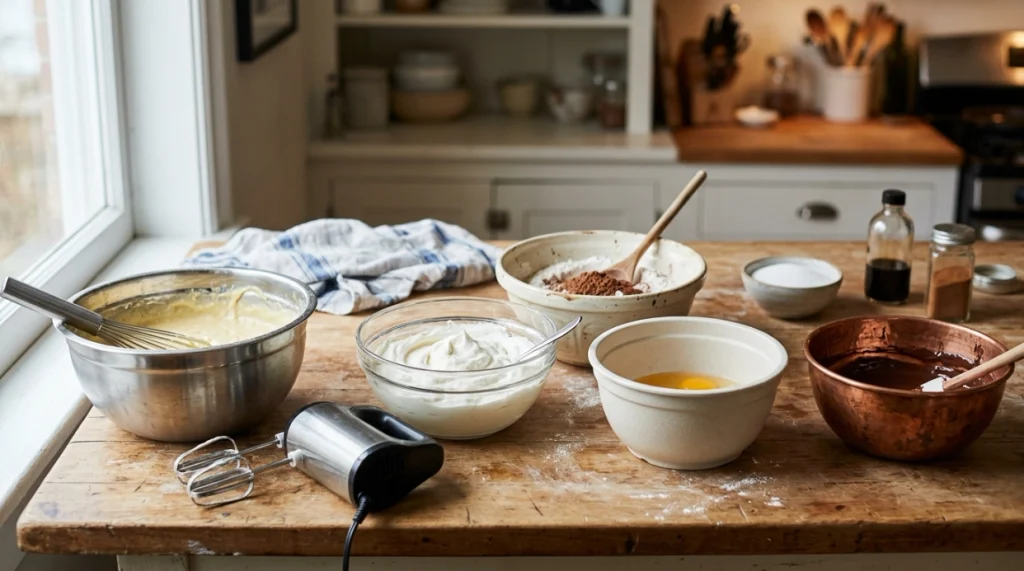
Stainless steel is the most versatile choice, but there isn’t one perfect material for every recipe. Each type has advantages that become more noticeable with certain ingredients.
| Bowl Material | Best Uses | Main Advantages | What to Watch For |
|---|---|---|---|
| Stainless steel | Batter, frosting, whipped cream, general baking | Lightweight, durable, easy to chill, easy to clean | Very light bowls may move unless supported |
| Glass | Cake batter, frosting, general mixing | Heavy, transparent, stain resistant | Can chip or break; avoid hard beater contact |
| Ceramic | Batters, frosting, medium batches | Stable and usually heavy | Can chip; heavier to hold or tilt |
| Plastic | Everyday batter and simple mixing | Lightweight, inexpensive, difficult to break | May slide; scratches and grease residue can build up |
| Copper | Whipping egg whites | Can help stabilize egg-white foam | Specialized, expensive, requires proper care |
Why stainless steel works so well
Stainless steel solves several practical problems at once. It doesn’t shatter if you bump it, and a quality bowl can handle repeated everyday mixing.
It is also useful for cold preparations. You can chill the bowl before whipping cream when a recipe benefits from keeping ingredients cold.
- Good for cake and brownie batter
- Good for buttercream and cream cheese frosting
- Good for whipped cream
- Good for beaten eggs
- Good for many soft cookie mixtures
Is a glass bowl good for a hand mixer?
Yes. A sturdy glass mixing bowl works well as long as it is in good condition and designed for food preparation.
The transparency is useful because you can see dry flour or unmixed batter hiding near the bottom. Its weight also helps resist movement.
Glass deserves more careful handling. Manufacturer guidance from Anchor Hocking’s glass care and use information warns that impacts, scratches, and severe temperature changes can weaken glassware.
- Do not use a chipped or cracked bowl.
- Avoid repeatedly hitting the sides with spinning beaters.
- Do not expose glass to sudden temperature changes unless its manufacturer permits them.
- Follow the specific care instructions supplied with your bowl.
Can you use a ceramic bowl?
Yes. Ceramic bowls are often heavy enough to stay planted on the worktop, which can make mixing comfortable.
The drawback is impact damage. A spinning metal beater should remain in the food instead of banging against the ceramic surface.
Can you use a plastic bowl?
Food-safe plastic can work perfectly well for ordinary cake batter, brownie batter, frosting, and similar mixtures. The FDA’s food-contact material guidance explains how materials intended to contact food are regulated for their intended uses.
I would choose a thick mixing bowl instead of a thin disposable-style container. A flimsy bowl flexes and can move across the counter when the mixer starts.
What about a copper bowl?
Copper is a specialty choice rather than an everyday requirement. Its most famous use is whipping egg whites.
Copper ions can interact with egg-white proteins and help create a more stable foam. The chemistry behind this traditional technique is discussed by the Hartings Lab at American University.
Section Takeaway: Stainless steel is the easiest all-purpose choice, while glass is excellent when you want weight and visibility. Ceramic and food-safe plastic also work, and copper is mainly a specialty bowl for egg whites.
What Size and Shape Bowl Should You Use?
The best bowl should leave enough empty space above the ingredients. That extra height gives batter somewhere to move when the beaters start turning.
For many normal home recipes, bowls in roughly the 2.5- to 5-quart range are practical. The exact size depends on your batch, so capacity alone should not make the decision.
Why bowl depth matters
A shallow bowl exposes more mixture to the edge. Thin liquids, cream, or loose flour can escape before you have time to increase control.
A moderately deep bowl helps contain that movement.
- Small quantities: Use a narrower bowl so the ingredients stay deep enough for the beaters to reach.
- Cake batter: Use a medium or large bowl with generous headroom.
- Whipped cream: A deeper chilled bowl helps control splatter.
- Frosting: Choose enough width to move the mixer through softened butter comfortably.
Is a narrow bowl better for small batches?
Often, yes. A wide bowl can spread a small amount of cream or egg too thinly across the bottom.
A narrower bowl concentrates the food around the attachments, making it easier for the beaters to stay engaged.
Should the bowl have straight or curved sides?
Rounded sides are convenient because they leave fewer tight corners where dry ingredients can hide. They also let you guide the mixer in smooth circles.
A flat base is still helpful. It gives the bowl a stable contact point on the work surface.
Which Bowl Is Best for Different Hand Mixer Recipes?
Match the bowl to the job. A bowl that is excellent for a double cake recipe may be frustrating when you’re whipping one or two egg whites.
Whipped cream
I favor stainless steel because it can be chilled easily and isn’t fragile. Cold equipment can be useful when you’re trying to keep cream cold during whipping.
- Choose a deep bowl.
- Chill it if your recipe recommends cold equipment.
- Start at a low speed to reduce splashing.
- Increase the speed after the cream begins to thicken.
Egg whites and meringue
Stainless steel, glass, and copper are good candidates. Whatever you choose, the bowl needs to be clean and free from greasy residue.
Copper offers a specialized advantage for egg-white foam, but it is not required to make meringue successfully.
Cake and brownie batter
A medium or large stainless steel, glass, ceramic, or sturdy plastic bowl works. Headroom matters more than having a specialty material.
- Add ingredients before the bowl becomes crowded.
- Begin at the mixer’s lowest useful speed.
- Keep dry flour away from rapidly spinning beaters at startup.
- Stop occasionally and scrape the bowl with the mixer turned off.
Buttercream and frosting
A stable stainless steel, glass, or ceramic bowl works well. Choose enough width for the beaters to travel through the butter instead of working in one spot.
Powdered sugar is easy to throw out of a shallow bowl. Begin slowly until the dry sugar becomes incorporated.
Small quantities
This is where shape makes the biggest difference. Two tablespoons of glaze in a five-quart bowl may sit too shallow for both beaters.
Use a smaller, narrower bowl, or switch to a manual whisk when the quantity is below the useful reach of the mixer attachments.
Section Takeaway: Large recipes need headroom, while small recipes need depth around the beaters. Choose bowl size according to ingredient volume rather than automatically reaching for your biggest bowl.
Can a Hand Mixer Damage a Bowl?
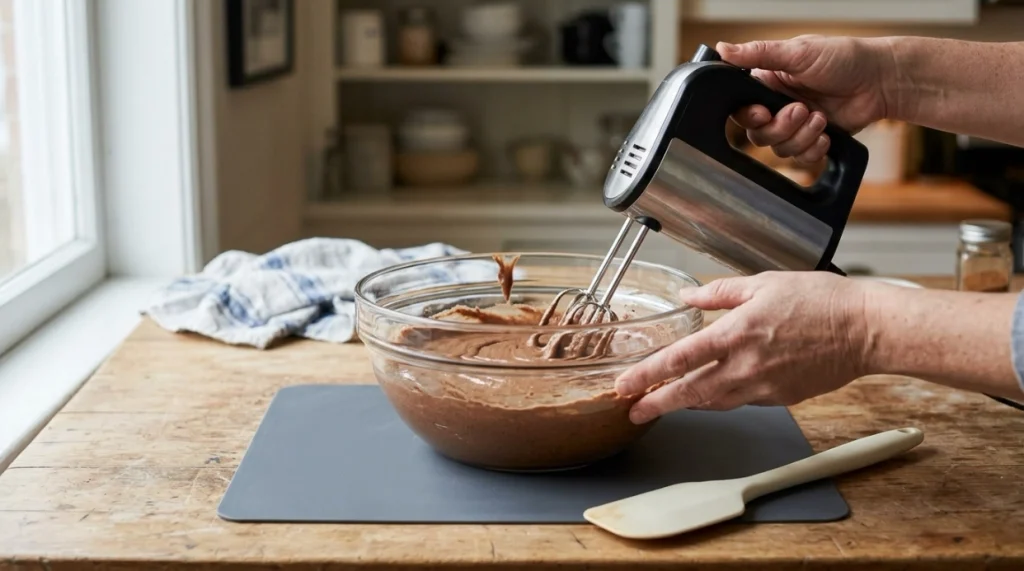
A hand mixer should mix the food, not grind against the container. Repeated hard contact between spinning metal attachments and a bowl can scratch surfaces or damage fragile materials.
This matters most with glass, ceramic, and coated bowls.
Should the beaters touch the bottom?
Light occasional contact can happen while you move a handheld mixer. Constantly pressing the spinning beaters hard against the bowl is unnecessary.
Keep most of the attachment inside the ingredients and guide it around the bowl rather than forcing it against the surface.
- Don’t deliberately scrape the bowl with spinning beaters.
- Turn the mixer off before scraping with a spatula.
- Replace a cracked or damaged bowl.
- Avoid mixing in containers that flex badly under pressure.
- Use attachments approved for your mixer model.
How do you stop a bowl from spinning?
A heavy glass or ceramic bowl may stay put by itself. Lightweight stainless steel and plastic sometimes need extra support.
A silicone non-slip mat is one of the simplest solutions.
- Place the bowl on a non-slip silicone mat.
- Use a bowl with a rubberized base.
- Hold the rim with your free hand when safe to do so.
- Start the mixer at low speed before increasing power.
- Keep the work surface dry and uncluttered.
Pro tip: Keep liquids and wet towels away from electrical plugs, outlets, damaged cords, and the mixer’s motor housing. If the appliance has an electrical fault, stop using it and follow the manufacturer’s manual or contact a qualified repair technician.
How do you prevent splashing?
Bowl depth helps, but speed control matters just as much. Starting at high speed can send flour, cream, or thin batter beyond even a large bowl.
- Place the attachments into the ingredients before starting.
- Select the lowest useful speed.
- Let loose ingredients begin combining.
- Increase the speed gradually when the recipe requires it.
- Keep the beaters below the surface when mixing thin liquids.
Hand Mixer Bowl FAQ
Can I use a stainless steel bowl with a hand mixer?
Yes. Stainless steel is one of the best choices for a hand mixer because it is durable, lightweight, easy to clean, and suitable for most everyday mixing. Choose a bowl large enough to contain the ingredients and keep it stable while the beaters are running.
Can you use a glass bowl with an electric hand mixer?
Yes. A sturdy glass mixing bowl works well and its weight can help keep it stable. Avoid chipped, cracked, or heavily scratched glass, and do not intentionally strike the sides or bottom with spinning metal beaters.
Can I use a plastic bowl with a hand mixer?
Yes, provided the bowl is food-safe and sturdy enough for mixing. A heavier plastic bowl is easier to control than a thin one. Replace badly scratched or damaged containers and follow the bowl manufacturer’s care instructions.
What size bowl is best for a hand mixer?
There is no single required size, but roughly 2.5 to 5 quarts covers many household mixing jobs. Use a smaller, narrower bowl for tiny batches and a larger bowl when cake batter, frosting, or other ingredients need more headroom.
Is a deep or shallow bowl better for a hand mixer?
A moderately deep bowl is usually easier to use because it reduces splashing and keeps ingredients around the beaters. Shallow bowls can work for thicker mixtures, but they provide less protection when mixing liquids, cream, flour, or powdered sugar.
Can I use a hand mixer in a ceramic bowl?
Yes. Ceramic bowls can be excellent because their weight helps resist movement. Handle them carefully, since ceramic can chip, and avoid deliberately grinding or striking spinning metal beaters against the bowl’s interior surface.
Do I need a special bowl made by the hand mixer manufacturer?
Usually not. Unlike a stand mixer with a bowl-locking system, a standard hand mixer normally works in a separate mixing bowl. Follow your appliance manual if your particular model or attachment includes special instructions.
What Bowl Should You Choose?
For the simplest answer, choose a medium-depth stainless steel mixing bowl for everyday hand mixer use. It handles most batters, frostings, eggs, and whipped ingredients without adding much weight or requiring special care.
Choose glass when you prefer extra stability and visibility. Ceramic, plastic, and copper can also be useful when their particular strengths match the recipe.
- Everyday baking: Stainless steel
- Heavy, stable bowl: Glass or ceramic
- Budget and lightweight use: Food-safe plastic
- Whipping egg whites: Stainless steel, glass, or copper
- Small batches: Narrower, smaller bowl
- Splash-prone mixtures: Deeper bowl with plenty of headroom
The material is only half the decision. Give your hand mixer enough depth, space, and stability, and ordinary mixing becomes much easier to control.