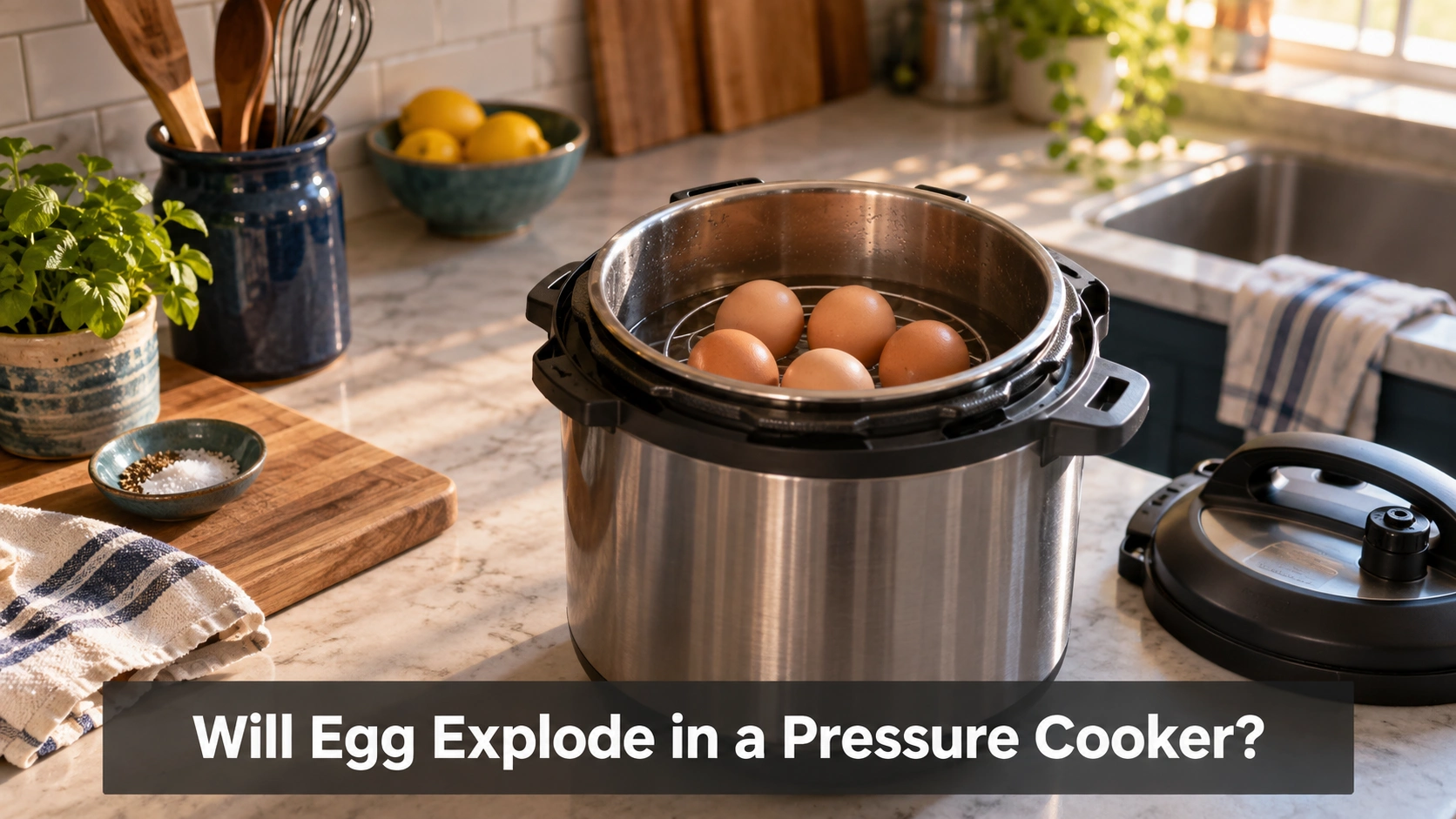
Quick Answer
An egg normally does not explode simply because you cook it in a pressure cooker. Eggs can be safely pressure-steamed when the cooker is used according to its instructions, but cracked shells, overfilled pots, blocked pressure-release parts, or forcing the lid open can create dangerous situations. For safe pressure cooking, follow the manufacturer’s instructions and review the CPSC pressure-cooker safety guidance.
What to watch for
- Intact shells: Whole eggs can be pressure-steamed, but damaged shells are more likely to leak their contents.
- Enough water: Pressure cooking requires the amount of liquid specified by your cooker or recipe.
- Proper release: Never force the lid open while the cooker remains pressurized.
- Clear vent: Keep the steam-release system clean and unobstructed.
- Correct capacity: Never exceed your pressure cooker’s maximum fill line.
Quick safety check
- If the lid is difficult to remove or the float valve remains raised, stop and allow the cooker to depressurize completely.
Will egg explode in pressure cooker? That’s a reasonable question, especially if you’ve seen warnings about eggs, shells, and pressure cooking. The short answer is no, not under normal conditions, but the way you cook and release pressure matters.
This guide explains what happens to an egg under pressure, why shells sometimes crack, what can cause trouble, and how to pressure-steam eggs more safely in 2026.
In This Guide
Can eggs explode in a pressure cooker?
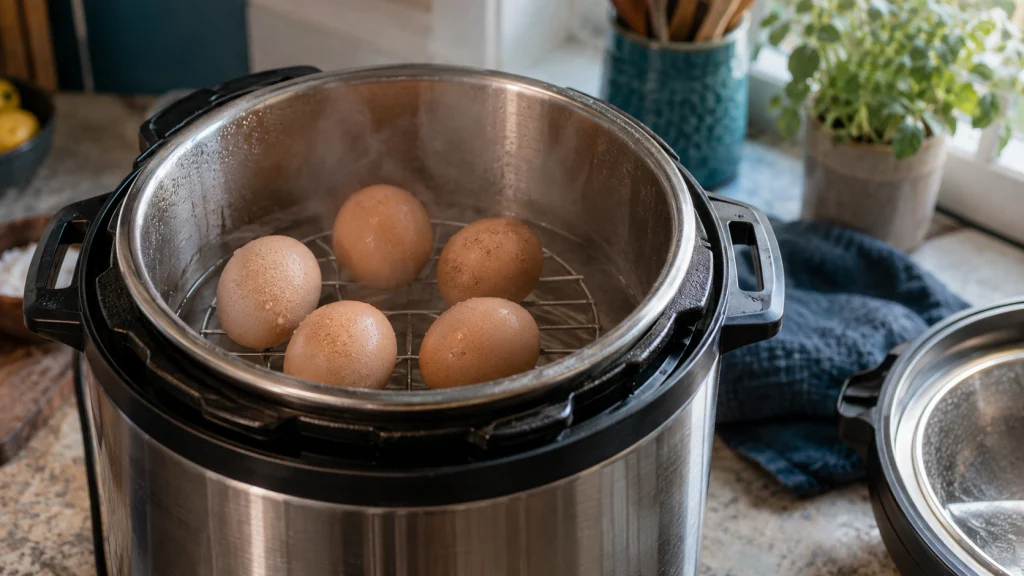
Eggs generally do not explode merely because they are inside a functioning pressure cooker. In fact, pressure-cooking manufacturers publish methods for cooking eggs in their shells.
For example, Instant Pot provides pressure-cooking instructions for eggs placed on a rack or trivet with water in the cooking pot. Its published methods include both soft-cooked and hard-cooked eggs. :contentReference[oaicite:0]{index=0}
The important distinction is between an egg cracking and a pressure cooker becoming dangerous. A cracked egg can leak, but the greater safety concern is uncontrolled pressure or opening the cooker before internal pressure has fully dropped.
What does pressure do to an egg?
A pressure cooker raises the boiling point of water by increasing the pressure inside the sealed cooking chamber. That creates a hotter steam environment than ordinary atmospheric steaming.
The shell surrounds the egg and provides a physical barrier, while the egg itself contains water, proteins, fat, and a small air space. Heating changes the proteins and causes the egg to set.
Pressure doesn’t automatically turn that trapped air space into an explosion.
Why does the word “explode” cause confusion?
People sometimes use “explode” to describe several different things. An egg may crack, split, leak, or burst during handling without producing the kind of pressure explosion associated with a failed pressure vessel.
A much more serious event occurs when hot pressurized contents escape unexpectedly. That’s why pressure-cooker safety focuses heavily on the lid, sealing system, pressure-release mechanism, and correct operating procedure.
The CPSC has documented pressure-cooker incidents where hot contents escaped under pressure and caused serious burns. :contentReference[oaicite:1]{index=1}
Section Takeaway: A properly used pressure cooker can cook eggs safely, but pressure itself doesn’t eliminate the need for careful lid and release procedures.
Why do eggs crack under pressure?
Eggs can crack because their shells are brittle and because heating creates temperature differences within the egg. A crack doesn’t necessarily mean the pressure cooker malfunctioned.
The shell can also have tiny weaknesses before cooking begins. A small impact during storage or loading may become a visible crack once the egg heats and expands.
Common reasons an egg cracks
- Cold eggs: A large temperature change can stress the shell.
- Existing damage: Hairline cracks may not be obvious before cooking.
- Hard contact: Dropping eggs onto a metal trivet can damage the shell.
- Overcrowding: Eggs packed tightly together can bump during handling.
- Rough removal: Hot eggs are easier to damage when handled carelessly.
Does pressure make the shell stronger?
No. Pressure does not turn the shell into a stronger material. The shell remains a fragile calcium-based structure while the egg cooks.
The pressure cooker also doesn’t need to squeeze the egg from every direction for cooking to work. The main cooking effect comes from the controlled high-temperature steam environment.
Can a cracked egg damage the pressure cooker?
A single cracked egg will usually leave cooked egg material in the pot rather than damage the pressure vessel itself. The bigger concern is contamination, cleanup, and the possibility that food residue could reach parts that should remain clear.
For that reason, I would remove badly cracked eggs before pressure cooking rather than treating the cooker like a place to rescue damaged eggs.
Section Takeaway: Cracked shells are usually a food and cleanup problem, not an egg-powered pressure explosion.
How do you pressure cook eggs safely?
The safest approach is simple: use a manufacturer-approved method, maintain the required liquid level, keep the pressure-release system clear, and wait until pressure has completely disappeared before opening the lid.
1. Start with intact eggs
Inspect each egg before placing it into the cooker. Skip eggs with obvious cracks or leaking contents.
2. Use a rack or trivet when your method calls for one
Manufacturer recipes commonly place eggs above the water on a rack or trivet. Instant Pot’s published egg methods use water in the inner pot and position the eggs on a rack or trivet. :contentReference[oaicite:2]{index=2}
3. Follow your specific manual
Pressure cookers differ in design, controls, pressure levels, and recommended liquid amounts. Don’t assume that a timing chart for one model automatically applies to another.
Instant Pot, for example, maintains a dedicated collection of manuals covering multiple multi-cooker models. :contentReference[oaicite:3]{index=3}
4. Keep the steam-release system unobstructed
Pressure needs a controlled path out of the cooker. Food residue or other debris around the release system can interfere with normal operation.
This matters even more with foods that can foam, froth, or sputter. CPSC safety guidance emphasizes keeping pressure-release pathways clear and ensuring users can determine when internal pressure has been released. :contentReference[oaicite:4]{index=4}
5. Never force the lid
This is the rule I would put above every egg-cooking timing chart. If the lid resists opening, treat that resistance as a warning that pressure may remain inside.
Instant Pot’s safety guidance says not to force the lid when the float valve remains raised or the lid is difficult to open. :contentReference[oaicite:5]{index=5}
6. Cool the eggs after cooking
Once the cooker has safely depressurized and the eggs are removed, cooling them in cold water can quickly stop the cooking process. Instant Pot’s published egg methods also use a cool or ice-water bath after cooking. :contentReference[oaicite:6]{index=6}
Section Takeaway: The safest egg-pressure-cooking routine is controlled and boring: intact eggs, correct liquid, clear vents, manufacturer instructions, and no forced opening.
Can you pressure cook eggs in the shell?
Yes, you can pressure-steam eggs in their shells when your pressure cooker manufacturer provides instructions for doing so. Pressure-cooking eggs in the shell is a recognized cooking method, not an inherently unsafe technique.
Instant Pot’s published recipes specifically describe steaming eggs in their shells and provide different cooking times for soft-, medium-, and hard-cooked results. :contentReference[oaicite:7]{index=7}
Pressure cooking versus boiling
| Feature | Pressure Cooker | Regular Pot |
|---|---|---|
| Cooking environment | Pressurized steam | Boiling or atmospheric steam |
| Egg position | Often on a rack or trivet | Often directly in water |
| Pressure management | Required | Not applicable |
| Main safety concern | Hot pressurized contents | Hot water and steam |
| Manufacturer instructions | Follow model-specific guidance | Usually simpler |
Pressure cooking can be convenient because the eggs sit in a controlled steam environment rather than being completely submerged. However, convenience doesn’t make pressure safety optional.
Should you poke a hole in the shell?
I don’t recommend adding a shell-puncturing step unless your specific cooker or recipe manufacturer tells you to do it. Unnecessary handling creates another opportunity to damage the shell.
A manufacturer-approved method is a better reference than a generic internet trick, especially when pressure is involved.
Section Takeaway: Eggs can be pressure-steamed in their shells, but use the method and timing recommended for your particular pressure cooker.
What happens if an egg cracks in a pressure cooker?
If an egg cracks during pressure cooking, some egg white and yolk can escape through the damaged shell. Depending on the size of the crack, you may end up with a partially intact egg and cooked egg residue in the pot.
That is unpleasant, but it isn’t the same thing as the pressure cooker exploding.
What should you do after cooking?
- Wait for full depressurization: Don’t open the cooker early to inspect the egg.
- Remove the eggs carefully: Hot shells can be slippery.
- Inspect the cooking chamber: Look for loose egg residue around the rack and inner pot.
- Clean the cooker: Follow the manufacturer’s cleaning instructions.
- Check the release area: Make sure no food residue has entered or obstructed the pressure-release system.
What if the egg bursts after cooking?
Sometimes an egg can crack when it is transferred from the hot cooker to cold water. A sudden temperature change can stress an already heated shell.
Handle cooked eggs gently and use utensils rather than grabbing several hot eggs at once.
What if the cooker is still pressurized?
Leave it alone. Do not shake it, move the lid, or attempt to force the pressure valve.
The CPSC specifically advises that a pressure cooker should not be opened until internal pressure has been released, and resistance from the lid should be treated as a warning. :contentReference[oaicite:8]{index=8}
Section Takeaway: A cracked egg is mainly a cleanup issue; a pressurized cooker is the situation that demands serious caution.
What pressure-cooker egg mistakes should you avoid?
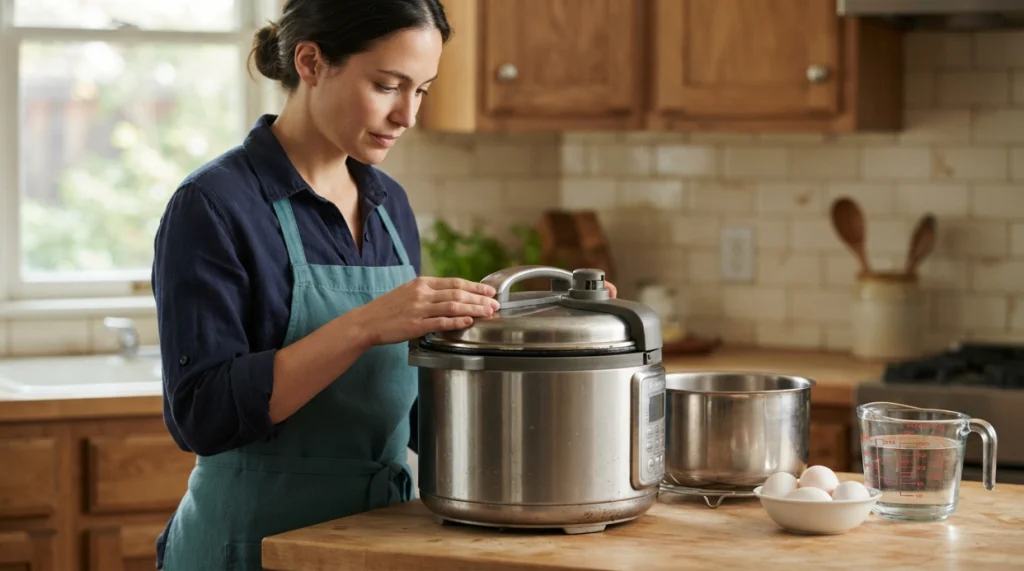
Most egg-related pressure-cooker problems come from poor handling or ignoring the appliance’s operating instructions. The egg itself is rarely the most dangerous component.
Don’t overfill the cooker
Follow the fill markings and food-specific limits in your manual. Overfilling can increase the chance of hot contents reaching the pressure-release system.
CPSC recall notices have documented pressure-cooker incidents involving hot contents being expelled under pressure, including cases associated with incorrect fill markings. :contentReference[oaicite:9]{index=9}
Don’t force a stuck lid
A stuck lid is a safety signal, not a mechanical challenge. If pressure may remain inside, stop handling the lid and follow your model’s depressurization procedure.
Don’t ignore a damaged cooker
Inspect the sealing ring, lid, pressure-release components, float valve, and inner pot according to the manufacturer’s maintenance instructions. Replace parts only with manufacturer-approved components.
Don’t use a recalled pressure cooker
Pressure-cooker recalls are not theoretical. CPSC has issued recent warnings and recalls involving models where lids could open while pressure remained inside, creating a serious burn hazard. :contentReference[oaicite:10]{index=10}
Before using an older appliance, check the manufacturer’s recall information and the CPSC database if you have concerns about the model.
Don’t rely on one universal egg recipe
Cooking time can vary with pressure level, egg size, starting temperature, cooker design, and the desired doneness. A recipe written for one pressure cooker shouldn’t automatically become the instruction manual for another.
Section Takeaway: Safe pressure-cooker egg cooking depends more on correct appliance operation than on trying to prevent an egg from “exploding.”
Pro tip: Never bypass, disable, or modify a pressure cooker’s locking, sealing, or pressure-release safety features. If a valve, lid, seal, or safety mechanism isn’t working normally, stop using the appliance and consult the manufacturer’s manual or a qualified appliance repair technician.
Pressure cooker egg FAQ
Can a hard-boiled egg explode in a pressure cooker?
A hard-boiled egg does not normally explode simply because it is pressure cooked. Whole eggs can be cooked under pressure using manufacturer-approved methods. Cracked shells, improper pressure release, overfilling, or forcing the lid open are more important safety concerns.
Is it safe to pressure cook eggs in their shells?
Yes, pressure-cooking eggs in their shells can be safe when the pressure cooker manufacturer provides instructions for the method. Use the specified water amount, cooking setting, timing, and pressure-release procedure for your particular appliance.
Why did my egg crack in the pressure cooker?
An egg may crack because of an existing hairline crack, rough handling, temperature changes, or contact with other eggs or the cooking rack. A cracked egg does not automatically indicate that the pressure cooker malfunctioned.
Can an egg clog a pressure cooker vent?
Egg residue can create a cleaning problem if it reaches areas around the pressure-release system. After cooking, inspect and clean the cooker according to the manufacturer’s instructions, and never operate a pressure cooker with a blocked or damaged release mechanism.
Should I release pressure immediately after cooking eggs?
Use the pressure-release method specified by your pressure cooker and recipe. Some manufacturer egg recipes use a short natural release followed by releasing remaining pressure, while other methods may differ. Always follow your model’s instructions rather than assuming one method fits every cooker.
What should I do if my pressure cooker lid won’t open after cooking eggs?
Do not force it. A lid that remains locked or difficult to turn can indicate that internal pressure is still present. Wait for complete depressurization and follow the manufacturer’s instructions. If the lid remains stuck after pressure is safely released, contact the manufacturer.
Are pressure cookers safe for cooking eggs in 2026?
Yes, pressure cookers can be used to cook eggs when the appliance is in good condition and operated correctly. Safety depends on using an appropriate model, following its instructions, maintaining the sealing and release components, observing fill limits, and never opening the cooker while pressurized.
Final takeaway: can an egg explode in a pressure cooker?
An egg can crack or burst during pressure cooking, but a properly functioning pressure cooker does not normally make an egg explode simply because it is under pressure.
The bigger safety issue is the pressure cooker itself. Hot contents escaping from a pressurized appliance can cause serious burns, so never force the lid, never bypass a safety mechanism, and never ignore a damaged or recalled cooker.
If you’re pressure cooking eggs, keep the process simple. Use intact eggs, the correct amount of water, a manufacturer-approved method, and a safe pressure-release procedure.
That approach gives you the convenience of pressure-steamed eggs without turning a simple breakfast into an unnecessary safety risk.