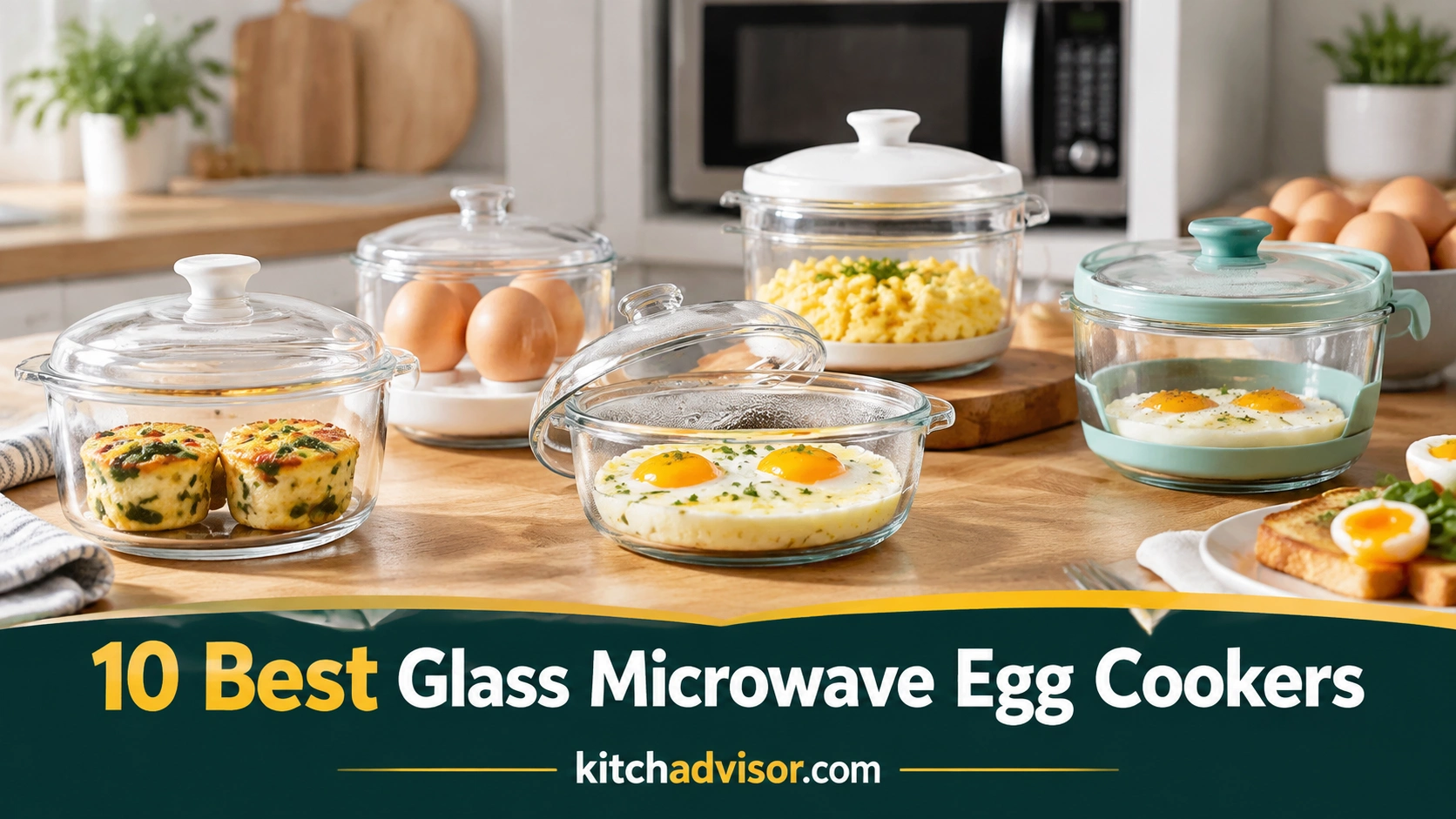
Microwaving an egg sounds simple until the shell explodes or the eggs stick so hard you give up on cleanup. A dedicated egg cooker solves both problems by controlling steam and heat more evenly than a bare bowl or mug ever could. The right container turns a two-minute microwave session into a reliable breakfast instead of a gamble.
Glass and ceramic cookers dominate this category for good reason. Both materials handle microwave heat without the warping or chemical concerns that come with some plastics, and both clean up easily in a dishwasher. Glass has the added benefit of letting you watch the eggs cook, which matters when timing is unpredictable and every microwave behaves a little differently.
The best glass microwave egg cooker will have a vented lid, a shape that suits your serving size, and a body that survives dishwasher and freezer cycles without staining or cracking. Capacity matters too: a single-serving bowl works for one egg or a small custard, while a wider dish is better suited to scrambling two or three eggs at once. Nonstick performance, handle design, and whether the piece doubles as storage all separate the good options from the mediocre ones.
Best for plastic-free storage and cooking: Anyday 2-Pack Glass Microwave Egg Cooker
Best for speed and single servings: OXO Good Grips Microwave Egg Cooker
Best for nonstick ease with 1-3 eggs: EliteVibe Ceramic Microwave Egg Cooker
Best for small-batch custards and desserts: BESTOYARD Steamed Egg Bowl
Best for families needing accessories included: Sanvvv Ceramic Egg Cooker with Spoon and Mat
Best budget glass bowl for single eggs: HOLIDYOYO Glass Egg Steaming Bowl
Best for airtight leftover storage: OUNONA Steamed Egg Bowl
Best compact option for dorms and offices: LALADEFIEE Glass Steamed Egg Bowl
Best low-cost gift-style pick: Luxshiny Microwave Egg Steamer
Best for egg-and-sausage sandwich prep: VINTORKY Steamed Egg Bowl with Lid
Anyday 2-Pack Glass Microwave Egg Cooker
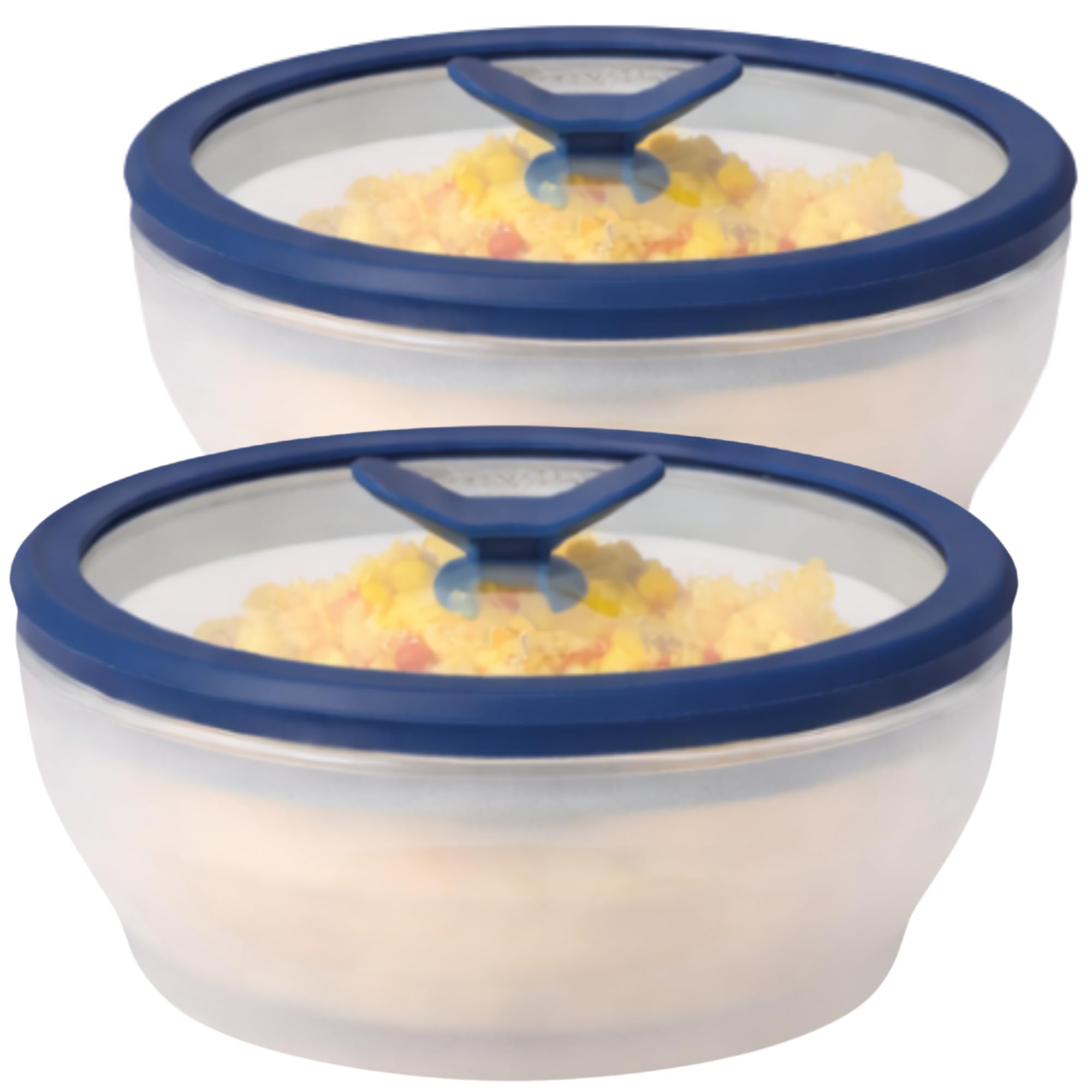
Buy this set if you want a true glass, plastic-free cooker that doubles as everyday food storage.
Pros
- Borosilicate glass body and lid, oven-safe up to 500°F
- Silicone rim traps steam for gentler cooking
- Works for scrambled eggs, poaching, and leftovers
Cons
- 2-cup capacity limits batch cooking
- Glass lid adds weight compared to plastic versions
This two-piece set stands out for going fully glass, including the lid, which most competitors pair with plastic or silicone. The silicone gasket around the rim does real work trapping steam, producing softer scrambled eggs than an uncovered bowl. Reviewers report using it well beyond eggs, for oatmeal, reheating, and small meal-prep portions. Dishwasher, freezer, and oven compatibility make it one of the more versatile picks here, though the compact size means one or two eggs per bowl at most.
OXO Good Grips Microwave Egg Cooker

Choose this one for the fastest, most consistent single-egg cooking of anything on this list.
Pros
- Cooks scrambled or fried eggs in about a minute
- Stay-cool handle and removable base for easy transfer
- Widely reviewed with a strong satisfaction track record
Cons
- Made of polypropylene plastic, not glass or ceramic
- Some users report egg sticking to the base
The OXO cooker is plastic, not glass, but it earns its spot for sheer convenience and a long history of positive feedback. The curved base centers yolks for fried eggs, and the wide opening lets you whisk directly inside the cooker before microwaving. It is built for breakfast sandwiches specifically, with a removable base that slides eggs straight onto an English muffin. Cleanup is dishwasher-safe, though a few reviewers note eggs sticking without a light coat of oil first.
EliteVibe Ceramic Microwave Egg Cooker

This ceramic cooker suits anyone scrambling two to three eggs who wants better release than plastic without switching to glass.
Pros
- Non-stick ceramic coating improves egg release
- Vented lid reduces splatter inside the microwave
- Holds up to three eggs for bigger portions
Cons
- Handle runs hotter than the “stays cool” claim suggests
- Three eggs can cause overflow if power is too high
Ceramic sits between glass and plastic on durability and heat handling, and this cooker uses that middle ground well. The non-stick interior genuinely reduces scraping compared to bare ceramic, and the vented lid keeps the microwave cleaner during cooking. Reviewers who stick to two eggs report the best results; a full three-egg batch can push past the rim and lift the lid. The hollow handle is a nice idea, though several buyers needed a potholder after longer cook times.
BESTOYARD Steamed Egg Bowl
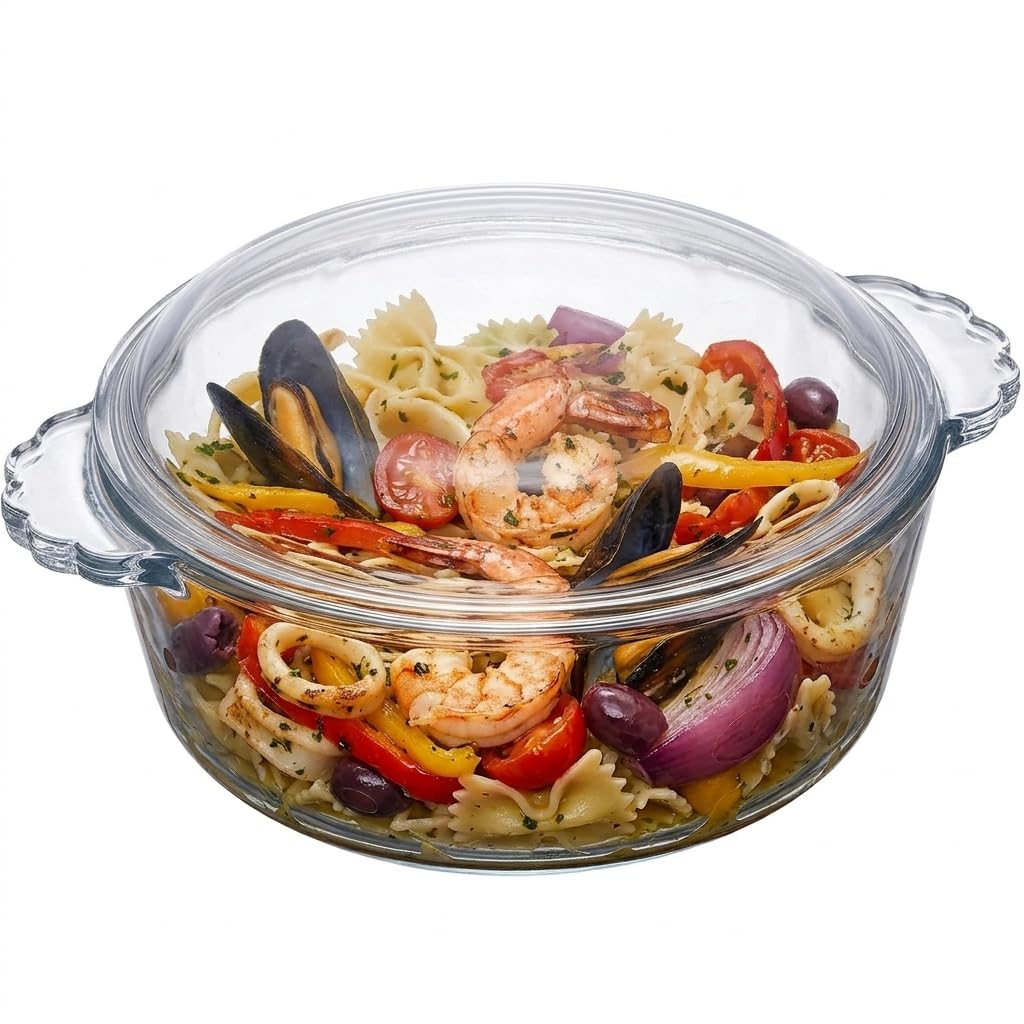
This is a strong pick for single-serving custards, puddings, and one-egg breakfasts where portion control matters.
Pros
- Heat-resistant glass built for microwave and steaming
- Dual handles make hot transfers safer
- Compact 10-ounce size limits waste and overcooking
Cons
- Too small for multi-egg or family portions
- Slow cooking required to avoid overflow
At 10 ounces, this bowl is sized for one serving, whether that’s a single steamed egg, a custard, or a small dessert. The dual handles are a practical touch for pulling a hot dish out of the microwave without fumbling. One reviewer notes success using low power (level 2 on a 1000W microwave) over several minutes rather than rushing on high, which tracks with how glass handles gentle, gradual heating better than a quick blast.
Sanvvv Ceramic Egg Cooker with Spoon and Mat
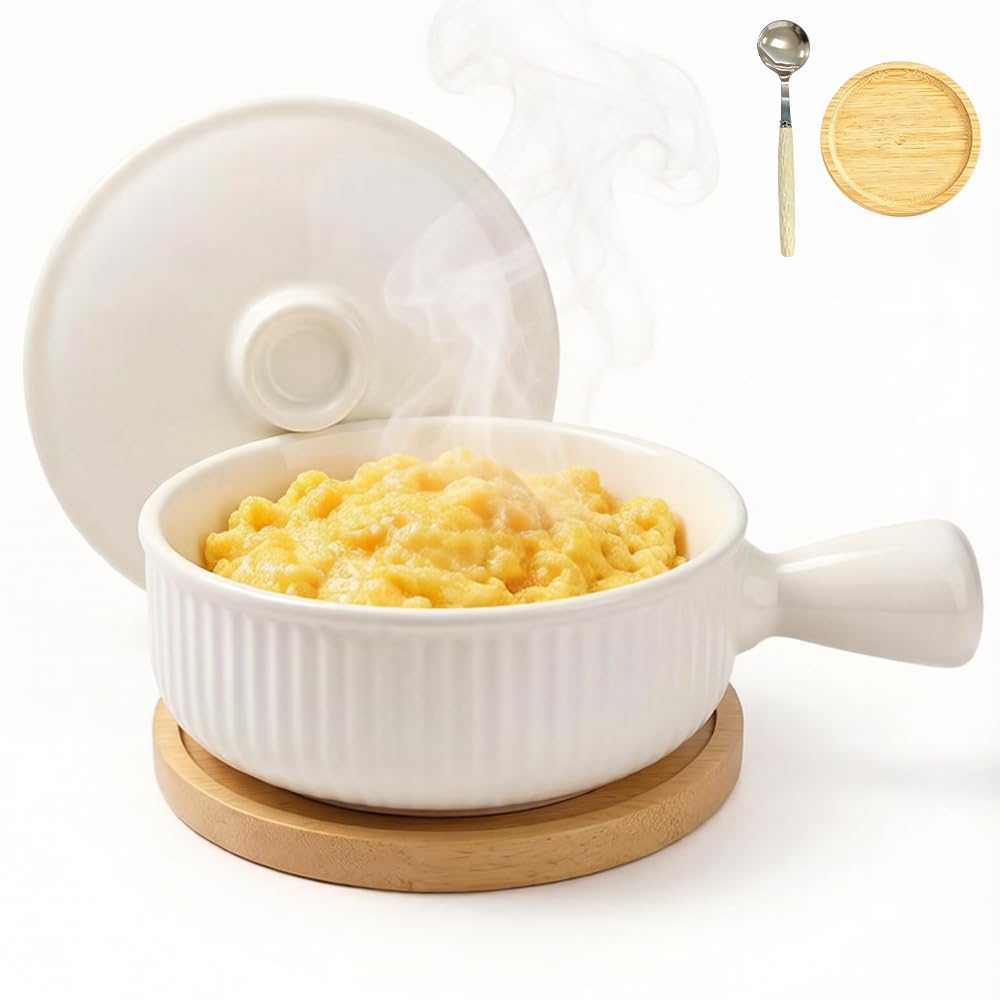
Buy this if you want a complete kit, spoon and heat mat included, for a student or first-apartment kitchen.
Pros
- Includes stainless spoon and wooden heat-resistant mat
- Splash-guard lid balances steam without a tight seal
- Holds up to three eggs plus mix-ins like spinach or cheese
Cons
- Sticking is a recurring complaint without added oil
- Cook times run longer than plastic competitors
The accessory bundle here makes this a thoughtful gift pick, especially for someone setting up a kitchen for the first time. The wooden mat protects countertops from a hot ceramic base, a detail other cookers skip entirely. Reviewers who add a splash of water or a bit of olive oil report smoother release and more even cooking. It takes longer than the OXO or EliteVibe models, but the added capacity and mix-in room make it worthwhile for heartier breakfasts.
HOLIDYOYO Glass Egg Steaming Bowl
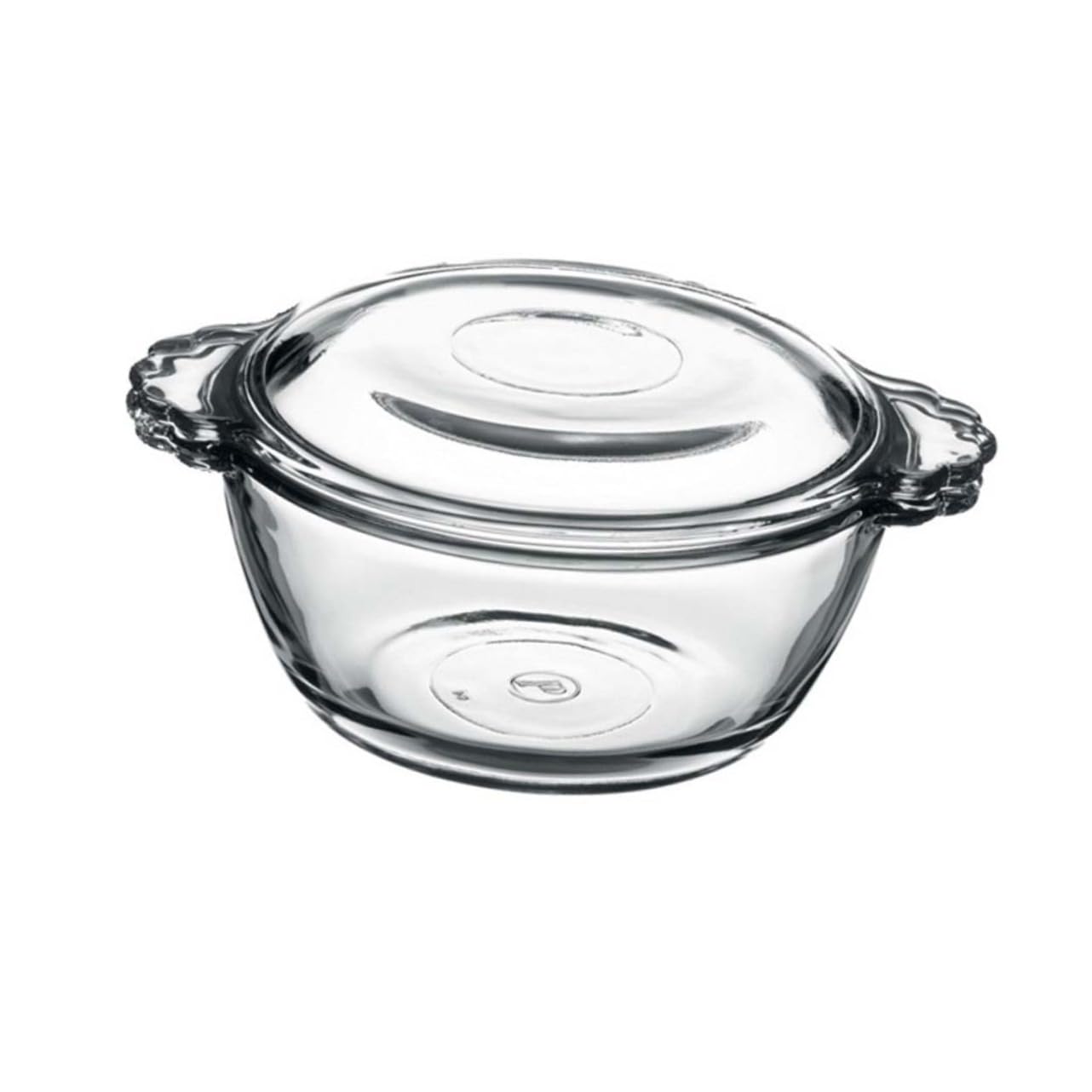
This lightweight glass bowl works well as a low-cost, no-frills option for single eggs or small desserts.
Pros
- Simple glass construction, oven and microwave safe
- Lightweight and easy to store in small kitchens
- Doubles as a dish for pudding or milk desserts
Cons
- No published reviews to confirm real-world performance
- Small size limits use to single portions
This bowl covers the basics: heat-resistant glass, a fitted lid, and a compact footprint that tucks into a cabinet without trouble. It is built for one egg or a small custard rather than a full breakfast for two. With no customer reviews yet, it is worth treating as an affordable, low-risk pick rather than a proven performer.
OUNONA Steamed Egg Bowl
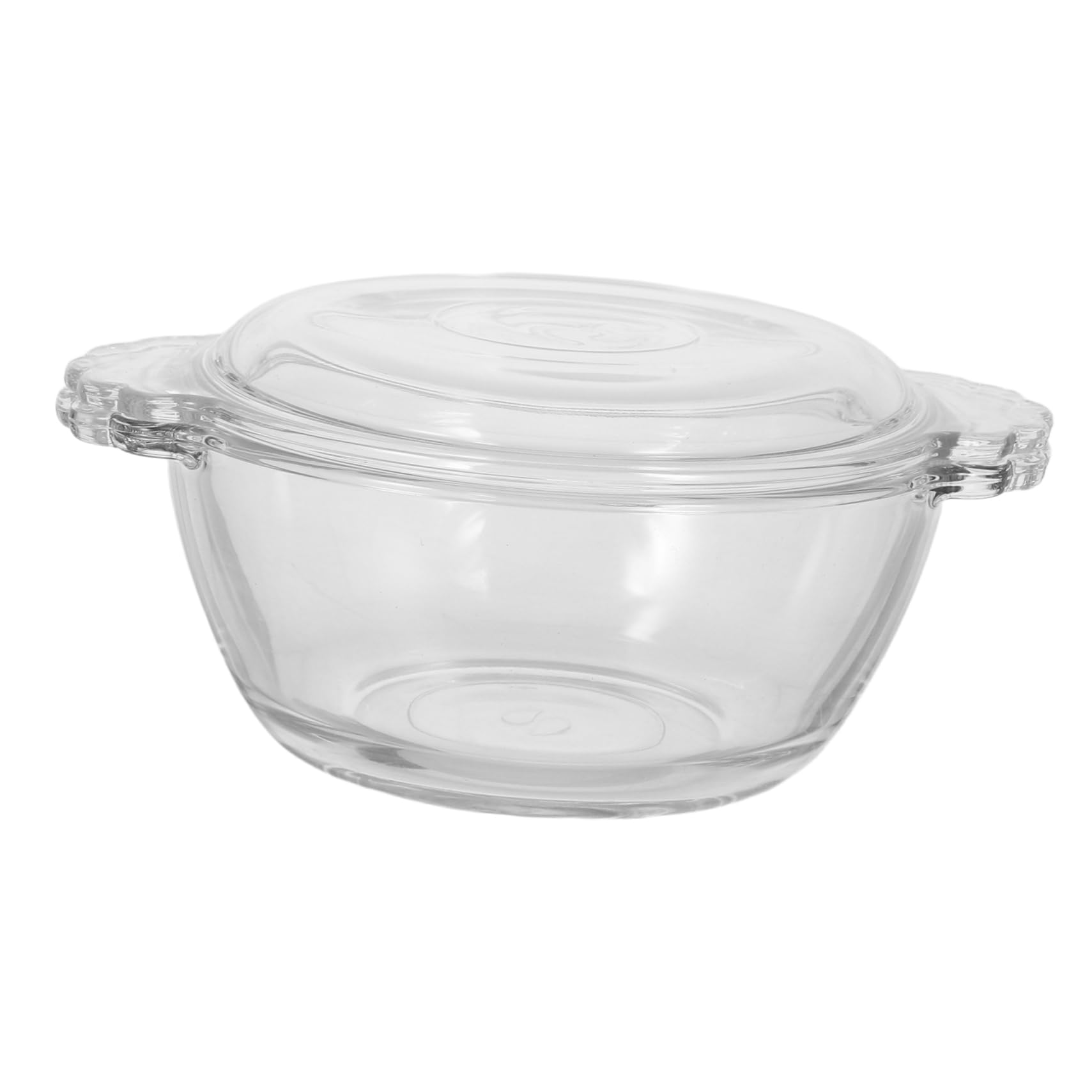
Pick this one if an airtight seal for leftovers matters as much as microwave cooking.
Pros
- Airtight lid design suited for storage after cooking
- Premium glass build resists staining
- Lightweight for easy handling and cleanup
Cons
- Small single-serving capacity
- No customer review history yet
The airtight claim separates this bowl from similar glass options that only cover loosely for steam venting. That makes it a better fit for cooking an egg in the morning and storing extra portions of soup or dessert later without transferring dishes. The glass itself is described as premium and stain-resistant, though independent feedback isn’t yet available to confirm long-term durability.
LALADEFIEE Glass Steamed Egg Bowl
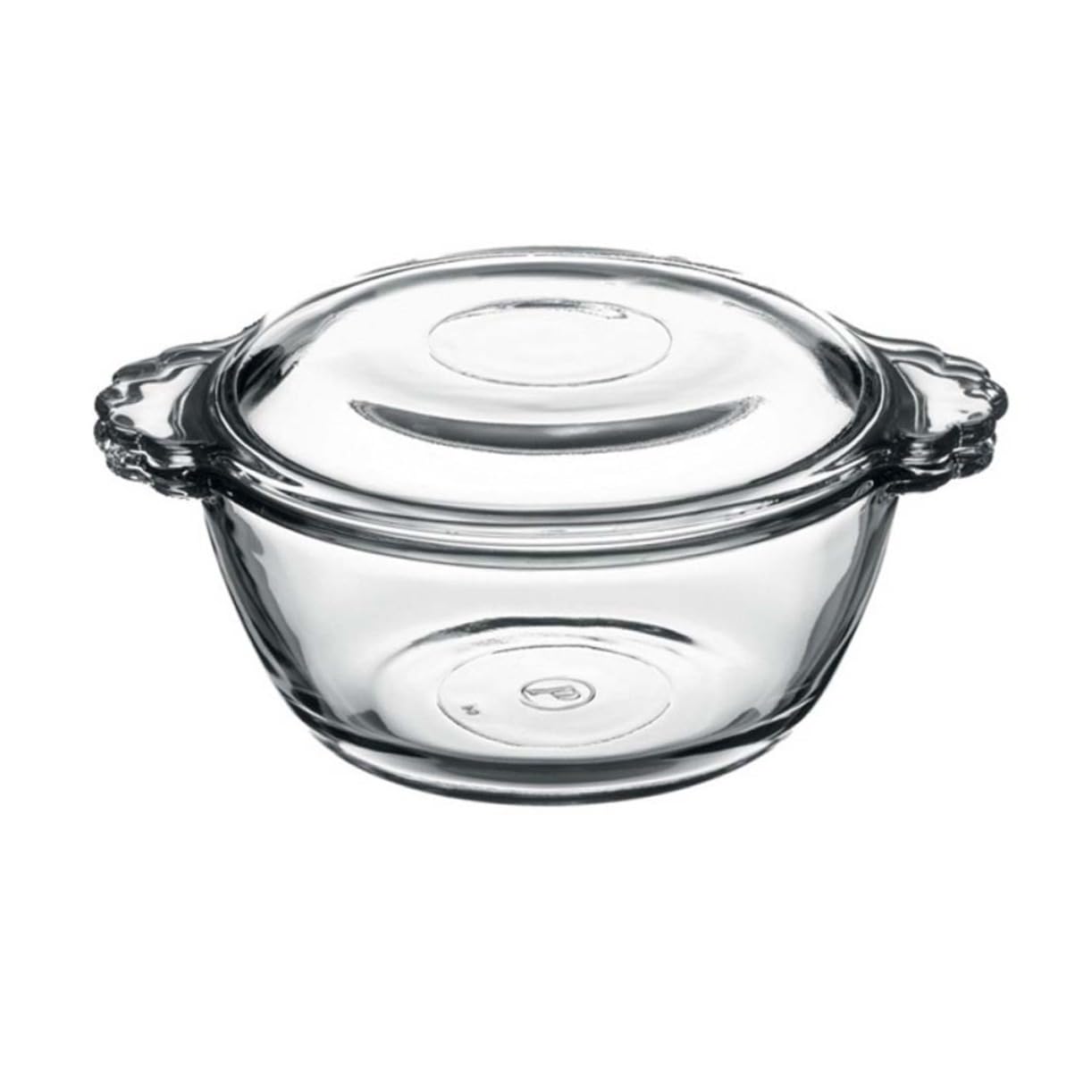
This compact glass bowl fits dorm rooms and office desks where storage space is tight.
Pros
- Handle design for easier gripping when hot
- Fine workmanship with a clean, simple look
- Works for eggs, pudding, or milk desserts
Cons
- Very small single-serving size
- No verified customer reviews
Built at the same roughly 275ml capacity as several other glass bowls in this roundup, this one adds a molded handle for a better grip straight out of the microwave. It suits a dorm room or a desk drawer more than a family kitchen. Absent published reviews, treat the durability and sealing claims as manufacturer descriptions rather than confirmed performance.
Luxshiny Microwave Egg Steamer
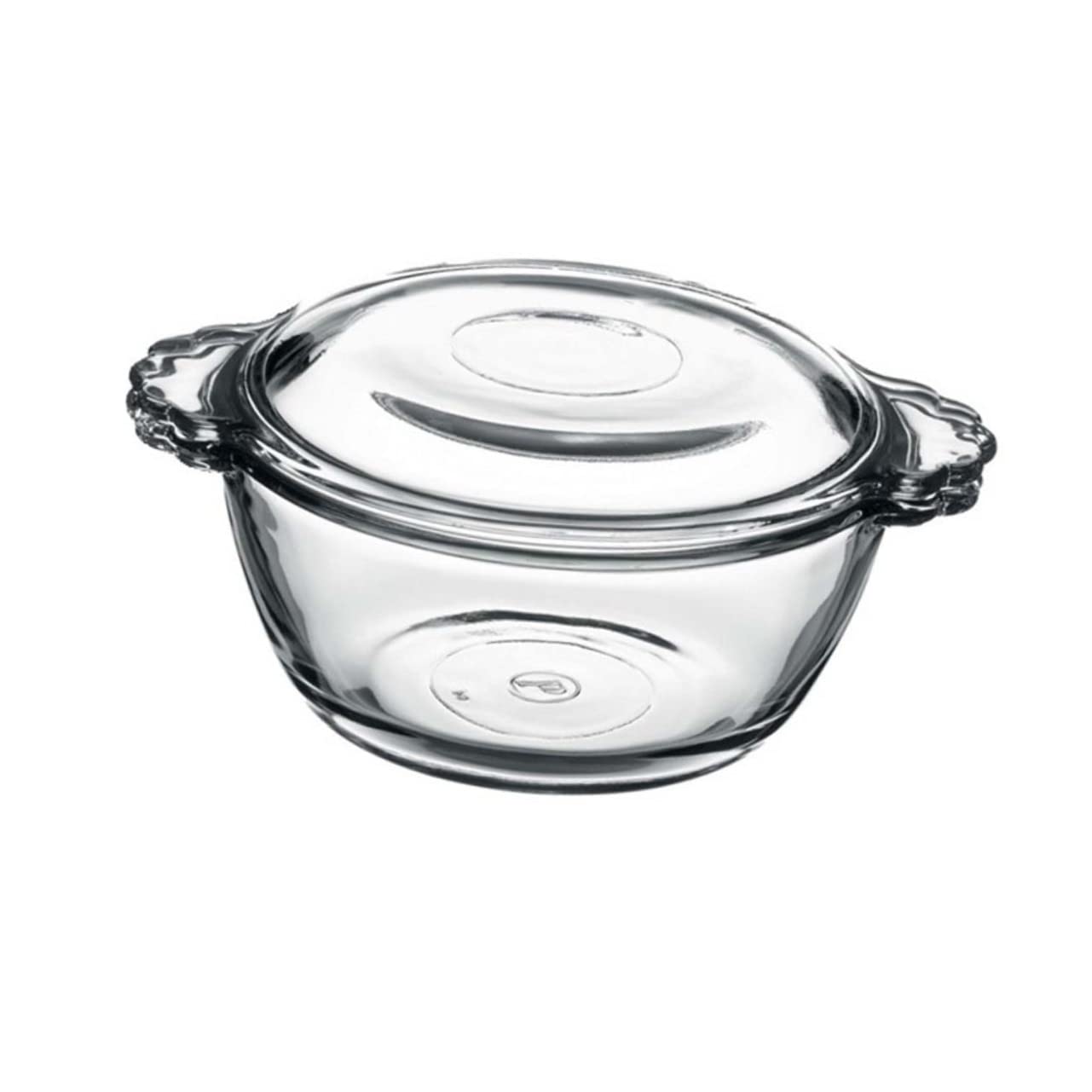
This is a reasonable low-cost pick for anyone testing whether a dedicated egg bowl fits their routine before spending more.
Pros
- Simple, functional glass design at a low price point
- Compact size suits single servings
- Microwave and oven compatible
Cons
- No customer reviews published
- Limited to small portions, not batch cooking
Nearly identical in dimensions and material to other glass bowls here, this option leans on straightforward glass construction rather than added features. It works fine as a starter cooker for someone unsure if they’ll use a dedicated egg bowl regularly. Without customer feedback on file, it makes sense to set expectations around basic performance rather than standout results.
VINTORKY Steamed Egg Bowl with Lid
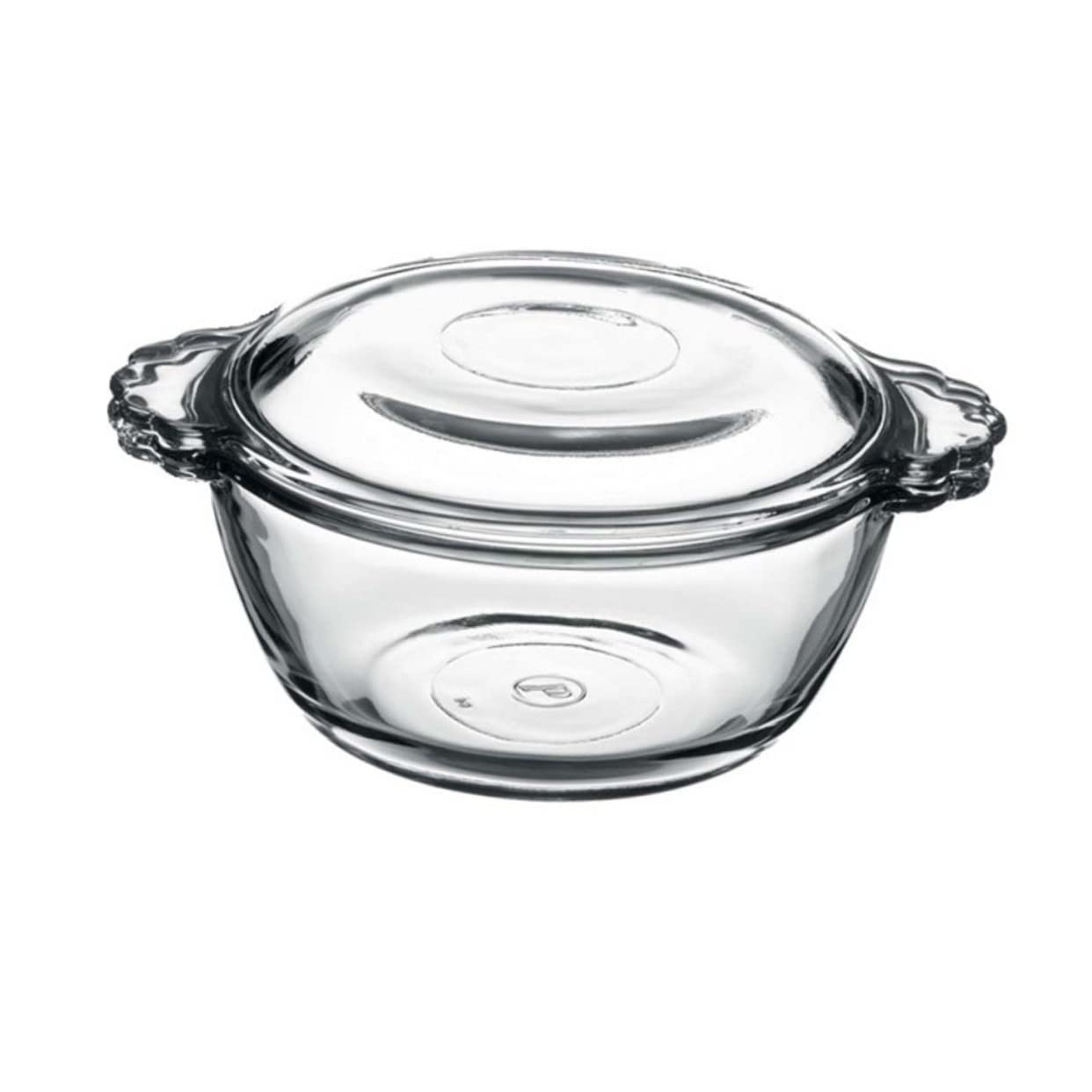
Buy this one for stacked egg-and-sausage sandwich prep in a single microwave run.
Pros
- One reviewer confirms success cooking egg and sausage patty together
- Compact glass build with a fitted lid
- Quick cleanup after cooking
Cons
- Limited review history overall
- Small capacity restricts use to one or two servings
A single detailed review here describes stacking an egg in the bottom and a sausage patty using the lid section, producing both components of a breakfast sandwich in one microwave cycle. That’s a clever workaround worth trying if similar bowls don’t offer separate cooking zones. Capacity remains limited to individual servings, and broader feedback is still thin.
Buying Guide
Material: Glass vs. Ceramic vs. Plastic
Glass wins on transparency and chemical inertness. It contains no BPA-adjacent concerns and lets you watch the eggs cook, which helps prevent overflow. Ceramic offers similar safety with added non-stick coatings in some models, though coatings wear over time. Plastic cookers cook fast and resist chipping but degrade under repeated high heat.
| Material | Pros | Cons |
|---|---|---|
| Glass | Chemical-free, visible cooking, oven-safe in most cases | Heavier, can chip or crack if dropped |
| Ceramic | Often non-stick, good heat retention | Coating can wear, handles may run hot |
| Plastic | Lightweight, often cheapest | Prone to staining and warping over time |
Capacity and Portion Size
Match the bowl to your typical serving. A 1-2 cup bowl suits a single egg or small custard. A 3-egg capacity cooker works better for households or anyone adding vegetables and cheese to scrambled eggs.
Lid Ventilation
A vented or loosely fitted lid prevents pressure buildup that can cause eggs to burst mid-cook. Airtight lids are better suited to storage after cooking rather than the cooking process itself.
Versatility Beyond Eggs
Many of these bowls double as containers for puddings, custards, soups, and vegetables. If you plan to use one dish for multiple purposes, prioritize oven-safe ratings and dishwasher compatibility over egg-specific features like curved bases for fried eggs.
Cleanup and Storage
Dishwasher-safe glass and ceramic simplify daily use. Stackable designs and included lids that double as storage covers add convenience for small kitchens with limited cabinet space.
Editor’s Choice
The Anyday 2-Pack Glass Microwave Egg Cooker earns the top recommendation for combining true borosilicate glass construction with genuine multi-use versatility. It cooks eggs gently thanks to the silicone-rimmed lid, survives oven temperatures up to 500°F, and transitions from cooking to fridge storage without switching dishes. For anyone prioritizing a glass-first, low-chemical kitchen tool, this set delivers the most complete package.
The OXO Good Grips Microwave Egg Cooker remains the fastest option for a single egg sandwich, even though it’s built from plastic rather than glass. For readers who want ceramic’s non-stick benefit with the ability to cook up to three eggs, the EliteVibe cooker is worth the slightly longer cook time.
Conclusion
Choosing between these cookers comes down to how you weigh material, portion size, and how much cleanup you’re willing to tolerate. Glass bowls from Anyday, BESTOYARD, and the smaller unbranded options offer the clearest view into the cooking process and the fewest chemical concerns. Ceramic picks like EliteVibe and the Sanvvv kit trade a bit of transparency for improved non-stick release and bigger capacity.
For daily single servings, a compact glass bowl in the 8-10 ounce range covers eggs, custards, and reheated leftovers without cluttering a cabinet. For households cooking two or three eggs at once, ceramic or the larger glass sets handle the extra volume better. Matching the bowl to your actual breakfast routine, rather than buying based on marketing claims alone, makes the biggest difference in daily satisfaction.
FAQS
Is glass or ceramic better for microwave egg cooking?
Glass offers better visibility during cooking and tends to resist staining longer. Ceramic often includes non-stick coatings that make egg release easier, though the coating can wear with heavy dishwasher use over time.
Can these cookers handle more than eggs?
Most glass and ceramic bowls in this category double as containers for oatmeal, custards, puddings, soups, and reheated vegetables. Check the oven-safe rating if you plan to bake or broil in the same dish.
Why do eggs sometimes explode in the microwave?
Steam builds up faster than it can escape, especially in sealed containers. A vented lid or a lid propped slightly open reduces this risk, and cooking at lower power in shorter intervals helps too.
How many eggs can a typical cooker hold?
Single-serving bowls hold one egg comfortably. Larger ceramic and glass cookers advertise capacity for two to three eggs, though several reviewers note that filling to the maximum increases the chance of overflow.
Are these cookers dishwasher safe?
Every product in this roundup lists dishwasher-safe care instructions. Hand-washing extends the life of non-stick ceramic coatings if you want to preserve easy release longer.