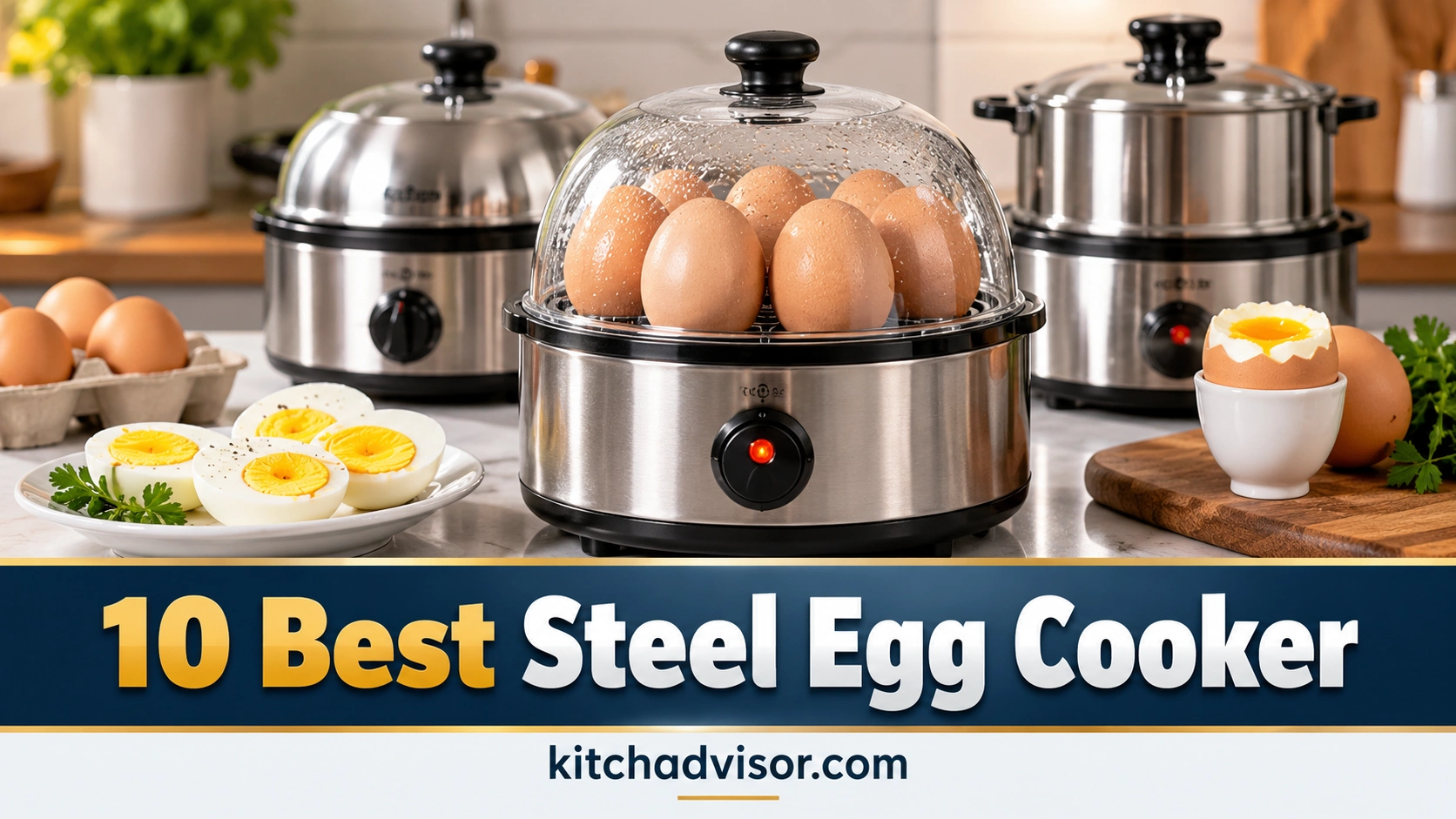
A hard-boiled egg sounds simple until you’re standing over a pot, guessing at timing and fishing shells out of a rolling boil. A steel egg cooker takes that guesswork away, using a measured amount of water and a timed heating cycle to deliver consistent results whether you want soft, medium, or hard yolks. Stainless steel construction matters here because it resists staining, holds up to daily use, and cleans up faster than the plastic-only models that scratch and discolor over time.
Electric egg cookers and stovetop poaching pans solve different problems. Electric units automate the process with built-in timers, auto shut-off, and audible alerts, while stovetop poachers rely on your stove’s heat and give you more direct control over doneness. The best pick depends on how many eggs you cook at once, whether you want poaching or omelet functions, and how much counter space you’re willing to give up. Trays with a stainless steel finish also tend to resist odors better than plastic inserts, which matters if you’re cooking eggs daily.
Cleanup, capacity, and control style separate the good models from the frustrating ones. A few units in this lineup include digital displays, others rely on a simple mechanical buzzer, and one is a purely stovetop tool with no electronics at all. The comparison below breaks down which stainless steel egg cooker fits a busy family’s breakfast rush, a meal prepper’s batch-cooking needs, or a small kitchen’s limited storage.
Best for large batches: Cuisinart CEC-10 Egg Central
Best for everyday simplicity: Elite Gourmet EGC855SS
Best value pick: Elite Gourmet EGC648
Best for poached eggs on the stovetop: Eggssentials Egg Poacher
Best for induction cooktops: EXCELSTEEL Egg Poacher
Best mid-range electric cooker: Elite Gourmet EGC724SS
Best for digital control: Elite Gourmet EGC785SS
Best for meal preppers: CACHOO 14-Egg Cooker
Best compact classic design: NESCO EC-10
Best budget-friendly option: VOBAGA Electric Egg Cooker
Cuisinart CEC-10 Egg Central Egg Cooker, Brushed Stainless Steel

Buy this if your household goes through a dozen eggs at a time and wants a brand name backed by a long warranty.
Pros
- Two-tier system cooks 10 eggs at once
- Poaching and omelet trays included
- Built-in cord storage and a 3-year warranty
Cons
- Plastic trays despite the steel lid
- Restarts cooking cycle if left plugged in
- Bulkier footprint than single-tier models
The two-tiered design is the standout feature here, letting us cook a full batch of hard-boiled eggs on one level while poaching or making omelets on the other. The blue LED and audible alert make it easy to walk away and trust the timing.
Cleanup stays simple thanks to removable trays, though we’d like to see a nonstick coating on the base plate. The one real complaint from long-term users is that the unit can restart heating after standby instead of staying off, so unplugging after use is worth the extra step.
Elite Gourmet 7-Egg Cooker EGC855SS
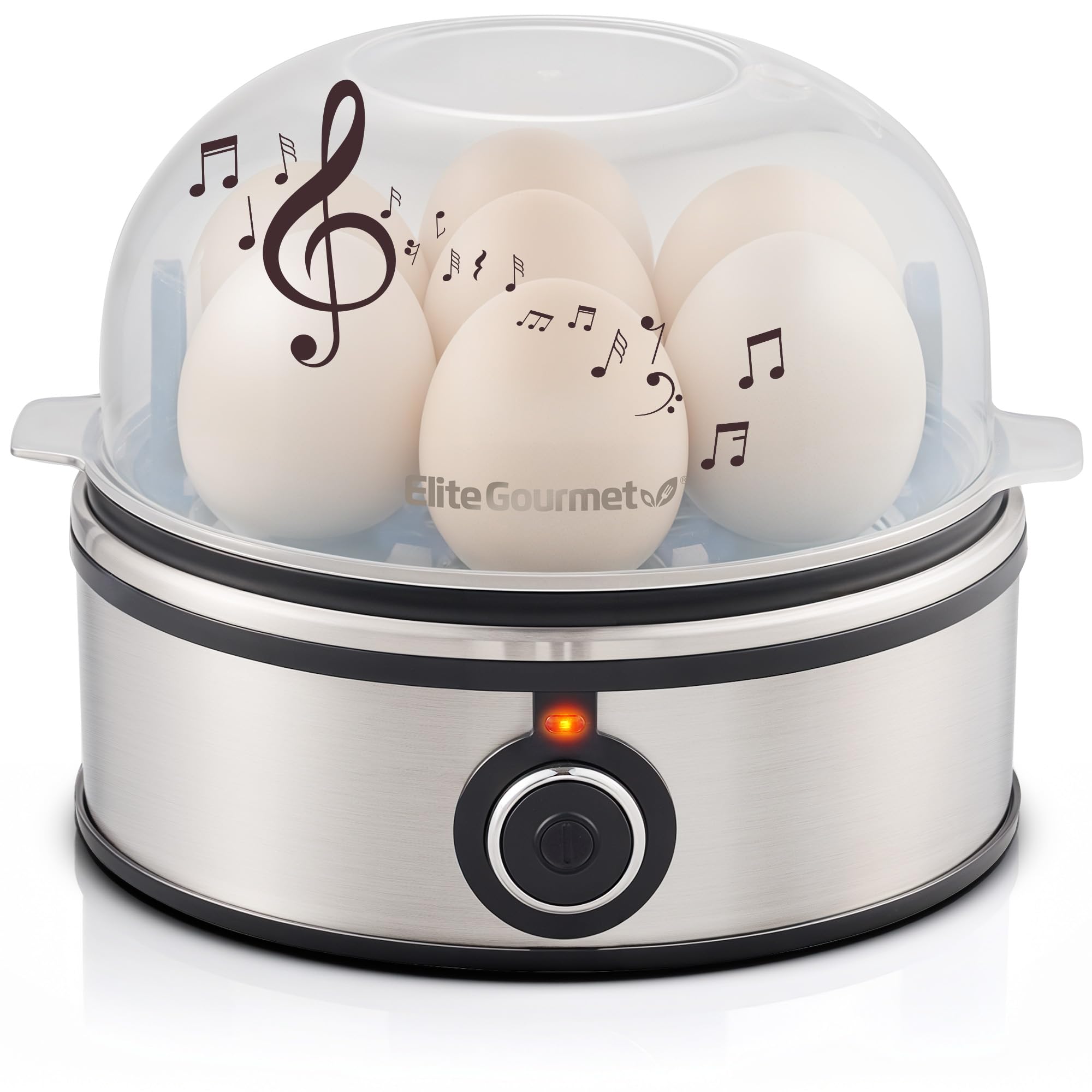
Buy this if you want a fuss-free, well-reviewed cooker for daily breakfasts without digital menus to learn.
Pros
- Melody alert instead of a harsh buzzer
- Dishwasher-safe trays on the top rack
- Includes poaching and omelet trays
Cons
- Instruction manual has a printing error about hand-washing
- 7-egg capacity may be tight for larger families
- Auto shut-off timing can run warm if left plugged in
This model’s stainless steel shell has a clean look on the counter, and the piercing pin built into the measuring cup is a small touch that prevents cracked shells during cooking. The melody alert is genuinely pleasant compared to a shrill beep.
Home cooks praise how consistently the eggs peel after cooking, a common complaint with stovetop boiling. The included recipe booklet adds value for anyone new to poaching or omelet-making in a countertop unit.
Elite Gourmet EGC648 Egg Boiler
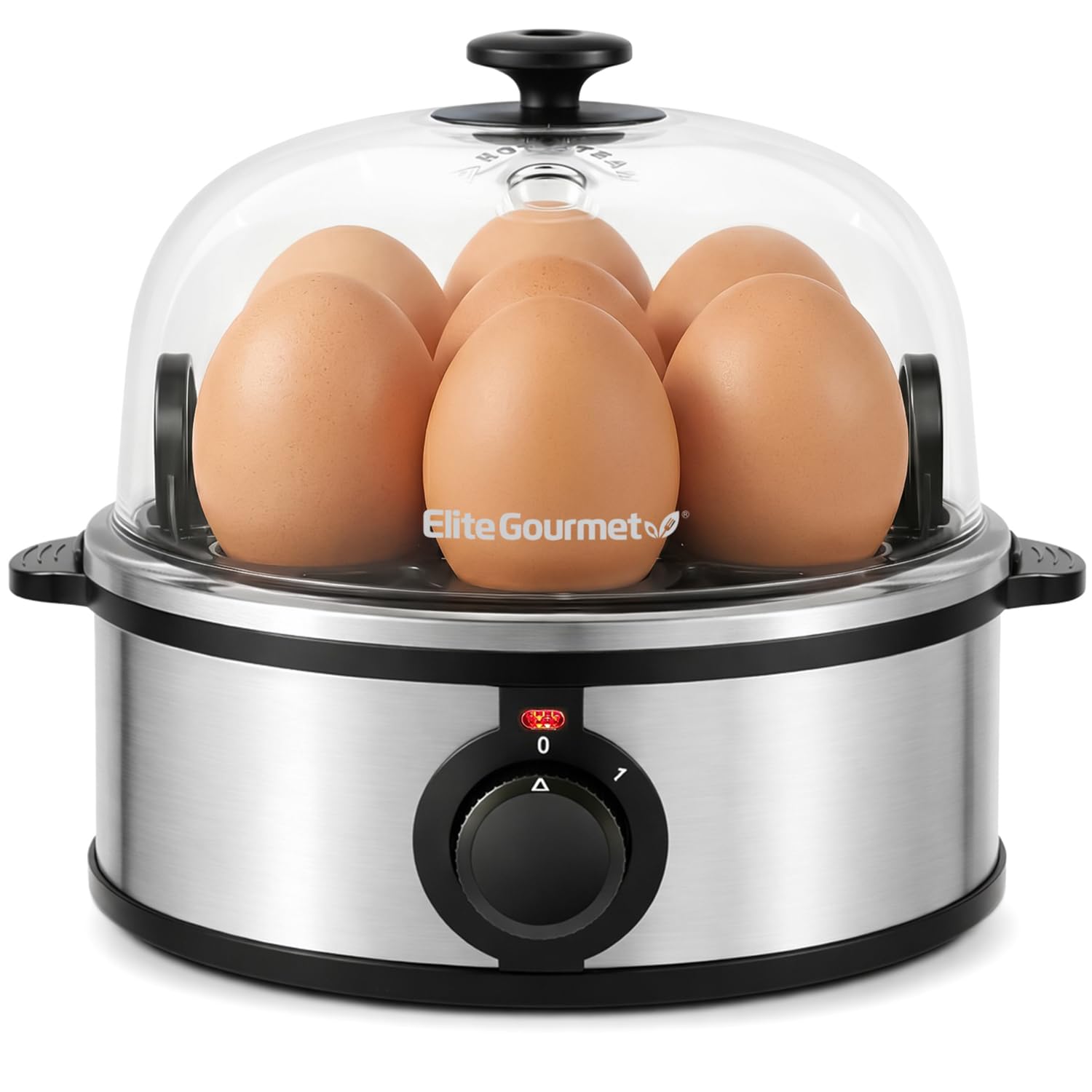
Buy this if you want proven reliability at a lower price point than the newer Elite Gourmet models.
Pros
- Stainless steel body, not just a steel-look lid
- Auto shut-off with buzzer alert
- Compact enough for dorms and small kitchens
Cons
- Doneness settings aren’t adjusted for egg quantity
- Piercing pin sometimes doesn’t fully puncture the shell
- No digital display for precise control
Reviewers with backyard chickens note that fresh eggs, which are notoriously hard to peel, come out clean and intact with this cooker. The stainless steel material (rather than the plastic-and-steel-trim combo seen elsewhere) gives it a sturdier feel in daily use.
The tradeoff is a simpler control scheme: soft, medium, and hard settings don’t scale automatically for different egg counts, so some trial and error is needed the first few times. Once dialed in, the results stay consistent.
Eggssentials 4-Cup Egg Poacher
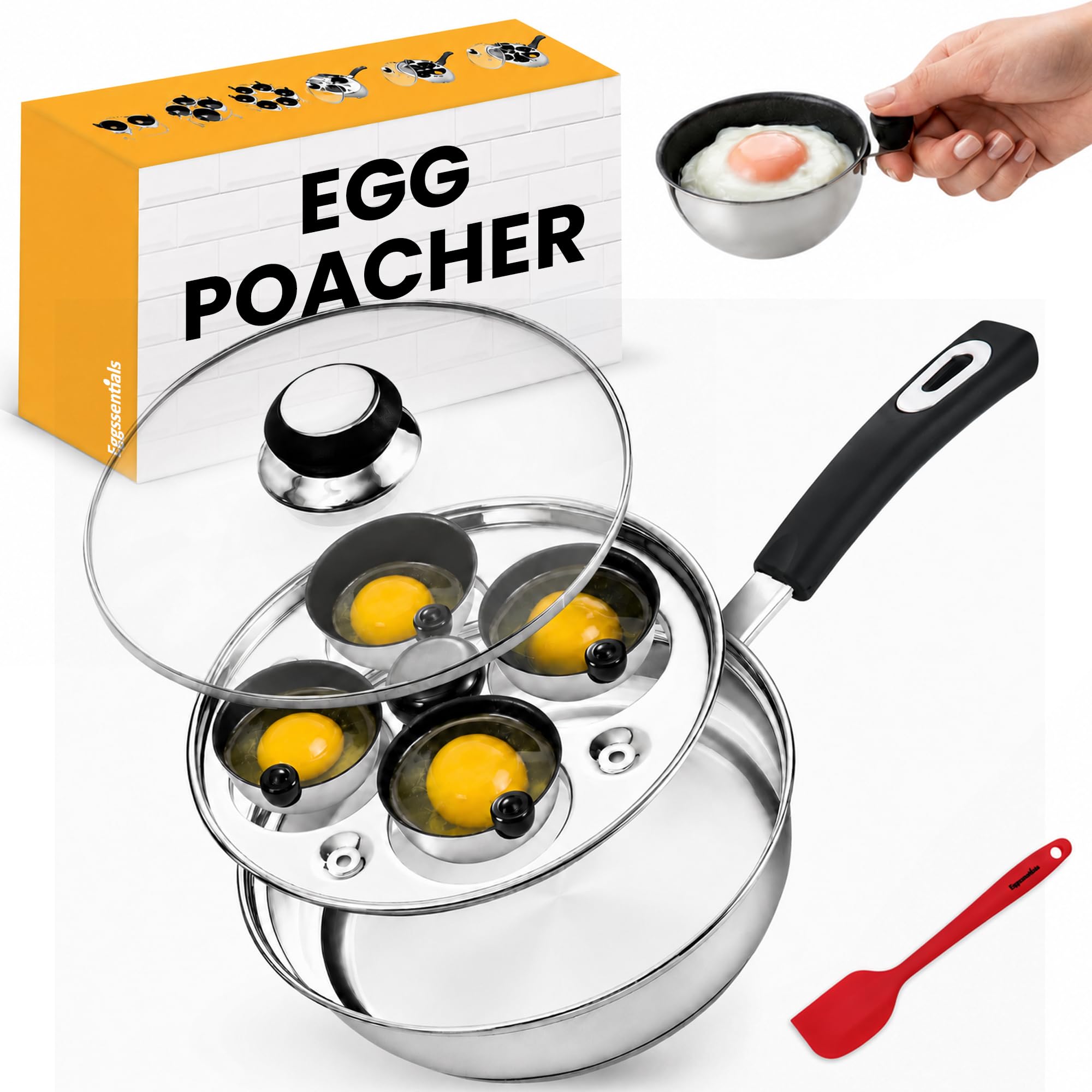
Buy this if poached eggs are the goal and you’d rather use your existing stovetop than add another electric appliance.
Pros
- Works on all stovetops, including induction
- Nonstick, PFOA-free insert cups
- Doubles as a sauté pan without the insert
Cons
- Limited to 4 eggs per batch
- Requires active stovetop monitoring
- Not suited for hard-boiling in the shell
This pan’s 3-ply aluminum-encapsulated bottom heats evenly, which matters for poaching since hot spots cause uneven whites. The tempered glass lid lets us watch progress without lifting it and losing steam.
Unlike electric cookers, this tool demands attention to the stove dial, but that also means finer control over firmness. The Bakelite handle stays cool, and the individual cups lift out cleanly for dishwasher cleanup.
EXCELSTEEL 6-Cup Egg Poacher

Buy this if you cook on an induction range and want a stovetop poacher built specifically for that kind of heat.
Pros
- 18/10 stainless steel construction suited for induction
- Stay-cool handle and knob
- Dishwasher-safe parts
Cons
- Metal rack can arrive slightly warped
- No electronic timer or shut-off
- Larger footprint at over 16 inches long
Reviewers consistently mention how well this poacher performs for eggs Benedict, with eggs releasing cleanly from the nonstick cups in under five minutes. The water-level guide etched into the pan helps prevent overfilling.
A few buyers received units with a warped internal rack that made the lid sit unevenly, worth checking on arrival. Otherwise, the build feels solid enough for daily use, and it looks presentable enough to serve straight from the pan.
Elite Gourmet EGC724SS Egg Boiler

Buy this if you want the Elite Gourmet formula at a lower entry price with all the same core functions.
Pros
- Consistent hard-boil results with easy peeling
- Auto shut-off and buzzer alert
- Handles poaching, omelets, and scrambled eggs
Cons
- Some users report inconsistent boil percentages
- Rated slightly lower overall than sibling models
- Basic build compared to the digital version
Owners with home chickens report this cooker handles farm-fresh eggs well, a task that often frustrates stovetop boiling since fresher eggs resist peeling. The piercing pin built into the measuring cup helps release steam pressure before cooking starts.
A handful of reviews mention uneven results on some batches, so it helps to stick closely to the water-fill lines. For the price, it delivers dependable everyday performance for soft, medium, and hard-boiled eggs.
Elite Gourmet EGC785SS Digital Egg Cooker
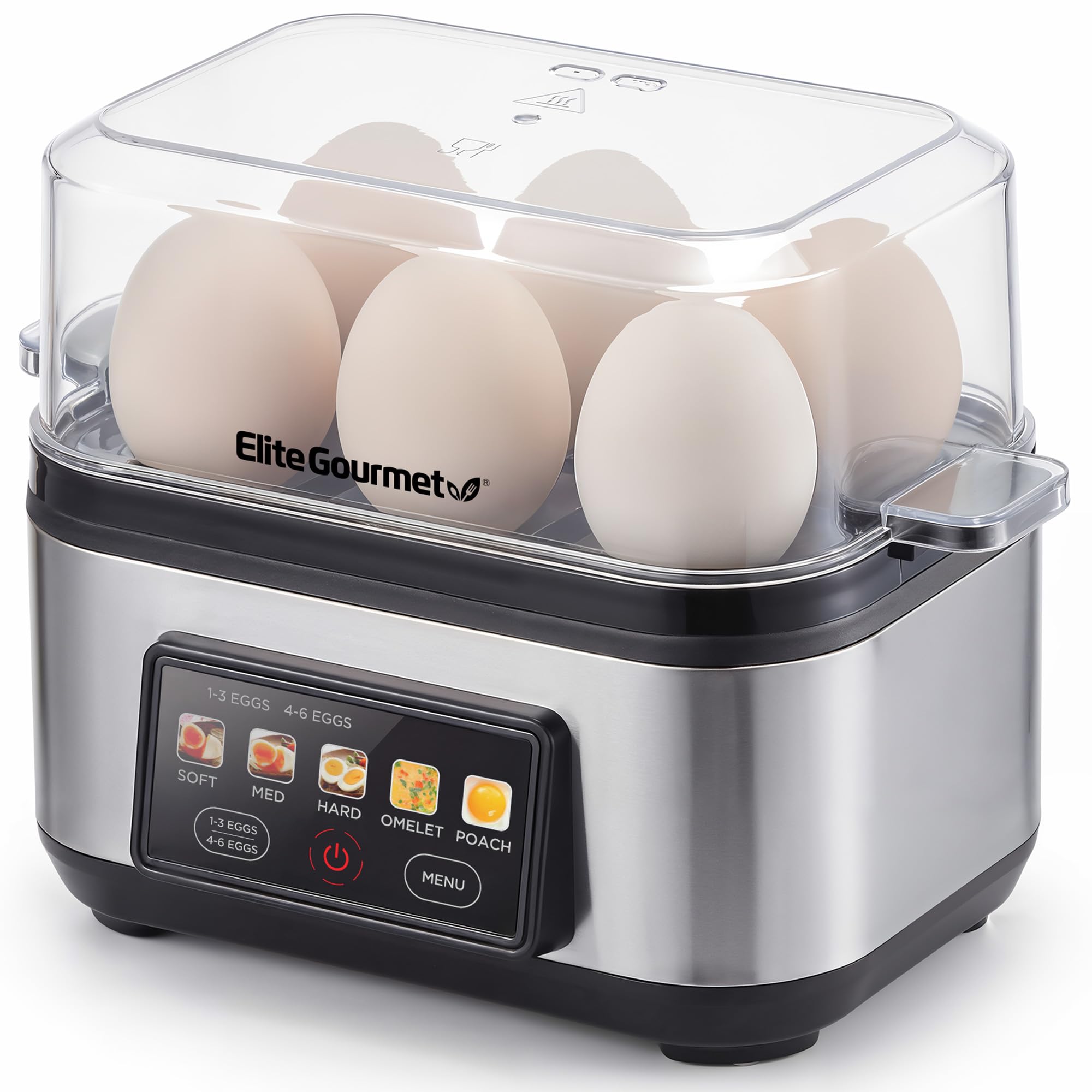
Buy this if you prefer pressing buttons on a digital screen over eyeballing a measuring cup.
Pros
- One-touch display selects egg count and mode
- Stainless steel housing and heating plate
- Poaching bowl and omelet function included
Cons
- Smaller 6-egg capacity than some rivals
- No visible countdown timer during cooking
- A few reports of inconsistent results after repeated use
The graphic display sets this cooker apart from the rest of the lineup, letting us tap through settings instead of measuring water manually. That precision appeals to anyone who wants a repeatable process without guesswork.
Some buyers wish there were a running timer visible during the cycle instead of just a start and finish alert. The stainless steel heating plate cleans up fast, and most parts are dishwasher safe on the top rack.
CACHOO 14-Egg Cooker
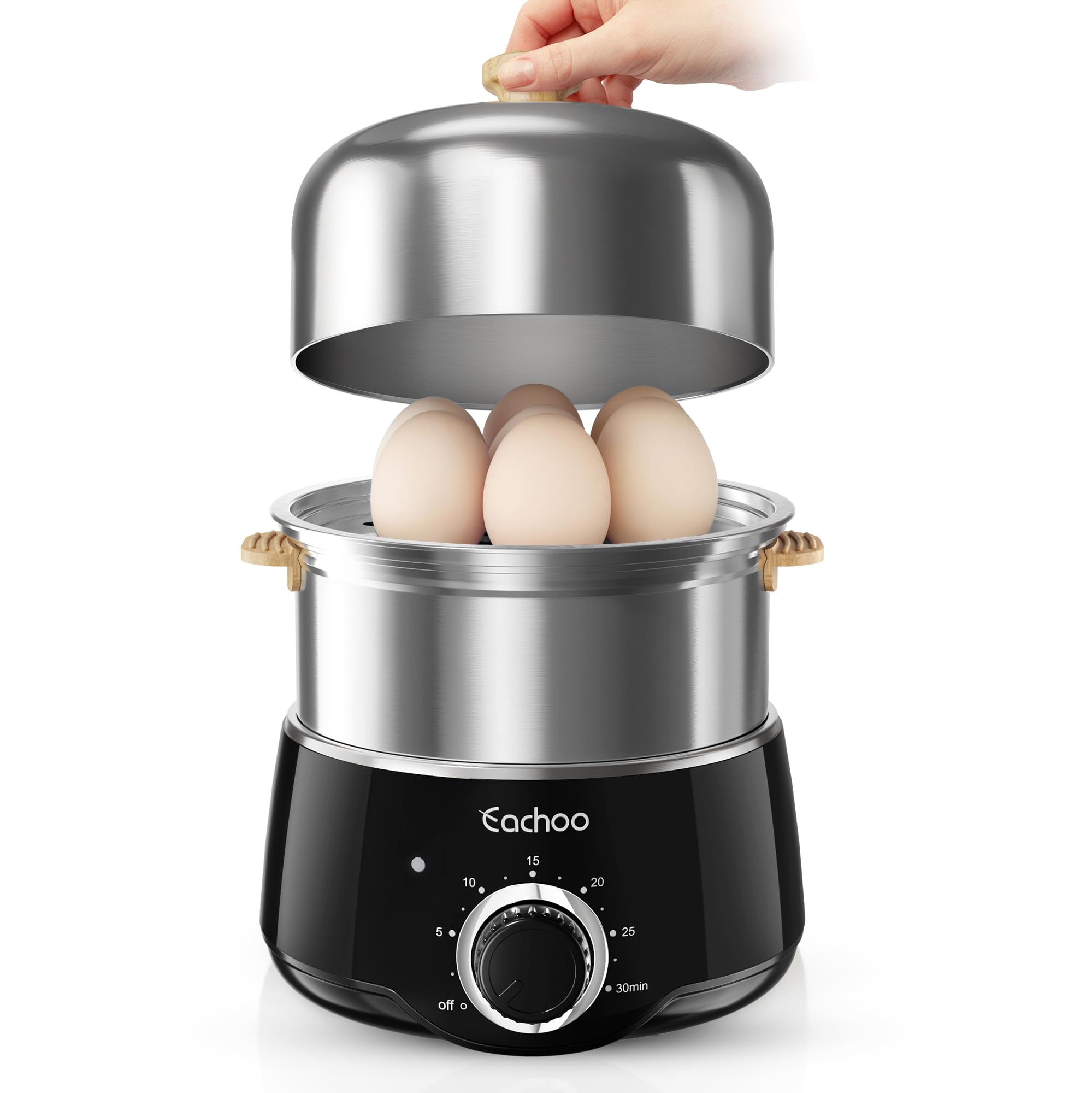
Buy this if batch-cooking for a large family or weekly meal prep is the priority.
Pros
- Two-tier trays cook up to 14 eggs at once
- Doubles as a steamer for vegetables and dumplings
- 30-minute timer with boil-dry protection
Cons
- No pin-piercing step required, which some find unusual
- Sharp edges reported on the tray slots
- Temperature can’t be lowered once the timer starts
This is the highest-capacity electric cooker in the lineup, and the added ability to steam vegetables or reheat leftovers extends its use well past breakfast. Families cooking for five or more people mention it handling the load without needing a second batch.
The trays feel sturdy, though a few buyers note sharp edges on the slots that call for careful handling while washing. Boil-dry protection adds a layer of safety that budget cookers sometimes skip.
NESCO EC-10 Egg Cooker
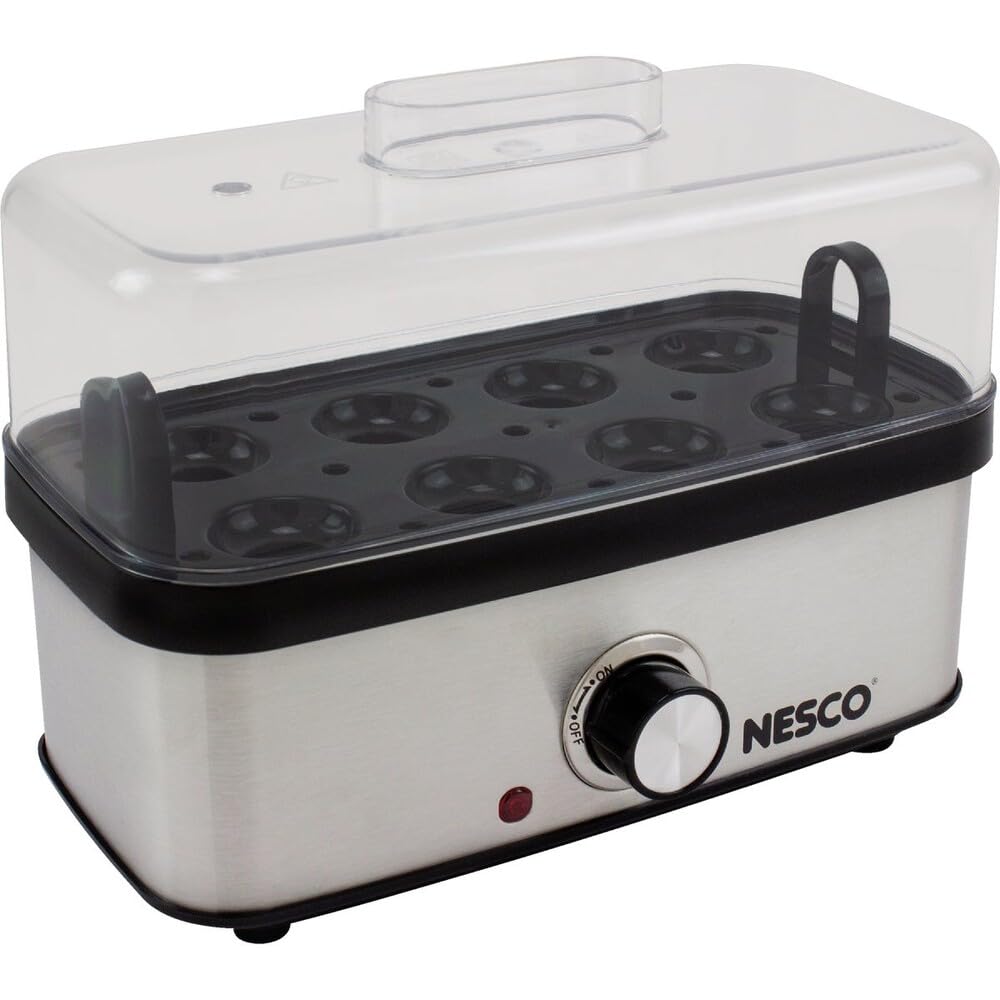
Buy this if you want a no-frills classic design from a long-standing kitchen appliance brand.
Pros
- Stainless steel wrap with a clean, simple look
- Poaching tray for up to 3 eggs
- Fits large eggs without crowding
Cons
- No auto shut-off, just a buzzer
- Lower wattage means slightly longer cook times
- Smaller production run means fewer accessory options
This cooker’s straightforward mechanical design appeals to anyone who doesn’t want a screen or extra settings to learn. Reviewers who’ve owned it for years report it still performs like new, with the stainless wrap resisting the dents and scuffs that plastic bodies show over time.
The lack of auto shut-off means the buzzer is the only cue to unplug, which some buyers wish were automated. For a simple daily hard-boiled egg routine, it holds up well and doesn’t overcomplicate the process.
VOBAGA Electric Egg Cooker

Buy this if budget matters most and you’re comfortable with a simpler, less-refined cooking experience.
Pros
- Lower price point than most competitors here
- Stainless steel tray resists rust
- Handles vegetables and dumplings in addition to eggs
Cons
- No audible alarm on some units
- Piercing pin design frustrates several buyers
- Reports of inconsistent heating on startup
This model appeals to shoppers prioritizing cost over refinement, and for basic hard-boiling it gets the job done. The stainless steel tray holds up better than the all-plastic trays found in some budget cookers.
The most common complaint involves the egg-piercing pin, which some describe as awkward to use compared to competitors. Buyers outside the US should also check the voltage rating before purchasing, since the 120V design isn’t universally compatible.
Buying Guide
Capacity and Household Size
Match the egg count to how many people you’re feeding regularly. A single-serving cooker handling 4 to 6 eggs suits individuals or couples, while households of four or more benefit from 10-egg or two-tier models that handle a full batch in one cycle.
Material Quality
Look closely at what “stainless steel” actually refers to on each listing. Some cookers use steel only for the outer shell or lid, while the water tray and egg racks remain plastic; others use steel throughout the tray and heating plate, which resists staining and holds up better over years of use.
Control Type
| Control Style | Best For | Tradeoff |
|---|---|---|
| Manual buzzer | Simple, no-frills use | No countdown or digital feedback |
| Auto shut-off | Preventing overcooking | Occasionally restarts if left plugged in |
| Digital display | Precise mode and quantity selection | Smaller capacity in some models |
Versatility
Many electric cookers include trays for poaching and omelets alongside the standard hard-boil rack. If you already own a stovetop poaching pan, an electric cooker’s poaching tray may be redundant. Consider whether steaming vegetables or dumplings adds real value to your kitchen routine.
Cleanup and Maintenance
Dishwasher-safe trays save time, but check whether that applies to all removable parts or just the outer tray. Mineral buildup from tap water is common in electric cookers; using distilled water reduces the need for descaling.
Countertop Footprint
Compact cookers around 6 to 7 inches square fit easily into small kitchens, dorms, or RVs. Larger two-tier units take up more storage space but justify it with higher output per cycle.
Editor’s Choice
The Cuisinart CEC-10 Egg Central stands out as the strongest overall pick for households that want capacity, versatility, and brand reliability in one unit. Its two-tier system, three-year warranty, and combination of poaching and omelet trays cover more use cases than any other model here.
For shoppers who poach eggs regularly and prefer stovetop cooking, the Eggssentials 4-Cup Egg Poacher earns a strong secondary recommendation thanks to its induction-safe build and even heat distribution. Anyone feeding a large family should also consider the CACHOO 14-Egg Cooker for its steaming versatility and high batch capacity.
Conclusion
Choosing the right stainless steel egg cooker comes down to matching capacity, control style, and cleanup preferences to your kitchen routine. Families cooking in bulk benefit from two-tier or high-capacity models, while individuals or couples do fine with a compact 6- or 7-egg unit. Stovetop poaching pans remain the better choice for anyone focused specifically on poached eggs rather than hard-boiling.
Pay attention to how much of each unit is actually stainless steel versus plastic with a steel-look finish, since that affects durability over years of use. Auto shut-off and dishwasher-safe parts save time on busy mornings, and a model with a piercing pin built into the measuring cup helps prevent cracked shells during cooking. Any of the ten picks above deliver reliable results once you learn its water-fill lines and settings.
FAQS
Do electric egg cookers really cook eggs better than boiling on the stove? They don’t cook eggs “better” so much as more consistently. The measured water and timed cycle remove the guesswork that leads to overcooked or undercooked batches on the stovetop.
Is stainless steel necessary in an egg cooker? Stainless steel trays and heating plates resist staining and hold up longer than plastic-only components, especially with daily use. The exterior housing matters less for performance but adds durability against scratches and wear.
Can I use tap water in these cookers? Tap water works, but it leaves mineral deposits over time that require periodic descaling. Distilled water reduces buildup and helps the heating element last longer.
How many eggs should I look for in a cooker? Match capacity to your household: 4 to 6 eggs suits individuals or couples, while 10 to 14-egg models suit larger families or weekly meal prep.
Are poaching trays in electric cookers as good as a dedicated stovetop poacher? They’re convenient for occasional poaching but generally produce softer, less defined results than a dedicated stovetop poaching pan with individual nonstick cups. Frequent poached-egg eaters tend to prefer the stovetop tool.
Do these cookers work for meal prep? Yes, especially the higher-capacity models like the CACHOO 14-egg cooker, which also steams vegetables and dumplings for batch cooking beyond eggs.