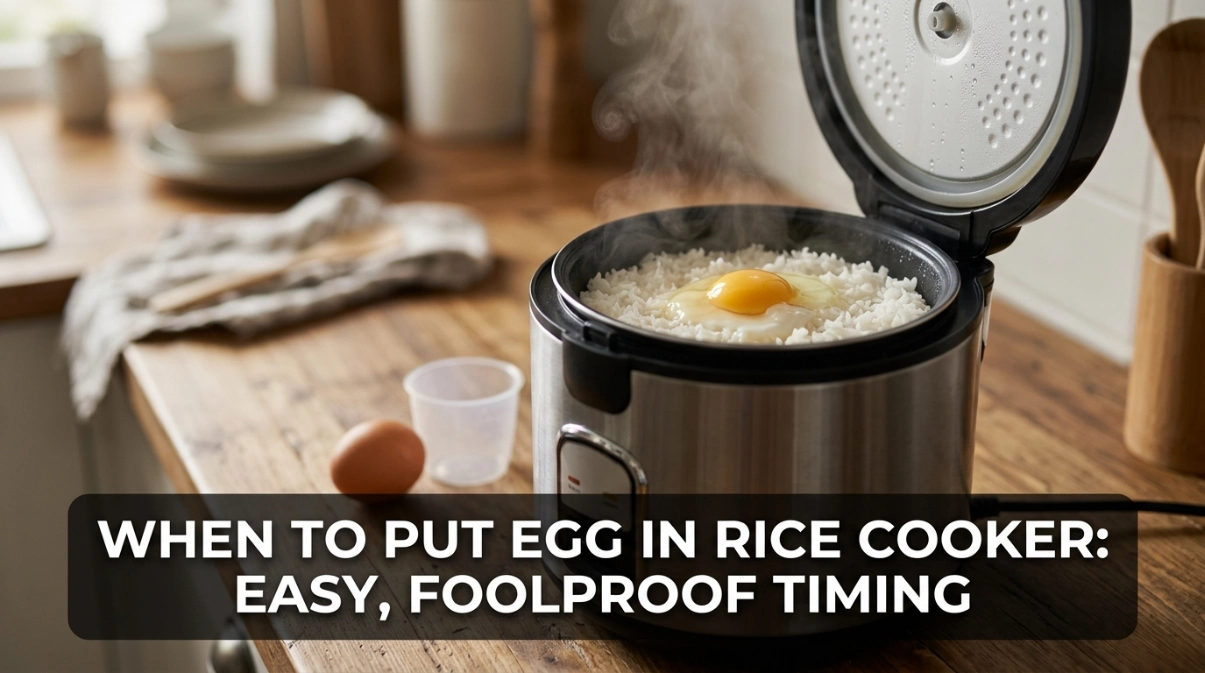
I used to think the egg could go into the rice cooker at any time. That is where most problems start. Add it too early and the yolk can turn dry. Add it too late and the white may stay loose.
The best answer to when to put egg in rice cooker depends on the result you want. A whole egg in the shell needs more time. A cracked egg placed over nearly cooked rice needs much less.
In this guide, I will show you the timing that works best for each method. I will also explain what to do if the egg is undercooked, overcooked, or making the rice too wet.
Common Signs of the Problem
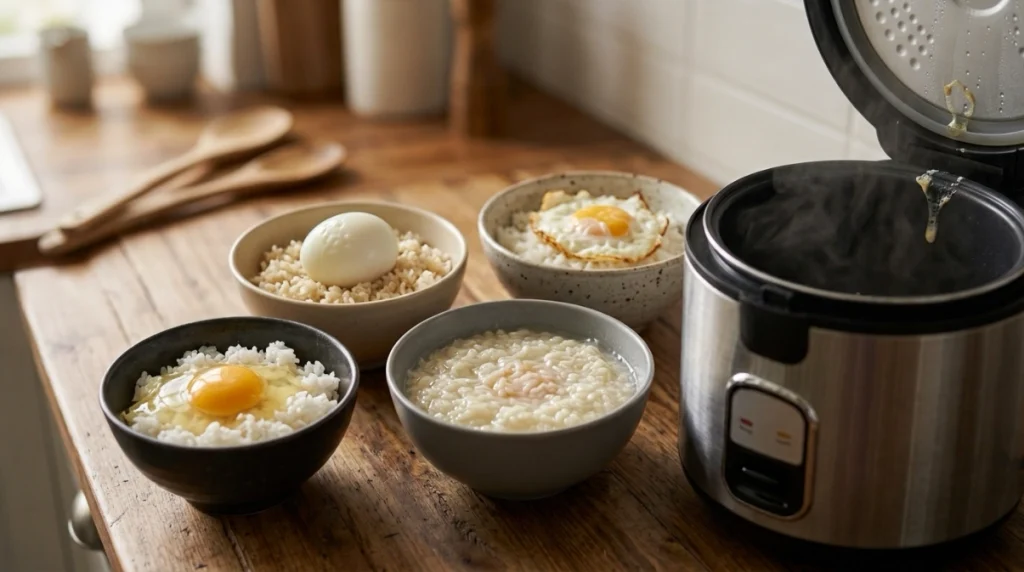
Most egg timing problems are easy to spot. The rice may cook well while the egg does not, or the egg may be fine while the rice texture changes.
| Symptom | Likely Cause | Quick Fix |
|---|---|---|
| Clear or loose egg white | Egg added too late | Add it a few minutes earlier |
| Dry, hard yolk | Egg cooked too long | Add it closer to the end |
| Soggy rice | Too much water | Use the normal rice-water ratio |
| Rubbery egg white | Too much heat time | Shorten the egg cooking time |
| Messy lid | Cracked egg added too early | Add it near the end |
If your cooker has a steam tray or egg insert, use it for whole eggs. If you lost a small measuring cup or tray, a correct replacement can make timing and portion control easier, but it is not needed for a cracked egg cooked on top of rice.
Possible Causes
The problem is usually simple. It often comes down to timing, water, steam, or where the egg sits inside the cooker.
Common causes include:
- Adding a cracked egg at the start of the full rice cycle
- Adding a whole egg too late
- Opening the lid again and again
- Adding extra water just because an egg is inside
- Leaving the egg on the Warm setting for too long
- Blocking the steam vent with a bowl or insert
A rice cooker creates its strongest steam during the main cooking stage. After it switches to Warm, a nearly set egg may finish, but a raw egg may cook too slowly.
How to Fix When to Put Egg in Rice Cooker
The right timing changes with the type of egg you want. These are the three methods I find easiest to control.
Add a Whole Egg at the Start for a Firm Result
For a firm whole egg, place it in a steam tray when you start the rice. This gives the egg almost the full cooking cycle.
If your cooker has a long cycle and the egg comes out too firm, try adding it a few minutes after cooking begins next time. Small timing changes can make a big difference.
Add a Cracked Egg Near the End
For a cracked egg with a softer yolk, wait until the rice is almost done. Then open the lid once, crack the egg over the rice, and close the lid right away.
A good starting point is the final 5 to 10 minutes. Around 5 minutes may leave the yolk softer. Around 8 to 10 minutes usually gives you a firmer white and yolk.
I would not add a cracked egg at the very start unless the recipe calls for it. The long cook can make the egg rubbery and may change the texture of the rice.
Use a Small Heat-Safe Bowl for More Control
A small heat-safe bowl in the steam tray works well if you do not want raw egg touching the rice. I lightly grease the bowl, crack in the egg, and add it near the end.
Make sure the bowl sits flat. It should never cover or block the steam vent.
| Method | When to Add Egg | Best For |
|---|---|---|
| Whole egg in steam tray | Start of cycle | Firm egg |
| Whole egg, softer center | A few minutes after start | Softer center |
| Cracked egg on rice | Final 5–10 minutes | Soft to medium yolk |
| Egg in small bowl | Near end of cycle | Easy removal |
Keep the Water Amount Normal
I do not add extra rice water just because I am cooking an egg. The rice should still get the amount of water you normally use.
Too much water can leave the rice soft or gummy. If your rice cooker manual gives special instructions for its steam tray, follow those directions instead.
Keep the Lid Closed
Opening the lid releases heat and steam. I learned that checking the egg every few minutes actually makes the cooking time harder to predict.
If the white is still clear when you check, close the lid again. Give it another 2 to 3 minutes before checking the result.
Use Warm Only for a Short Finish
Use the Warm setting only when the egg is almost done. It can give the center a little more time without starting another full cook cycle.
Do not leave the egg there for too long. The white can become tough, and the top of the rice may start to dry.
Clean Spills After the Cooker Cools
If raw egg touches the lid, rim, or steam area, I clean it after the cooker has cooled and is unplugged. Dried egg sticks quickly and may leave an unpleasant smell.
For cleaning, I use a soft cloth or non-abrasive sponge. Never pour water into the heating base, and never scrape a nonstick inner pot with metal tools.
Mistakes to Avoid
A whole shell-on egg needs more cooking time than a cracked egg. Opening the lid too often also releases steam and makes your timing less reliable.
Avoid these common mistakes:
- Do not block the steam vent.
- Do not add large amounts of extra water.
- Do not handle a hot egg with bare hands.
- Do not use a cracked or leaking shell-on egg.
- Do not leave cooked egg on Warm for a long time.
- Do not open the heating base.
- Do not bypass safety switches or overheat protection.
If the cooker smells burnt, sparks, trips a breaker, or has a damaged power cord, stop using it. Those signs point to an electrical problem rather than bad egg timing.
When to Replace the Rice Cooker
Bad egg timing by itself is not a reason to replace your rice cooker. Change the timing first and test another batch before blaming the appliance.
Replacement makes more sense if the cooker no longer heats, fails to switch from Cook to Warm, has a badly damaged cord, or shows clear electrical damage.
| Issue | What I Would Do | Replace? |
|---|---|---|
| Lost steam tray | Replace the tray | No |
| Missing measuring cup | Replace the cup | No |
| Worn inner pot coating | Replace pot if available | Maybe |
| Damaged power cord | Stop using cooker | Often |
| Cooker will not heat | Service or replace | Often |
I would never open a sealed heating unit or try to bypass a safety part. For a small kitchen appliance, the electrical and fire risks are not worth it.
My Personal Experience
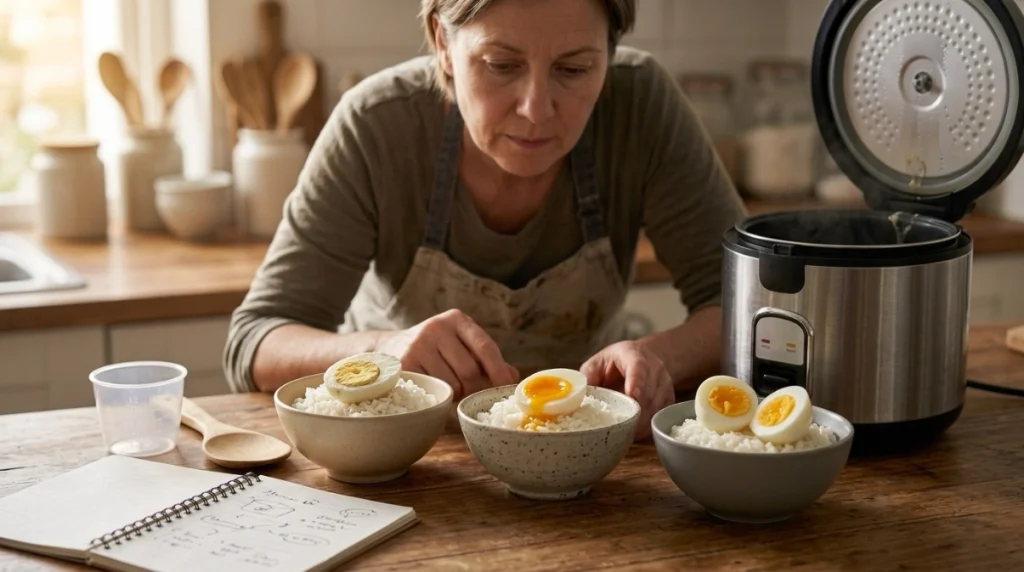
The most useful thing for me was changing only one part of the process at a time. I kept the rice and water the same, then changed only when the egg went into the cooker.
A cracked egg added too early came out much firmer than I wanted. Adding it during the final part of the cycle gave me a set white while keeping the yolk softer.
For whole eggs, the steam tray was easier to manage. I could lift out the egg without disturbing the rice, which made the whole process less messy.
Knowing roughly how long the normal rice cycle takes also helps. Once that timing is familiar, spotting the final 5 to 10 minutes becomes much easier.
Final Thoughts
So, when to put egg in rice cooker? Add a whole egg in a steam tray near the start if you want a firm result. Add a cracked egg during the final 5 to 10 minutes if you want a softer yolk.
Use your normal rice-water ratio and keep the steam vent clear. Avoid opening the lid more than needed, then adjust the egg timing by a few minutes to suit your cooker.
Good timing is the main fix here. It keeps the rice consistent, helps the egg cook the way you want, and makes the method much easier to repeat.