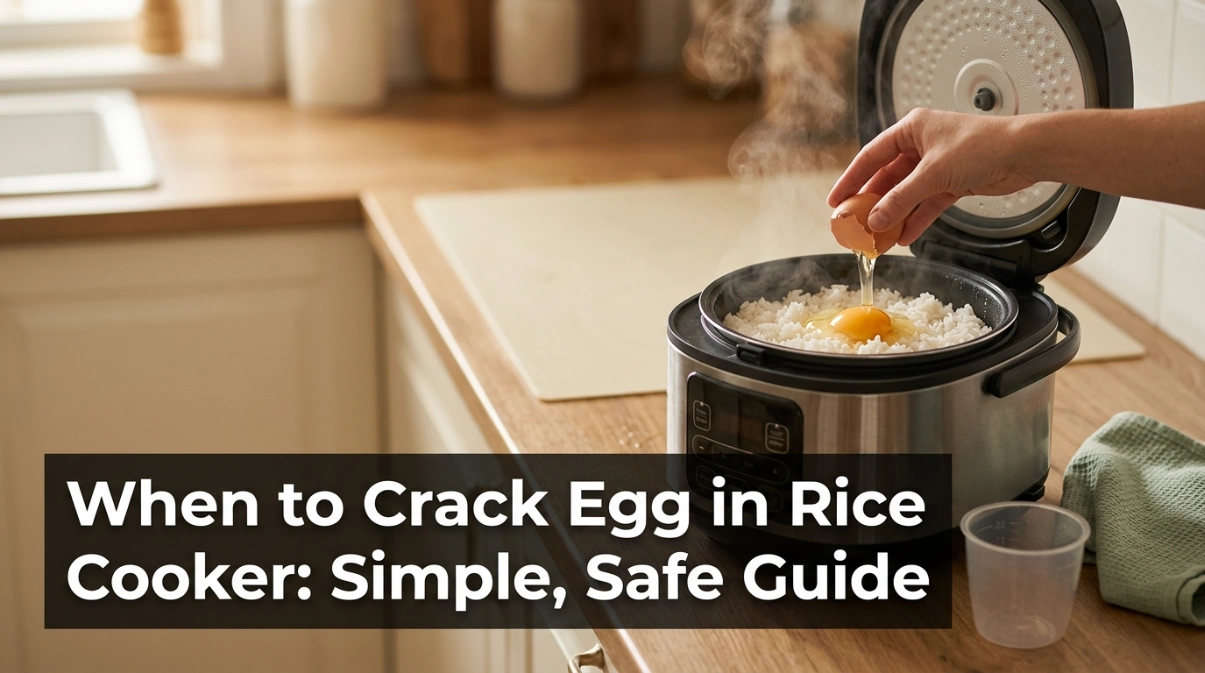
Knowing when to crack egg in rice cooker can make the difference between a soft, tasty egg and a dry, rubbery one. Timing matters much more than I first expected when working out this method.
The easiest approach is to let the rice cook most of the way first. Then crack the egg over the hot rice, close the lid, and let the trapped steam cook it.
For most basic rice cookers, adding the egg during the last 5 to 10 minutes of cooking works best. A softer yolk needs less time, while a firm egg needs more.
Quick Answer: When Should You Crack an Egg Into a Rice Cooker?
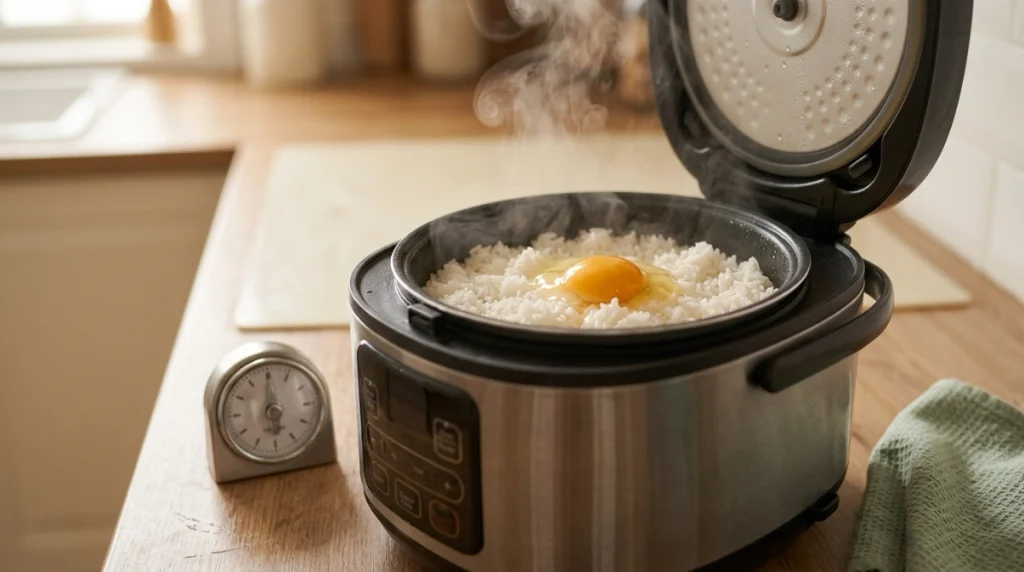
Crack the egg into the rice cooker when the rice is almost done and there is still plenty of steam inside. In many cookers, this means about 5 to 10 minutes before the cooker switches to Warm.
For a soft yolk, start near the 5-minute mark. For a firm white and yolk, give the egg closer to 8 to 10 minutes.
I prefer adding the egg later rather than at the start. When an egg cooks through the entire rice cycle, the white can turn tough and the yolk may become dry.
| Egg Result | When to Add It | Approx. Cooking Time |
|---|---|---|
| Soft yolk | Near the end | 5-6 minutes |
| Medium yolk | Near the end | 7-8 minutes |
| Firm egg | A little earlier | 9-10 minutes |
These times are guides. Rice cooker temperature, rice amount, egg size, and starting temperature can all change the result.
Common Signs of the Problem
The most common sign of bad timing is a rubbery egg. This often happens when the egg goes into the cooker much too early.
The opposite problem is a clear or runny egg white. That usually means the egg was added too late or the cooker had already switched to Warm.
You may also notice rice that becomes wet around the egg. This can happen if you add several eggs at once or disturb the rice too much.
| Symptom | Likely Cause | Quick Fix |
|---|---|---|
| Rubbery egg | Egg added too early | Add it later |
| Raw egg white | Egg added too late | Give it more cooking time |
| Egg barely cooks | Cooker is on Warm | Add egg during active cooking |
| Rice gets mushy | Too much liquid | Use the normal rice-water ratio |
| Uneven egg | Lid opened often | Keep the lid closed |
Consistent rice cooking also helps. I recommend measuring the rice and water instead of guessing.
If the original rice cooker cup is missing, a replacement measuring cup can help you repeat the same rice-to-water ratio each time. It is not required for cooking the egg, but consistent water makes the timing much easier to judge.
Possible Causes
In most cases, nothing is actually wrong with the rice cooker. The problem is simply when and how the egg is added.
Common causes include:
- Cracking the egg in at the start of a long rice cycle
- Waiting until the cooker has already entered Warm mode
- Opening the lid several times to check the egg
- Adding too many cold eggs at once
- Using too much water with the rice
- Covering or blocking the steam vent
- Using a rice cooker that is heating poorly
- Expecting every cooker to use the same timing
The Cook and Warm settings are especially important. The Cook setting supplies stronger heat, while Warm is mainly designed to hold cooked rice at a serving temperature.
An egg added after the cooker switches to Warm may cook slowly or unevenly. I would not rely on Warm mode alone to safely cook a raw egg.
How to Fix When to Crack Egg in Rice Cooker Timing
Let the Rice Cook First
Start your rice in the normal way. Add the normal amount of rice and water, then begin the regular cooking cycle.
Do not crack the egg in immediately. Let the rice absorb most of its water and become nearly tender first.
With a basic cooker, I look for the stage when there is still strong steam but little free water sitting above the rice.
Add the Egg During the Final Minutes
Once the rice is nearly done, open the lid carefully. Hot steam can escape quickly, so keep your face and hands away from the vent.
Make a small space in the surface of the rice if needed. Crack the egg directly onto the rice, then close the lid right away.
For a softer egg, begin checking after about 5 minutes. A firmer egg normally needs several minutes more.
Keep the Lid Closed
This step made the biggest difference in getting predictable results. The egg is cooked by heat from the rice plus trapped steam under the lid.
Every time the lid opens, heat escapes. Constant checking can add several minutes to the cooking time.
Use the clear lid if your cooker has one. Otherwise, wait for your planned cooking time before opening it.
Check the Cook and Warm Settings
If your rice cooker switches to Warm immediately after you add the egg, the rice may have already finished its active cooking cycle.
In that case, the egg may need more heat than Warm provides. Next time, add it a few minutes earlier.
Some digital cookers also have rice, steam, porridge, or quick-cook settings. Use a normal rice cycle unless the manufacturer’s instructions say another mode is suitable.
Check for Poor Heating
If both the rice and egg stay undercooked, timing may not be the only problem. Make sure the removable cooking pot is sitting flat against the heating plate.
After the cooker is unplugged and completely cool, remove any dry rice or dirt from the bottom of the inner pot. Keeping this area cleaning-friendly and free of debris helps the pot make proper contact with the heater.
Do not pour water into the electrical base. Use only a soft, slightly damp cloth where the manufacturer’s instructions allow it.
Mineral buildup can also appear around lids or steam vents. Keep the steam vent clear according to your cooker’s cleaning instructions so steam can escape normally.
Make Sure the Egg Is Fully Cooked
The egg white should no longer look clear or jelly-like when you want a fully cooked egg. The yolk should reach the texture you prefer.
For the lowest food-safety risk, cook eggs until both the white and yolk are firm. Egg dishes are generally considered safely cooked at about 160°F or 71°C.
People at higher risk from foodborne illness should avoid relying on a very runny or partly cooked egg.
Mistakes to Avoid
The first mistake to avoid is cracking an egg into the cooker before the rice has even started cooking. It may work, but the egg often spends far too long under heat.
Do not crack an egg onto the exposed heating plate or electrical base. The egg belongs inside the removable cooking pot, on top of the rice or in a suitable heat-safe insert.
Avoid these other mistakes:
- Do not block the lid’s steam vent.
- Do not reach over escaping steam.
- Do not repeatedly open the lid.
- Do not add cracked eggs to a cooker that has stopped heating properly.
- Do not use a damaged power cord or plug.
- Do not bypass a safety switch or thermal protection device.
- Do not open a sealed electrical heating unit to repair it yourself.
If you smell burning plastic or see smoke, unplug the cooker if it is safe to do so and stop using it.
A light cooked-rice smell is normal. An electrical burning smell is not.
When to Replace the Rice Cooker
Bad egg timing alone is not a reason to replace your rice cooker. If the machine cooks rice normally, changing when you add the egg will usually solve the problem.
Replacement becomes more reasonable when the cooker itself cannot produce steady heat or has an electrical fault.
| Cooker Problem | Best Action | Replace? |
|---|---|---|
| Egg added at wrong time | Change timing | No |
| Dirty pot contact area | Clean when cool | No |
| Damaged removable lid | Replace lid if available | Usually no |
| Frayed power cord | Stop using cooker | Often |
| Burning electrical smell | Stop using cooker | Usually |
| Cooker will not heat | Professional check or replace | Often |
Do not try to repair internal wiring, heating elements, thermal fuses, or safety switches unless the unit is specifically designed for qualified servicing.
For an inexpensive basic rice cooker, replacement often makes more sense than paying for internal electrical repair.
My Personal Experience
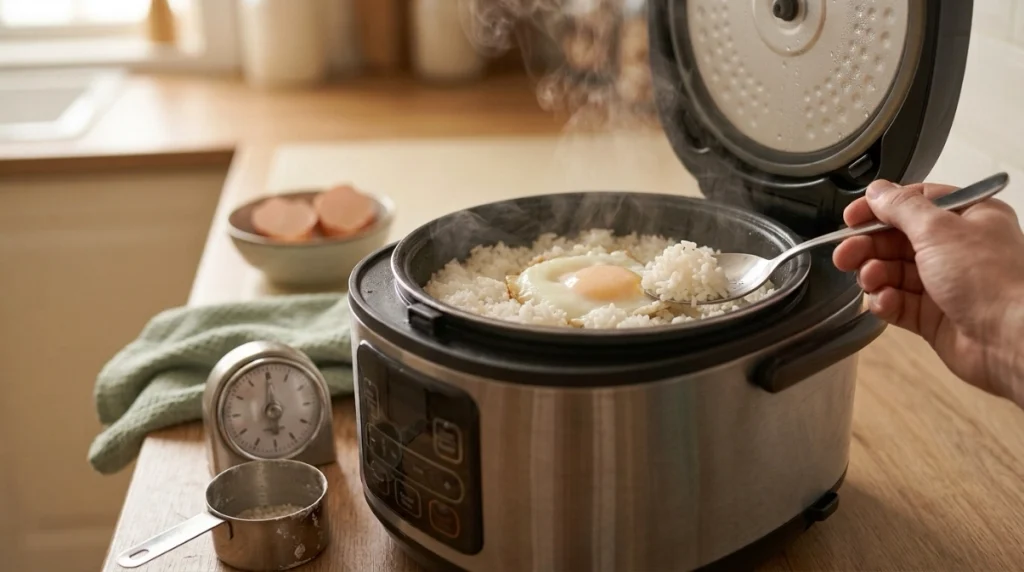
For this type of cooking, the timing method I recommend is simple: cook the rice first, then add the egg near the end instead of treating the egg like another raw rice ingredient.
Adding an egg too early gives it far more heat than it needs. The white becomes firm long before the rice finishes, and the yolk can turn dry.
The better approach is to wait until the rice is nearly ready. I find a starting window of about 5 to 10 minutes before the end gives much more control.
I would begin with one egg rather than several. Once you know how fast your cooker handles one egg, it becomes much easier to adjust the timing for your preferred yolk.
I also avoid opening the lid every minute. Giving the trapped steam time to work produces a much more even result.
The key lesson is that there is no perfect universal minute for every machine. Cooker size, rice quantity, water level, and egg temperature all affect the result.
Final Thoughts
If you are wondering when to crack egg in rice cooker, start near the end of the rice cooking cycle. About 5 to 10 minutes before the rice finishes is a useful starting range.
Use less time for a soft yolk and more time for a fully firm egg. Keep the lid closed so the remaining heat and steam can cook the egg evenly.
If your egg stays raw even when added at the right stage, check whether the cooker is still on Cook, whether the pot is heating normally, and whether the lid and steam vent are working as intended.
Most of the time, you do not need a new cooker or a complicated fix. A small change in timing is enough to get hot rice and a properly cooked egg in the same pot.