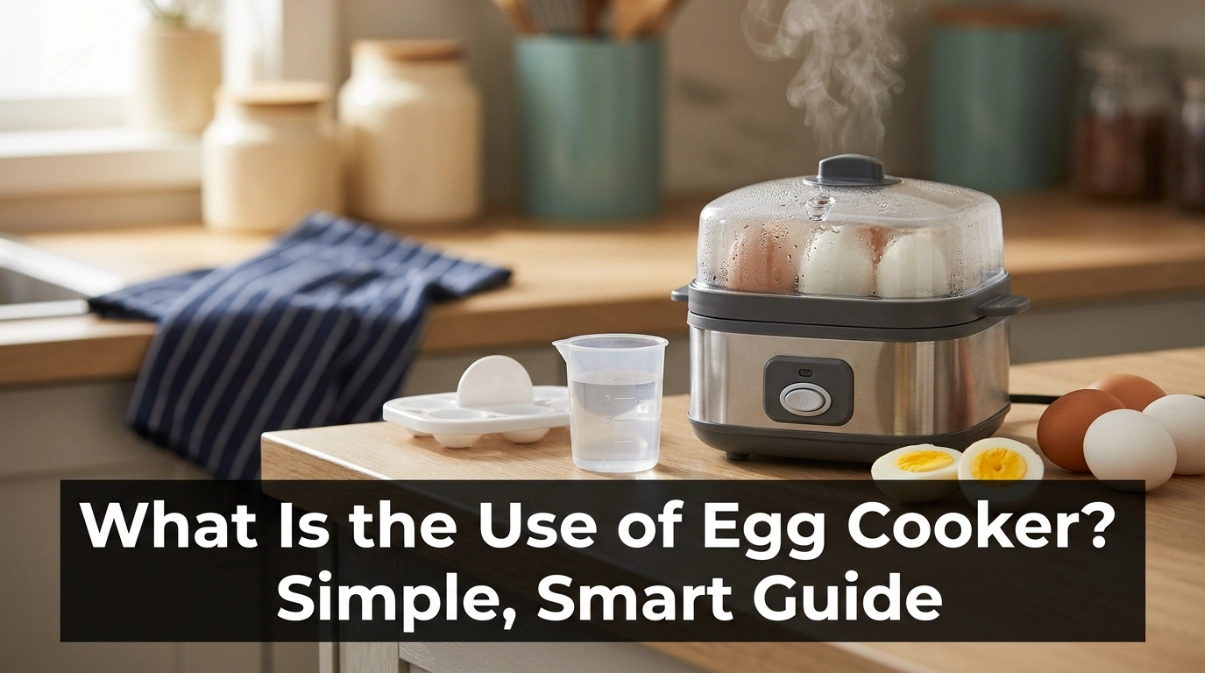
If you are asking what is the use of egg cooker, the short answer is simple. An egg cooker uses water, heat, and steam to cook eggs with less guesswork.
I found the biggest benefit was not speed alone. It was consistency. Once I learned the right water amount, I could make soft, medium, or hard eggs with much less checking.
An electric egg cooker can also be useful for poached eggs or small egg dishes if the model includes those trays. Some units have extra settings, but basic models mainly steam eggs.
The process sounds easy, yet small mistakes can change the result. Too much water, a loose lid, scale on the heating plate, or a badly placed egg tray can all cause trouble.
What Is the Use of Egg Cooker in Daily Cooking?
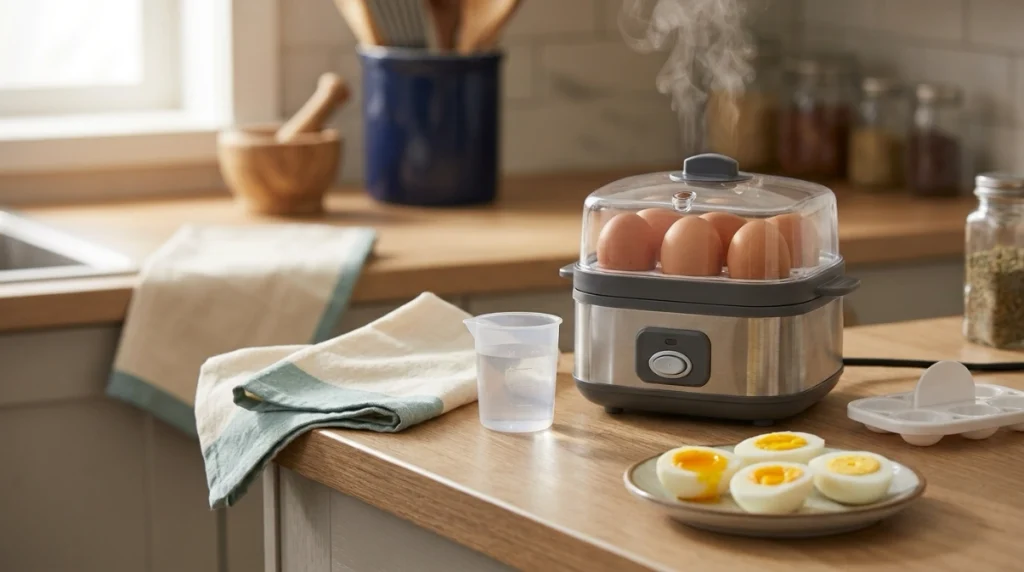
The main use of an egg cooker is to cook eggs with steam. You add a measured amount of water, place the eggs in the tray, close the lid, and switch the unit on.
As the heating plate warms the water, steam builds inside the cooker. That steam cooks the eggs until the water is used up or the machine reaches its shut-off point.
Here are the most common uses:
- Making soft-boiled eggs
- Making medium-boiled eggs
- Making hard-boiled eggs
- Cooking several eggs at the same time
- Making poached eggs on supported models
- Making small omelets or egg custards on some models
The exact features depend on the cooker. Always check the tray and settings that came with your unit.
| Egg Cooker Use | What It Does | Main Benefit |
|---|---|---|
| Soft eggs | Uses less water | Soft or runny yolk |
| Hard eggs | Uses more water | Fully cooked yolk |
| Poached eggs | Cooks eggs in a tray | No pan needed |
| Multiple eggs | Steams several at once | More consistent batches |
When I first used this type of cooker, I thought the water cup was just a normal cup. It is not. The marks on the supplied measuring cup often control how long the cooker heats.
That is why I keep the original cup with the machine. If it gets lost, a compatible replacement measuring cup can be useful. The same is true for a cracked egg tray or damaged lid.
I would only replace parts that are designed for that model. A tray or lid that does not fit well can let steam escape and change the cooking time.
Common Signs of the Problem
An egg cooker is simple, but you may still notice poor results. Most problems show up during cooking or just after the cycle ends.
The signs I pay attention to are uneven eggs, water left on the heating plate, unusual smells, or a cooker that does not heat.
| Symptom | Likely Cause | Quick Fix |
|---|---|---|
| Eggs are too soft | Too little water | Use the correct water mark |
| Eggs are too hard | Too much water | Reduce water next time |
| Unit does not heat | Power or safety issue | Check plug and outlet |
| Steam leaks | Lid or tray is not seated | Refit the parts |
| White marks appear | Mineral buildup | Descale the heating plate |
| Burning smell | Dry residue or fault | Unplug and inspect when cool |
A small amount of steam around the vent is normal. Heavy steam coming from the side of the lid may mean the lid is not seated correctly.
Some models beep when the eggs are done. Others switch off or change a light. A beep by itself is usually normal unless the manual says it is an error signal.
Possible Causes
If the cooker is not giving the result you expect, I would check the simple things first. Most egg cooker problems do not need tools.
Common causes include:
- Too much or too little water
- Wrong egg setting
- Egg tray placed incorrectly
- Lid not fitted correctly
- Blocked steam vent
- Mineral scale on the heating plate
- Loose power plug
- Faulty wall outlet
- Auto shut-off activated after overheating
Water measurement caused the most confusion for me at first. More water usually means a longer heating time, which often means firmer eggs.
Egg size can also matter. A very large cold egg may cook a little differently from a smaller egg at room temperature.
How to Fix Common Egg Cooker Use Problems
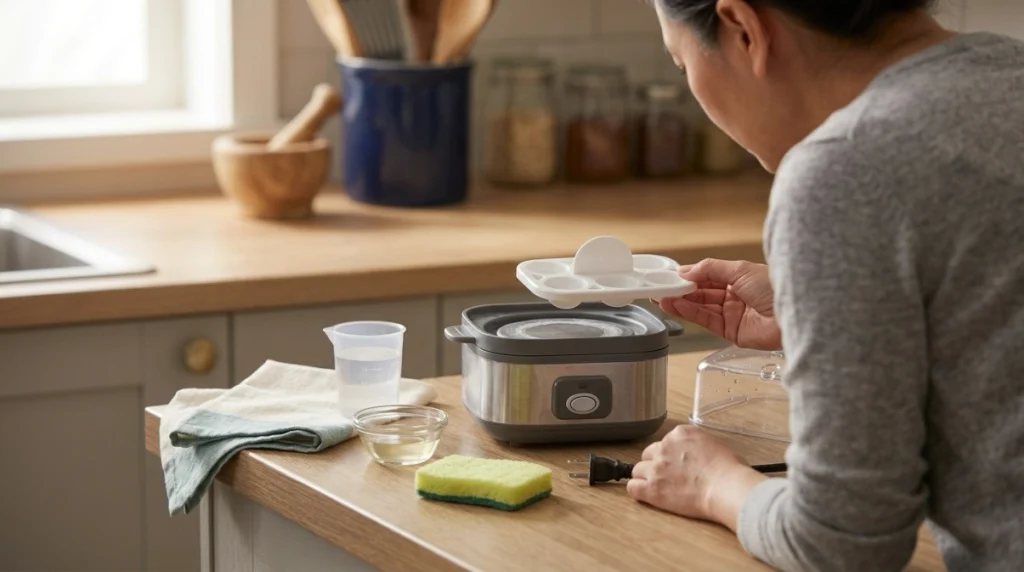
Check the Power Source
If nothing happens when you press the button, start with the wall outlet. Make sure the power cord is fully connected and the outlet works.
I usually test the outlet with another small appliance. If the cooker still shows no sign of power, I stop there rather than opening the base.
Never cut, splice, or repair a damaged power cord unless the manufacturer provides an approved repair method. A sealed heating unit should not be opened at home.
Use the Correct Amount of Water
This is the first thing I check when eggs come out too soft or too firm. The measuring cup usually has marks for different levels of doneness.
Use the marks that match your egg count and cooking style. Do not assume a full cup will give better results.
I once added extra water because I thought more steam would cook the eggs faster. It did the opposite of what I wanted and left the eggs much firmer.
Inspect the Egg Tray and Lid
The egg tray should sit flat. The lid should also rest in its normal position without being forced.
If either part is cracked or bent, steam can escape. A correct replacement egg tray or lid is safer than trying to tape or glue a damaged part.
Never block the steam vent. Hot steam needs a safe path out of the cooker.
Check the Heating Plate
A dull white or chalky layer on the heating plate is often mineral scale. Hard water can leave this behind after many cooking cycles.
This is where regular cleaning made the biggest difference for me. A clean heating plate transfers heat more evenly and is easier to inspect.
Let the cooker cool and unplug it first. Wipe loose dirt with a soft cloth or non-abrasive sponge.
For mineral scale, many manufacturers allow diluted white vinegar or a suitable descaling solution. Follow your model’s manual because the recommended method can vary.
Never pour water into electrical openings. Do not place the powered base in a sink or dishwasher.
Reset After Overheating
Some egg cookers use auto shut-off or overheat protection. The unit may stop working for a short time if it becomes too hot.
Unplug it and let it cool fully. Then check that the heating plate has the correct amount of water before trying again.
Do not bypass an overheat switch or safety switch. These parts help protect the cooker from excess heat.
Check Buttons and Settings
Models with control panels may have separate buttons for boiled eggs, poaching, or omelets. Make sure the correct mode is selected.
If lights flash in an unusual pattern, check the manual before continuing. Different brands use different light and beep codes.
Mistakes to Avoid
The most common mistake I made was treating the measuring cup like an optional accessory. It is often one of the most important parts of the whole cooking process.
I would also avoid these mistakes:
- Adding random amounts of water
- Covering the steam vent
- Touching the lid during cooking
- Lifting the lid toward your face
- Using damaged trays or lids
- Scraping the heating plate with metal tools
- Immersing the electrical base in water
- Opening the heating unit for DIY repairs
- Bypassing the auto shut-off or safety switch
Steam can burn skin very fast. I lift the lid away from my face and keep my hands clear of the vent.
Let the unit cool before wiping it down. This also protects the heating plate from sudden temperature changes.
When to Replace the Egg Cooker
Not every problem is worth repairing. I would replace the cooker if the fault involves damaged electrical parts, repeated overheating, or a strong burning smell.
A damaged cord, cracked powered base, or unreliable shut-off feature is also a good reason to stop using the machine.
| Repair Issue | What I Would Do | Replace Instead? |
|---|---|---|
| Lost measuring cup | Buy compatible cup | No |
| Cracked removable tray | Replace tray | Usually no |
| Mineral buildup | Descale safely | No |
| Damaged power cord | Stop using unit | Often yes |
| Burning electrical smell | Unplug immediately | Yes |
| Shut-off keeps failing | Stop using unit | Usually yes |
Replacement makes more sense when a safety-related repair costs close to the price of a new cooker. Small removable parts are a different matter and are often easy to replace.
My Personal Experience
When I first started using an egg cooker, I expected it to work like a kettle. I added water, loaded the eggs, and assumed the machine would handle everything.
My first batch was too firm. I then tested a smaller measured amount of water and made sure the tray sat flat.
That simple change gave me a much better result. I also noticed that scale on the heating plate built up faster than I expected.
After keeping the plate clean and using the water marks, the results became much more consistent. I stopped opening the lid during cooking too, since that releases heat and steam.
The main lesson for me was simple. The machine is easy to use, but the small parts of the process matter.
Final Thoughts
So, what is the use of egg cooker? Its main job is to make egg cooking easier and more repeatable by using measured water and steam.
For most people, the best results come from using the correct water amount, seating the tray and lid properly, keeping the heating plate free of scale, and letting the auto shut-off work as designed.
If the cooker does not heat, smells burnt, leaks badly, or has a damaged cord, stop using it until the cause is clear. Do not open the sealed heating base or bypass its safety system.
For normal use, an egg cooker can be a simple tool for soft, medium, hard-boiled, and sometimes poached eggs. Once I learned to measure the water instead of guessing, using one became much easier and far more predictable.