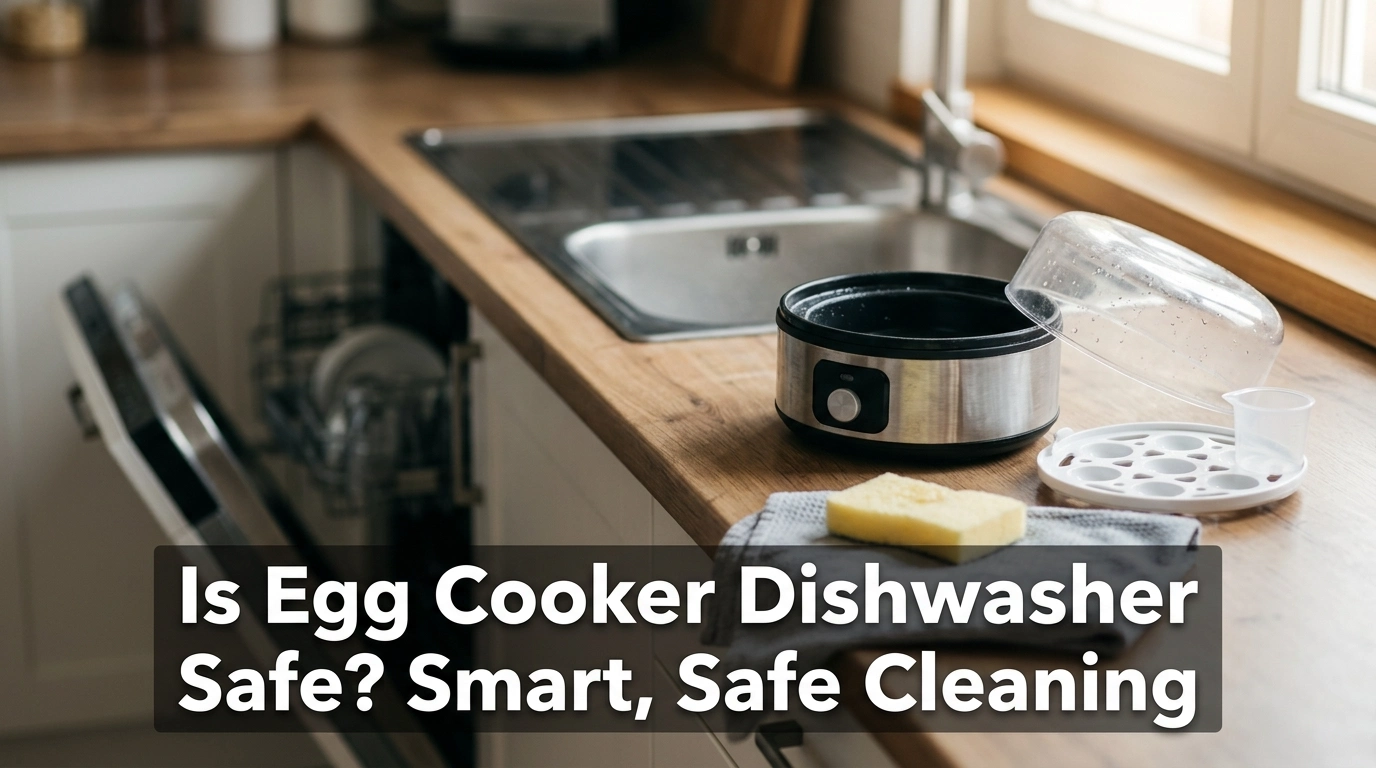
Is egg cooker dishwasher safe? In most cases, only the removable parts are dishwasher safe. The electric base and heating plate must never go in water or a dishwasher.
I once placed an egg tray in the dishwasher without checking its care guide. It came out clean, but the thin plastic had bent from the heat. That mistake taught me that “removable” does not always mean “dishwasher safe.”
This guide will help you identify safe parts and wash each one the right way. I will also explain what to do if a part becomes cloudy, warped, cracked, or full of water.
Common Signs of the Problem
You may not see damage after the first dishwasher cycle. Heat and strong detergent can weaken some parts over time.
Watch for these common signs:
- A warped egg tray or egg insert
- A cloudy or cracked plastic lid
- Water trapped inside a double-wall lid
- Faded measurement marks on the cup
- A loose silicone lid gasket
- Rust spots on metal parts
- Peeling labels near the control buttons
- An egg cooker that will not heat after washing
A lid may also stop sitting flat on the tray. This can let too much steam escape and leave the eggs undercooked.
| Symptom | Likely cause | Quick fix |
|---|---|---|
| Warped egg tray | Dishwasher heat | Replace the tray |
| Cloudy plastic lid | Harsh detergent | Hand-wash from now on |
| Base will not heat | Water entered the base | Unplug and stop using it |
| Loose lid seal | Heat damaged the gasket | Refit or replace it |
Replacement egg trays, lids, measuring cups, and silicone gaskets can be useful when one removable part fails. I prefer replacing a damaged part instead of using a cracked lid or bent tray near hot steam.
Check that the new part fits your exact model. A tray that looks right may still sit too high or block a safety switch.
Possible Causes
The main cause is often a mix-up about which parts are safe to wash. An egg cooker has both electrical and non-electrical parts, and they need different care.
Common causes include:
- The manual was lost or not checked
- The removable tray was assumed to be dishwasher safe
- The dishwasher used a high-heat drying cycle
- Strong detergent damaged clear plastic
- Small parts fell near the heating coil
- Water entered a hollow lid or handle
- The electric base was rinsed under a tap
- Limescale was mistaken for food residue
The base contains the power cord, heating element, controls, and safety parts. Water can cause a short circuit, corrosion, electric shock, or a burning smell.
The heating plate may look like a plain metal dish. However, it is fixed to an electrical unit, so it must not be soaked.
Is Egg Cooker Dishwasher Safe? Check These Parts
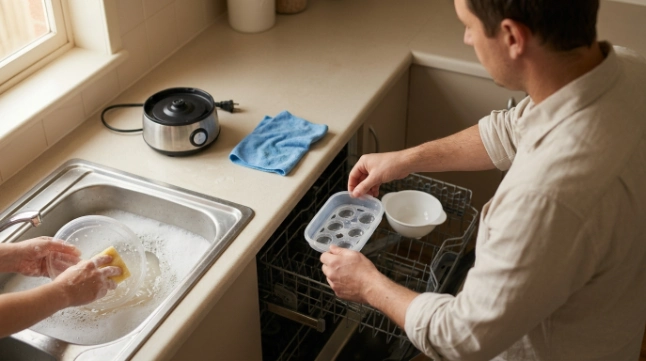
The safest answer depends on the brand and model. Look for a dishwasher-safe symbol on the part, box, manual, or maker’s website.
This general guide applies to many small electric egg cookers:
| Egg cooker part | Usual wash method | Dishwasher risk |
|---|---|---|
| Electric base | Wipe only | Electric shock or failure |
| Egg tray | Check the manual | Warping |
| Plastic lid | Often hand-wash | Clouding or cracking |
| Measuring cup | Check its label | Marks may fade |
| Poaching bowl | Often top rack only | Heat damage |
| Metal insert | Check the manual | Discoloration or rust |
Unplug and Cool the Cooker
Unplug the cooker before touching the heating plate. Let it cool fully, since the plate can stay hot after the eggs are done.
Do not lift the lid with your face or hand over the steam vent. Hot steam can cause a fast and painful burn.
Check the Manual and Symbols
Find the model number on the bottom label. Then check the care section in the manual for each removable part.
“Top-rack dishwasher safe” means the item should stay away from the lower heating area. It does not mean that every part can go anywhere in the machine.
If you cannot find clear instructions, hand-washing is the safer choice. I use a soft cloth or non-abrasive sponge with mild dish soap.
Separate Every Removable Part
Remove the lid, egg tray, poaching bowl, measuring cup, and loose gasket if the manual permits it. Keep the electric base beside the sink, not inside it.
Check the lid vent for pieces of cooked egg. Use a soft brush to clear it, but never push a knife or metal pin into a narrow vent.
Wash Dishwasher-Safe Parts Correctly
Place approved plastic parts on the top rack. Keep light measuring cups secure so they cannot drop onto the dishwasher’s hot parts.
Turn off heated drying when the maker advises it. Allow the parts to air-dry before putting the cooker back together.
Hand-Wash Unmarked Parts
For safe cleaning, wash unmarked removable parts in warm water with mild soap. Avoid rough pads that can scratch clear lids and plastic trays.
Rinse each part and dry it with a soft cloth. Make sure hollow handles, steam vents, and gasket grooves contain no trapped water.
Wipe the Heating Plate and Base
Use a damp cloth to wipe the base. The cloth should be wet enough to lift dirt but not wet enough to drip.
Never pour water onto the heating plate. Keep water away from the cord, wall plug, control panel, buttons, and air openings.
Remove Mineral Buildup
White or brown marks on the plate are often limescale. They come from minerals left behind when the cooking water turns to steam.
Unplug the unit and let it cool. If the manual allows descaling, apply a small amount of white vinegar and water to the plate with a cloth.
Let it sit for the time stated in the manual. Wipe it away, then wipe again with a clean damp cloth.
Do not run a cooking cycle with vinegar unless the maker tells you to do so. Some models use coated plates that need special care.
Dry and Test the Cooker
Let all parts dry fully before assembly. Place the cooker on a dry, level counter and inspect the cord and plug.
Add the normal amount of water and test one egg. Stop at once if you notice smoke, sparks, a burning smell, odd flashing lights, or harsh beeping.
| Problem | Recommended solution | Difficulty |
|---|---|---|
| Light limescale | Descale as directed | Easy |
| Faded cup marks | Replace the cup | Easy |
| Warped tray | Replace with a matching tray | Easy |
| Water inside base | Stop use and seek service | Expert only |
| Cracked housing | Replace the cooker | Not worth repairing |
Mistakes to Avoid
Do not place the whole egg cooker in a dishwasher. Even a base described as water-resistant is not made for soaking or dishwasher spray.
Avoid these mistakes:
- Guessing that every removable part is dishwasher safe
- Putting thin plastic on the bottom rack
- Using bleach, oven cleaner, or steel wool
- Scraping the heating plate with a knife
- Blocking the steam vent
- Washing the base under running water
- Plugging in a damp cooker
- Using a cracked lid or bent egg tray
- Trying to bypass a safety switch
Never open a sealed heating unit to dry or repair it. Do not change the cord, heating element, auto shut-off, or overheat protection at home.
If water reaches the base, unplug it without touching any wet surface. Do not test it again just to see if it still works.
When to Replace the Egg Cooker
Replace the cooker if the housing is cracked, the cord is damaged, or water has entered the electrical base. A burning smell, sparks, or repeated overheating also means you should stop using it.
A new removable tray or measuring cup may solve a small issue. But electrical repair often costs more than a basic egg cooker and may leave it unsafe.
| Repair issue | Typical decision | Replace instead? |
|---|---|---|
| Damaged measuring cup | Buy a matching cup | No |
| Cracked lid | Replace the lid | Usually no |
| Warped egg tray | Replace the tray | Usually no |
| Failed heating element | Professional assessment | Often yes |
| Wet or cracked base | Stop using it | Yes |
Check the warranty before buying a new unit. Dishwasher damage may not be covered if the care guide required hand-washing.
My Personal Experience
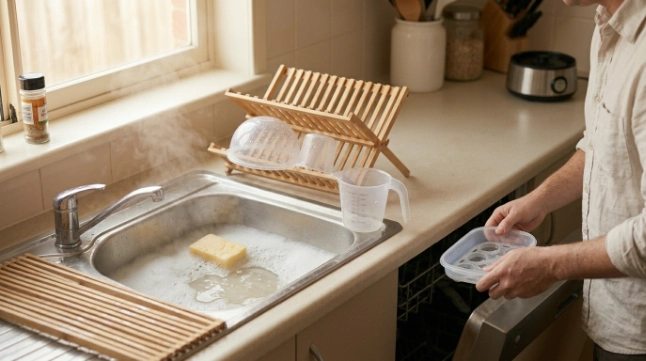
My first mistake was treating all loose parts in the same way. I placed the tray, lid, and measuring cup on the top rack because none of them had wires.
The cup survived, but its printed marks began to fade. The tray also developed a small bend, which made the lid wobble and leak more steam.
Hand-washing worked much better for me. I now use warm water, mild soap, and a soft sponge for the tray, lid, and cup unless their labels clearly permit dishwasher use.
For the heating plate, I use a damp cloth and a little diluted white vinegar when scale appears. I keep the base dry and let every part air-dry before storage.
The biggest lesson was simple: removable does not mean dishwasher safe. Checking the model guide takes less time than finding a replacement lid or tray.
Final Thoughts
So, is egg cooker dishwasher safe? The whole appliance is not dishwasher safe, and the electric base must always stay dry.
Some egg trays, lids, cups, and poaching bowls may be safe on the top rack. Check the manual or dishwasher symbol before washing them.
When there is no clear label, hand-wash the removable parts. It is the safest way to prevent warping, cracks, faded markings, leaks, and electrical damage.
