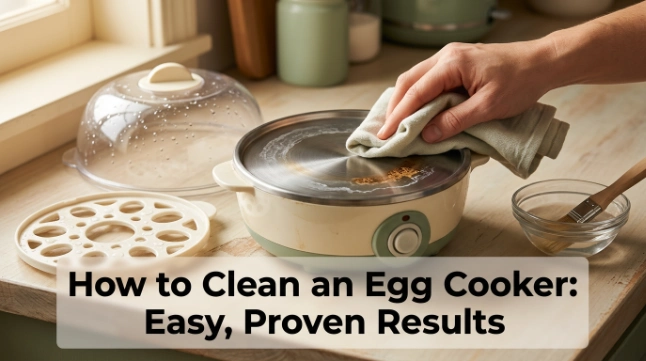
Learning how to clean an egg cooker is easier than it may seem. The main challenge is removing cooked egg, water stains, and mineral buildup without harming the heating plate.
I learned this after leaving water in my cooker overnight. The next morning, the heating plate had a white ring, and the lid smelled like boiled eggs.
My first mistake was scrubbing the plate too hard. That did not help. A short vinegar soak worked far better and caused no scratches.
In this guide, I will show you how I clean each removable part, descale the heating plate, remove odors, and avoid electrical damage.
Common Signs Your Egg Cooker Needs Cleaning
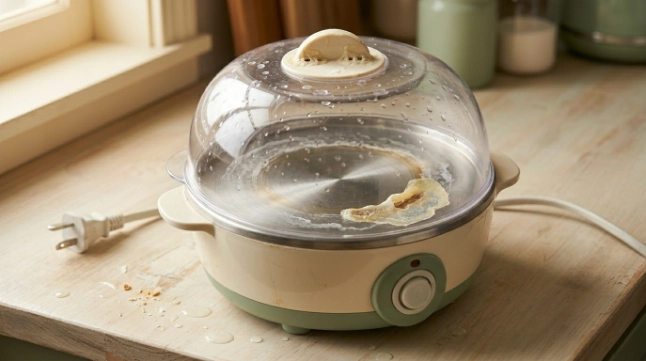
An egg cooker may look clean while still holding grease, mineral deposits, or food bits. The lid and steam vent often need more care than expected.
I normally clean my cooker when I notice any of these signs:
- A white or brown ring on the heating plate
- A strong egg smell inside the lid
- Water spots on the egg tray
- Egg white stuck near the tray holes
- Steam escaping from a blocked vent
- Longer cooking times than normal
- Popping sounds from mineral buildup
- Brown marks that return after each use
| Symptom | Likely cause | Quick fix |
|---|---|---|
| White marks | Mineral buildup | Use diluted vinegar |
| Egg odor | Food film on lid | Wash with mild soap |
| Slow cooking | Coated heating plate | Descale the plate |
| Water leak | Tray or lid fitted poorly | Clean and refit parts |
A damaged part can also make cleaning harder. If an egg tray is cracked or a measuring cup is missing, I replace that part instead of guessing the water level.
A soft cloth and a non-abrasive sponge are also useful. I avoid rough scrubbers because they can leave fine scratches on plastic and coated metal.
Possible Causes of Stains, Odors, and Buildup
Most egg cooker stains come from water, not eggs. Tap water contains minerals that stay on the hot plate after the water turns to steam.
These minerals form limescale. It may look white, gray, tan, or light brown. It is usually harmless, but a thick layer can reduce heating speed.
Egg residue creates a different problem. A cracked egg may leak through the tray and cook onto the heating plate.
The lid can also hold odor. Steam carries small bits of egg and moisture into the steam vent, edges, and handle area.
| Problem | Recommended solution | Difficulty |
|---|---|---|
| Fresh egg spill | Wipe after the plate cools | Easy |
| Light water spots | Use a damp soft cloth | Easy |
| Thick limescale | Descale with vinegar | Easy |
| Blocked steam vent | Clean with a soft brush | Easy |
| Cracked plastic | Replace the damaged part | Moderate |
Some marks are caused by too much heat. This can happen when too little water is used or the cooker runs with a dry heating plate.
A dark mark does not always mean the unit is ruined. If it has no burnt smell, melted area, or damaged cord, careful descaling may remove it.
How to Clean an Egg Cooker Safely
Always unplug the cooker first. Let the heating plate cool fully before touching it or adding any liquid.
Never place the powered base in a sink. Water can enter the control panel, safety switch, cord connection, or heating element.
Remove and Wash the Loose Parts
Take off the lid, egg tray, poaching tray, and any removable egg insert. Check the manual first if you are unsure which parts can be removed.
Wash these parts with warm water, mild dish soap, and a soft sponge. Pay close attention to tray holes, lid edges, and the steam vent.
Rinse each part well. Soap left in the vent may cause an odd smell when the cooker heats again.
Some parts may be dishwasher-safe, but I do not assume this. High heat can bend thin plastic, so I check the maker’s care instructions first.
Wipe the Powered Base
Use a soft cloth that is damp, not dripping wet. Wipe the outside of the base and the area around the buttons.
Do not let water run into seams or controls. For small corners, I wrap the damp cloth around a cotton swab instead of pouring water on the base.
This gentle cleaning method protects the electrical parts. It also keeps dirt from building up around the safety switch.
Clean the Heating Plate
For a fresh spill, wait until the plate is cool. Then wipe it with a warm, damp cloth.
If egg has dried on the surface, place a damp cloth over the spot for a few minutes. This softens the food without hard scraping.
Never use steel wool, a knife, or a metal scraper. These can scratch the plate and damage its finish.
Descale With White Vinegar
For mineral buildup, I mix equal parts white vinegar and water. One or two tablespoons of each is often enough for a small cooker.
Pour only enough mixture onto the heating plate to cover the stained area. Do not fill the base or allow liquid to reach the controls.
Leave it for about 10 to 15 minutes. Then wipe the plate with a soft cloth and repeat if the scale is still thick.
Use a fresh damp cloth to remove the vinegar. Wipe the plate dry before putting the cooker back together.
A maker-approved descaling solution can also work. Follow its label, since the amount and contact time may differ.
Clear the Lid and Steam Vent
A blocked steam vent can trap odor and change how steam leaves the cooker. Wash the lid in warm, soapy water.
Use a soft toothbrush or small bottle brush around the vent. Do not widen the hole with a pin, knife, or other sharp tool.
Rinse the lid and hold it up to the light. The vent should look open and free of food.
Remove a Strong Egg Smell
Soap and warm water remove most odors. If the smell remains, soak only the washable plastic parts in diluted vinegar for 10 minutes.
Rinse them well and let them air-dry. I find that drying the parts apart works better than closing the cooker while it is damp.
Do not soak the powered base. A damp cloth is the safest choice for that section.
Dry and Test the Cooker
Dry every part before assembly. Check that no water remains near the controls, cord, or underside of the base.
Refit the tray and lid. Add the correct amount of water with the measuring cup, then run one normal cycle without eggs if the manual allows it.
Stay nearby during this test. Stop using the cooker if you notice smoke, a sharp burning smell, sparks, or liquid near the cord.
Mistakes to Avoid
My biggest mistake was treating the heating plate like a cooking pan. Heavy scrubbing made the surface look dull but did not remove the mineral stain.
Avoid these common errors:
- Putting the powered base in water
- Cleaning while the plate is hot
- Using bleach, oven cleaner, or harsh powder
- Scraping the plate with metal
- Pouring vinegar into the buttons or seams
- Blocking or changing the steam vent
- Running a cycle with no water
- Storing the unit while it is damp
Do not open a sealed heating unit. Never bypass the safety switch, auto shut-off, or overheat protection.
If water enters the base, unplug it and stop using it. Do not run a quick test to see if it still works.
When to Replace the Egg Cooker
Cleaning can solve stains, odors, and slow heating caused by scale. It cannot safely fix damaged wires or failed electrical parts.
| Repair issue | Likely cost | Replace instead? |
|---|---|---|
| Missing measuring cup | Low | No |
| Cracked egg tray | Low | Usually no |
| Broken lid | Low to moderate | Compare prices |
| Damaged power cord | Moderate | Usually yes |
| Failed heating element | High | Yes |
| Melted or smoking base | Unsafe to repair at home | Yes |
Replace the cooker if the cord is split, the plug becomes very hot, or the base smells burnt after cleaning.
I would also replace a unit that leaks into its electrical base. The same applies if the auto shut-off fails or the cooker keeps overheating.
A new tray, lid, or measuring cup may extend the cooker’s life. Electrical faults are different and should not be treated as home cleaning jobs.
My Personal Experience
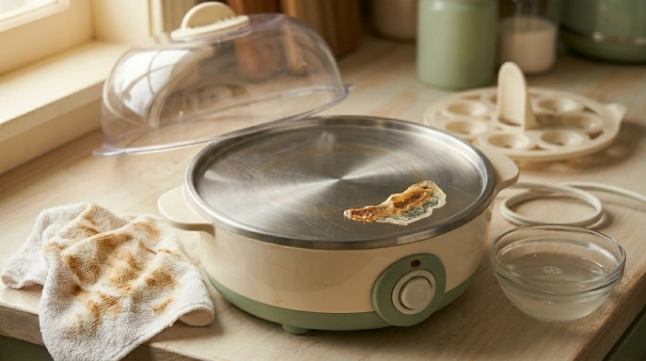
The worst buildup on my cooker looked like a burned brown ring. Dish soap did almost nothing, so I first thought the plate was damaged.
I then tested diluted white vinegar. After a 15-minute soak, most of the ring lifted with a soft cloth.
A second short soak removed the rest. The cooker heated more evenly during my next test, and the popping sound became much softer.
I also learned to wash the lid right away. When I left it closed while damp, the egg smell returned even though the tray looked spotless.
Now I empty unused water, wipe the cool plate, and leave the lid off until all parts are dry. This takes only a few minutes.
Final Thoughts
The safest way to clean an egg cooker is to unplug it, cool it, wash the removable parts, and wipe the base with a damp cloth.
Use diluted white vinegar for limescale. Use mild dish soap for egg residue and odors, but keep the electrical base out of water.
Regular care prevents thick stains and blocked vents. It also helps the cooker heat well without the need for harsh cleaners or risky repairs.
6 thoughts on “How to Clean an Egg Cooker: Easy, Proven Results”