
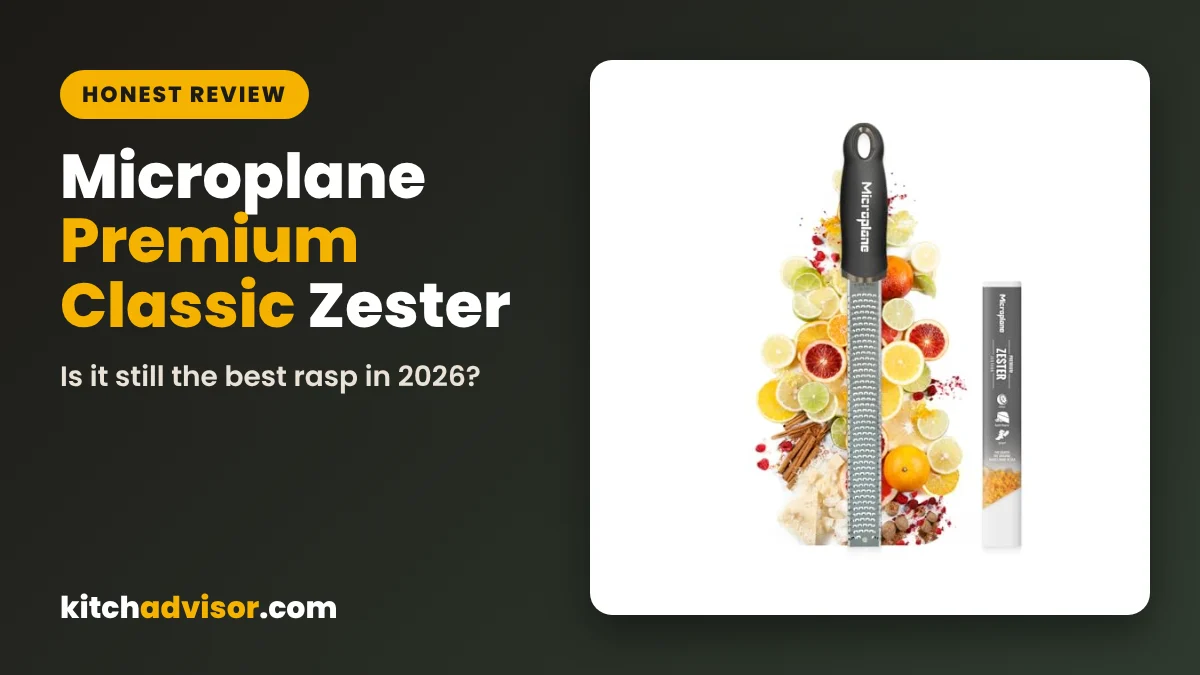
Microplane Premium Classic Zester Review: Still the Best Rasp in 2026?
KitchAdvisor is reader-supported. As an Amazon Associate we earn from qualifying purchases, at no extra cost to you.
Yes, the Microplane Premium Classic Series Zester is still the rasp grater most home cooks should buy. Its photo-etched stainless steel blade takes the thin, flavorful layer off a lemon without the bitter white pith, turns Parmesan into fluffy snow, and grates garlic and ginger into a paste in seconds.
It is a simple tool, so the real questions are how sharp it stays, how easy it is to clean, and whether you need it if you already own a box grater. This review covers its key features, who should buy it, who can skip it, and how it compares with other ways to zest and grate.
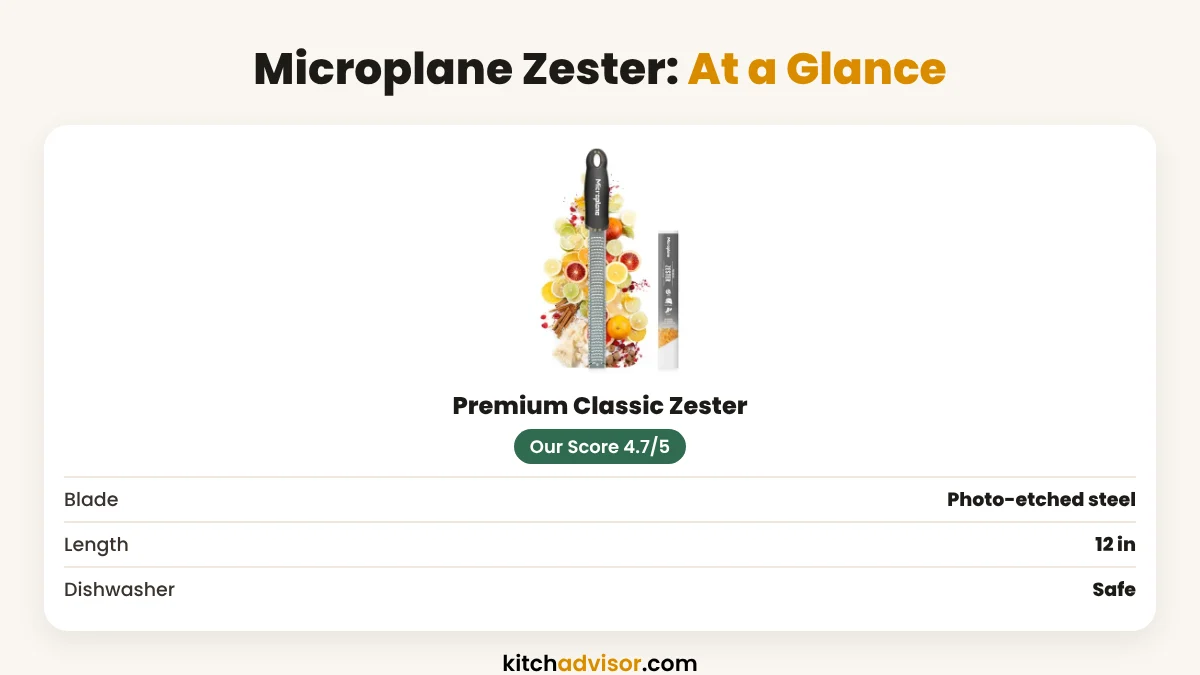
Reviewed Product
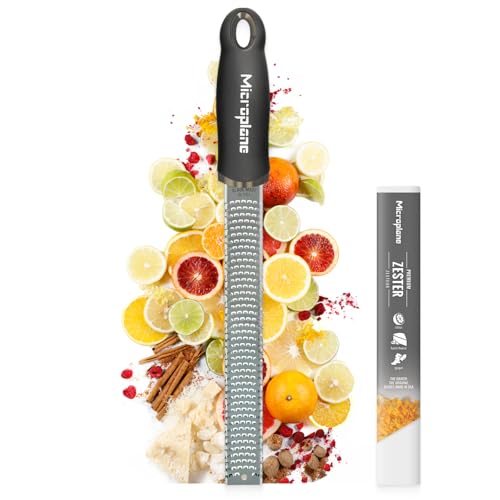
Microplane Premium Classic Series Zester
Rating: ★★★★½ 4.7/5
Research-based editorial score from verified specs, materials, design and buyer-use factors.
Best For: Home cooks who zest citrus, grate hard cheese, garlic, ginger or whole spices more than once a week.
Key Specs
Photo-etched stainless steel blade • Made in USA blades • 12 x 1.31 x 1 in • About 3.9 oz • Non-scratch end tabs • Dishwasher-safe • Magnetic stainless steel
Key Advantage
Razor-sharp etched teeth cut food cleanly instead of tearing it, so zest is fluffy and pith stays behind.
Main Trade-off
The narrow blade is slow for large jobs like a pile of cheddar or a whole carrot.
Quick Verdict
The Premium Classic is the long, narrow rasp that made Microplane a household name. The blade is not stamped or punched like a cheap grater. Microplane uses a photo-etching process to make the teeth, which leaves each one with a true cutting edge. In practice that means the tool shaves food instead of tearing it, so lemon zest comes off in light, dry flakes and Parmesan piles up like snow.
The blade is made from surgical-grade stainless steel in the USA and stays rust-free with normal care. At 12 inches long and only about 1.3 inches wide, it lies across a bowl or measuring cup, and the non-scratch end tabs protect your counter while you grate. Because true stainless steel is magnetic, you can hang it on a magnetic knife strip.
Our verdict: if you zest citrus, grate hard cheese or mince garlic and ginger regularly, this is one of the most useful small tools you can own. If you mostly shred soft cheese for tacos, a box grater is the better buy.
Pros
- Very sharp photo-etched teeth
- Takes zest without the bitter pith
- Grates garlic, ginger and nutmeg to a fine paste
- Dishwasher-safe and rust-resistant
- Slim enough to hang on a magnetic strip
Cons
- Too narrow for big grating jobs
- Grating large amounts by hand can tire your wrist
How It Compares
| Tool | Best for | Fine zest | Big batches |
|---|---|---|---|
| Microplane Premium Classic | Zest, Parmesan, garlic, ginger, spices | Excellent | Slow |
| Box grater | Cheddar, potatoes, carrots | Fair (fine side) | Excellent |
| Channel zester | Long strips for cocktails and garnish | No, strips only | Slow |
| Zyliss Susi 4 Garlic Press | Many garlic cloves fast | No | Good for garlic |
Key Features
Photo-etched, made in USA stainless blade
Microplane started out making woodworking rasps, and the kitchen line uses the same photo-etching method. Instead of punching holes in a sheet, the teeth are chemically etched, which gives each one a sharp edge. That is why zest comes off dry and fluffy and garlic turns into a smooth paste. The blades are made in the USA from surgical-grade stainless steel that resists rust and holds its edge well over time.
Zests citrus without the pith
The tooth set is designed to take only the colored outer rind, where the flavorful oils are, and leave the bitter white pith behind. Draw the fruit across the blade in one direction and rotate it as the color disappears. A single lemon gives you enough zest for a vinaigrette, a pan of lemon bars or a stir-fry sauce.
Hard cheese, garlic, ginger and whole spices
Parmesan, Pecorino, Asiago and Grana Padano grate into soft mounds that melt quickly over pasta and eggs. Garlic and peeled ginger turn into a paste that blends into marinades and dressings. Whole nutmeg and cinnamon sticks become fresh ground spice. Microplane even suggests it for scraping burnt edges off cookies or toast.
Long, slim shape with non-scratch tabs
The tool is about 12 inches long and 1.3 inches wide and weighs only around 4 ounces. You can rest the end on a cutting board or across a bowl, and the rubber-like end tabs keep it from scratching the surface. The black handle is comfortable for short jobs.
Easy to clean and dishwasher-safe
Rinse it right after use, before cheese or citrus oil dries in the teeth. A soft kitchen brush on the underside clears trapped bits. The zester can also go in the dishwasher.
Rasp vs Box Grater vs Channel Zester
A rasp like the Premium Classic is a precision tool. It makes very fine, light shreds, which is what you want for zest that disappears into batter, cheese that melts on contact, and garlic that blends into a dressing with no chunks. It is not built for volume.
A box grater has bigger holes and a larger surface, so it is faster for a pound of cheddar, a pile of potatoes for hash browns or carrots for slaw. Its finest side can zest, but the punched holes tend to tear the rind and pick up more pith.
A channel zester cuts long, thin strips of peel. Bartenders use it for twists and garnishes. It is great for looks but not for mixing zest into food.
Most cooks end up owning a rasp and a box grater. If you only have room for one and you cook Italian, bake with citrus or use lots of fresh ginger, the rasp is the more useful tool day to day.
How to Zest a Lemon with a Microplane
- Wash and dry the lemon so the blade grips the peel.
- Hold the zester at an angle over a bowl, or turn it upside down and rest it on the fruit so the zest collects on top of the blade where you can see it.
- Draw the lemon across the blade in one direction with light pressure.
- Rotate the fruit as soon as you see white pith appear, then move to a fresh yellow area.
- Tap the zester on the bowl edge to release the zest, and use it right away for the strongest aroma.
Who Should Buy It
- Bakers who add lemon, lime or orange zest to cakes, cookies and glazes.
- Pasta lovers who want fresh Parmesan at the table.
- Cooks who use a lot of fresh garlic and ginger in sauces, curries and stir-fries.
- Anyone who wants freshly grated nutmeg for custards, eggnog or béchamel.
Who Should Skip It
- Cooks who mainly shred soft cheese or vegetables in bulk. A box grater or food processor is faster.
- People who need long citrus strips for cocktail garnish. A channel zester does that job.
- Anyone with limited grip strength who grates large amounts. A garlic press may be easier for big batches of garlic.
Care and Safety Tips
- Always grate in one direction, away from your fingers, and stop before the last small piece. Use the last bit of ginger or garlic in cooking instead of grating your knuckles.
- Rinse right after use. Dried cheese and citrus oil are much harder to remove later.
- Brush from the back of the blade to push food out of the teeth rather than catching the brush on the sharp edges.
- Store it in a sleeve, on a magnetic strip or in a utensil holder blade-side in, so it does not dull against other tools in a drawer.
- Do not use it on bone or frozen food. Hard impacts can bend the etched teeth.
Alternatives to Consider
- Zyliss Susi 4 Garlic & Ginger Press: faster if you crush several cloves at once and want to avoid peeling; it does not zest or grate cheese.
Frequently Asked Questions
Is a Microplane the same as a zester?
Yes. Microplane is a brand, but its long rasp grater is so popular that people call any rasp zester a “Microplane”. It zests citrus and also grates hard cheese, garlic, ginger and whole spices.
Is the Microplane Premium Classic dishwasher-safe?
Yes, Microplane says it can go in the dishwasher. Rinsing it right after use and brushing the underside keeps it cleanest.
Does a Microplane get dull?
Over years of heavy use the teeth will slowly lose some bite, but the photo-etched stainless steel holds its edge well. Avoid grating hard or frozen items and storing it loose in a drawer to make it last longer.
Can you grate garlic with a Microplane?
Yes. Peel the clove and rub it along the blade to make a fine paste. It is great for dressings, marinades and garlic butter.
Is a rasp better than a box grater for Parmesan?
For a light, fluffy topping, yes. The rasp makes fine shreds that melt fast on hot pasta. For larger amounts to bake into a dish, the fine side of a box grater is quicker.
Final Verdict
The Microplane Premium Classic Series Zester earns its spot in almost every kitchen drawer. The photo-etched blade is sharp, the zest is fluffy and pith-free, and it handles Parmesan, garlic, ginger and nutmeg just as well.
It will not replace a box grater for big shredding jobs, and that is fine. For small, flavor-packed tasks, this is still the rasp to beat in 2026. If garlic is your main job, also look at our best garlic press picks, and for juicing the lemons after zesting see our best citrus juicer guide.
Related reading: