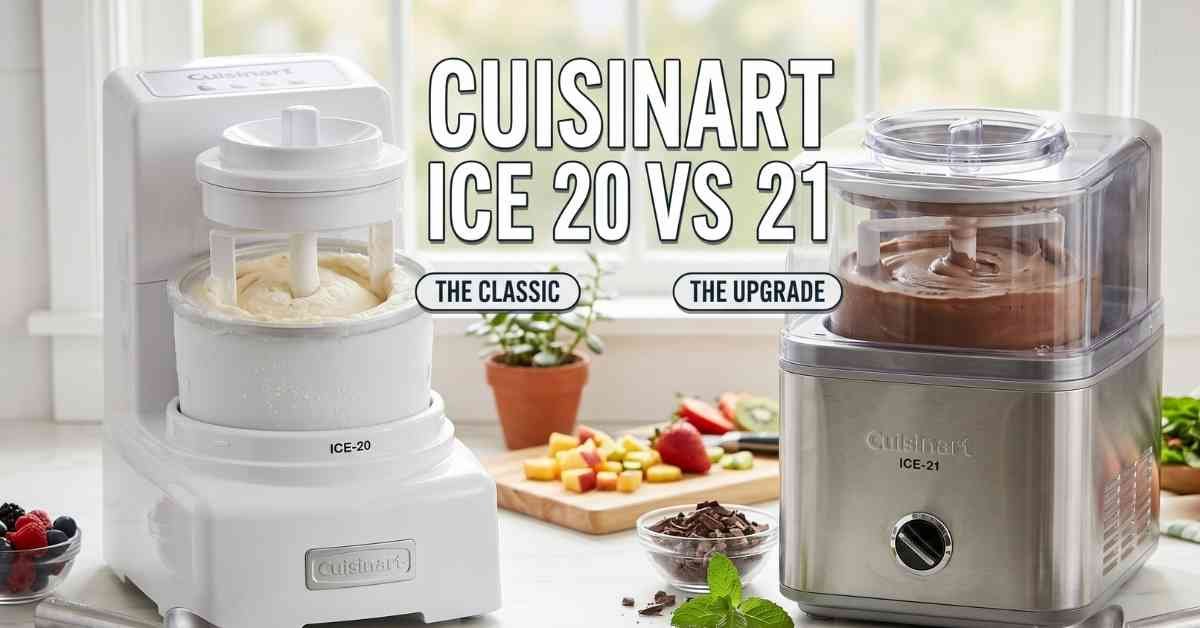
It was a blistering Saturday afternoon in July. My craving for homemade strawberry sorbet reached an all-time high. I stood in my kitchen, staring at two popular canister machines. I wanted to see which one froze my mixture faster.
If you are comparing the Cuisinart Ice 20 Vs 21, you know the struggle. You want creamy perfection without waiting all day. Both machines promise delicious results. However, subtle design changes drastically alter the churning experience. Let me share exactly how these two perform when the heat is on.
Cuisinart Ice 20 Review
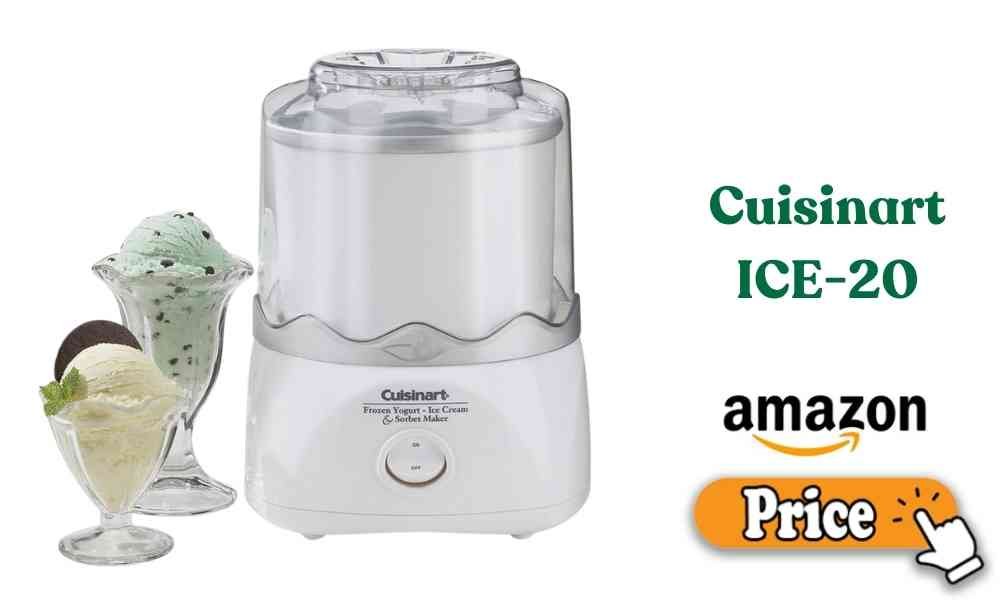
The Cuisinart Ice 20 is a classic canister-style machine. It holds 1.5 quarts of liquid dessert. It relies on a heavy-duty motor and a traditional paddle. These parts aerate your mixture while the frozen bowl chills it down.
Pros and Cons
Here is a quick look at the strengths and weaknesses of this older appliance.
| Pros | Cons |
| Affordable budget option | Slower freezing time |
| Very easy to operate | Loud motor noise |
| Sturdy and durable build | Leaves icy film on the bowl |
Living With The Ice 20
Using this machine over the summer brought back fun memories. I loved whipping up basic vanilla bean flavors. However, I quickly realized a small flaw in the design. The old dasher leaves a thin layer of frozen mix on the bowl walls. You have to scrape it down manually to prevent icy chunks in your bowl.
It takes roughly 30 minutes to reach a thick consistency. The motor is quite loud during this time. It fills the kitchen with a heavy, mechanical whirring sound. Despite the noise and minor scraping, the final dessert is incredibly satisfying on a hot day.
Recommendation
This machine is perfect for casual dessert makers. It fits those wanting an affordable option for simple weekend treats. It is not good for impatient folks or those who hate loud appliances.
Cuisinart Ice 21 Review
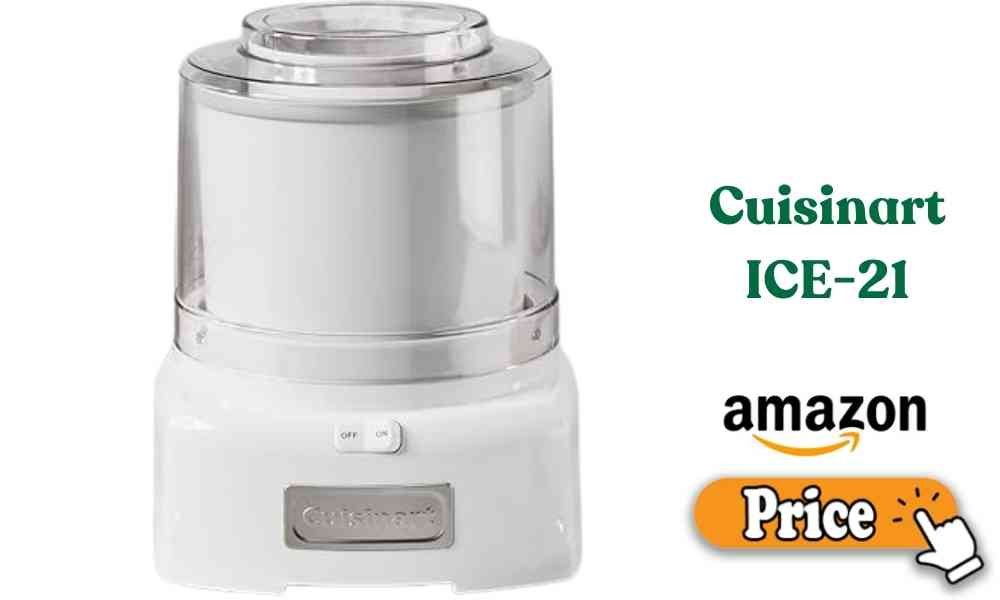
Stepping up to the Cuisinart Ice 21 feels like a solid upgrade. It shares the same 1.5-quart capacity as the older model. However, it features a newly designed mixing paddle. This upgraded blade aggressively scrapes the bowl edges. It is built to get your frozen yogurt ready much faster.
Pros and Cons
This upgraded model fixes past flaws but still carries a few minor quirks.
| Pros | Cons |
| Extremely fast churning | Bowl requires 24-hour pre-freezing |
| Ultra-smooth texture | Motor is still noticeably loud |
| No manual scraping needed | Takes up precious counter space |
Whipping Up Magic With The Ice 21
The first time I poured a chocolate mint base into this machine, I was amazed. The new horizontal paddle works brilliantly. It aggressively scrapes the sides so the mixture chills evenly. Within just 15 minutes, my base transformed into a flawlessly creamy masterpiece.
The texture felt noticeably richer than before. The faster freeze time prevents large ice crystals from forming. The motor still buzzes loudly. However, the shorter run time makes the noise much easier to tolerate. Cleaning the bowl is also a breeze since nothing gets stuck to the walls.
Recommendation
This model is perfect for ice cream lovers who want ultra-smooth textures. It is great for those who value fast churning speeds. It is not good for anyone who easily forgets to pre-freeze their bowl.
Detail Comparison for Cuisinart Ice 20 Vs 21
Choosing between these siblings comes down to small engineering changes. These details heavily impact your dessert-making workflow. Let us break down the core differences in this detailed Cuisinart Ice 20 Vs 21 showdown.
Freezing Performance: Cuisinart Ice 20 Vs 21
The time it takes to chill the base matters deeply. The older model requires up to 30 minutes to finish. The newer version finishes the job in under 20 minutes.
| Feature | Cuisinart Ice 20 | Cuisinart Ice 21 |
| Average Freeze Time | 25 to 30 minutes | 15 to 20 minutes |
Final Rating:
Cuisinart Ice 20: 7/10 | Cuisinart Ice 21: 9/10
Texture & Creaminess: Cuisinart Ice 20 Vs 21
Fast freezing is the secret to a luxurious mouthfeel. The newer model creates a significantly smoother creaminess. The older unit occasionally produces slightly icy batches.
| Feature | Cuisinart Ice 20 | Cuisinart Ice 21 |
| Ice Crystal Formation | Noticeable at times | Minimal to none |
Final Rating:
Cuisinart Ice 20: 7/10 | Cuisinart Ice 21: 9.5/10
Mixing Paddle Performance: Cuisinart Ice 20 Vs 21
The paddle design is the biggest difference here. The classic blade struggles to clear the sides entirely. The upgraded dasher scrapes flawlessly and prevents frozen walls.
| Feature | Cuisinart Ice 20 | Cuisinart Ice 21 |
| Blade Design Type | Vertical | Horizontal |
| Scraping Efficiency | Leaves residue | Clean scraping |
Final Rating:
Cuisinart Ice 20: 6/10 | Cuisinart Ice 21: 9/10
Noise Level: Cuisinart Ice 20 Vs 21
Both appliances pack heavy-duty motors. They generate a lot of mechanical sound. You will definitely hear them whirring loudly. However, the upgraded machine runs for a shorter duration.
| Feature | Cuisinart Ice 20 | Cuisinart Ice 21 |
| Operational Sound | Very loud (30 mins) | Very loud (15 mins) |
Final Rating:
Cuisinart Ice 20: 5/10 | Cuisinart Ice 21: 6/10
Prep Time & Batch Speed: Cuisinart Ice 20 Vs 21
Both bowls require at least 24 hours in a deep freezer. You cannot skip this crucial step. However, once you pour the liquid, the upgraded model gets you to dessert time faster.
| Feature | Cuisinart Ice 20 | Cuisinart Ice 21 |
| Bowl Prep Time | 24 hours | 24 hours |
| Active Batch Speed | Slower | Much Faster |
Final Rating:
Cuisinart Ice 20: 8/10 | Cuisinart Ice 21: 9/10
Conclusion
Both appliances make tasty frozen treats right on your kitchen counter. However, the upgraded mixing paddle makes the newer model a clear winner. You get smoother textures, quicker batches, and less scraping. This makes the upgrade completely worth it for serious dessert fans.