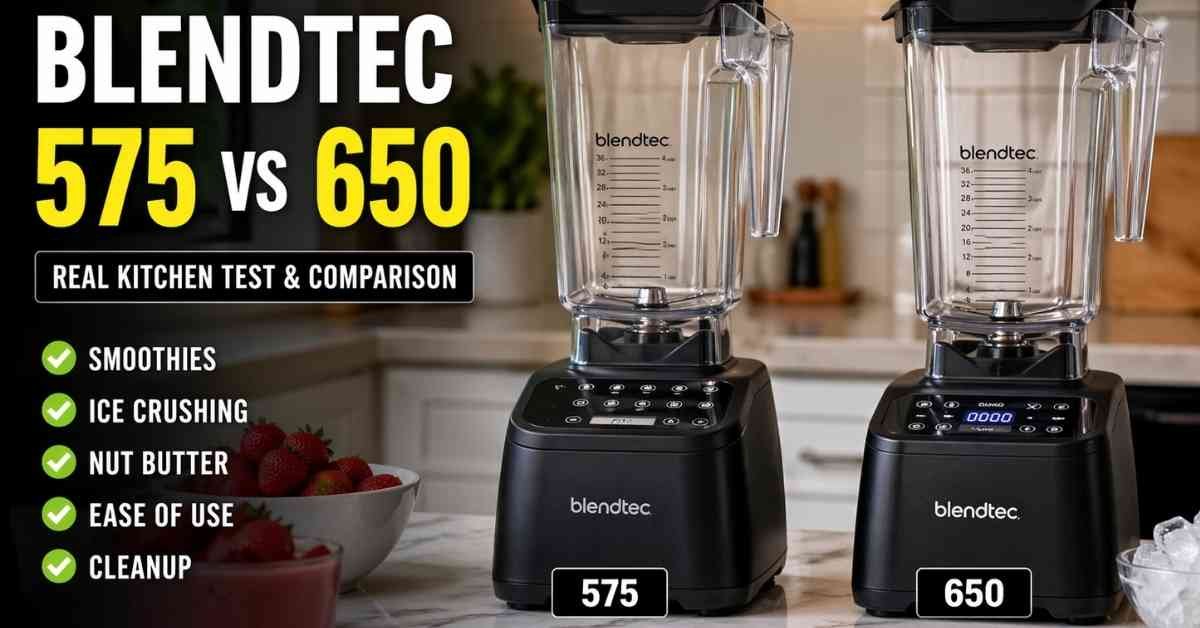
Blendtec 575 vs 650 is a smart comparison if you want a strong countertop blender but do not want to waste money on features you will never use. I used both in normal daily kitchen life, not in a showroom. That means busy mornings, frozen fruit smoothies, quick protein shake runs, and late cleanup when I wanted the job done fast.
Both are good high speed blenders, but they feel different once you live with them. Small details like controls, noise, and jar handling matter more than most buyers expect.
Blendtec 575 Review
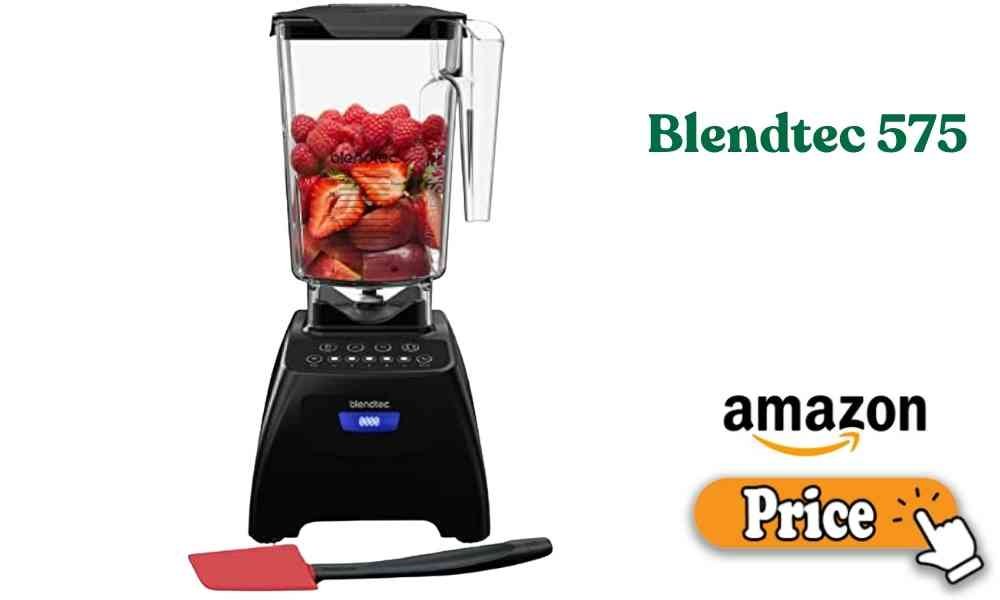
The Blendtec 575 felt easy to trust from day one. It has strong blending power and simple controls that did not slow me down. I reached for it often when I wanted a quick smoothie blender that just worked.
Pros and Cons
It impressed me with speed and texture. It annoyed me a bit with noise and a learning curve on timing thick blends.
| Pros | Cons |
|---|---|
| Strong motor for smoothies and ice | Loud at high speed |
| Easy touch controls | Can shake on counter with heavy loads |
| Good preset cycles | Jar is bulky for small cabinets |
| Fast cleanup | Thick blends need tamper-style pauses |
Real Experience After Months of Use
Smoothies came out very smooth, even with frozen fruit and seeds. My morning banana shake had almost no grit. Ice crushing was fast, and frozen drinks had a nice texture instead of chunky bits. That alone saved time before work.
For nut butter blender tasks, it worked, but I had to stop and scrape more than I wanted. The motor stayed strong, though. The jar poured cleanly once I learned the angle. I usually rinsed it right after use, and cleanup took less than a minute. Loud? Yes. But effective.
Recommendation
Perfect for people who want power, presets, and daily smoothie use. Great for families or frequent use. Skip it if you need the quietest blender or have very tight storage space.
Blendtec 650 Review
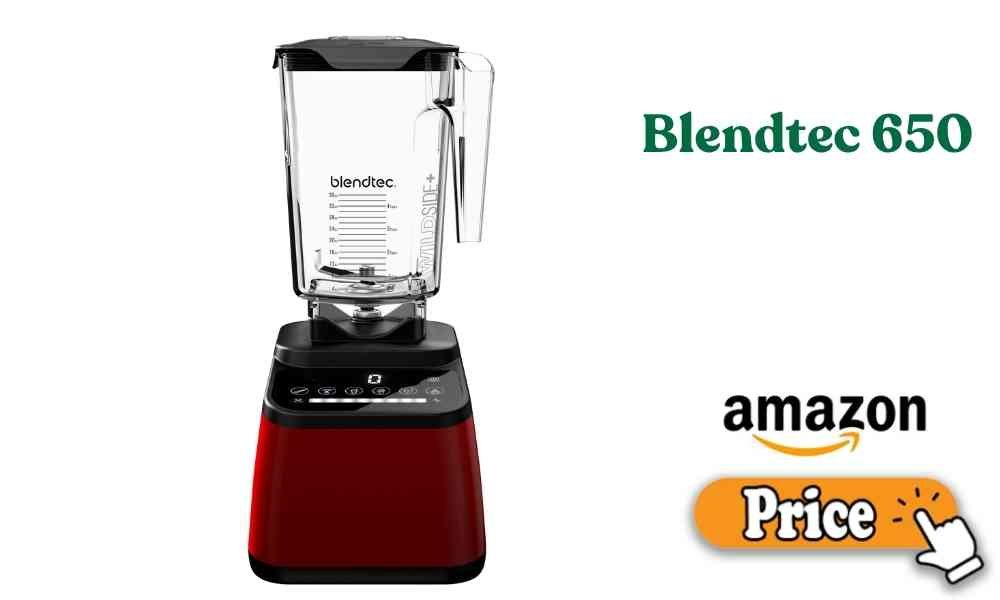
The Blendtec 650 felt like the more polished version in daily use. It gave me similar power, but the interface and overall feel seemed a bit nicer. It felt made for people who want convenience.
Pros and Cons
It delivered smooth results with less fuss. The downside is simple: it often costs more.
| Pros | Cons |
|---|---|
| Strong blending performance | Higher price in many markets |
| Sleek controls and smoother use | Still loud under load |
| Great preset options | Overkill for light users |
| Reliable for daily use | Large footprint |
Real Experience After Months of Use
Protein shakes, smoothies, and crushed ice were easy wins. The texture was silky, and I rarely needed extra blending time. It handled frozen fruit with confidence, even when I filled the blender jar more than I should have.
What I noticed most was convenience. The controls felt nicer during rushed mornings. Cleanup was simple, and the lid fit securely. For thick recipes, it still needed some help now and then, but less frustration overall. That small difference adds up with daily use.
Recommendation
Perfect for buyers who use a blender often and want a smoother experience. Great for smoothie lovers and busy kitchens. Skip it if price matters more than comfort features.
Detailed Comparison for Blendtec 575 vs 650
Both blenders are powerful and capable. The real gap is not huge raw power. It is about ease of use, value, and how they fit your habits. Here are the differences that mattered most to me.
Smoothie Texture – Blendtec 575 vs 650
Both make smooth drinks, but the 650 felt a bit more consistent with hard mixes.
| Feature | Blendtec 575 | Blendtec 650 |
|---|---|---|
| Soft fruit smoothies | Excellent | Excellent |
| Frozen fruit smoothies | Very Good | Excellent |
| Seed blending | Very Good | Excellent |
| Repeat consistency | Good | Very Good |
Rating
Blendtec 575: 8.5/10
Blendtec 650: 9/10
Both are strong, but the 650 felt slightly more refined.
Ice Crushing Ability – Blendtec 575 vs 650
Ice was easy work for both. The difference was mostly control feel.
| Feature | Blendtec 575 | Blendtec 650 |
|---|---|---|
| Crushed ice speed | Fast | Fast |
| Snow-like texture | Good | Very Good |
| Frozen drink results | Very Good | Excellent |
| Motor confidence | Strong | Strong |
Rating
Blendtec 575: 8.5/10
Blendtec 650: 9/10
Neither struggles here, but the 650 felt cleaner in results.
Thick Blends / Nut Butter – Blendtec 575 vs 650
Thick recipes test any blender. Both can do it, but patience helps.
| Feature | Blendtec 575 | Blendtec 650 |
|---|---|---|
| Peanut butter | Good | Very Good |
| Hummus | Very Good | Very Good |
| Need to scrape sides | Often | Less Often |
| Heat buildup | Low | Low |
Rating
Blendtec 575: 8/10
Blendtec 650: 8.5/10
The 650 felt a little less frustrating.
Ease of Use – Blendtec 575 vs 650
This is where I noticed the clearest gap.
| Feature | Blendtec 575 | Blendtec 650 |
|---|---|---|
| Learning curve | Easy | Very Easy |
| Daily convenience | Good | Excellent |
| Control feel | Good | Very Good |
| Quick start use | Good | Excellent |
Rating
Blendtec 575: 8/10
Blendtec 650: 9/10
The 650 simply felt nicer during rushed days.
Noise Level – Blendtec 575 vs 650
Neither is quiet. High speed blender power comes with sound.
| Feature | Blendtec 575 | Blendtec 650 |
|---|---|---|
| Low speed noise | Moderate | Moderate |
| High speed noise | Loud | Loud |
| Counter vibration | Medium | Medium-Low |
| Comfort in small kitchen | Fair | Fair |
Rating
Blendtec 575: 7/10
Blendtec 650: 7.5/10
Both are noisy, but the 650 felt slightly calmer.
Value for Money – Blendtec 575 vs 650
This depends on what you need.
| Feature | Blendtec 575 | Blendtec 650 |
|---|---|---|
| Price value | Excellent | Good |
| Performance per dollar | Excellent | Very Good |
| Long-term use value | Very Good | Very Good |
| Best for budget buyers | Yes | No |
Rating
Blendtec 575: 9/10
Blendtec 650: 8/10
The 575 often gives more value if price matters.
Final Verdict
There is no single winner for everyone. If you want the better budget buy with strong real performance, choose the Blendtec 575. If you blend often and want a smoother daily experience, choose the Blendtec 650. Best for smoothies: 650.
Best for power value: 575. Best for small kitchens: whichever fits your budget and storage better, since both use similar space. Best overall for most users: 575 if price is lower, 650 if convenience matters more.
