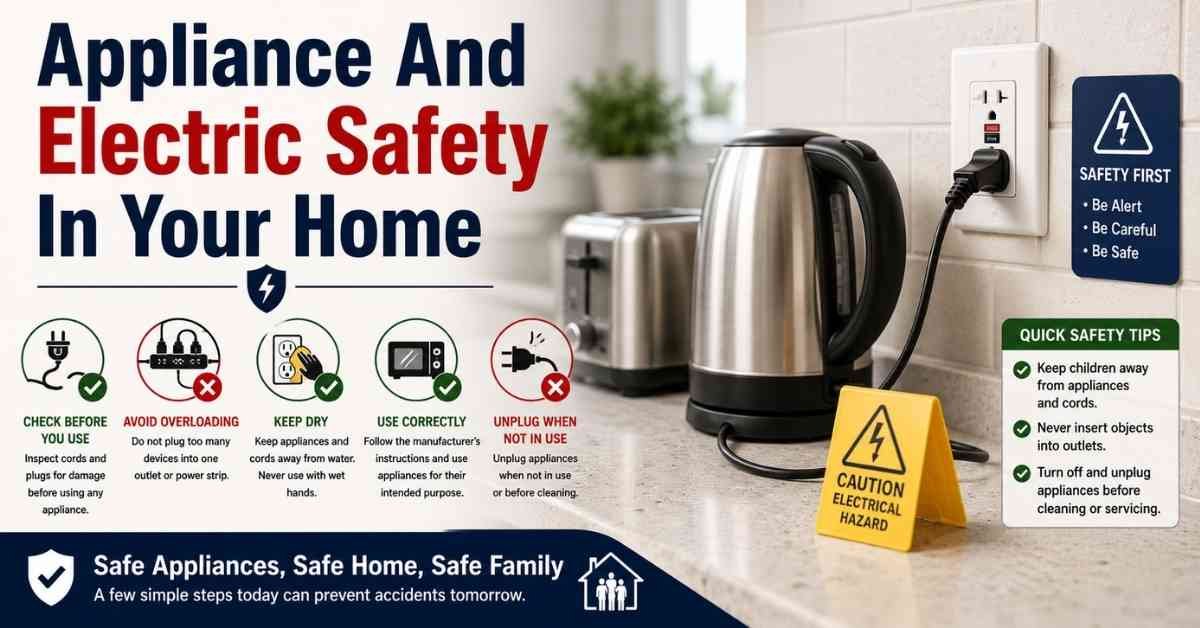
Safe use of tools with plugs is a top rule to know. We use them each day to cook and clean our house. We must use deep care so we do not get hurt. A bad shock from a wall box is a huge risk. This guide shows how to use your home gear the right way.
Water And Plugs Do Not Mix
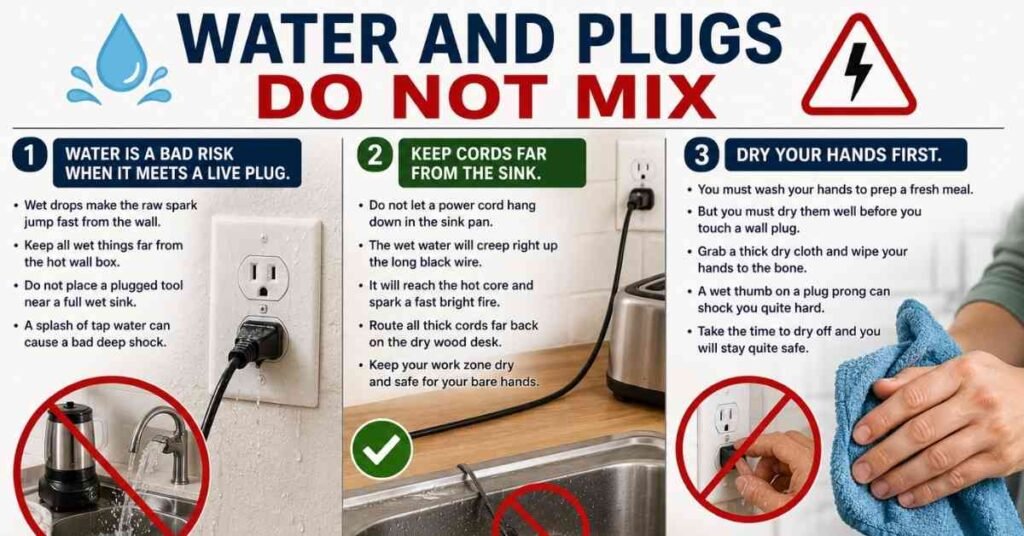
Water is a bad risk when it meets a live plug. Wet drops make the raw spark jump fast from the wall. You must keep all wet things far from the hot wall box. Do not place a plugged tool near a full wet sink. A splash of tap water can cause a bad deep shock.
Keep Cords Far From The Sink
Do not let a power cord hang down in the sink pan. The wet water will creep right up the long black wire. It will reach the hot core and spark a fast bright fire. Route all thick cords far back on the dry wood desk. Keep your work zone dry and safe for your bare hands.
Read More: Knife And Cut Safety In Your Home
Dry Your Hands First
You must wash your hands to prep a fresh meal. But you must dry them well before you touch a wall plug. Grab a thick dry cloth and wipe your hands to the bone. A wet thumb on a plug prong can shock you quite hard. Take the time to dry off and you will stay quite safe.
Unplug Gear When You Are Done
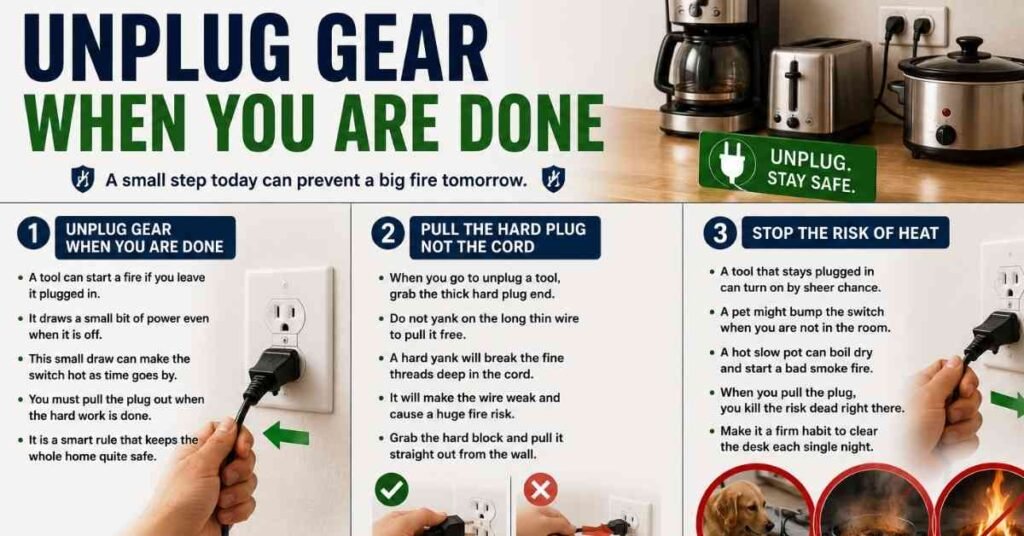
A tool can start a fire if you leave it plugged in. It draws a small bit of power even when it is off. This small draw can make the switch hot as time goes by. You must pull the plug out when the hard work is done. It is a smart rule that keeps the whole home quite safe.
Pull The Hard Plug Not The Cord
When you go to unplug a tool, grab the thick hard plug end. Do not yank on the long thin wire to pull it free. A hard yank will break the fine threads deep in the cord. It will make the wire weak and cause a huge fire risk. Grab the hard block and pull it straight out from the wall.
Stop The Risk Of Heat
A tool that stays plugged in can turn on by sheer chance. A pet might bump the switch when you are not in the room. A hot slow pot can boil dry and start a bad smoke fire. When you pull the plug, you kill the risk dead right there. Make it a firm habit to clear the desk each single night.
Check The Cords Each Month
Cords wear out as we bend them back and forth each week. You must check them close to see if they are safe to use. Look at the whole length of the wire from end to end. Feel the rubber coat to see if it is stiff or hard. A bad cord is a trap that waits for you to plug it in.
Look For Bare Wire
If you see a bare wire, do not plug the tool in at all. A bare wire means the safe rubber coat is gone and dead. If you touch that bare spot, the shock will hit you hard. The raw wire can also spark and burn the wood desk top. Toss the bad cord out or have a pro fix it right away.
Feel For Hot Plugs
When a tool runs for a while, feel the wall plug end. It should be just warm to the touch of your bare hand. If it is too hot to hold, you have a big bad fault. Turn the tool off and pull the plug out with deep care. Do not use that wall box or that tool till it gets fixed.
Give Your Gear Space To Breathe
Tools get warm when they do hard work on the desk. They need cool room air to keep the heat from a bad build. Do not push a hot tool flat to the back wall face. Give it a wide space to let the hot air vent out fast. This keeps the core parts cool and makes the tool last long.
Do Not Trap The Heat In
If you block the air vents, the tool will get too hot fast. The parts inside will melt and cause a dark smoke puff. Do not throw a thick towel on top of a hot slow pot. Keep paper bags far away from the hot sides of a warm box. Let the heat rise up and fade out in the large room.
Keep Vents Clean And Clear
Dust can clog the small air holes on your hot desk tools. A clog blocks the cool air and traps the high heat inside. Use a small soft brush to sweep the dust off the vent slats. Do this once a month to keep the tool safe and clean. A clean tool runs cool and does not start a bad fast fire.
Use The Right Wall Box
The wall box gives the tool the pure power it needs to run. But a wall box can only give out so much safe power. You must not ask it to do too much work at one time. If you do, the wires in the wall will get quite hot. This is a top way that bad fires start deep in a house wall.
Do Not Add Too Much Load
Do not plug three big tools in the same small wall box. A toaster and a slow pot draw a huge load of high power. If you plug them both in one box, the fuse will blow out. Use one plug port for one big hot tool at a time. Spread the load out to keep the whole house safe and sound.
Ground Fault Plugs Save Lives
You must use a safe ground plug near a wet sink bowl. This plug has a fast trip switch built right in its face. If a drop of water hits the plug, it turns off right away. It cuts the power dead before the shock can reach your heart. Test these plugs each month to make sure they work quite well.
Fix Bad Gear Right Away
If a tool acts odd, you must stop its use right then. Do not try to make it work if it sparks or smells bad. A strange noise means a part inside is loose or near its end. Unplug the bad tool and set it far out of the clear way. Safety comes first when you deal with high raw strong power.
Do Not Use A Bad Tool
A tool with a crack in the case is not safe to touch. Water and dust can get in the crack and cause a short fault. If a tool drops hard on the floor, check it close for harm. Do not plug it in if you see loose parts or a bent switch. It is far best to throw it out and buy a fresh new one.
Call A Pro For Big Jobs
Do not take a tool apart if you do not know the parts. The parts inside hold a charge long after the plug is pulled. You can get a huge shock from a loose bare wire inside. Call a pro tech to fix the hard faults in your big home tools. They know the safe way to test and fix the bad hot gear.
Be Safe With Big Tools
Big tools like a cold box or a stove need deep care too. They pull a ton of power to do their huge hard daily jobs. Make sure their cords are thick and made for a large heavy load. Do not squish the cord in back of the large cold fridge box. Keep the path clear so the cord stays free from all bad harm.
Keep Big Gear Dry
When you clean a big tool, do not spray the plug with wash soap. Spray the cloth first and then wipe the flat hard steel clean. Do not let water run down the back side where the wires hide. If a big tool gets wet inside, it will fry the main board fast. Use dry care to keep your large gear safe for a long time.
Read The Rule Book First
Each tool comes with a small book of smart safe house rules. Take the time to read the book before you plug the tool in. It tells you the best way to clean and store the new gear. It lists the top risks that you must watch out for each day. Stay smart and use care with each step you take in the room.