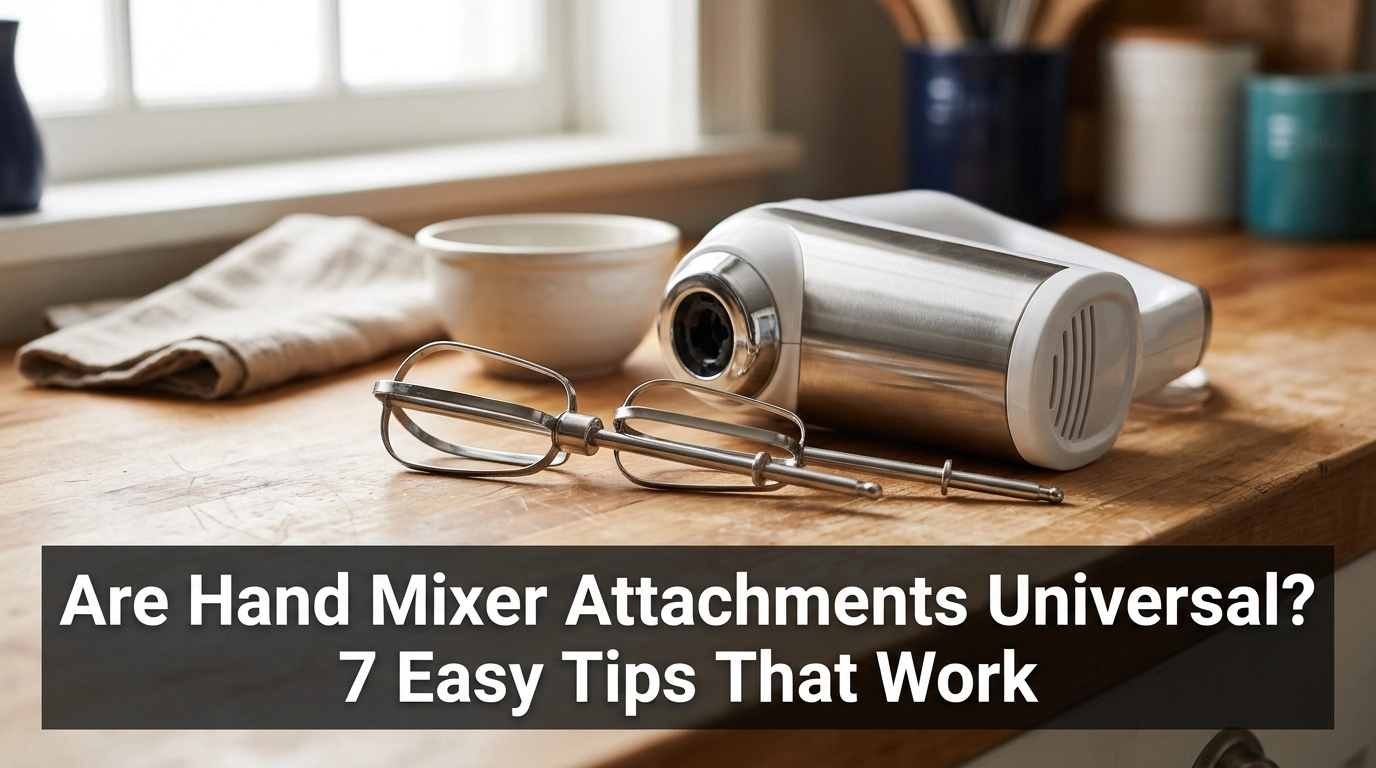
Are hand mixer attachments universal? No. Some beaters fit several mixer models, but many are made for one brand or model. The shape, size, and locking system can differ.
I learned that a beater can look right and still fail to fit. A small difference in the stem or lock can stop it from sliding into place.
In this guide, I will explain how to check your attachments, spot a poor fit, and find the right replacement. These checks can also help you avoid damage to your mixer.
Common Signs of the Problem
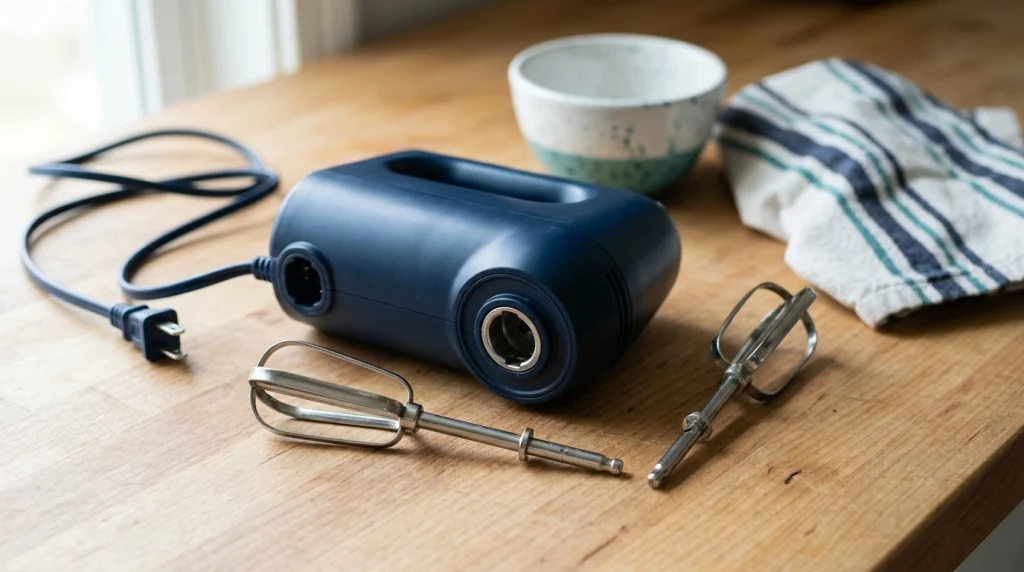
A hand mixer attachment may look correct but still fail to fit. Here are the main signs to watch for.
- The beater will not slide in: The stem may be too wide, too narrow, or the wrong shape.
- The attachment will not lock: The locking notch may not match the mixer.
- The beater falls out: It may not be secured or may be the wrong type.
- One beater fits, but the other does not: Some mixers use two different attachment sockets.
- The mixer makes odd noises: A poorly fitted beater may rub against the housing or the other beater.
Stop using the mixer if an attachment wobbles, slips, or makes unusual noises. Unplug it before checking the fit.
Possible Causes
There are several reasons why hand mixer attachments may not fit.
- Different brands: A beater from one brand may not match another brand’s mixer.
- Different models: Even mixers from the same maker can use different attachment designs.
- Different stem shapes: Some beaters have round stems, while others have square or shaped ends.
- Different locking systems: Some mixers use a simple push-in fit. Others need a notch or collar to lock the beater in place.
- Special attachments: Dough hooks, whisks, and blending rods may use different fittings.
- Wear or damage: A bent stem or damaged socket can stop a correct attachment from fitting well.
The key point is simple: matching the brand alone is not enough. You also need to check the exact model and attachment type.
How to Fix the Hand Mixer Attachment Fit Problem
You do not need special tools for these checks. Start with the model details and work through each step before buying new beaters.
1. Check the Mixer Brand and Model
First, unplug the mixer. Look for the brand name and model number on its body, handle, or rating label.
Use that number to find the manual or the maker’s list of compatible parts. This is the best way to confirm which beaters fit your mixer.
Do not rely on a product listing that says only “universal hand mixer beaters.” Check the supported models before you buy.
2. Compare the Attachment Stems
Take out the old beaters and compare them with the replacement. Look at the stem shape, width, length, and locking notch.
A close match in length does not prove that the attachment will fit. The part that enters the mixer must match the socket and locking system.
If you no longer have the original beaters, check the manual or ask the maker to identify the correct part. Avoid guessing from a photo alone.
3. Check the Locking System
Some mixers have two sockets with different release features. One may have a marked collar or a special notch to help the beaters lock in place.
Check the instructions to see whether each beater belongs in a particular socket. Never force an attachment into the wrong opening.
If the attachment does not slide in smoothly, stop. Forcing it may damage the socket or the locking parts.
4. Choose the Correct Replacement Parts
Once you know the model, look for beaters listed for that exact mixer. A compatible replacement set is usually a safer choice than an attachment sold as a universal fit.
You may also need to replace a bent or worn beater. If the original part is discontinued, ask the maker or a trusted parts seller about approved alternatives.
Check whether the set includes two matching beaters or a pair with different stems. Keep the old parts until the replacements fit and work as intended.
5. Test the Fit With the Mixer Unplugged
Insert each attachment as the manual directs. You should not need to push hard, twist roughly, or use a tool.
Check that each beater locks in place. Give it a gentle pull to confirm that it stays secure.
If one attachment will not lock, remove it and compare the stem again. Do not switch on the mixer to see whether a loose beater will stay in place.
6. Inspect and Clean the Attachment Sockets
Food residue can sometimes collect around the attachment openings. Unplug the mixer and check for visible dirt or dried food.
Use a soft, slightly damp cloth to wipe the outside of the sockets. Keep water away from the motor openings, and never immerse the mixer body.
Cleaning may help if residue blocks the fitting, but it will not make an incompatible beater fit. If the socket looks cracked or bent, stop using that attachment and seek advice from the maker.
7. Run a Safe Function Check
Once both beaters fit and lock correctly, make sure they are secure before plugging in the mixer. Keep fingers, cloths, and other objects away from the beaters.
Start at the lowest speed in a suitable bowl. Watch for wobbling, scraping, or unusual noise.
Switch off and unplug the mixer if anything seems wrong. A correct attachment should rotate without hitting the housing or the other beater.
Quick Comparison Tables
Use this table to match common symptoms with their likely causes.
| Symptom | Likely Cause | Quick Fix |
|---|---|---|
| Beater will not enter | Wrong stem size or shape | Check the model |
| Beater will not lock | Notch does not match | Find the correct part |
| Beater slips out | Poor fit or worn lock | Stop and inspect |
| Beaters hit each other | Wrong pair or bent part | Check compatibility |
| Attachment fits but wobbles | Damage or loose socket | Stop using it |
Here is a simple guide to the next step.
| Problem | Recommended Solution | Difficulty |
|---|---|---|
| Unknown model | Find the model number | Easy |
| Wrong attachment | Order a compatible part | Easy |
| Food residue | Wipe the socket area | Easy |
| Bent beater | Replace the beater | Easy |
| Damaged socket | Contact the maker | Moderate |
Mistakes to Avoid
A common mistake is assuming that every hand mixer uses the same beater design. Similar-looking attachments can have different stems and locking features.
Avoid these errors:
- Forcing a beater into a tight socket.
- Buying parts based on brand name alone.
- Running the mixer with a loose attachment.
- Mixing beaters that are not designed to work as a pair.
- Washing the mixer body under running water.
- Opening the motor housing to adjust the attachment socket.
Never try to bend a stem to make it fit. Do not modify the locking notch or bypass a safety feature.
If the socket is damaged, use an authorized repair service or replace the mixer if repair is not worthwhile.
When to Replace the Hand Mixer
A new set of beaters may solve the problem if the mixer itself is in good condition. Check the cost of the correct replacement parts before buying a new appliance.
Replace the damaged attachment if it is bent, cracked, badly worn, or no longer locks securely. Do not keep using it just because it still turns.
Consider replacing the mixer if its sockets are cracked, its locking system has failed, or suitable replacement parts are no longer available. If the motor smells burnt, sparks, or gets unusually hot, unplug it and stop using it.
Never open a sealed motor unit or attempt an electrical repair unless you are qualified to do so.
My Personal Experience

When checking hand mixer attachments, I would start with the model number rather than the appearance of the beaters. This avoids wasting time on parts that look similar but use different fittings.
The most useful check is comparing the stem and locking notch with the original attachment. I would then insert each beater with the mixer unplugged and confirm that it locks without force.
I would not claim that a replacement works until it had passed a safe test. If a beater wobbles or makes contact with the other one, I would stop and check the part number again.
The main lesson is that a good fit depends on more than size. The attachment must match the mixer and lock securely.
Final Thoughts
So, are hand mixer attachments universal? No, not in every case. Some replacements fit several models, but many are designed for specific mixers.
Check your model number, compare the stems, and confirm the locking system before buying. Choose a compatible part and test its fit while the mixer is unplugged.
If the attachment still will not lock or the socket looks damaged, do not force it. The right replacement is safer and more reliable than trying to make the wrong part fit.