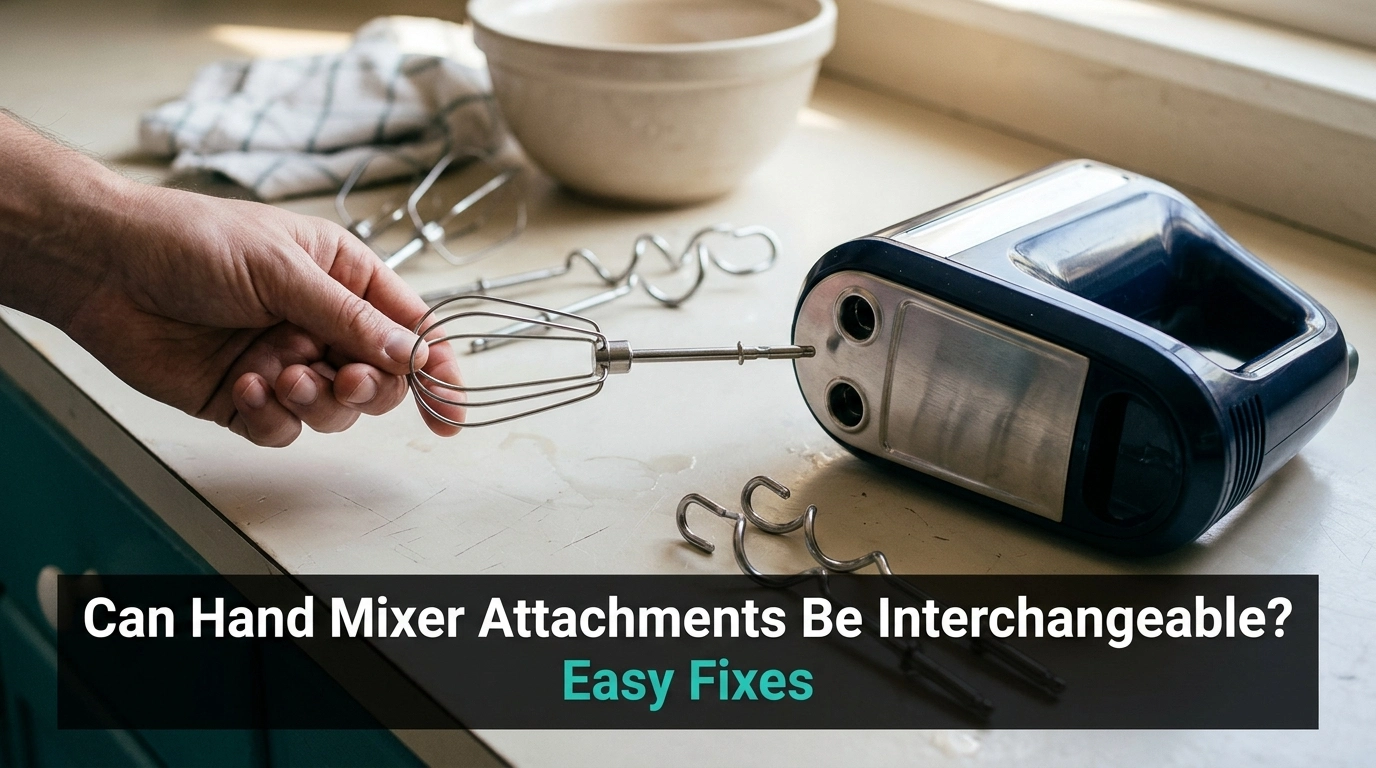
Can Hand Mixer Attachments Be Interchangeable? Easy Fixes
Can hand mixer attachments be interchangeable? Yes, some can, but not all. The fit depends on the mixer brand, model, shaft size, and attachment design.
I would never assume that two beaters will work just because they look alike. A small difference in shape or length can stop an attachment from locking in place.
The good news is that you can check most attachments at home. You do not need to take your mixer apart or force anything into place.
In this guide, I will explain how to spot a mismatch, check attachment fit, avoid common mistakes, and know when you need a replacement part.
Common Signs of the Problem
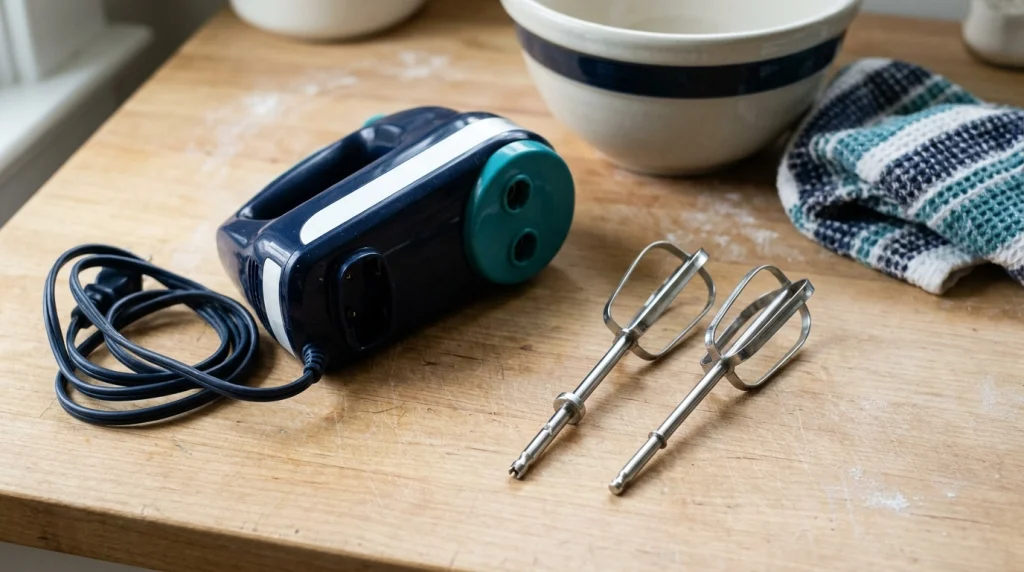
A hand mixer may show clear signs that an attachment does not fit. These signs can help you find the cause before you use the mixer.
- The beater will not slide into the socket.
- The attachment goes in but will not lock.
- One beater sits lower than the other.
- The attachment falls out during use.
- The beaters hit each other or make a strange noise.
- The mixer runs, but the beaters do not turn as expected.
If you notice any of these signs, switch off the mixer and unplug it. Do not test a loose or poorly fitted attachment while the motor is running.
A beater that fits into the socket is not always the right beater. It must also lock in place and clear the bowl without hitting the other attachment.
Possible Causes
Several things can explain why one hand mixer attachment fits while another does not.
- Different brands: Attachments from different brands may use different shaft shapes and locking systems.
- Different models: Even one brand may change its attachment design between models.
- Different attachment types: Standard beaters, dough hooks, and whisk attachments serve different jobs.
- Different shaft lengths: A beater may fit the socket but sit too high or too low.
- Worn or damaged parts: Bent shafts, worn locks, or damaged sockets can stop an attachment from fitting well.
- Wrong left or right beater: Some mixers use two beaters with different shapes or markings.
Some brands make attachments for several models. Others use model-specific parts. The only safe way to know is to check the model number and the maker’s compatibility guide.
How to Fix Can Hand Mixer Attachments Be Interchangeable?
You can check compatibility in a few simple steps. Start with the model number, then inspect the attachments before trying them in the mixer.
1. Check the Mixer Brand and Model
Unplug the mixer before you inspect it. Look for the brand and model number on the handle, underside, or product label.
Search the maker’s manual for approved attachments. If the manual lists a part number, use that number to compare replacement beaters.
This is the best first step because two mixers can look almost identical but use different attachment sockets.
2. Compare the Attachment Shafts
Place the original and replacement attachments side by side. Compare their length, width, shaft shape, and any notches or collars.
Look closely at the end that enters the mixer. A round shaft may not fit a socket designed for a square or specially shaped shaft.
Do not file, bend, or cut an attachment to make it fit. That can weaken the part or cause it to come loose during use.
3. Check the Locking Mechanism
With the mixer unplugged, insert the attachment gently into the correct socket. Follow the instructions for pushing, turning, or locking it into place.
You should not need to use heavy force. If the attachment will not seat properly, remove it and check the shape again.
If the mixer has a release button, use it as directed. Never bypass the locking system to make an attachment stay in place.
4. Check Beater Position and Clearance
If the attachment fits, compare its position with the original beater. Both attachments should sit at the height intended by the manufacturer.
Check for bends, cracks, or loose parts. If the design uses two different beaters, make sure each one goes into its correct socket.
Do not run the mixer if the beaters touch each other or scrape the bowl. A poor fit can damage the attachments, bowl, or drive parts.
5. Choose the Right Replacement Part
If your attachment is missing or damaged, look for a replacement listed for your exact mixer model. A matching brand alone does not guarantee compatibility.
A replacement beater set or whisk may be all you need. Keep the model number handy when contacting the manufacturer or a parts seller.
Avoid buying a full new mixer until you know whether a suitable replacement is available. A correct attachment is often the simpler fix.
6. Clean and Store Attachments Properly
Food residue can make an attachment harder to inspect. Cleaning the shafts and sockets can help you spot damage, dried food, or rust.
Follow the manual to learn which parts are dishwasher-safe. Wipe the mixer body with a slightly damp cloth, and never immerse the motor unit in water.
Dry the attachments well before storage. Keep them together so you can tell which beaters belong to your mixer.
Quick Troubleshooting Table
| Symptom | Likely Cause | Quick Fix |
|---|---|---|
| Beater will not enter | Wrong shaft shape | Check model compatibility |
| Beater will not lock | Wrong design or damaged lock | Inspect the shaft and socket |
| Beaters sit unevenly | Wrong attachment or bent shaft | Compare with original parts |
| Beaters hit each other | Incorrect fit or damaged part | Stop use and check alignment |
| Attachment falls out | Locking system does not engage | Use an approved replacement |
Mistakes to Avoid
A common mistake is assuming that all hand mixer beaters use the same design. Similar-looking parts can have different locking features.
Avoid these errors:
- Forcing a beater into the socket.
- Mixing attachments without checking the model.
- Using a bent or cracked attachment.
- Running the mixer to see whether a loose beater will stay in place.
- Washing the motor body under a tap.
- Opening the motor housing to repair a socket or drive mechanism.
Always unplug the mixer before removing, fitting, or cleaning attachments. Keep fingers and loose items away from the beaters when the appliance is plugged in.
If you notice sparks, a burning smell, a damaged cord, or unusual heat, stop using the mixer. Do not open a sealed motor unit or attempt electrical repairs unless you are qualified to do so.
Problem and Solution Table
| Problem | Recommended Solution | Difficulty |
|---|---|---|
| Wrong attachment shape | Find the correct model-specific part | Easy |
| Food buildup on shaft | Clean as the manual directs | Easy |
| Bent beater | Replace the damaged attachment | Easy |
| Damaged locking socket | Ask the maker about service | Moderate |
| Motor or drive failure | Seek professional assessment | Moderate to high |
When to Replace the Hand Mixer
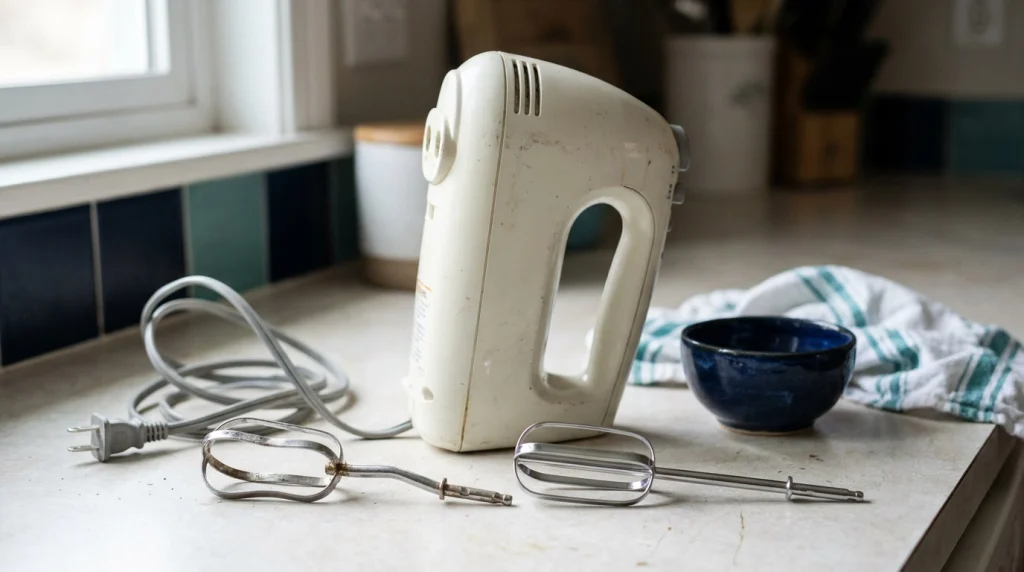
You may only need a new attachment if the mixer itself works well. A compatible replacement beater is often worth checking before replacing the whole appliance.
Consider replacing the mixer if its socket is badly worn, the drive mechanism slips, or approved attachments no longer lock securely. Compare the repair cost with the price of a suitable replacement mixer.
Do not keep using an attachment that falls out or hits the other beater. The risk of damage is not worth saving a small amount on a replacement part.
If the mixer smells burnt, sparks, or has a damaged power cord, stop using it and seek qualified service or replace it as appropriate.
My Personal Experience
When checking whether hand mixer attachments can be interchangeable, I would start with the original beaters rather than trying several random replacements. That gives me a clear reference for length, shaft shape, and locking style.
I would unplug the mixer, compare both sets side by side, and check the model manual. Then I would gently fit the approved attachment and confirm that it locks in place.
I would not claim that an attachment works just because it enters the socket. Correct height, secure locking, and proper clearance matter just as much.
The most useful lesson is simple: check compatibility before testing performance. If the fit is uncertain, stop and find the correct part instead of forcing it.
Final Thoughts
Can hand mixer attachments be interchangeable? Yes, but only when the attachment design is compatible with the mixer. Some brands support several models, while others require specific parts.
Check your model number, compare the shafts, and make sure each attachment locks securely. Never force a part or run the mixer with loose beaters.
If the original attachment is damaged, look for a replacement approved for your exact model. This simple check can help you avoid damage and keep your hand mixer working safely.