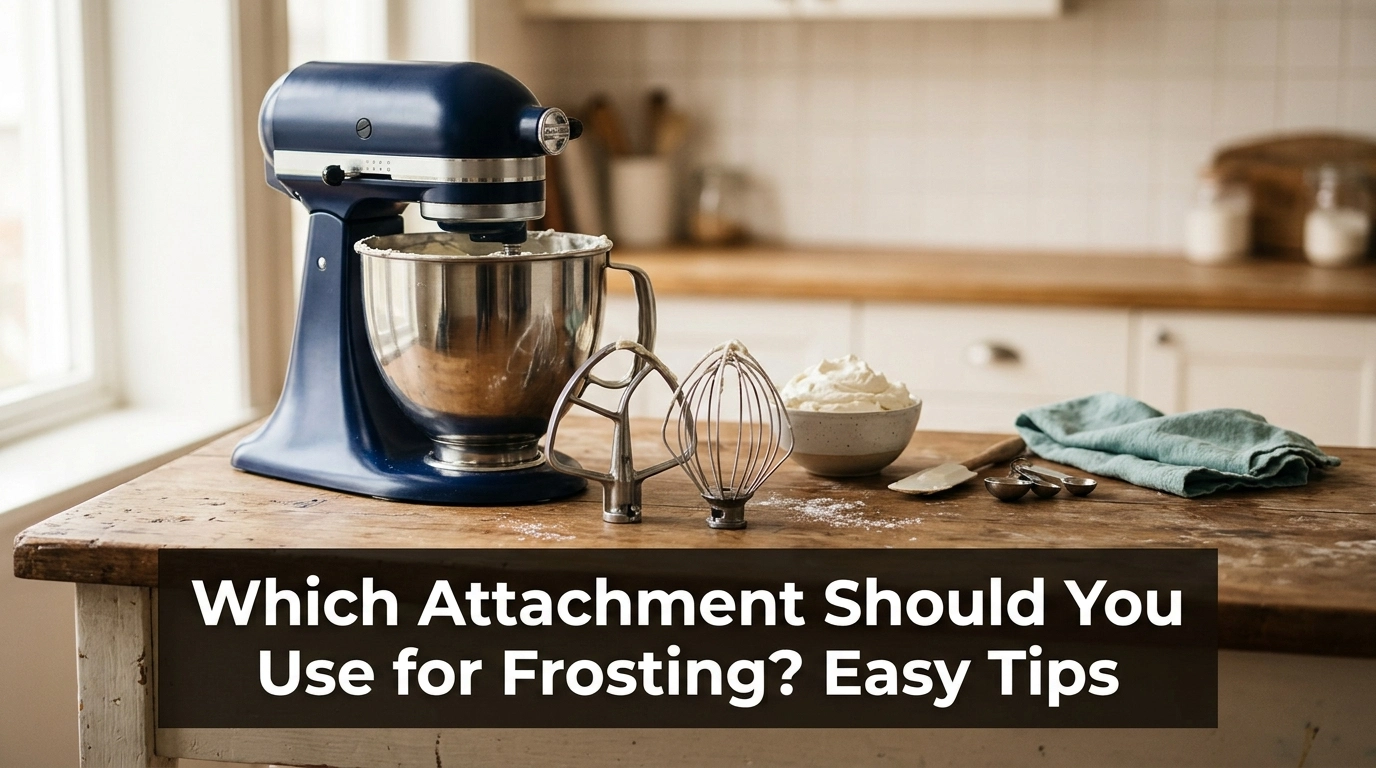
Which attachment should you use for frosting? In most cases, use the paddle attachment for buttercream and the whisk attachment for whipped cream frosting. The best tool depends on the type of frosting you want to make.
Choosing the wrong attachment can leave frosting lumpy, too soft, or full of air bubbles. The good news is that you can fix most of these problems with a few simple steps.
This guide explains which mixer attachment to use, how to fit it, and what to do if your frosting does not turn out right.
Common Signs You Are Using the Wrong Attachment
Your frosting can show signs that the mixer tool is not right for the job. Look at its texture before you change your recipe.
- Frosting has too many air bubbles: A whisk can add too much air to buttercream.
- Buttercream looks rough: The butter may be too cold, or the mix may need more time.
- Whipped cream stays runny: The cream may be too warm or need more whipping.
- Frosting has lumps: The butter, cream cheese, or other ingredients may not be soft enough.
- Frosting looks flat: You may need a whisk for a recipe that relies on whipped air.
The attachment matters, but it is not the only thing that affects the result. Ingredient temperature, mixing speed, and mixing time also play a big part.
Possible Causes of Frosting Problems
Before you switch attachments, check what went wrong. This can save time and help you avoid adding extra sugar or cream.
- Wrong attachment: A whisk may add too much air to dense buttercream.
- Cold ingredients: Cold butter and cream cheese can form lumps.
- High mixing speed: Fast mixing can make frosting messy or add unwanted air.
- Warm ingredients: Warm cream may fail to hold firm peaks.
- Too much liquid: Extra milk, cream, or flavoring can make frosting too thin.
A simple rule helps here: use a paddle for thick frosting and a whisk for frosting that needs air.
How to Choose the Right Attachment for Frosting
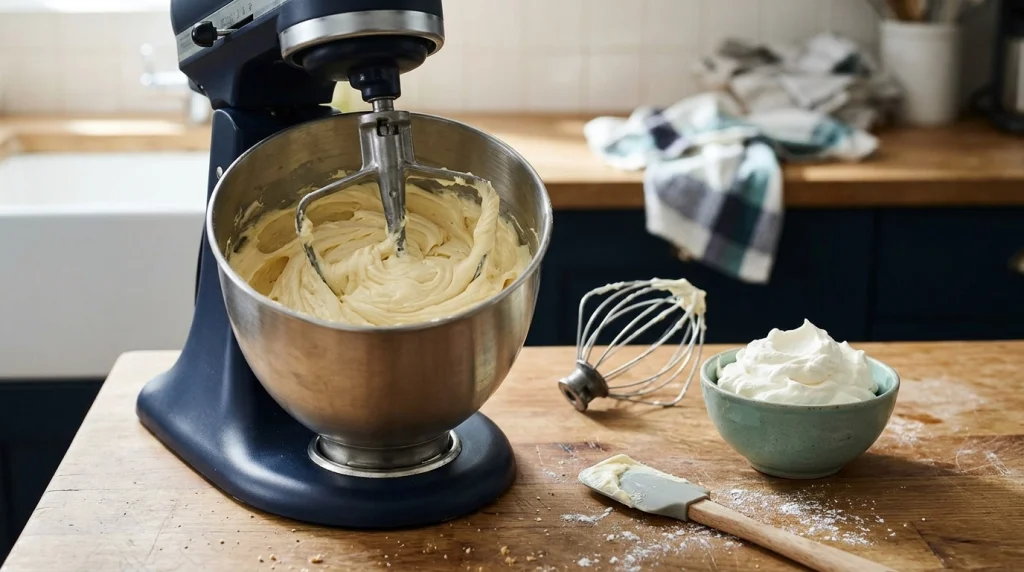
The best attachment depends on the recipe and the texture you want. Here are the main mixer tools and when to use each one.
1. Use the Paddle Attachment for Buttercream
The paddle attachment is the best choice for most buttercream recipes. It mixes butter and sugar into a smooth, spreadable frosting without adding as much air as a whisk.
Start with softened butter. Beat it on a low or medium speed until smooth, then add the sugar in small batches.
Scrape the sides of the bowl as needed. Add flavoring and a little liquid only when the recipe calls for it.
If the frosting looks full of tiny bubbles, lower the speed and mix briefly. This can help make the texture smoother.
2. Use the Whisk Attachment for Whipped Cream Frosting
The whisk attachment is best for whipped cream frosting. Its thin wires beat air into the cream, helping it grow in volume and form soft or firm peaks.
For the best result, chill the cream and mixing bowl first. Pour in cold cream and start at a low speed to prevent splashes.
Raise the speed as the cream thickens. Stop when it reaches the texture your recipe needs.
Watch it closely near the end. Overwhipped cream can become grainy and may start turning into butter.
3. Use the Paddle for Cream Cheese Frosting
The paddle attachment is usually best for cream cheese frosting. It helps blend the cream cheese, butter, and sugar into a smooth mixture.
Let the ingredients soften enough to mix well, but do not leave them in a warm place for too long. Add the sugar gradually to reduce clouds of powder.
Mix only until the frosting looks smooth. Too much mixing can make some cream cheese frostings loose, especially when the ingredients are warm.
4. Use a Beater or Paddle for Thick Frosting
Some mixers have a flat beater instead of a tool called a paddle. These attachments do much the same job for many frosting recipes.
Use the flat beater for thick buttercream, chocolate frosting, and similar mixtures. Follow your mixer’s manual if it has a special attachment for these tasks.
A dough hook is not a good choice for ordinary frosting. It is made for kneading dough, not for blending butter and sugar into a smooth cream.
5. Check the Attachment Before Mixing
Make sure the attachment is made for your mixer model. It should lock into place without force and sit at the correct height above the bowl.
Turn the mixer off before changing tools. Unplug it if your manual calls for this during attachment changes or cleaning.
If the beater scrapes the bowl, do not bend the tool to fix it. Check the manual for the correct adjustment method or contact the maker.
Quick Guide to Mixer Attachments
| Frosting type | Best attachment | Main reason |
|---|---|---|
| American buttercream | Paddle | Smooth, dense texture |
| Whipped cream frosting | Whisk | Adds air and volume |
| Cream cheese frosting | Paddle | Blends without excess air |
| Chocolate buttercream | Paddle | Mixes thick ingredients |
| Meringue-based frosting | Whisk | Whips egg whites or meringue |
Recipes can vary, so check the recipe instructions when they name a specific tool.
Mistakes to Avoid
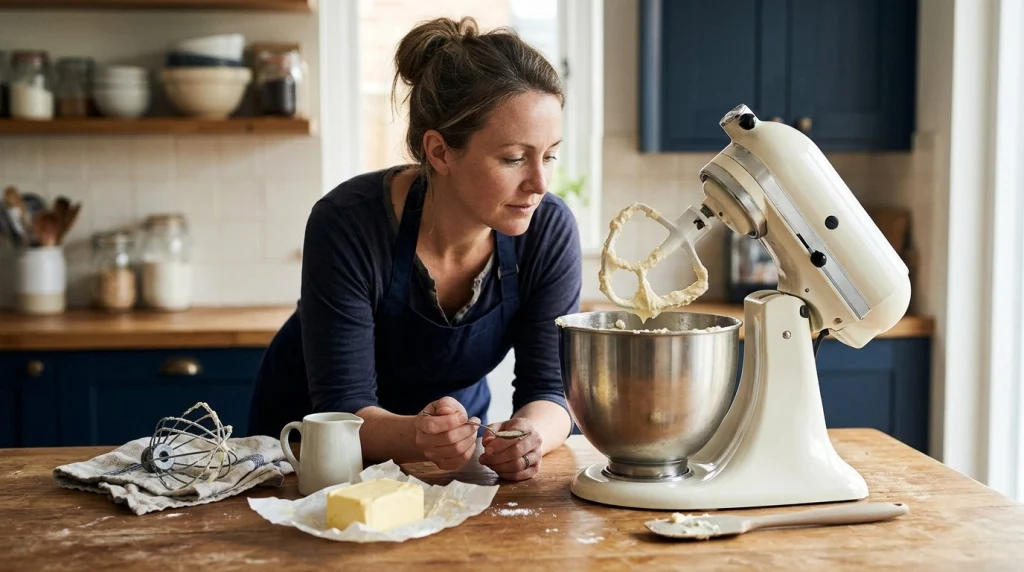
A good attachment cannot fix every frosting problem. Avoid these common mistakes to get a better result.
- Starting too fast: Sugar may fly out of the bowl. Begin slowly, then raise the speed.
- Using cold butter: Hard butter can leave small lumps. Let it soften before mixing.
- Adding too much liquid: Add milk or cream in small amounts.
- Overmixing whipped cream: Stop once the cream reaches the needed peaks.
- Ignoring the bowl: Scrape the sides with the mixer switched off.
- Changing attachments while running: Turn the mixer off first and follow the maker’s safety instructions.
Do not put your fingers or a spoon near moving beaters. If you need to scrape the bowl, stop the mixer first.
Keep the attachment and bowl clean before and after use. Grease or food residue can affect some recipes, especially those that rely on whipped egg whites.
When to Replace a Mixer Attachment
You do not need to replace an attachment just because your frosting looks wrong. Check the ingredients, mixing speed, and recipe first.
Replace the attachment if it is cracked, bent, badly worn, or no longer locks into place. A damaged coating that is flaking may also be a reason to stop using it.
| Problem | What to do | Replace it? |
|---|---|---|
| Frosting has lumps | Check ingredient temperature | Usually no |
| Whisk is bent | Stop using it | Often yes |
| Paddle coating is flaking | Check maker guidance | Usually yes |
| Attachment will not lock | Check model compatibility | If damaged |
| Frosting is too thin | Check recipe and temperature | Usually no |
Use only attachments approved for your mixer. A tool that looks similar may not fit safely or work at the right height.
My Practical Guide to Getting Better Frosting
When frosting does not look right, I would check the recipe and ingredient temperature before blaming the mixer. These checks help narrow down the cause without making extra changes.
For buttercream, start with the paddle and softened butter. Mix slowly at first, scrape the bowl, and check the texture before adding more liquid.
For whipped cream, use cold cream and the whisk. Watch the mixture as it thickens, and stop once it reaches the required peaks.
If buttercream looks too airy, use a lower speed and mix briefly with the paddle. If it is lumpy, check whether the butter or cream cheese was too cold.
These steps are practical ways to troubleshoot common frosting problems. Results still depend on the recipe, mixer, and ingredients.
Final Thoughts
Which attachment should you use for frosting? For most buttercream and cream cheese frosting, choose the paddle attachment. For whipped cream frosting and meringue, choose the whisk.
Start with the right tool, use ingredients at the temperature your recipe calls for, and mix at a suitable speed. These simple steps can help you make frosting that is smooth, fluffy, and easy to spread.
If your frosting still looks wrong, check the recipe and texture before buying a new attachment. Often, a small change in temperature or mixing time is all you need.