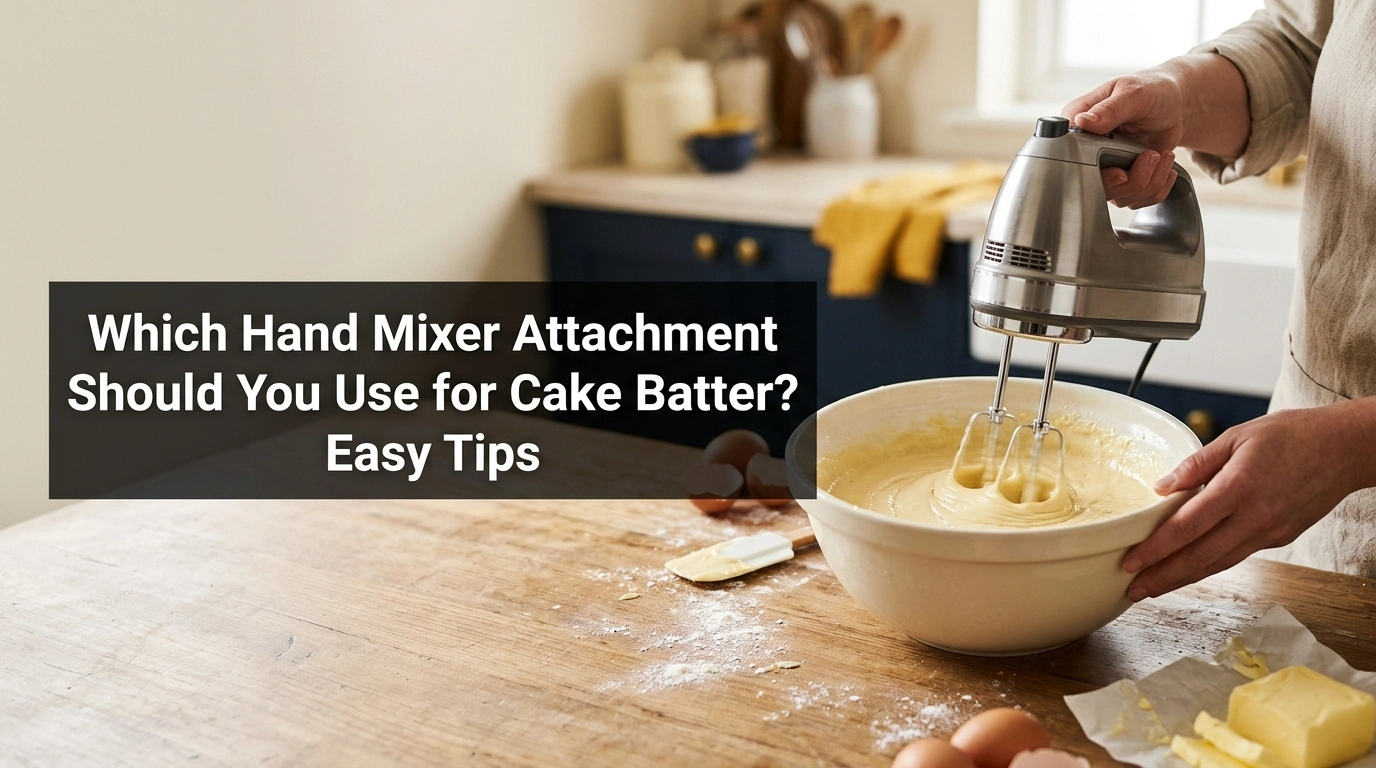
Which hand mixer attachment should you use for cake batter? For most cakes, standard beaters are the best choice. They mix butter, sugar, eggs, and flour with ease.
Choosing the wrong attachment can leave lumps or make mixing harder. The good news is that you do not need many tools to make a good cake.
In this guide, I will explain which attachment to use, how to mix cake batter, and which mistakes to avoid. You will also learn when a whisk works better and why dough hooks are not the right choice for most cakes.
Common Signs of the Problem
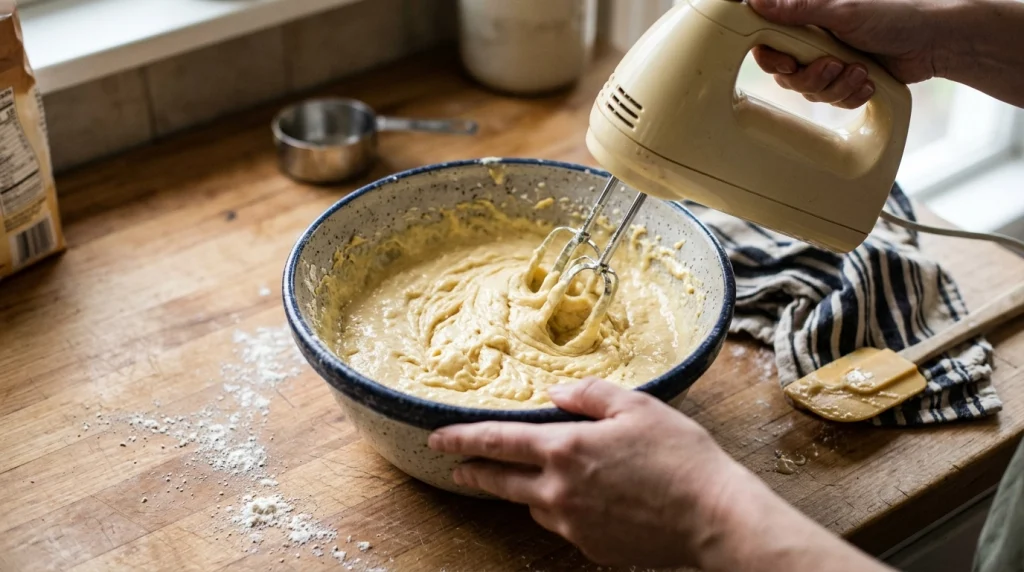
Using the wrong attachment or mixing method can cause a few common problems. These signs can help you find what went wrong.
- Lumpy batter: Some ingredients may not be mixed well.
- Flour flying out: The mixer speed may be too high.
- Dense cake: The batter may have been mixed too much.
- Uneven batter: Some flour or butter may be stuck to the bowl.
- Flat cake: Mixing may be one cause, but the recipe and oven can also affect the result.
- Slow mixing: The attachment may not suit the type of batter.
These problems do not always mean your mixer is faulty. The recipe, ingredient temperature, and mixing time also matter.
Possible Causes
Before you start mixing, it helps to know why cake batter may not turn out as expected.
- Wrong attachment: Dough hooks are made for kneading dough, not regular cake batter.
- High speed: Starting too fast can scatter flour and splash wet ingredients.
- Cold butter: Hard butter may not blend well with sugar.
- Too much mixing: Mixing flour for too long can make some cakes tough.
- Wrong method: Some cakes need creamed butter, while others need whipped eggs.
- Small bowl: A crowded bowl can make mixing harder.
The easiest fix is to choose the attachment that suits your recipe. Then start slowly and mix only as much as needed.
Which Hand Mixer Attachment Should You Use for Cake Batter?
For most cake recipes, standard beaters are the best option. They mix common cake ingredients well and help create a smooth batter.
Here is a quick guide to the main hand mixer attachments.
| Attachment | Best Use | Suitable for Cake Batter? |
|---|---|---|
| Standard beaters | Cake batter, butter, sugar, and eggs | Yes |
| Whisk attachment | Whipping cream and egg whites | Yes, for airy mixtures |
| Dough hooks | Kneading bread and pizza dough | Usually no |
Standard beaters are ideal for butter cakes, cupcakes, and many simple cake recipes. They can cream butter and sugar, blend eggs, and mix wet ingredients.
A whisk attachment is useful when a recipe needs whipped egg whites or cream. It helps add air to the mixture, which can improve the texture of some cakes.
Dough hooks are designed for kneading dough. They are not the best choice for most cake batters because they may not mix the ingredients evenly.
How to Choose and Use the Right Hand Mixer Attachment for Cake Batter
The best way to mix cake batter is to use the right attachment and follow the recipe. These simple steps can help you avoid common mixing problems.
1. Choose Standard Beaters
Fit the standard beaters into your hand mixer before you begin. Check that both beaters lock into place as shown in the manual.
Use them for most butter cakes, cupcakes, and basic cake batters. They work well with soft butter, sugar, eggs, and flour.
If your recipe calls for whipped egg whites, you may need a whisk attachment instead. Check the recipe before choosing your tool.
2. Prepare Your Ingredients
Measure the ingredients before turning on the mixer. This helps you follow the recipe and keeps you from adding too much flour or liquid.
If the recipe calls for softened butter, let it soften until it yields when pressed. Do not melt it unless the recipe asks for melted butter.
Cold ingredients can sometimes make the batter harder to mix. Preparing them first can help the ingredients blend more evenly.
3. Start at a Low Speed
Place the beaters in the bowl before switching on the mixer. Start at the lowest speed to keep flour from flying out.
Once the ingredients begin to blend, increase the speed if the recipe calls for it. Keep the beaters inside the batter while the mixer is running.
A deep bowl can also help reduce splashes. Leave enough room for the batter to move without spilling over the sides.
4. Cream Butter and Sugar
For a butter cake, use standard beaters to mix softened butter and sugar. Beat until the mixture looks lighter and feels creamy.
Stop the mixer before scraping the sides of the bowl with a spatula. This helps bring any unmixed butter and sugar back into the batter.
Do not keep beating without a reason. Follow the recipe and stop when the mixture reaches the right texture.
5. Add Eggs Slowly
Add the eggs as directed by your recipe. For many butter cakes, adding them one at a time helps the mixture blend more evenly.
If the mixture looks slightly curdled, do not panic. It may still work, and the recipe may allow you to add a little of the measured flour to help it come together.
Keep using standard beaters for normal cake batter. Switch to a whisk only when your recipe calls for a whipping step.
6. Mix in the Flour Carefully
Add the flour as directed by the recipe. Use low speed and stop when the dry streaks mostly disappear.
Mixing flour for too long can make some cakes tough. For delicate cakes, folding the flour in by hand may give you better control.
If flour sticks to the sides of the bowl, switch off the mixer before scraping it down. Then mix briefly until the batter looks even.
7. Use a Whisk for Airy Mixtures
Some cakes need whipped egg whites or cream. A whisk attachment is useful because its shape helps add air to these mixtures.
Use a clean, dry bowl when whipping egg whites. Start at a low speed, then increase it as the mixture begins to foam.
If you need to fold whipped egg whites into cake batter, use a spatula and gentle movements. This helps keep as much air in the mixture as possible.
8. Clean the Attachments After Use
Switch off and unplug the mixer before removing the beaters. Wash the removable attachments as directed in the user manual.
Good cleaning helps prevent dried batter from building up on the beaters. Dry them well before storing them.
Useful accessories include a deep mixing bowl, a flexible spatula, and measuring cups or a kitchen scale. You usually do not need replacement attachments unless the original ones are damaged or no longer fit securely.
Common Mixing Problems and Quick Fixes
If your batter does not look right, use this table to find a likely cause and a simple solution.
| Problem | Likely Cause | Quick Fix |
|---|---|---|
| Flour clouds | Speed is too high | Start on low |
| Butter lumps | Butter is too cold | Soften it as directed |
| Dense cake | Too much mixing or a recipe issue | Mix only as needed |
| Uneven batter | Ingredients stick to the bowl | Scrape the sides |
| Egg whites fail to whip | Greasy bowl or beaters | Wash and dry them |
| Mixer struggles | Batter is too thick | Check the recipe and mixer limits |
These fixes can help, but not every cake problem comes from the attachment. Ingredient amounts, baking time, and oven temperature also affect the final cake.
Mistakes to Avoid
A few simple mistakes can affect your batter or make mixing harder. Keep these points in mind.
- Do not use dough hooks for regular cake batter. Standard beaters are usually better.
- Do not start at full speed. This can scatter flour and make a mess.
- Do not overmix after adding flour. Too much mixing can make some cakes tough.
- Do not use a whisk for every task. It is best for mixtures that need air.
- Do not scrape the bowl while the beaters spin. Switch off the mixer first.
- Do not wash the motor unit in water. Unplug it and wipe the body with a damp cloth.
If your mixer smells burnt, sparks, or makes a new grinding noise, stop using it. Unplug it if safe, and seek help from a qualified repair service.
Never open the motor housing or try to repair live electrical parts. Do not use a damaged power cord or bypass any safety feature.
When to Replace the Hand Mixer Attachment
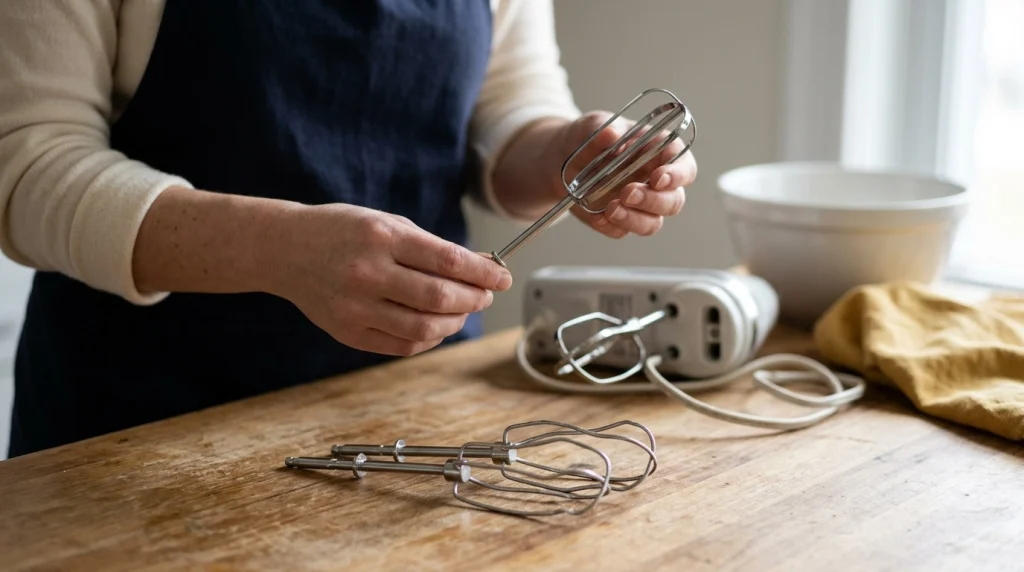
You do not need a new attachment just because your cake batter looks wrong. First, check your recipe, mixing speed, and ingredient amounts.
Replace a beater if it is bent, cracked, badly rusted, or does not lock into the mixer. A damaged attachment may mix poorly or come loose during use.
| Repair Issue | Possible Action | Replace Instead? |
|---|---|---|
| Wrong attachment used | Switch to standard beaters | No |
| Batter is lumpy | Check ingredients and mixing | Usually no |
| Beater is bent or cracked | Find a compatible replacement | Replace the beater |
| Attachment will not lock | Check the fit and manual | Replace if damaged |
| Motor smells burnt | Stop using the mixer | Seek service |
If your mixer struggles with normal cake batter, check the manufacturer’s instructions. If the motor has a persistent fault, repair or replacement may be the safer option.
My Practical Experience With Cake Batter Attachments
When choosing a hand mixer attachment, I would start by checking the recipe. For a basic butter cake, standard beaters are the most practical choice.
I would prepare the ingredients, fit the beaters securely, and start at low speed. Then I would cream the butter and sugar before adding the eggs and flour as directed.
If the recipe calls for whipped egg whites, I would use a whisk attachment if available. I would then fold the whites into the batter by hand to help keep the mixture airy.
I cannot claim to have tested every mixer model or cake recipe. However, these steps follow common baking methods and help avoid many mixing problems.
The main lesson is simple: use the right attachment, prepare your ingredients, and avoid mixing for longer than needed.
Final Thoughts
Which hand mixer attachment should you use for cake batter? Standard beaters are the best choice for most cakes. They mix butter, sugar, eggs, and flour with ease.
Use a whisk attachment when you need to whip egg whites or cream. Save dough hooks for bread dough and other mixtures that need kneading.
Start slowly, follow the recipe, and stop mixing once the ingredients are combined. These simple steps can help you make smoother batter and better cakes at home.