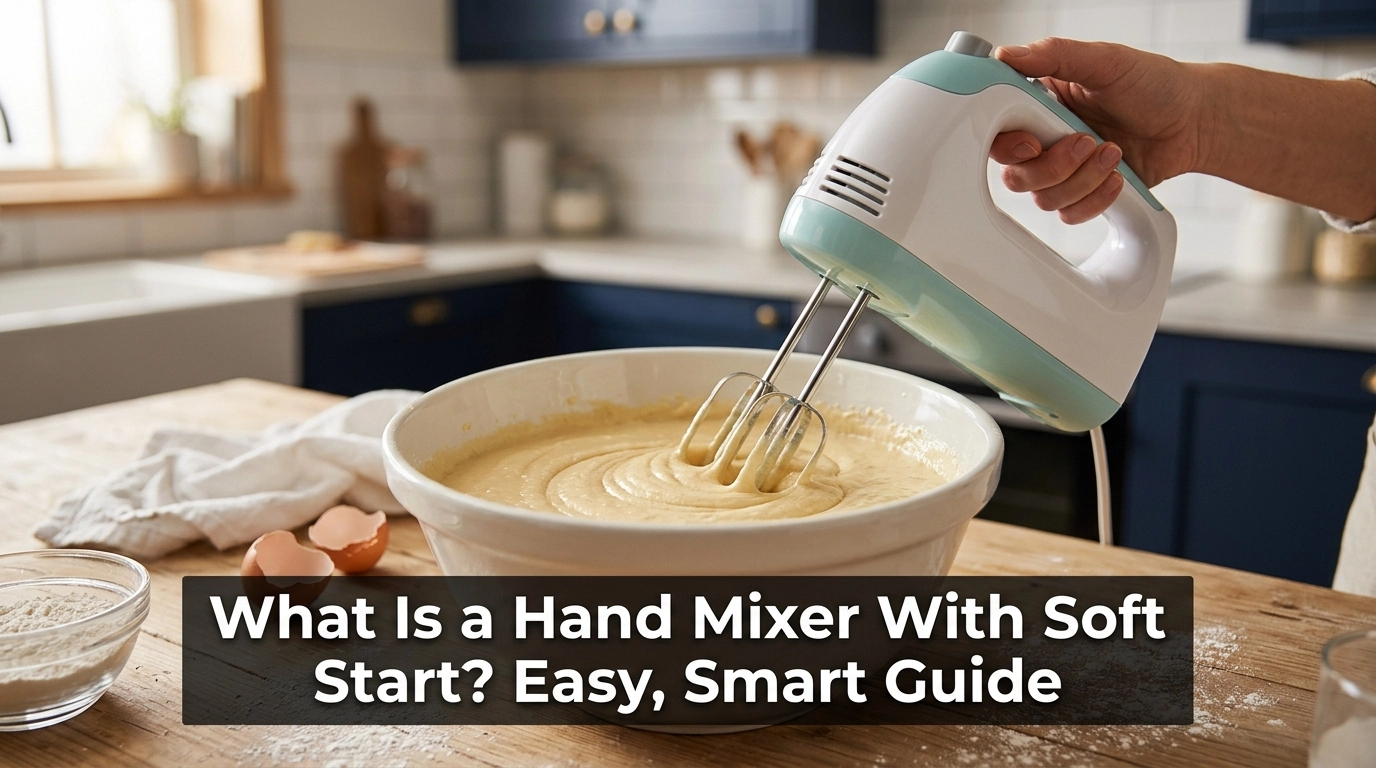
What is a hand mixer with soft start, and why does it matter? It is a hand mixer that starts at a low speed, then picks up speed bit by bit. This helps keep flour, milk, and batter inside your bowl.
A hand mixer that starts too fast can make a mess. One quick turn can send flour into the air or splash wet batter onto the counter. Soft start helps cut down on that mess.
The key is to know what a slow start should feel like. A short, smooth rise in speed is normal. But a mixer that stays slow, stops, or makes odd sounds may need a closer look.
What Is a Hand Mixer With Soft Start and How Does It Work?
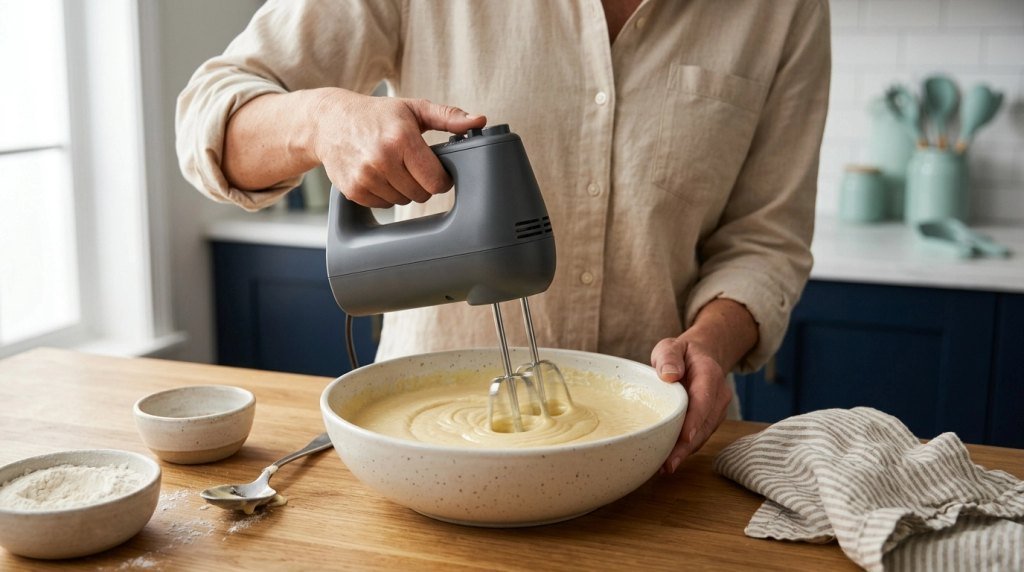
A hand mixer with soft start has a built-in speed control that lets the beaters turn slowly at first. The speed then rises until it reaches the level you chose.
For example, you may pick speed five. The beaters will not jump right to that speed. They start more gently and then speed up.
This can help when you mix cake batter, beat eggs, or add flour to a bowl. It gives you more control at the start of each task. KitchenAid, for example, describes this feature on its 9-speed hand mixer.
KitchenAid CA
Soft start is not the same as a low-speed setting. A low setting stays slow. Soft start only slows the first part of the mixing process.
Common Signs of the Problem
A soft-start hand mixer should speed up in a smooth way. The change may be brief, but you should be able to hear or feel it.
Some signs are normal. Others may mean the mixer has a fault.
| What You Notice | Likely Cause | What to Do |
|---|---|---|
| Starts slow, then speeds up | Normal soft start | Keep mixing |
| Stays slow on all settings | Speed control or motor issue | Test with a light mix |
| Stops while mixing | Heavy load or motor heat | Unplug and let it cool |
| Beaters do not turn | Loose beaters or a fault | Check their fit |
| Speed jumps up and down | Speed control or motor fault | Stop and seek service |
| Makes a harsh grinding sound | Possible worn parts | Stop using it |
A brief slow start is not a fault. But if the mixer can no longer reach its set speed, there may be a real issue.
Possible Causes of Soft Start Problems
The first step is to tell normal soft start from a weak or faulty mixer. They can feel much the same at first.
Here are some common causes to check.
- Normal soft start: The mixer starts slow on purpose to help stop splashes.
- Thick batter: A heavy mix may put too much strain on the motor.
- Loose beaters: Beaters that do not fit well may fail to turn as they should.
- Power issue: A poor outlet or damaged cord can stop the mixer from working.
- Motor heat: Some mixers may shut down when they get too hot.
- Speed control fault: The mixer may not respond as it should when you change speeds.
Not all hand mixers work in the same way. Some have more speed levels, while others have a shorter soft-start phase.
It also helps to use the right beaters. Bent or worn beaters can make mixing less smooth. If they no longer fit well, look for a replacement made for your exact model.
How to Fix a Hand Mixer With Soft Start
If your mixer starts slowly and then works well, there is no need to fix it. That is the soft-start feature doing its job.
If it stays slow, stops, or fails to mix, use these simple checks.
1. Check the Power Source
Turn the mixer off and unplug it. Look at the cord and plug for wear, cracks, or burn marks.
If both look safe, plug the mixer into a known working wall outlet. Avoid using a loose plug or a damaged power strip.
If the mixer still does not start, do not try to open its case. The issue may be inside the unit.
2. Test the Speed Settings
Place the beaters in a deep bowl with a small amount of water. Make sure the bowl is stable and the beaters are well below the rim.
Start at the lowest speed. Then move up one level at a time, keeping the beaters in the water.
The speed should rise as you move through the settings. If it stays the same at all levels, the speed control may have a fault.
3. Check the Beaters
A beater that is not locked in place can cause poor mixing. It may also make odd sounds.
Turn off and unplug the mixer. Remove each beater and look for bent parts or food stuck near the shaft.
Put the beaters back as shown in the user manual. Some models use two different beater slots, so the correct side matters.
4. Reduce the Mixing Load
Thick cookie dough or cold butter can slow a small hand mixer. The motor may not have enough power for a large, stiff batch.
Try a smaller amount or let firm ingredients soften when the recipe allows. Use a speed that suits the mix.
Do not force the beaters through hard dough. Check the manual before using dough hooks, as not all hand mixers can handle bread dough.
5. Let the Motor Cool
If the mixer stops in the middle of a task, turn it off and unplug it. Let it cool as the manual directs.
A heavy load or long mix time can cause excess heat. Some models have a safety cut-off, but not all do.
Once cool, check whether the mixer works with a light mix. If it keeps stopping, stop using it and seek help.
6. Clean the Beaters and Mixer Body
Good cleaning can help keep the beaters free of dried food. Thick batter stuck to the shafts may make it hard to remove or fit them.
Unplug the mixer first. Remove the beaters and wash them as the manual directs. Use a soft cloth to wipe the mixer body.
Do not put the motor unit in water. Keep water away from the vents, plug, and speed buttons.
7. Check the Speed Buttons
Some mixers use a slide switch. Others use buttons and a small speed display.
Test the controls with a light mix. Each press or move should cause the speed to change.
If the buttons stick, wipe the outside with a slightly damp cloth while the mixer is unplugged. Do not spray cleaner into the switch.
Soft Start vs. Regular Hand Mixer
Both types can mix cake batter, beat eggs, and whip cream. The main difference is how they begin to spin.
| Feature | Soft-Start Mixer | Regular Mixer |
|---|---|---|
| Start speed | Rises with care | May begin at set speed |
| Splash control | Helps cut splashes | Depends on low speed and technique |
| Mixing control | Gentler first turn | Varies by model |
| Best use | Flour, batter, wet mixes | Daily mixing tasks |
| Cost | Depends on model | Depends on model |
A soft-start mixer can make baking less messy. Yet a regular hand mixer with a good low-speed setting may work just as well for many tasks.
Mistakes to Avoid
One common mistake is to think a slow first turn means the mixer is weak. On a soft-start model, that first slow turn is by design.
Another mistake is to start with a bowl that is too full. Soft start can cut splashes, but it cannot stop all of them.
Avoid these habits:
- Do not lift spinning beaters out of wet batter.
- Do not touch the beaters while the mixer is plugged in.
- Do not mix dough that is too stiff for the unit.
- Do not use a mixer with a frayed cord.
- Do not block the air vents while mixing.
- Do not keep using a mixer that smells burnt or gives off smoke.
Never open the motor case or bypass a safety switch. If you smell burning or see smoke, unplug the mixer if it is safe to do so and stop using it.
When to Replace the Hand Mixer
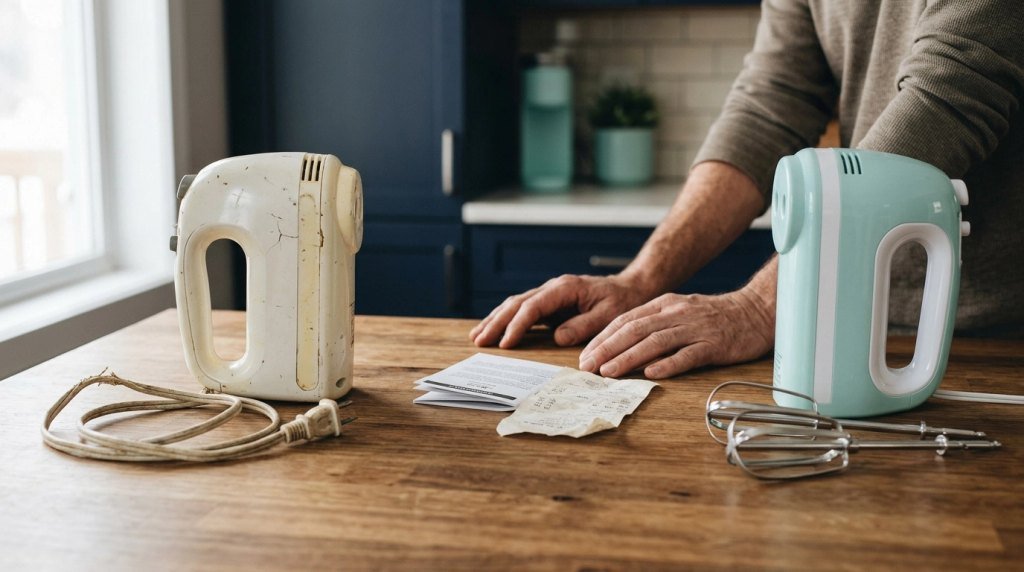
A slow start alone is not a reason to buy a new mixer. It is often a sign that the soft-start feature works as planned.
But it may be time for a new one if the motor keeps stopping, the case is cracked, or the mixer makes harsh grinding sounds.
A damaged power cord is also a safety risk. Ask the maker about approved service or repair rather than trying a home wiring fix.
Before replacing the mixer, check its warranty. A small fault may be covered.
If repair costs close to the price of a new unit, a new mixer may be the better choice.
My Practical Testing Approach
I find it useful to keep the first test simple. Rather than use thick dough, I would start with a small, light mix in a deep bowl.
I would check whether the beaters start gently, rise to the set speed, and stay steady. These three signs tell me more than the first slow turn alone.
Next, I would test each speed level and listen for odd sounds. I would also check that both beaters are firmly in place.
The key lesson is to avoid mistaking a built-in feature for a fault. A normal soft start is brief and smooth. A mixer that stalls, surges, or stops needs more care.
Final Thoughts
So, what is a hand mixer with soft start? It is a hand mixer that brings the beaters up to speed in a smooth, gradual way. Its main job is to help stop flour and batter from flying out of the bowl.
For home baking, this feature can make mixing feel more calm and easy. It is most useful when you work with dry flour, thin batter, or other mixes that can splash.
If your mixer starts slow and then speeds up, it is likely working as it should. If it stays slow or stops, check the power, beaters, load, and speed controls before you decide to replace it.