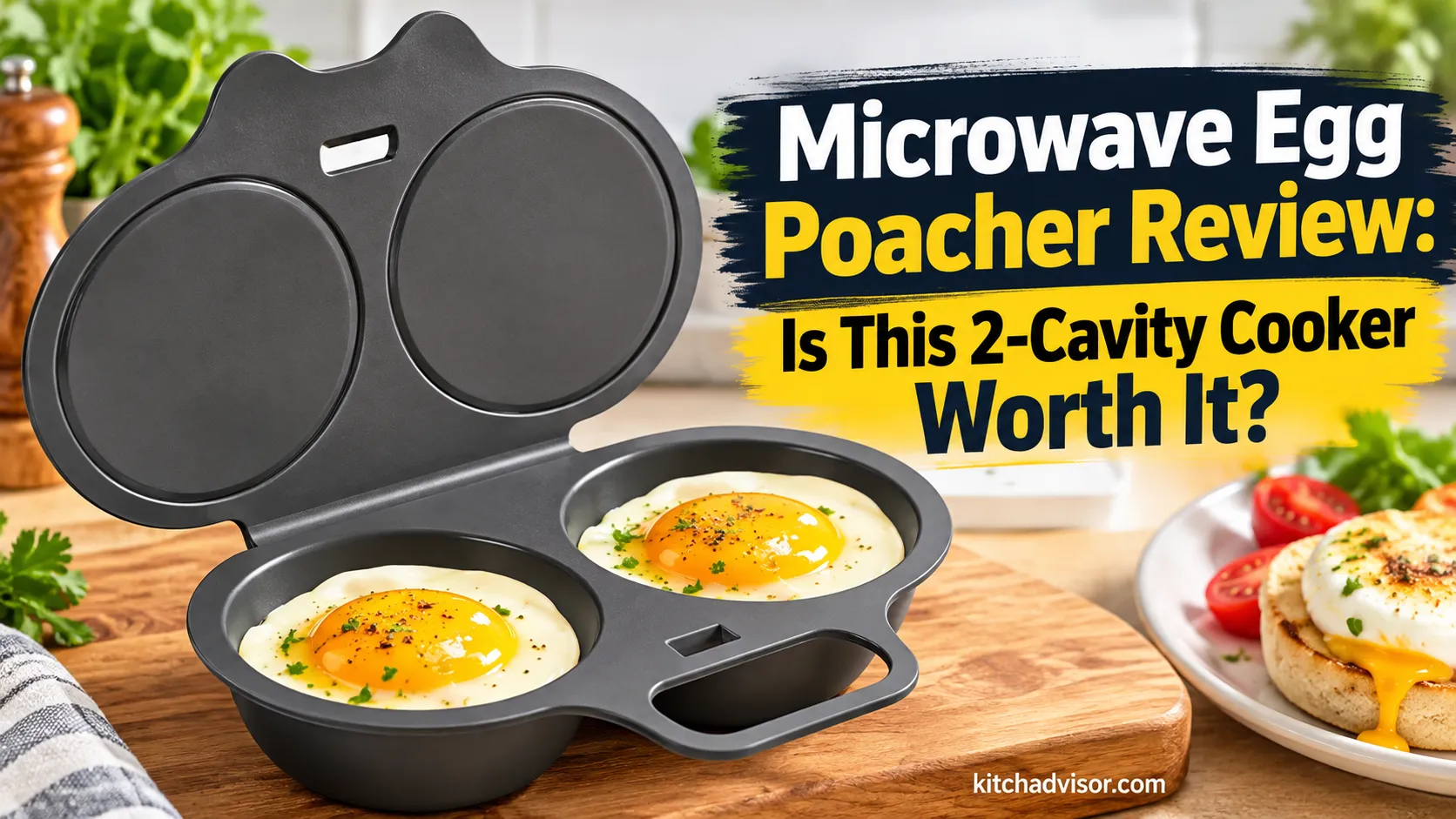
The Generic Microwave Egg Poacher is a compact two-cavity microwave egg cooker designed to prepare two shell-free eggs at once. Its main purpose is making quick poached-style or molded eggs for breakfast without using a saucepan or separate electric appliance.
This microwave egg poacher review focuses on its verified polypropylene construction, compact 6.3 × 4.53-inch footprint, covered two-cavity design, and straightforward microwave preparation. It targets buyers who want a simple, inexpensive egg-cooking tool rather than a powered countertop cooker.
🏆 My Quick Verdict
💡 Best For: One- or two-person households wanting a compact microwave tool for quick shell-free eggs.
⚡ Key Specs:
Two cavities, polypropylene construction, approximately 6.3 × 4.53 inches, dark gray finish, microwave-safe design, reusable covered format.
✅ Bottom Line: The simple two-cavity format suits fast breakfasts and kitchens where storage space matters. Its main limitation is that cooking results still depend on microwave power, egg size, and careful timing.

At a Glance
- Two separate cavities let you prepare up to two eggs in one batch.
- The cooker uses polypropylene and measures approximately 6.3 × 4.53 inches.
- Microwave operation eliminates the need for a powered heating base.
- The included lid helps contain the eggs during microwave cooking.
- Its compact footprint makes cupboard storage relatively straightforward.
- Cooking time must be adjusted to your microwave and desired egg texture.
Specifications
| Specification | Verified Detail |
|---|---|
| Product type | Microwave egg poacher / egg cooker |
| Capacity | Two egg cavities |
| Material | PP polypropylene |
| Approximate size | 6.3 × 4.53 inches |
| Color | Dark gray |
| Heating method | Microwave |
| Reusable | Yes |
Design & Build Quality
The design is deliberately simple, with two molded egg cavities contained inside a compact polypropylene body. This keeps the cooker lighter and less complicated than an electric egg appliance.
The two-cavity format is particularly practical for breakfast sandwiches or two individual portions. Its lid also gives the unit a more contained cooking format than placing uncovered dishes directly in the microwave.
Its compact dimensions are another useful feature. At roughly 6.3 × 4.53 inches, it should require relatively little cupboard space when not in use.
Setup, Installation & Ease of Use
- Wash and inspect the cooker before its first use.
- Crack one egg into each cavity rather than placing shell-on eggs inside.
- Add seasonings or suitable fillings before cooking when desired.
- Fit the lid correctly before placing the cooker in the microwave.
- Start conservatively with cooking time because microwave wattage varies significantly.
- Allow hot steam to escape carefully when opening the lid.
- Clean and dry the cooker fully before returning it to storage.
Core Performance & Feature Breakdown
The main performance advantage is speed and simplicity rather than sophisticated cooking control. There is no heating element, timer, thermostat, or electronic control system to manage.
Instead, your microwave supplies all the heat. This makes microwave wattage and cooking duration central to the final egg texture.
Expert Insight
Microwave egg cookers usually benefit from conservative timing at first. You can add a few seconds if needed, while an overcooked egg cannot be reversed.
Two cavities are enough for a small breakfast without creating the bulk of a multi-egg electric cooker. The listing also positions the product for adding seasonings or fillings, giving it more flexibility than a tool restricted to plain eggs.
Key Features Explained
Two-Cavity Layout
The cooker has two separate cavities, allowing two eggs to cook simultaneously. That capacity suits individuals, couples, or anyone assembling two breakfast sandwiches.
Microwave Cooking
No separate electrical base is required because the household microwave provides the heat. The trade-off is that cooking times can differ substantially between microwaves.
Polypropylene Construction
The verified material is PP polypropylene, commonly used for lightweight molded kitchen products. Buyers should still follow the product’s microwave-use directions and inspect the cooker if it becomes visibly damaged.
Covered Reusable Design
The included lid creates a contained cooking setup and the cooker is intended for repeated use. Care is still required when opening it because hot food and trapped steam can cause burns.
Real-World Usability & Maintenance
This product makes the most sense for small portions. Preparing one or two eggs requires little equipment, while the compact body is easier to store than most electric egg cookers.
Cleanup should be performed after the unit has cooled. Avoid aggressive scraping that could damage the molded surface, and dry the cavities and lid before storage.
The biggest learning curve is timing. Egg size, starting temperature, microwave wattage, and preferred doneness can all change the required cooking duration.
Pros & Cons
Pros
- Two cavities prepare two eggs without needing a saucepan.
- Compact dimensions make the cooker easy to store.
- No dedicated electrical base or power cord is required.
- Reusable polypropylene construction keeps the design simple.
Cons
- Only two eggs can be prepared per batch.
- Results depend heavily on microwave wattage and cooking time.
- No verified manufacturer warranty information is provided in the listing.
Common Issues & Fixes
Eggs Turn Rubbery
Excess cooking time can make eggs firm or rubbery. Reduce the next cooking cycle and increase time only in small increments.
Egg Is Still Too Soft
Microwave power or cooking time may be too low for your preferred texture. Add a short additional interval rather than restarting with a much longer cycle.
Egg Sticks to the Cavity
Residue left from previous batches may make removal harder. Clean the cavity thoroughly after cooling and follow any preparation directions supplied with the cooker.
What to Know Before You Buy
This is a microwave accessory, not an automatic electric egg cooker. It will not provide automatic shutoff, audible alerts, dedicated soft-medium-hard settings, or the larger capacity available from countertop machines.
You should also confirm that two eggs per batch match your routine. A larger household preparing several eggs every morning may find repeated microwave batches inconvenient.
No manufacturer warranty duration is stated in the available product information. Buyers who consider warranty coverage important should verify current seller terms before ordering.
Who Should Buy It / Who Should Skip It
✅ Who Should Buy It
- People who normally cook one or two eggs at a time.
- Students and apartment users wanting compact kitchen tools.
- Microwave users who prefer shell-free egg preparation.
- Buyers who do not need an electric countertop cooker.
✗ Who Should Skip It
- Families that regularly cook several eggs at once.
- Buyers wanting automatic shutoff and dedicated doneness controls.
- Anyone who prefers shell-on hard-boiled eggs.
- Users without access to a microwave.
Alternatives to Consider
Sistema Microwave Easy Eggs
Best For: Buyers wanting a branded microwave egg container with a steam-release vent.
Main Advantage: The 271 mL container has a locking lid and dedicated steam vent.
Trade-off: It is designed primarily for a small single-container portion rather than two separated cavities.
Key Spec: 271 mL capacity and approximately 4.9 × 5.4 × 2.6 inches.
Check Price on AmazonElite Gourmet 7-Egg Electric Egg Cooker
Best For: Households wanting larger batches and an electric cooking system.
Main Advantage: It cooks up to seven shell-on eggs in one batch and offers automatic shutoff.
Trade-off: The powered base requires more storage space than a simple microwave poacher.
Key Spec: Seven-egg capacity.
Check Price on AmazonIs It Worth It?
The Generic Microwave Egg Poacher is worth considering when convenience, compact storage, and small portions matter more than automated cooking controls. Its two-cavity format addresses a straightforward job without adding another powered appliance to the counter.
Its value becomes less compelling for larger households. Buyers making four or more eggs regularly will probably appreciate the capacity and automatic controls of an electric cooker more.
Final Verdict
The Generic 2-Cavity Microwave Egg Poacher is a practical choice for quick one- or two-person breakfasts. It offers simple microwave preparation and compact storage, but buyers should expect to fine-tune cooking time for their particular microwave.
Frequently Asked Questions
Can the Microwave Egg Poacher cook two eggs at once?
Yes, the cooker has two separate egg cavities. Its design is intended to prepare up to two eggs during the same microwave session.
What size is the Microwave Egg Poacher?
The verified dimensions are approximately 6.3 × 4.53 inches. That compact footprint makes it better suited to small portions than batch preparation.
What material is the egg poacher made from?
The product specification identifies the material as PP polypropylene. The cooker is designed for microwave egg preparation.
Does it come with a warranty?
No specific manufacturer warranty duration is stated in the available listing information. Check the current seller or marketplace terms if warranty coverage is important to your purchase.
How should the microwave egg poacher be cleaned?
Allow it to cool before cleaning away egg residue and drying it thoroughly. Avoid aggressive scraping that could damage the molded surface.
Will the same cooking time work in every microwave?
No, microwave power varies between appliances. Egg size, starting temperature, desired doneness, and microwave wattage can all affect cooking time.
Affiliate disclosure: kitchadvisor.com earns a small commission when you purchase through links on this page — at no extra cost to you. Our editorial process is independent: affiliate relationships never influence which products we recommend or how we rank them.