Quick Answer
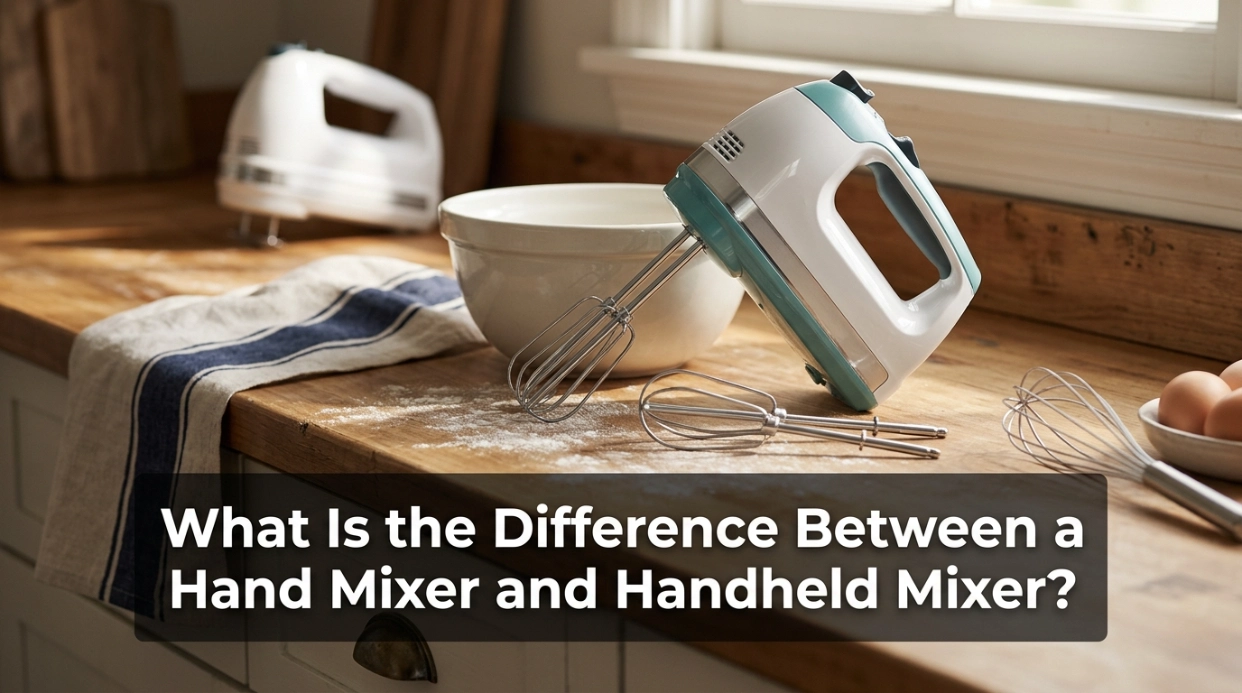
There is usually no functional difference between a hand mixer and a handheld mixer. Both terms describe a compact electric mixer that you hold over a bowl while motor-driven beaters or whisks mix the ingredients, and manufacturers such as KitchenAid describe a hand mixer as an electric handheld mixing tool.
The important differences to know
- Same basic appliance: “Hand mixer” and “handheld mixer” are commonly interchangeable names.
- Standard retail term: “Hand mixer” is the name you will see most often in appliance categories and product listings.
- Held during use: You guide the mixer through ingredients instead of attaching it to a countertop stand.
- Uses beaters: Typical models use removable beaters, whisks, or compatible dough hooks.
- Not a hand blender: An immersion blender normally uses a blade inside a bell-shaped blending head.
Easy identification tip
- If the appliance has two removable beaters that spin over a bowl, you are almost certainly looking at what retailers call a hand mixer.
If you are comparing “hand mixer” and “handheld mixer” listings in 2026, the wording can make two identical appliances sound different. In most cases, they are simply two names for the same kitchen tool.
I find the more useful question is what the appliance actually does. Attachment type, speed control, motor design, weight, and intended recipes matter far more than whether the box says “hand” or “handheld.”
In This Guide
- Are a Hand Mixer and Handheld Mixer the Same Thing?
- Why Do the Names Cause So Much Confusion?
- How Is a Hand Mixer Different From a Hand Blender or Stand Mixer?
- What Features Matter More Than the Name?
- What Is a Handheld Mixer Best Used For?
- Should You Buy a Hand Mixer or Handheld Mixer?
- Frequently Asked Questions
Are a Hand Mixer and Handheld Mixer the Same Thing?
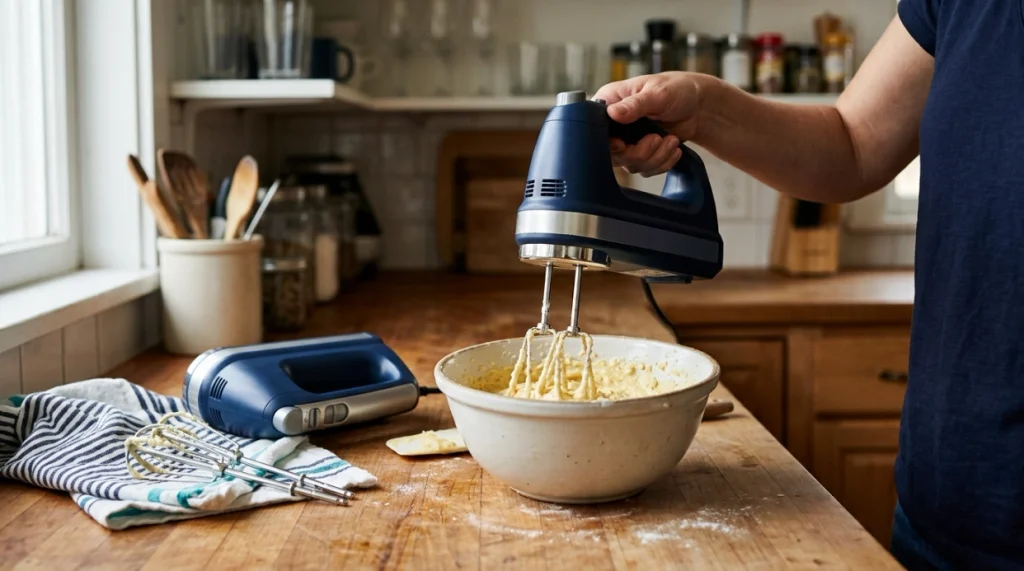
Yes, in ordinary kitchen-appliance terminology, a hand mixer and a handheld mixer normally mean the same thing. Both describe a portable electric appliance that you hold while its attachments rotate inside a separate bowl.
Definition: A hand mixer is a portable powered kitchen mixer with a motorized housing, handle, speed control, and removable beaters or similar attachments.
The word “handheld” simply emphasizes how you operate it. Unlike a stand mixer, the motor housing remains in your hand throughout mixing.
This is not just casual wording. Appliance manufacturers may use “hand mixer” as the official product category while describing the same machines as handheld mixers elsewhere in their product information.
- Hand mixer: The most common category name for the appliance.
- Handheld mixer: A descriptive name emphasizing portability and hand-held operation.
- Electric hand mixer: Another common name that separates it from old-fashioned manual rotary beaters.
- Electric mixer: A broader phrase that may refer to either hand mixers or stand mixers.
The name alone therefore should not change your buying decision. Look at the shape, attachments, and intended tasks instead.
Section Takeaway: In modern appliance listings, “hand mixer” and “handheld mixer” usually describe the same portable electric mixing appliance.
Why Do the Names Cause So Much Confusion?
The confusion comes from inconsistent marketing language. Retailers, manufacturers, recipe writers, and shoppers do not always use the same name for compact mixing appliances.
“Hand mixer” is short and established, so it works well as a product-category label. “Handheld mixer” is more descriptive because it immediately tells you that the appliance is held rather than mounted on a stand.
Hand mixer can also have an older meaning
Before electric models became common, people used hand-cranked rotary beaters. Those tools can also be described as manual hand mixers.
That is why adding the word “electric” can sometimes remove ambiguity. An electric hand mixer clearly means the motorized appliance with powered beaters.
Handheld mixer can be used too loosely
Some marketplace sellers use broad phrases such as “handheld food mixer” for several different appliances. That can include true hand mixers, immersion blenders, milk frothers, or small rechargeable whisks.
My rule when reading a listing is simple: ignore the marketing phrase for a moment and inspect the working end of the appliance.
- Two rotating beaters: Usually a hand mixer.
- Long shaft with a blade guard: Usually a hand blender or immersion blender.
- Single tiny whisk: Often a milk frother rather than a full hand mixer.
- Mixer mounted on a base: A stand mixer or compact stand mixer.
This quick visual check prevents most naming mistakes. It is also more reliable than relying on marketplace keywords alone.
How Is a Hand Mixer Different From a Hand Blender or Stand Mixer?
A hand mixer mixes and aerates with rotating beaters, while a hand blender normally chops and purees with fast-moving blades. A stand mixer performs mixing jobs from a fixed countertop base and usually handles longer or heavier tasks more comfortably.
| Feature | Hand Mixer / Handheld Mixer | Hand Blender | Stand Mixer |
|---|---|---|---|
| Main working part | Usually two beaters or whisk-style attachments | Blade inside a guarded blending head | Beater, whisk, dough hook, or other mixer attachment |
| Held while running | Yes | Yes | No |
| Best-known jobs | Beating, whipping, creaming, mixing batter | Pureeing, blending soups, sauces, smoothies | Mixing, whipping, kneading, larger batches |
| Separate bowl required | Yes | Uses a cup, pot, bowl, or other container | Usually supplied with its own bowl |
| Storage footprint | Compact | Compact | Much larger |
A hand blender is especially easy to confuse with a handheld mixer because both are portable electric appliances. Their working action is different, though.
Beaters move ingredients around and can incorporate air. Blades cut ingredients into smaller pieces and are better for pureeing.
Stand mixers overlap more closely with hand mixers. They can whip cream, beat eggs, mix batter, and handle other similar jobs without requiring you to hold the motor.
For safety, treat all of these as powered appliances and follow the manufacturer’s operating instructions. UL Solutions’ household-appliance information explains the broader safety-testing framework used for household electrical appliances.
What Features Matter More Than the Name?
Speed control, attachments, comfort, and suitability for your recipes matter far more than whether a manufacturer calls the product a hand mixer or handheld mixer. Two appliances with different names can be nearly identical, while two hand mixers can perform quite differently.
Speed settings and low-speed control
Multiple speeds help you match the mixer to the food. A slow starting speed is especially useful when flour, powdered sugar, or thin liquids could otherwise spray from the bowl.
Higher speeds suit jobs such as whipping cream or aerating egg whites. More settings can provide finer control, although the number of speeds alone does not prove that one mixer is stronger.
Included attachments
- Standard beaters: Useful for cake batter, frosting, eggs, and general mixing.
- Whisk attachment: Designed for aerating cream, egg whites, and similar mixtures.
- Dough hooks: Supplied with some models for dough within the manufacturer’s stated limits.
- Storage case: Keeps beaters and other attachments together when the mixer is stored.
Weight and handle comfort
A hand mixer stays in your hand during operation, so weight matters more than it does with a stand mixer. A poorly balanced model may feel tiring during longer mixing jobs.
Controls should also be easy to reach without changing your grip. The attachment-eject control should not be easy to press accidentally while the mixer is running.
Corded versus cordless operation
Corded models draw power from an outlet, while cordless models use rechargeable batteries. Cordless designs remove the trailing power cord but add battery charging and runtime considerations.
Neither design changes the appliance category. Both are still hand mixers when they use the same handheld beater-based design.
What Is a Handheld Mixer Best Used For?
A hand mixer is best for small-to-medium mixing jobs that need repeated beating, whipping, or creaming. It fills the gap between doing everything manually and setting up a larger stand mixer.
- Cake and cupcake batter: Mix wet and dry ingredients efficiently without a large countertop machine.
- Whipped cream: A whisk attachment or beaters can incorporate air quickly.
- Egg whites: Increasing speed gradually helps build foam for meringues and similar recipes.
- Buttercream: Electric beaters reduce the effort needed to combine softened butter and sugar.
- Creaming butter and sugar: Repeated beating helps combine and aerate the mixture.
- Mashed potatoes: A mixer can smooth cooked potatoes, although aggressive mixing can make some potatoes gluey.
- Light dough: Some models include dough hooks, but you should respect the manufacturer’s batch and dough limits.
A hand mixer becomes less attractive when the mixture is extremely stiff or the batch is large. Holding a motor over heavy dough for a long period can also become tiring.
I would also avoid treating a hand mixer like a blender. Beaters are meant to mix ingredients, not chop ice, puree vegetables, or replace a blade-based food processor.
Before cleaning, changing beaters, or clearing stuck ingredients, disconnect the appliance from its power source according to its manual. You can also check the CPSC recall database if you are concerned about a particular appliance model.
Section Takeaway: Hand mixers excel at beating, whipping, creaming, and everyday batter work, but they do not replace a blade-based blender or a heavy-duty stand mixer.
Should You Buy a Hand Mixer or Handheld Mixer?
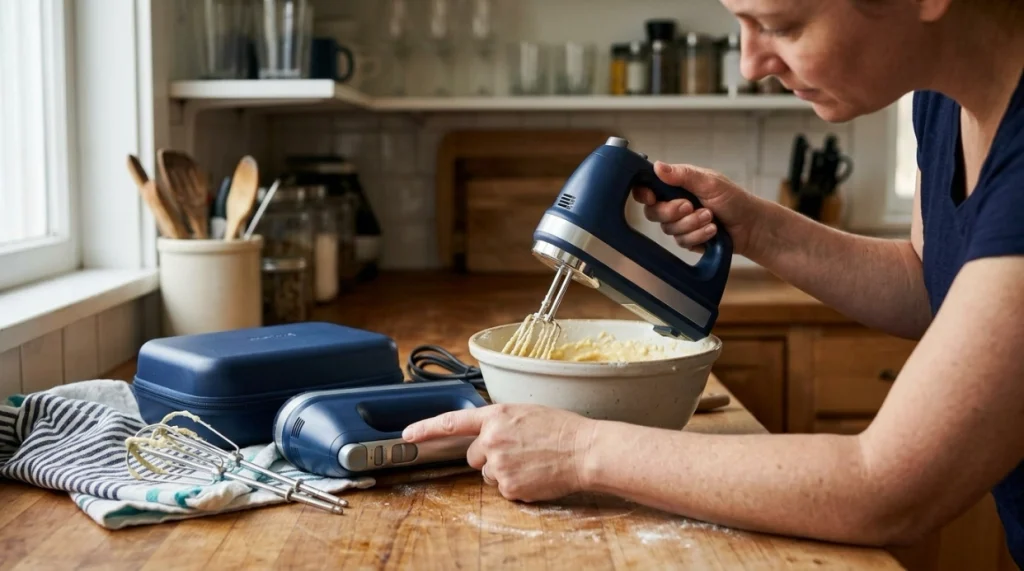
You do not need to choose between the terms because they normally describe the same type of appliance. Instead, compare individual models by features, comfort, attachments, storage needs, and the recipes you expect to make.
Start by thinking about your most frequent kitchen jobs. A basic model may be enough for occasional cake batter, eggs, and whipped cream.
Prioritize these factors when shopping
- Useful low speed: Helps reduce flour clouds and liquid splashing.
- Comfortable weight: Important because your hand supports the mixer during operation.
- Appropriate attachments: Buy for the jobs you genuinely plan to perform.
- Easy cleanup: Removable attachments should be simple to wash according to the manual.
- Convenient storage: Consider cord management and attachment storage.
- Safety information: Look for clear operating instructions and applicable safety certification markings.
Do not assume the model with the highest advertised wattage will automatically perform best. Motor type, gearing, beater design, electronic controls, and load handling can also influence how a mixer behaves.
Likewise, a large number of speed settings is only helpful when those settings provide useful control. For many home cooks, predictable low-speed mixing matters more than an impressive number printed on the box.
If you are shopping online, check the photographs and included attachments before relying on the product title. This is especially important when a marketplace seller uses “handheld mixer” as a broad keyword.
Section Takeaway: Shop by design and capability, not by whether the product title says “hand mixer” or “handheld mixer.”
Frequently Asked Questions
Is a handheld mixer the same as an electric hand mixer?
Usually, yes. “Handheld mixer” and “electric hand mixer” commonly describe the same portable motorized appliance with removable beaters or similar attachments that you guide through ingredients in a separate bowl.
Is a hand mixer the same as a hand blender?
No. A hand mixer normally uses rotating beaters for mixing, beating, and whipping, while a hand blender usually has a blade at the bottom of a long shaft for pureeing and blending foods.
Can I use a handheld mixer for cake batter?
Yes. Cake batter is one of the common jobs suited to a hand mixer, although the correct speed and mixing time depend on the recipe. Start slowly when adding dry ingredients to reduce splashing.
Can a hand mixer knead bread dough?
Some models include dough hooks and are designed to handle certain doughs. Check the manufacturer’s instructions because dense dough, large batches, or extended kneading can exceed the intended load of some hand mixers.
Is a hand mixer better than a stand mixer?
Neither design is automatically better for every job. A hand mixer offers compact storage and quick setup, while a stand mixer supports hands-free operation and is generally better suited to longer or heavier mixing tasks.
Why do stores call the same appliance a hand mixer and handheld mixer?
The two phrases describe the same basic form factor, but retailers use different search and marketing terminology. “Hand mixer” is the established category name, while “handheld mixer” emphasizes that you hold the appliance while using it.
How can I tell whether an online listing is a real hand mixer?
Look for a motor housing with a handle plus removable beaters or whisk-style attachments. If the appliance instead has a long shaft ending in a guarded blade, it is probably an immersion or hand blender.
Bottom line: For most shoppers, there is no meaningful difference between a hand mixer and a handheld mixer. Focus on the attachments, speed control, comfort, build, and recipes the manufacturer says the appliance can handle.
If two listings use different names but show the same beater-based design, compare their actual specifications rather than the wording in the title. That will tell you far more about which mixer belongs in your kitchen.
“`
