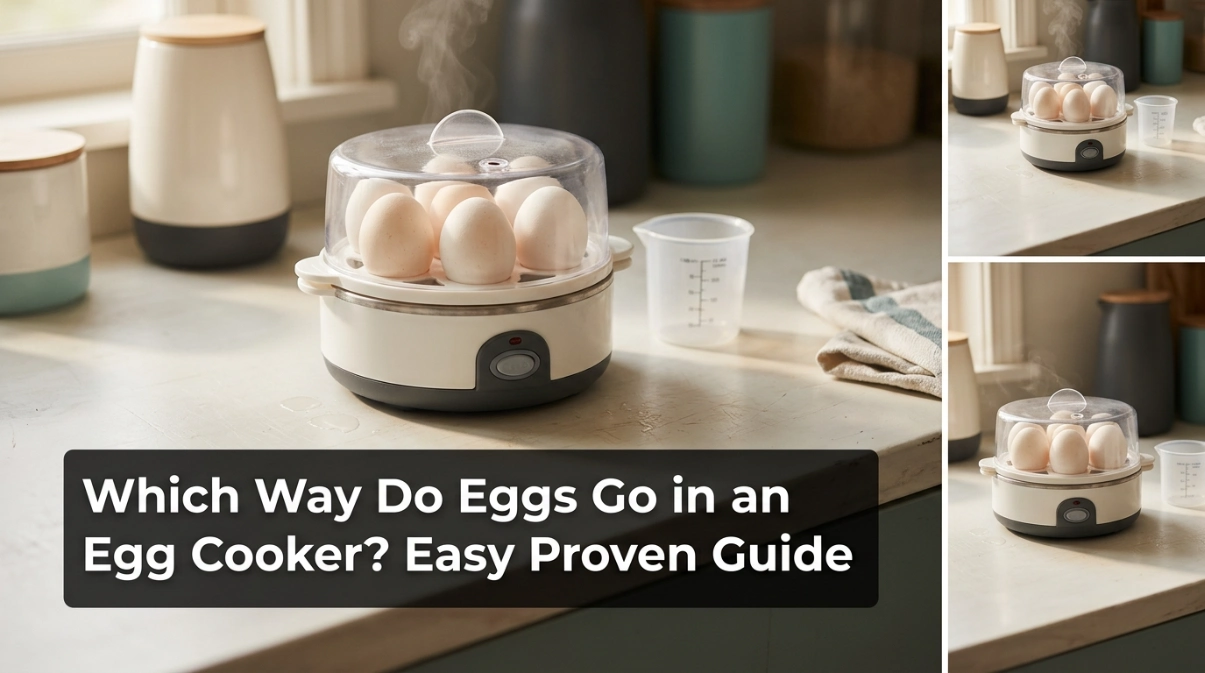
If you are asking which way do eggs go in an egg cooker, the simple answer is this: place the pointed end down and the wider, rounded end up.
I learned this after loading my first batch the wrong way. The eggs still cooked, but one cracked and another leaked a little white through the shell.
The right position helps the eggs sit firmly in the tray. It also keeps the air pocket near the wide end, where it naturally sits.
In this guide, I will show you the setup I use, what can go wrong, and the small checks that make cooking eggs easier.
Common Signs of the Problem
Egg position seems like a small detail. In practice, the wrong setup can cause a few annoying problems.
| Symptom | Likely Cause | Quick Fix |
|---|---|---|
| Egg rocks in the tray | Wide end placed down | Turn it so the pointed end sits down |
| Shell cracks | Egg is unstable or over-pierced | Seat it firmly and use the pin gently |
| Egg white leaks | Large puncture or shell crack | Make one small hole if required |
| Eggs cook unevenly | Wrong water level or poor tray fit | Re-seat eggs and measure water |
| Lid does not sit well | Egg is tilted or tray is overloaded | Straighten eggs and stay within capacity |
The biggest clue is how the egg sits. When the pointed end goes into the tray opening, the egg usually feels more stable.
If your egg tray is cracked or warped, a replacement egg tray may be useful. A damaged holder can make even correctly placed eggs lean.
I also keep the original water measuring cup with my cooker. Its marks are easier to follow than guessing, and some cups include the egg-piercing pin.
Possible Causes
Most people asking this question do not have a broken egg cooker. The problem is usually setup.
Common causes include:
- The wide end is placed down.
- The egg tray is not flat.
- Too much or too little water is used.
- The shell is pierced on the wrong end.
- The puncture is too deep.
- The lid is not seated well.
- The tray is overloaded.
- The heating plate has mineral buildup.
One thing surprised me during testing. Turning the egg the right way did not fix every bad batch.
When I used too much water, the eggs still came out firmer than I wanted. Egg position matters, but water level matters too.
How to Fix Egg Position: Which Way Do Eggs Go in an Egg Cooker?
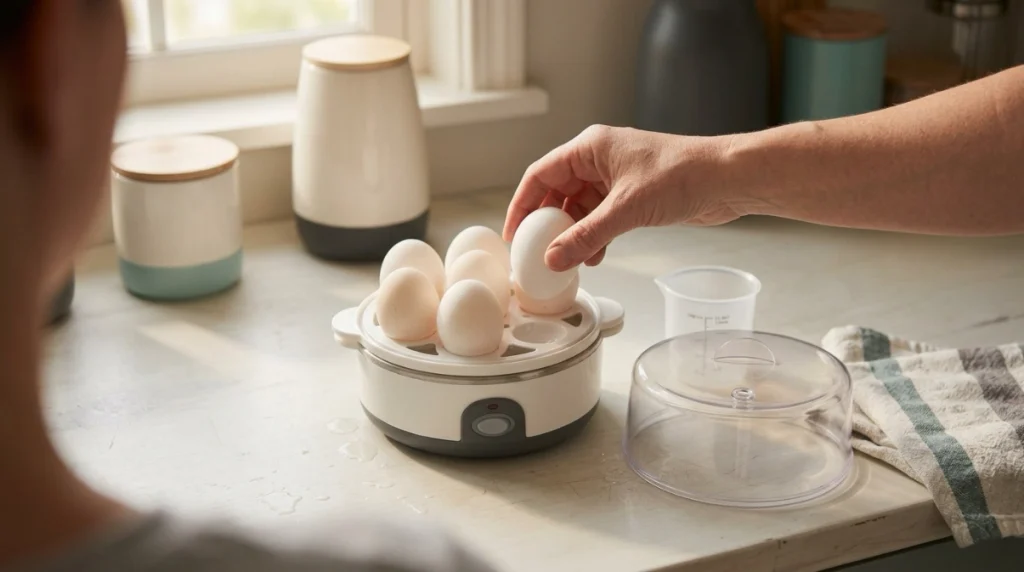
Put the Pointed End Down
Place the egg tray in the cooker. Hold one egg and find the narrow, pointed end.
Put that pointed end into the tray hole. The broad, rounded end should face up.
I tested both directions. Pointed-end-down felt more secure and kept the eggs straighter under the lid.
Do not force an egg into the holder. It only needs to rest in place.
Pierce the Correct End if Required
Some egg cookers tell you to pierce the shell before cooking. Others do not.
If your manual calls for piercing, the hole is usually made in the wide, rounded end. That is where the egg’s air cell normally sits.
Use the small pin supplied with the cooker or measuring cup. I once pushed the pin too far and made a larger hole than needed.
That egg leaked during cooking. A tiny puncture worked much better on the next batch.
Keep your fingers away from the pin tip. Do not hold the egg in your palm while pushing hard.
Measure the Water Carefully
Egg cookers often control doneness by the amount of water added. The water amount changes how long steam is made.
Use the cup and marks made for your model when possible. The lines may differ for soft, medium, and hard eggs.
I found that guessing the water caused more trouble than egg direction. Once I used the right line, my results became much more steady.
| Setup Item | Correct Use | What I Check |
|---|---|---|
| Egg | Pointed end down | Egg sits upright |
| Wide end | Facing up | Piercing hole is at top if required |
| Egg tray | Flat in place | No rocking |
| Water | Measured for doneness | Correct cup line |
| Lid | Fully seated | Steam vent stays open |
Check the Tray and Lid
Make sure the tray sits flat before starting. A tilted tray can make eggs lean against the lid.
Then fit the lid as directed. Never block the steam vent with a towel, hand, or other object.
Steam is very hot. I keep my face and hands away from the vent while the cooker is running.
After cooking, I lift the lid away from my face so the steam moves in the other direction.
Check for Mineral Buildup
If the eggs sit correctly but cooking takes longer than before, look at the heating plate.
A white or chalky layer can form from minerals in water. This can affect how well the cooker heats.
For cleaning, I unplug the cooker and let it cool first. I wipe the plate with a soft cloth or non-abrasive sponge.
If the maker allows descaling, white vinegar can help loosen mineral buildup. I never pour liquid into switches, vents, or the electrical base.
Always follow your model’s manual because cleaning steps can differ.
Mistakes to Avoid
The first mistake is putting the wide end down just because it looks flatter. In many egg cooker trays, that makes the egg less stable.
Another mistake is adding extra water “just to be safe.” That can change cooking time and leave eggs harder than expected.
Do not make a large hole in the shell. If piercing is required, one small hole is enough.
I also avoid stacking eggs, overfilling the tray, or running the cooker without the right tray. The lid should fit normally.
Never open the electrical base or heating unit to repair wiring. Do not bypass a safety switch, auto shut-off, or overheat protection.
If the cord is damaged, the base smells burned, or the cooker trips the outlet, stop using it.
When to Replace the Egg Cooker
Wrong egg direction alone is not a reason to replace the cooker. A setup change should solve that problem.
Replacement makes more sense when there is a real safety or heating fault.
Consider replacing the unit if the cord is damaged, the base smells burned, the heating plate no longer heats, or the cooker fails to shut off as designed.
A cracked removable tray or lost measuring cup may be easier to replace than the whole cooker. Use only a part made to fit your model.
If the lid is badly warped or cracked, replace it before using the cooker again. A poor lid fit can let hot steam escape in the wrong direction.
My Personal Experience
My first mistake was putting the broad end down because that side looked more stable on the counter.
Inside the egg tray, it was the opposite. The eggs leaned more, and one shell cracked during the cycle.
On my next test, I put the pointed ends down. I also measured the water instead of filling by eye.
That batch sat straighter and cooked more evenly. I made only a tiny puncture in the rounded end because that cooker called for pierced eggs.
I later tested too much water. The egg position was correct, but the yolks came out firmer than I wanted.
That taught me the main lesson: position the eggs correctly, then treat water level as a separate setting.
Final Thoughts
So, which way do eggs go in an egg cooker? Put the pointed end down and the wide, rounded end up.
If your model requires shell piercing, the wide end is usually the end you pierce. Make only a tiny hole and follow your cooker manual.
Then check the water level, tray fit, lid position, and steam vent. Those small steps solved nearly every issue I ran into.
The best result came from keeping the setup simple: eggs upright, correct water, a clean heating plate, and no guessing.