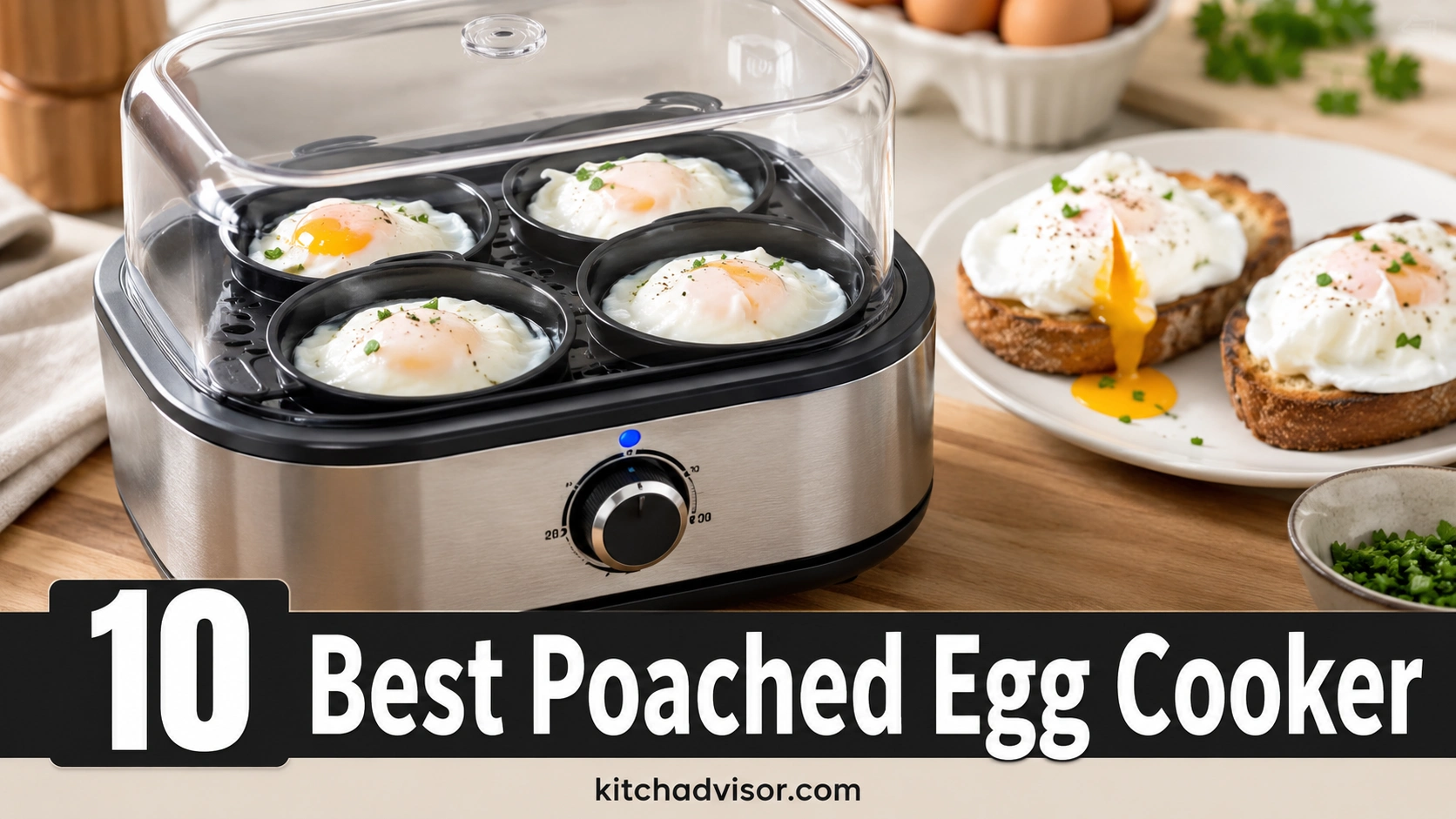
Poached eggs can be difficult to cook evenly. The whites may spread in the water, while the yolks can become firm before the whites set. A poached egg cooker gives us a simpler way to shape and cook eggs with less effort than traditional poaching.
When choosing one, we look for a stable design, nonstick surfaces, and materials that can handle regular heat. The best poached egg cookers make it easier to produce neatly shaped eggs while keeping cleanup simple. Capacity, egg release, dishwasher safety, and compatibility with different pan sizes also matter.
We compared poached egg cookers to find the models that make preparing consistent eggs straightforward, convenient, and less messy.
Best Poached Egg Cookers
We reviewed poached egg cookers for ease of use, cooking performance, cleanup, and overall value. Our list features the best options for making consistent poached eggs at home.
Eggssentials 4-Cup Egg Poacher
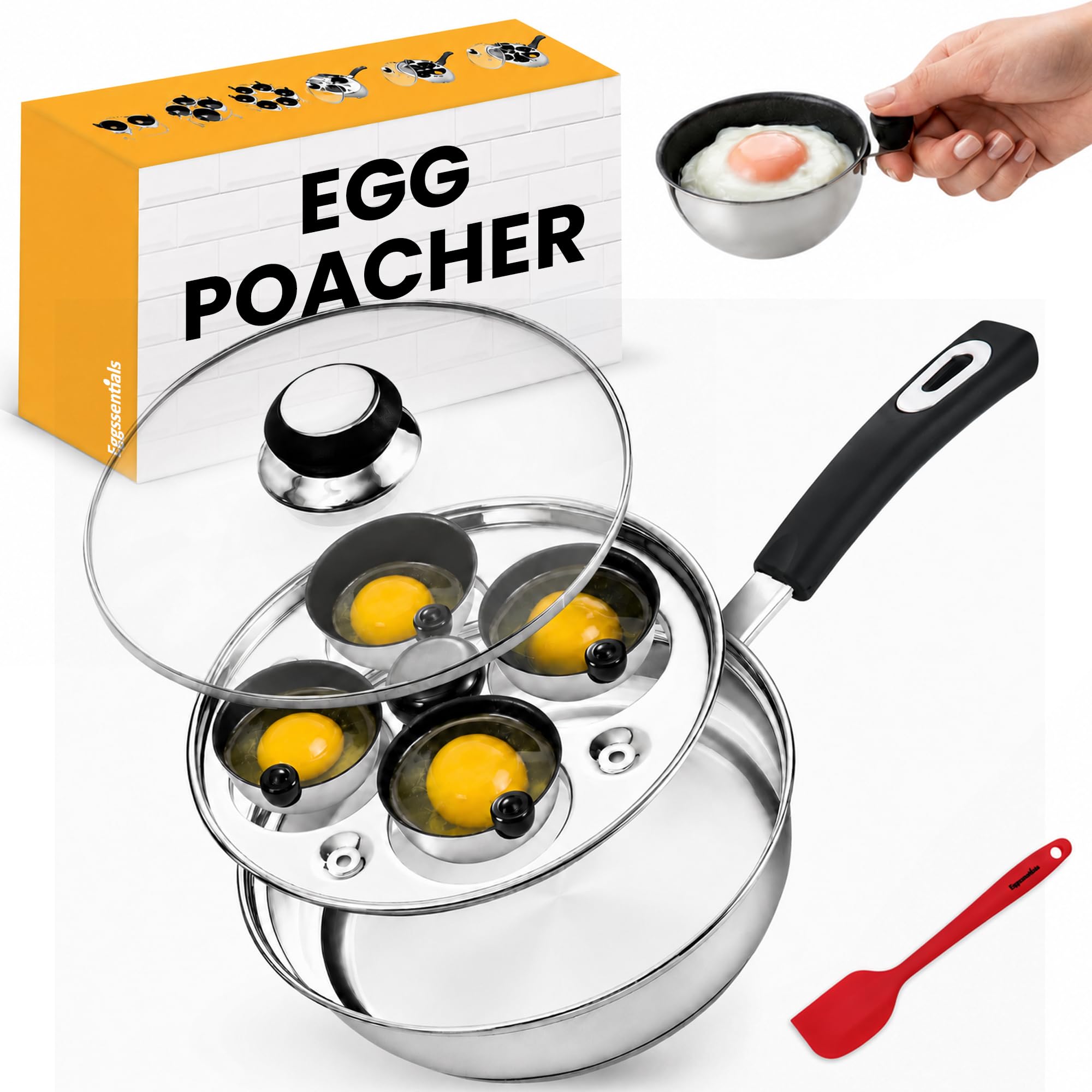
We recommend this pan for cooks who want four poached eggs at once, easy cleanup, and a sturdy design that also works as a sauté pan.
Pros
- Releases eggs cleanly from the PFOA-free nonstick cups
- Heats evenly on gas, electric, and induction stoves
- Glass lid makes it easy to watch the cooking process
Cons
- The pan takes up more storage space than a single-egg cooker
- Eggs may need timing adjustments for firmer or softer yolks
- The handle and lid knob can still feel warm during longer cooking
We found the Eggssentials pan simple to use. After adding water and cracking eggs into the cups, we could monitor the cooking through the glass lid without lifting it and losing steam.
The larger cups held enough egg for a satisfying serving, while the nonstick coating helped the eggs slide out with little effort. The removable insert also made cleanup faster than cleaning a pan of loose poaching water.
The stainless steel body felt solid on the stovetop, and the pan heated evenly during testing. Removing the egg insert leaves a useful sauté pan, which gives this cooker more value than a single-purpose model.
We would choose it for family breakfasts or weekend Eggs Benedict. It may feel bulky for small kitchens, but its four-cup capacity, induction compatibility, and easy cleanup make it a practical choice for regular use.
EXCELSTEEL Four-Cup Egg Poacher

We recommend this poacher for consistent breakfast eggs, simple cleanup, and sturdy stainless steel construction.
Pros
- Nonstick cups release eggs with little effort
- Glass lid lets us watch the cooking process
- Stay-cool handle and dishwasher-safe parts simplify use
Cons
- Cups still need light oil or butter for the best release
- Eggs may take a few tries to cook perfectly
- The pan feels less refined than premium cookware
We found the EXCELSTEEL easy to use after a short learning period. The four cups sit securely in the pan, and the lid helps retain steam while letting us check the eggs without lifting it.
The nonstick coating worked well, especially after we lightly sprayed the cups. Without oil, some egg whites stuck around the edges. Once the eggs finished, we could usually lift them out cleanly with a spoon.
Cleanup was straightforward, and the dishwasher-safe design added convenience. The stainless steel pan also felt sturdy during use and worked well on our induction cooktop.
Cooking time depends on heat and egg size, so we needed a few attempts to get the yolks exactly right. Still, this poacher gave us more consistent results than the traditional water-and-vinegar method.
EXCELSTEEL Six-Cup Egg Poacher

We recommend this poacher for households that want to cook six evenly sized eggs with little hands-on work.
Pros
- Nonstick cups release eggs easily
- Glass lid lets us watch the cooking
- Dishwasher-safe parts simplify cleanup
Cons
- The cup rack may arrive slightly uneven
- The cups need careful handling to avoid scratches
- Its wide shape takes up storage space
We found the EXCELSTEEL simple to use for breakfast and brunch. After adding water to the pan, we cracked eggs into the coated cups, placed the rack inside, and covered it with the vented glass lid. The eggs cooked in about four to seven minutes, depending on how firm we wanted the yolks.
The nonstick coating helped the eggs slide out with little effort. We also liked the small handles on the cups, which made serving easier. The stainless steel pan felt sturdy, and the stay-cool handle and lid knob made it safer to move during cooking.
Cleanup took little time, especially when we used the dishwasher. However, the metal rack can sit unevenly on some units, which may make the lid harder to position. We also recommend using nonmetal utensils to protect the cup coating.
Modern Innovations Egg Poacher Pan
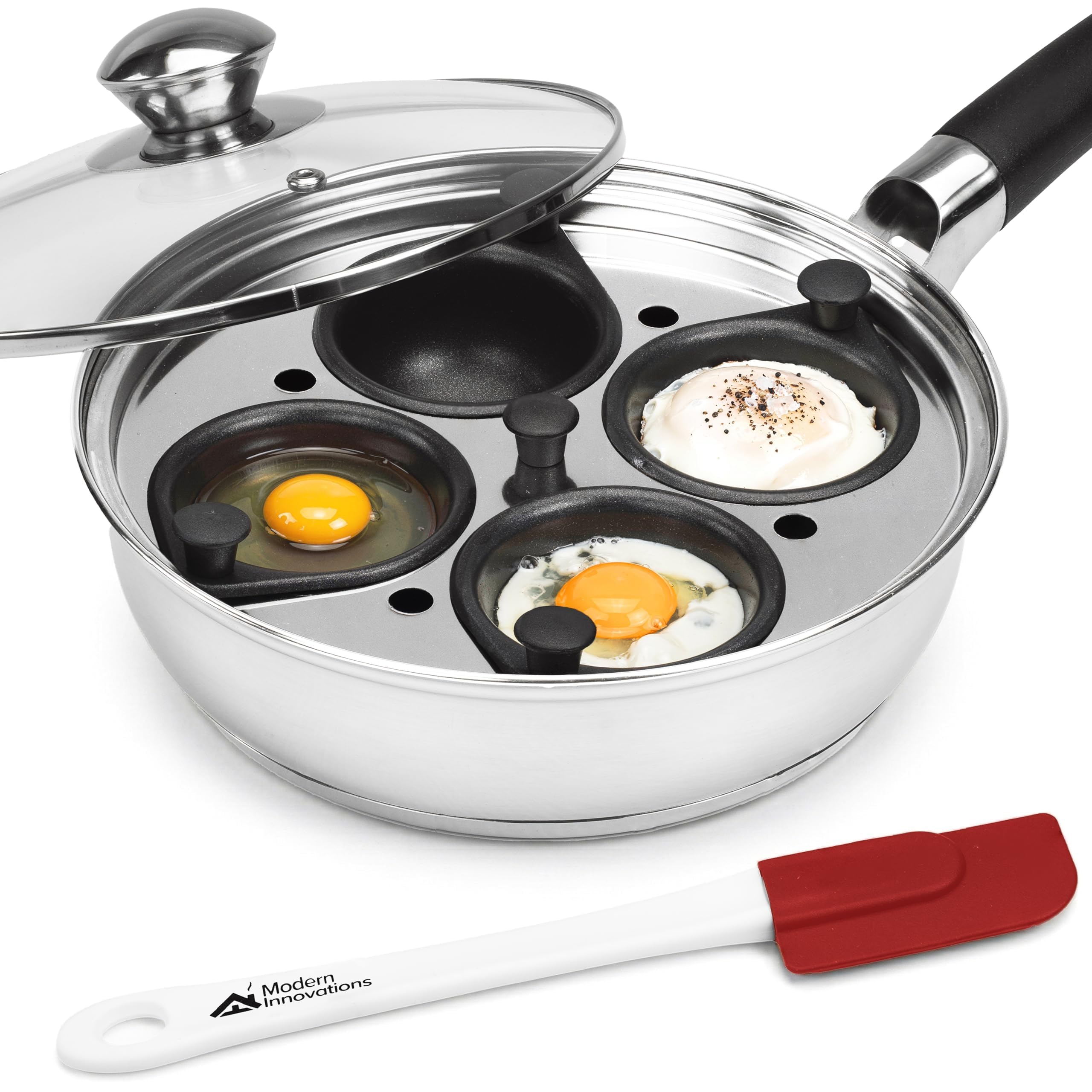
We recommend this pan for households that want to poach four eggs at once with less mess than stovetop water.
Pros
- Cooks four eggs in one batch
- Clear lid helps us watch the cooking
- Removable parts make cleanup simple
Cons
- Finding the right cooking time takes practice
- Steam can make the cup handles hot
- Nonstick cups need gentle handling
We found the stainless steel pan sturdy during use, and the stay-cool handle made it comfortable to move. The insert sits above a small amount of water, letting steam cook the eggs without fully submerging them.
The four cups held one large egg each and released the eggs fairly well with the included silicone spatula. We needed to adjust the cooking time to match our stove and preferred yolk texture.
The glass lid helped us check progress without lifting it and losing steam. After cooking, we could remove the insert and use the pan for other tasks, which made it more useful than a single-purpose cooker.
Cleanup was straightforward because the removable parts are dishwasher safe. We would still handle the nonstick cups carefully and avoid metal tools to help protect their coating.
Eggssentials 4-Cup Egg Poacher
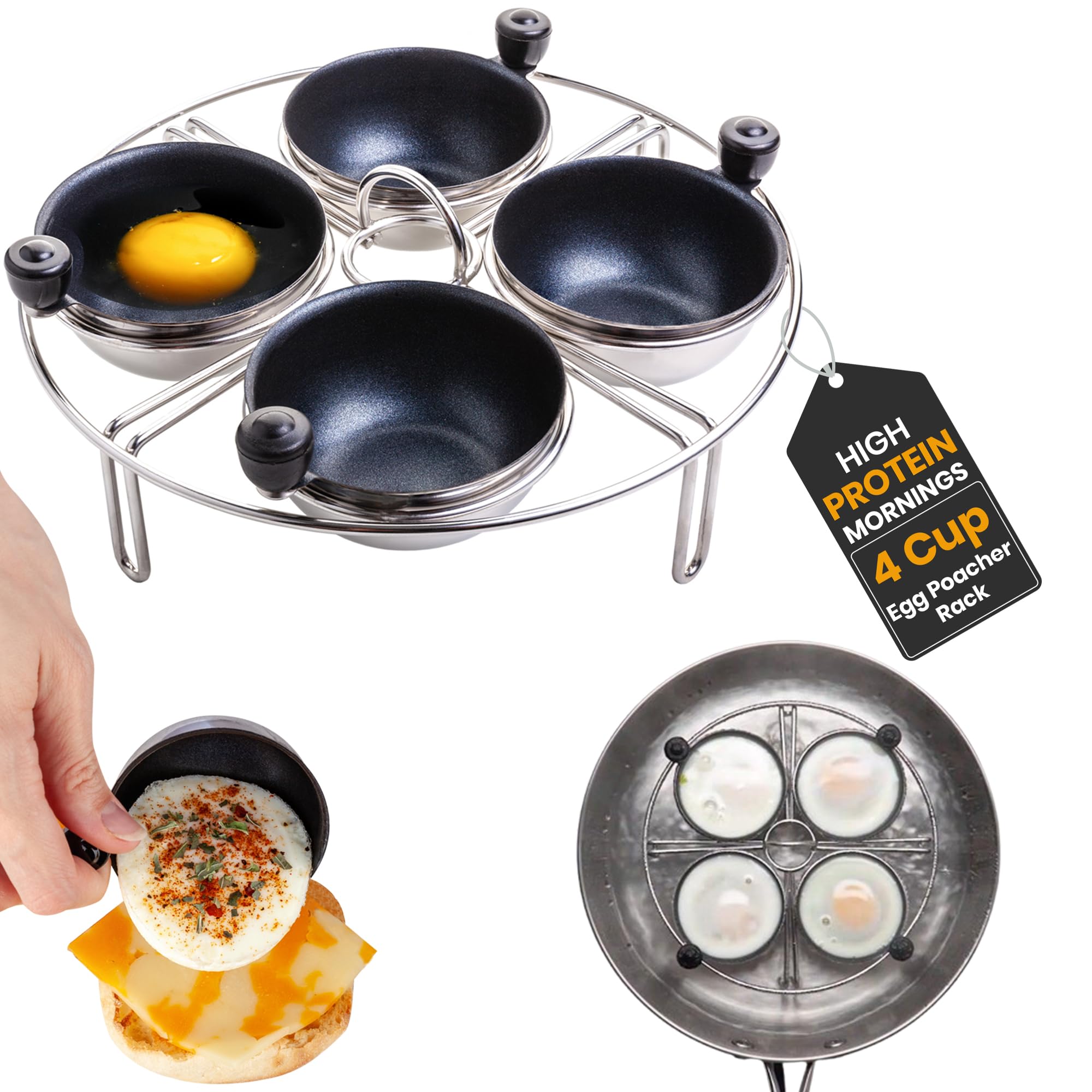
We recommend this insert for easy poached eggs without storing a separate pan, as long as it fits your cookware.
Pros
- Fits many pots, skillets, and 5-, 6-, and 8-quart pressure cookers
- Nonstick stainless steel cups release eggs with little effort
- Removable cups and a center handle make serving simple
Cons
- Requires cookware wider than the 7.25-inch rack
- Egg doneness may vary between cups
- The nonstick coating needs careful handling
We found the rack easy to set up in a pot with about half an inch of water. The four cups held the eggs securely, and the rack kept them from tipping or spilling during cooking.
The eggs cooked in under five minutes, though timing needed some adjustment for the yolk texture we wanted. We also used a light coating of oil, which helped the eggs slide out cleanly.
The stainless steel cups felt sturdier than silicone alternatives, and the Bakelite handle stayed easier to handle after cooking. We could remove each cup separately and place the egg directly on toast.
Cleanup was quick because the cups have a nonstick surface and are dishwasher safe. Before buying, we would measure the inside of our pot carefully, since the 7.25-inch rack may not fit smaller cookware.
DASH Rapid Egg Cooker
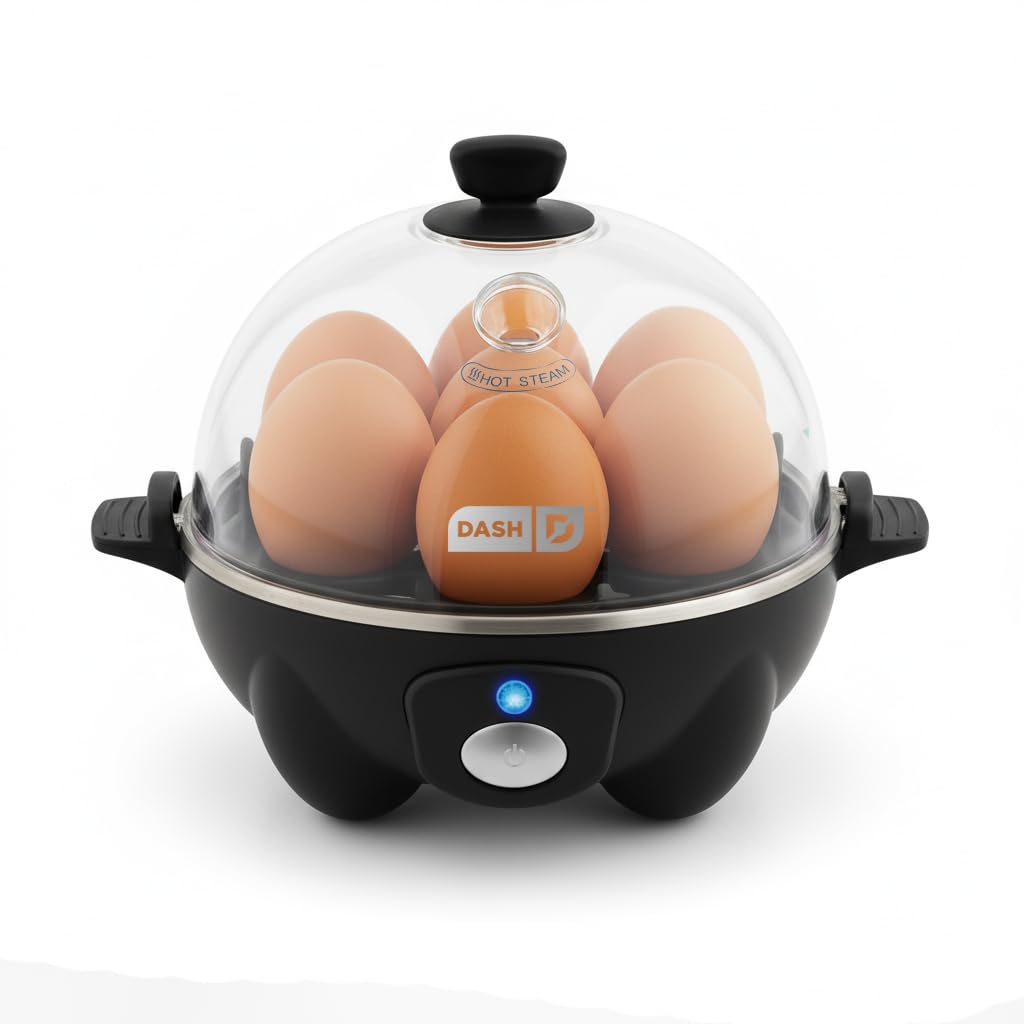
We recommend this compact cooker for easy poached eggs, boiled eggs, and small omelets with little hands-on work.
Pros
- Makes poached, soft-boiled, and hard-boiled eggs
- Compact parts store inside the unit
- Removable accessories are dishwasher-safe
Cons
- The cooker beeps but does not shut off automatically
- Poached eggs may need timing adjustments
- The plastic body feels lightweight
We found the DASH Rapid Egg Cooker simple to set up. The included poaching tray helps us prepare several eggs without watching a pot on the stove, while the omelet bowl adds another useful option for quick breakfasts.
The thermal sensor controls the cooking cycle, so we only need to add the right amount of water and press the button. Results can vary slightly with egg size and personal taste, especially when we want soft or firm yolks.
Cleanup takes little effort because the trays and other non-electric parts can go in the dishwasher. The small footprint also makes storage easy, although the unit continues cooking after its alert, so we need to unplug it promptly.
Eggssentials 2-in-1 Egg Poacher Pan
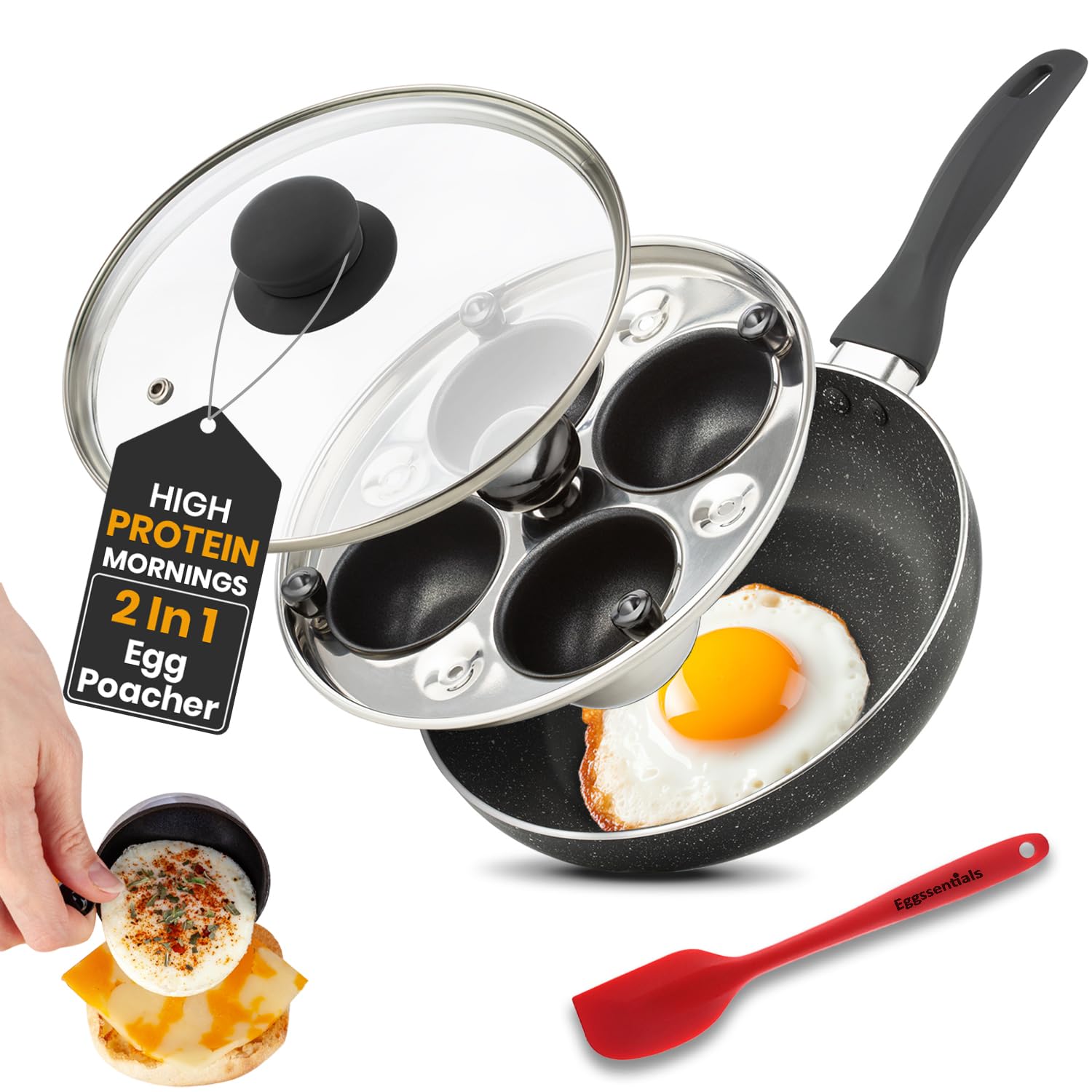
We recommend this pan for cooks who want four poached eggs at once and a useful skillet for other meals.
Pros
- Makes several eggs at the same time
- Removable cups are simple to clean
- Works as a small frying pan without the insert
Cons
- Eggs may stick without a little oil or butter
- We need to judge the water level carefully
- Some buyers reported missing accessories or instructions
We found the Eggssentials pan easy to use after a short trial. A light coating of cooking spray helped the eggs release from the cups, while the glass lid let us check their progress without lifting it.
The four cups handled large eggs well, and the pan cooked eggs with different yolk textures in one batch. We also removed the insert and used the base as a compact skillet for frying or making omelets.
Cleanup was straightforward because the cups come out of the tray and the parts are dishwasher safe. We still prefer gentle hand washing for the nonstick surfaces to help preserve the coating.
The handle stayed comfortable during cooking, and the lid’s vent helped manage steam. We recommend measuring the water carefully and avoiding overfilling, since excess water can make the insert float or cook unevenly.
NutriChef Egg Poacher Pan
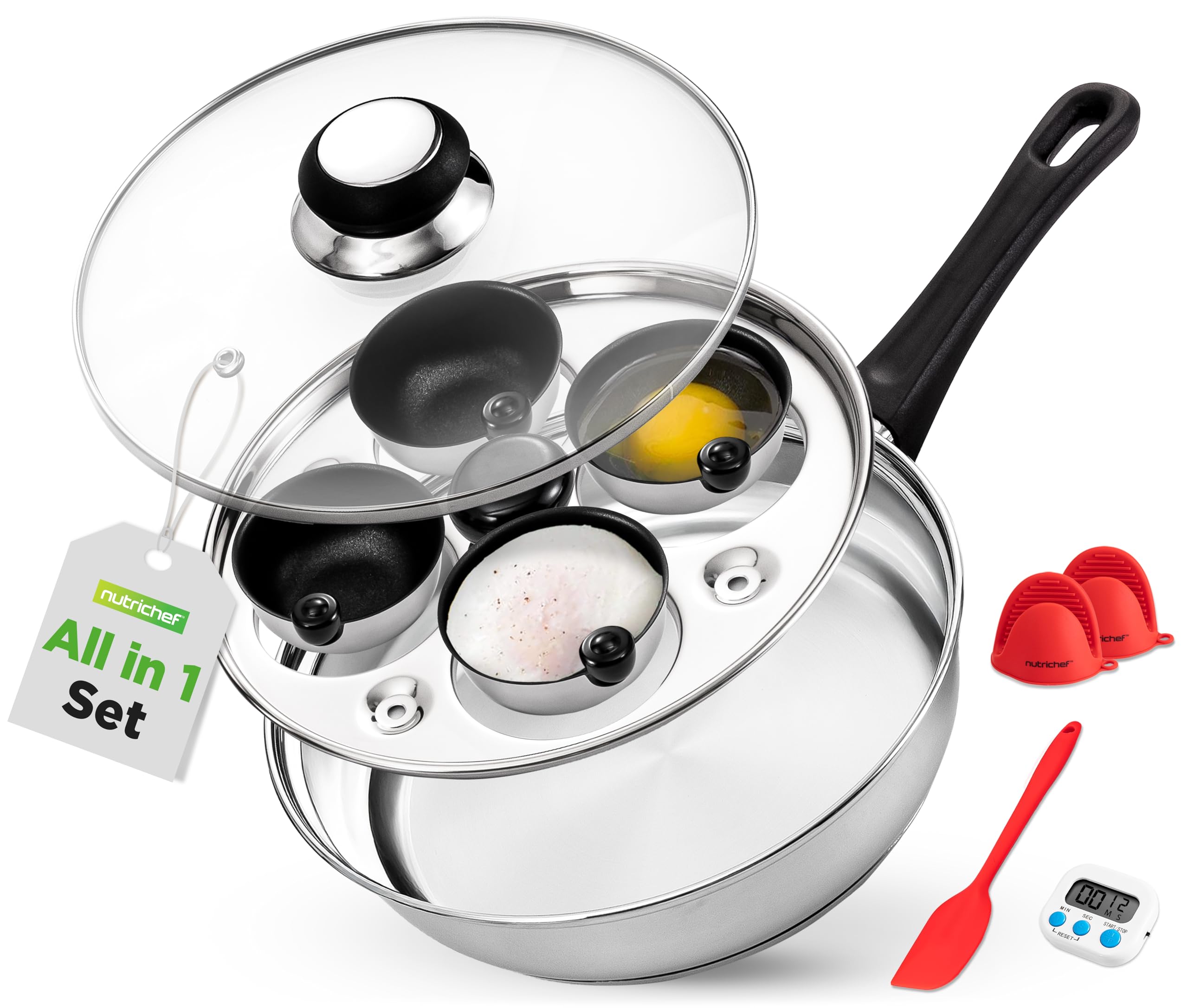
We recommend this pan for cooks who want to prepare up to four poached eggs at once with less mess and steady results.
Pros
- Cooks four eggs together
- Clear lid makes monitoring easy
- Works on induction stovetops
Cons
- Cups need light oiling to prevent sticking
- Included mitts feel awkward
- Poaching handles may become hot
We found the NutriChef easy to use after adding a small amount of water to the pan and lightly brushing oil inside each cup. The eggs released smoothly, and the included spatula helped lift them without breaking the yolks.
The glass lid let us check the eggs without releasing much steam. The pan heated evenly, and preparing four eggs at the same time worked well for breakfast or eggs Benedict.
Cleanup was simple, especially for the main pan. The cups may need hand washing and careful oiling, while the included mitts were less useful than standard kitchen gloves. We also recommend using caution around the poaching handles, which can get hot during cooking.
RUNZI Stainless Steel Egg Poacher

We recommend this sturdy six-cup poacher for households that want evenly cooked eggs with less hands-on work.
Pros
- Makes up to six eggs at once
- Works on induction and other stovetops
- Removable nonstick cups simplify cleanup
Cons
- Eggs may stick without a light coating of oil
- The cups can be awkward to lift out
- Cooking takes longer than some stovetop methods
We found the RUNZI pan solid and stable during use. Its thick stainless steel body spread heat evenly, while the glass lid let us check the eggs without releasing much steam.
The large cups handled full-size eggs well, although we needed to oil them before adding the eggs. Without enough oil, removal became more difficult and the cooked whites could tear.
The removable insert gives us room to cook several eggs at once, making this pan useful for brunch or family breakfasts. After cooking, we could remove the cups for easier washing, and the pan also worked as a small sauté pan without the insert.
Some users may find the cups slow or tricky to remove, especially when making only one or two eggs. Still, the durable build, induction compatibility, and six-egg capacity make this a practical choice for regular use.
Excelsteel 2-Cup Egg Poacher

We recommend this poacher for making two consistent eggs at a time, thanks to its sturdy pan, simple design, and easy cleanup.
Pros
- Produces two poached eggs with little effort
- Stainless steel pan works for other cooking tasks
- Dishwasher-safe parts simplify cleanup
Cons
- Egg cups may feel hot and awkward to remove
- The lid may not fit securely for every user
- We still get better release when we grease the cups
We found the Excelsteel 2-Cup Egg Poacher straightforward to use. After adding water to the pan, we greased the cups, cracked in the eggs, and covered them while they cooked. We could watch the progress through the lid and adjust the cooking time for firmer whites or softer yolks.
The nonstick cups released the eggs well when we used a small amount of butter. Without greasing, removal may take more effort. The cups also become hot during cooking, so we handled them carefully and used suitable kitchen tools.
We like that the base works as a regular cooking pan, which gives this set more value than a single-purpose poacher. Its stainless steel construction feels durable, and the dishwasher-safe parts made cleanup quick after breakfast.
Buying Guide
We should choose a poached egg cooker based on capacity, cooking method, and ease of use. The best option should fit our kitchen space and make it easy to produce evenly cooked eggs.
| Feature | What to look for |
|---|---|
| Capacity | Choose a size that matches how many eggs we usually cook at once. |
| Materials | Look for food-safe, heat-resistant materials that can handle regular use. |
| Cooking method | Compare stovetop, microwave, and electric models based on our available equipment. |
| Cleaning | Removable parts and dishwasher-safe components can reduce cleanup time. |
| Egg release | Nonstick surfaces or coated cups can help eggs slide out without breaking. |
| Controls | Electric models should have clear settings and simple controls. |
We should check the cooker’s dimensions before buying, especially if cabinet or drawer space is limited. A compact design may work best for small kitchens, while a larger model can suit households that prepare several eggs at once.
Safety features also matter. For electric cookers, we should look for automatic shutoff, heat-resistant handles, and stable feet. For microwave models, we should confirm that the materials are microwave-safe and follow the stated cooking instructions.
We should also consider how much control we want over the yolk. Models with adjustable cooking settings may help us prepare soft, medium, or firm eggs, while simpler designs may require more timing and testing. Clear instructions and easy-to-read measurements make the cooking process more consistent.
Editor’s Choice
We choose the Dash Deluxe Rapid Egg Cooker as our top pick for making poached eggs at home. It cooks up to seven eggs at once and includes a poaching tray, measuring cup, and omelet bowl.
The cooker uses a simple water-measuring system. We add the recommended amount of water, place the eggs in the tray, and start the cycle with one button. A built-in timer signals when the eggs finish cooking.
| Feature | Details |
|---|---|
| Capacity | Up to 7 eggs |
| Poached eggs | Up to 4 at once |
| Controls | One-button operation |
| Accessories | Poaching tray, measuring cup, omelet bowl |
| Cleaning | Removable, dishwasher-safe parts |
We like its compact size and clear controls. The poaching tray helps shape the eggs, while the automatic shutoff reduces the need for constant monitoring.
The results can vary with egg size, water temperature, and personal preference. We recommend checking the first batch and adjusting the water amount for softer or firmer yolks.
Conclusion
We should choose a poached egg cooker based on capacity, ease of cleaning, and cooking control. A model with removable parts and clear water markings makes daily use simpler.
For most kitchens, we recommend a cooker that makes two to four eggs at once. Silicone cups help release eggs easily, while a timer or automatic shutoff can improve consistency.
We should also check the cooker’s size before buying. A compact model suits small kitchens, while a larger unit works better for families or meal preparation. Reading care instructions helps us protect the cooker and maintain its performance.
FAQS
What is the best poached egg cooker?
We look for a cooker that holds the egg securely, heats evenly, and releases the egg without sticking. Silicone cups work well for simple stovetop use, while electric models suit users who want automatic timing.
How many eggs can we cook at once?
Capacity varies by model. Single-cup cookers suit small batches, while multi-egg trays can cook several eggs together. We should check that the pan or appliance fits our usual serving size.
Do we need to grease a poached egg cooker?
A light coating of cooking oil can reduce sticking, especially with metal cups. Many silicone models need little or no grease, but we should follow the manufacturer’s care instructions.
How long does poaching take?
Most eggs take about 4–7 minutes, depending on the cooker, water temperature, and preferred yolk texture. We should start checking early because cooking continues briefly after removal.
Are electric poached egg cookers easy to clean?
Many include removable trays or cups that rinse clean quickly. We should choose a model with dishwasher-safe parts when convenient cleanup matters.
Can we cook other foods in one?
Some cookers can handle foods such as dumplings or small portions of vegetables. We should only use the appliance for foods listed in its instructions.