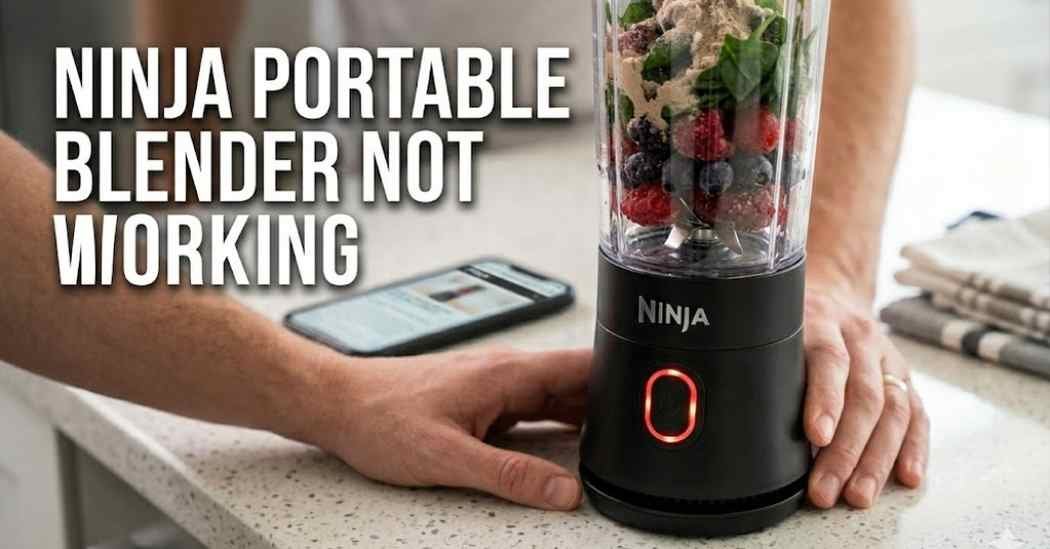
I love making quick smoothies on the go. But last week, my morning routine stopped cold. I pressed the power button, and nothing happened.
Having a Ninja portable blender not working is super frustrating. You just want your drink, but the machine refuses to blend. I totally get the annoyance and the sudden stress.
I spent hours testing and fixing my own machine. In this guide, I will share exactly how I solved the problem. You will learn easy steps to get your blender spinning again.
Common Signs of the Problem
You usually notice the issue right away. Sometimes the blender stays completely dark when you press the button. Other times, the control panel flashes strange colors at you.
You might see flashing purple or red lights. The motor might make a low humming sound without moving. Or, the blender blades might just twitch and stop instantly.
These signs help point to the real issue quickly. Replacing worn parts often saves the day. Keeping a handy cleaning brush, replacement lids, or new gaskets and seals around is very smart. I always keep a soft cloth nearby for quick wipe-downs.
Possible Causes
Portable blenders rely on battery power and safety switches. If one small thing fails, the whole unit stops working. The system is designed this way to keep you safe.
Here are the most common reasons your blender stopped:
- The internal battery is completely dead.
- The jar assembly is not lined up right.
- Thick food is jamming the drive coupling.
- The motor is too hot from heavy use.
Understanding the cause makes the fix much easier. It stops you from guessing and wasting time. Let us look at a quick cheat sheet for these annoying issues.
| Symptom | Likely Cause | Quick Fix |
| No lights at all | Dead battery | Plug into charger for 2 hours |
| Flashing red light | Jammed blades | Remove cup and clear food |
| Flashing white light | Jar assembly loose | Twist cup until arrows align |
How to Fix a Ninja Portable Blender Not Working
You do not need to be a tech expert to fix this. Most problems take just a few minutes to solve at home. You only need basic patience and a keen eye.
I will walk you through the safest methods I use. Follow these simple steps in order for the best results. You will save money and avoid buying a new machine.
Check the Power Supply
The most common issue is a fully drained battery. Portable blenders use a lot of power to crush hard ice. You must provide a strong and steady power supply.
Check your power cord for any visible damage. Plug your blender into a reliable wall outlet using a good charging block. Do not use a weak laptop port to charge it.
Wait for the solid green light to appear on the front. This shows the battery is finally fully charged. Do not try to blend while the machine is plugged in.
Align the Jar Assembly
Ninja blenders have a very strict lid locking system. The motor will not run if the cup is even slightly loose. This safety switch protects your fingers from the sharp blades.
Look for the tiny arrows on the cup and the base. Twist the blender jar until these arrows line up perfectly. The control panel lights should flash to show it is ready.
If the arrows do not align, take the cup off. Check the threads for trapped dirt or sticky fruit juice. Wipe the threads down and try twisting the cup on again.
Inspect the Blender Blades
Sometimes, chunky fruit blocks the blade path completely. The overload protection stops the motor to prevent permanent damage. This is a very helpful safety feature that saves your device.
Empty the cup and look closely at the drive coupling. Carefully remove any stuck food using small tamper tools or a brush. You must always clean the blade area very well to avoid future jams.
Never use metal tools to pry food away. You might scratch the base or dull the blades. Always use soft tools and food-safe degreasers if things get sticky.
Reset the Overload Protection
Did you run the blender several times in a row? The motor might be dealing with severe overheating. You might even notice a faint burning smell coming from the base.
Turn the blender off completely and let it sit on the counter. Wait at least fifteen minutes before trying to use it again. This simple break often fixes the problem without any extra work.
If the error codes or flashing lights continue, double-check your ingredient sizes. Cut your fruit into smaller pieces next time. Your motor works best when it has room to spin freely.
| Problem | Recommended Solution | Difficulty Level |
| Will not charge | Try a different power cord | Very Easy |
| Cup leaks | Check seals and gaskets | Easy |
| Motor smells burnt | Let the blender cool down | Easy |
Mistakes to Avoid
Many people ruin their blenders by making simple errors. Never put the motor base in the dishwasher or sink. Water will destroy the internal battery and the control panel.
Do not fill the cup past the maximum liquid line. Overfilling causes nasty leaks and puts huge stress on the motor. Always leave room for the food and water to move.
Never poke the blender blades with your bare hands. Always use a proper non-abrasive sponge or a brush. Stay away from unsafe electrical repairs or opening the sealed motor base.
When to Replace the Blender
Sometimes, a blender is just too broken to fix. If it will not hold a charge anymore, the battery is dead. You cannot replace the internal battery inside these portable units safely.
If the buttons and settings stop responding entirely, the control panel is fried. Water damage usually causes this permanent type of failure. In these cases, buying a new blender makes more sense.
Pay attention to strange grinding noises. If the drive coupling is stripped and smooth, it will not spin the blades. Sometimes a new base is the only real option left.
| Repair Issue | Estimated Cost | Replace Instead? |
| Broken blades | $15 to $20 | No, just replace part |
| Cracked jar | $10 to $15 | No, buy a new jar |
| Dead motor | Over $40 | Yes, buy a new blender |
My Personal Experience
I remember when my blender first flashed a red error light. I thought the motor was completely broken for good. I felt very frustrated and confused in my kitchen.
I poured out my smoothie and checked the blades carefully. A tiny piece of frozen strawberry was stuck tight under the blade. I used a small tool to pop the stubborn piece out.
After that, the blender worked perfectly again without any trouble. I learned that packing the cup too tight is a bad idea. Now, I always layer my liquids first, followed by the soft fruits.
I also learned to respect the cleaning and maintenance routine. Rinsing the blender right after using it prevents crusty buildup. A little bit of care makes the machine last for years.
Final Thoughts
Fixing your portable blender is usually very fast and easy. Most times, it just needs a good charge or a quick alignment. You rarely need to buy a brand-new machine.
Remember to line up the arrows on the cup and base. Do not overfill your fresh ingredients past the safe line. Always treat the sharp blades and the motor base with respect.
I hope my personal tips helped you get back to blending. Dealing with tech issues is annoying, but you can handle it. Enjoy your smooth, perfectly blended drinks again!