
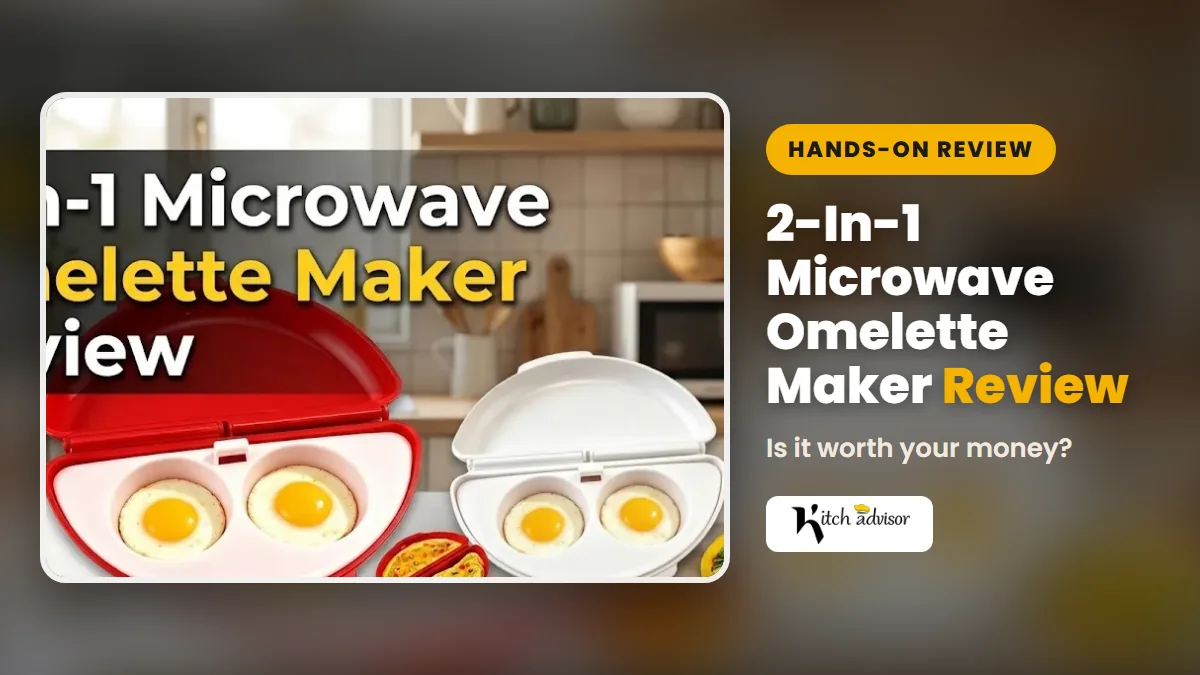
2-In-1 Microwave Omelette Maker Review: Is It Worth Buying?
The 2-In-1 Microwave Omelette Maker & Egg Cup Cooker is designed for users who need a fast, low-effort breakfast solution without turning on a stovetop. By combining a folding omelet pan with a removable dual-cup tray, this microwave cooker handles two distinct styles of egg preparation in a single compact unit.
For college students in dorms, office workers utilizing breakroom microwaves, or busy households prioritizing speed, stovetop cooking is not always practical. This cooker solves that problem by leveraging microwave heat to steam and set eggs in under three minutes. While microwave egg cookers cannot perfectly replicate the caramelized exterior of a pan-fried omelet, this device prioritizes convenience, fast cleanup, and consistent morning routines over traditional culinary techniques.
Quick Verdict
Reviewed Product
2-In-1 Microwave Omelette Maker & Egg Cup Cooker
A versatile, BPA-free microwave cooker that folds for omelets or utilizes a drop-in tray for poached-style egg cups.
Rating:
★★★★☆
4.0/5
Research-based editorial assessment using verified product information, buyer-use factors, limitations, and comparison context.
Best For:
Dorm residents, office workers, and busy parents who need hands-off breakfast prep in under three minutes.
Key Specs
BPA-Free Plastic Construction • Removable 2-Cup Tray • Fold-Over Hinge Design • Top-Rack Dishwasher Safe
Key Advantage
Provides two distinct cooking methods (omelet and poached-style cups) in a single compact storage footprint.
Main Trade-off
Requires careful timing adjustments based on individual microwave wattage to avoid rubbery textures.
Bottom Line
A highly practical, low-cost solution for quick breakfasts. It trades stovetop culinary perfection for unbeatable speed and convenience.

At a Glance
- Combines a folding omelet pan and a removable two-cup tray.
- Manufactured from food-grade, BPA-free plastic.
- Cooks most egg dishes in 90 seconds to 3 minutes, depending on wattage.
- Requires no stovetop, making it ideal for dorms and offices.
- Top-rack dishwasher safe for hands-off cleaning.
Verified Specifications & Buyer Implications
| Attribute | Verified Detail | Why It Matters |
|---|---|---|
| Material | BPA-Free Microwave Safe Plastic | Ensures no harmful chemicals leach into food during the high-heat microwave cooking process. |
| Design Type | Folding Clamshell + Tray | Allows the user to cook a flat egg base, add fillings, and fold the unit over to shape the omelet easily. |
| Capacity | 2–4 Eggs (Omelet) / 2 Eggs (Cups) | Perfectly sized for a standard single-serving breakfast. Overfilling will cause messy microwave spillage. |
| Cleaning | Top-Rack Dishwasher Safe | Reduces morning cleanup time, though baked-on egg residue may occasionally require a quick pre-rinse. |
Design & Build Quality
The 2-in-1 Microwave Omelette Maker is constructed from lightweight, heat-resistant plastic. This material choice is standard for microwave cookware, prioritizing microwave transparency so heat penetrates the food rather than the vessel. The BPA-free designation ensures food safety during daily high-temperature exposure.
The physical design relies on a central hinge. In the open position, both sides lay flat, allowing the user to pour beaten eggs into each half. Once the eggs are partially set, the user can add ingredients to one side and fold the cooker shut, pressing the two halves together to form a traditional half-moon omelet shape. The addition of the “A+B” removable tray sets this unit apart. The tray drops securely into the base, providing two rounded depressions designed for poaching or shaping egg bites. The plastic is thick enough to withstand daily thermal cycling without warping, provided it is kept away from direct heat sources like stovetops or oven broilers.
Setup & Ease of Use
Using the cooker requires virtually no learning curve, though optimizing the cooking time takes minor experimentation.
- Preparation: Lightly coat the interior with cooking spray or butter to prevent sticking, a crucial step for microwave plastic cookware.
- For Omelets: Whisk eggs in a separate bowl, pour evenly into the open halves, and microwave until almost set. Add fillings, fold the unit closed, and microwave for a final 20–30 seconds.
- For Egg Cups: Insert the removable tray, crack one egg into each cup, pierce the yolks with a fork to prevent popping, and microwave in short 30-second bursts.
- Extraction: Use a silicone spatula to slide the finished eggs onto a plate. Avoid metal utensils to prevent scratching the plastic surface.
How This Review Was Researched
This review evaluates the product using verified specifications, manufacturer documentation, current product information, and relevant comparison context. No personal hands-on testing is claimed unless testing evidence was actually provided. The assessment relies on material properties, design geometry, and standard microwave cooking behaviors.
Category-Specific Performance
Moisture Retention and Fluffiness
Microwaves cook by exciting water molecules, which can rapidly dry out eggs if left unchecked. The clamshell design of this omelet maker naturally traps escaping steam once folded closed. This trapped moisture acts as a secondary cooking mechanism, gently steaming the top layers of the egg and preventing the rubbery texture often associated with microwaved food. For buyers, this means a significantly fluffier end result than cooking eggs in an open ceramic bowl.
Heat Distribution Consistency
Because microwave energy can create hot spots, the shallow, wide geometry of the open omelet pan encourages even cooking. By spreading the liquid egg thinly across two halves during the initial cooking phase, the product prevents the common issue of raw centers and overcooked edges. Buyers must still monitor their specific microwave wattage, as a 1200W microwave will process the eggs much faster than a standard 700W dorm model.
Poaching Tray Effectiveness
The removable tray provides an effective mold for shaping eggs, but it is not a true water-bath poacher. It relies on direct microwave heat to set the egg whites. Buyers should expect a texture closer to a firm steamed egg or a fast-food egg patty rather than a delicate, slow-simmered traditional poached egg. Piercing the yolk prior to cooking remains essential to prevent pressure buildup.
Key Features Explained
Dual-Function Removable Tray
The drop-in “A+B” tray converts the flat omelet surface into two distinct circular cups. This matters for buyers who want variety in their breakfast routines. Instead of purchasing a separate egg poacher and omelet maker, this single unit handles both, reducing cabinet clutter. The limitation is that you cannot cook an omelet and egg cups simultaneously.
Snap-and-Fold Hinge System
The flexible center hinge allows the user to cook the egg flat, then fold one half over the other to trap heat and shape the omelet. This mechanical action means the buyer does not need culinary spatula skills to flip a delicate egg sheet. A simple fold creates a neatly contained pocket for cheese, vegetables, or meats.
Real-World Usability & Maintenance
The primary appeal of this cooker is frictionless maintenance. After sliding the finished eggs onto a plate, the unit can be rinsed and placed directly onto the top rack of a dishwasher.
Because plastic can develop a static cling with fats and proteins over time, applying a light coat of cooking spray or butter before adding the eggs is highly recommended. Failing to lubricate the plastic will inevitably lead to thin layers of egg baking into the material, which requires scrubbing with a non-abrasive sponge. The plastic is lightweight and highly portable, meaning it easily fits into a work bag or remains unobtrusive in a cramped office kitchenette. It is not suitable for convection microwave settings, conventional ovens, or stovetops.
Pros & Cons
Pros
- Cooks full breakfasts in under three minutes
- 2-in-1 design saves kitchen storage space
- Top-rack dishwasher safe for fast cleanup
- Eliminates the need for stovetop pans and spatulas
Cons
- Requires dialing in times for specific microwaves
- Eggs will stick if cooking spray is not used
- Small capacity is limited to single servings
Common Issues & Fixes
Rubbery or Chewy Egg Texture
Cause:
Microwaving eggs for too long or using excessively high wattage, which boils away moisture rapidly.
Fix:
Reduce the microwave power level to 80%, or cook in shorter 30-second intervals until the eggs are just set.
Loud Popping During Cooking
Cause:
Intact egg yolks building up internal steam pressure and bursting under microwave heat.
Fix:
Always pierce unbroken yolks with a fork or toothpick before placing the tray in the microwave.
What to Know Before You Buy
Before purchasing, check the wattage of your primary microwave. Microwaves under 800W may require an extra 30 to 60 seconds of cooking time, while 1200W models can overcook eggs rapidly. You should also be aware that this is a single-serving device. If you routinely need to cook breakfast for a family of four, batch-cooking in this device will likely take longer than simply using a large skillet on the stove. Finally, understand that “non-stick” plastic still requires a barrier layer of fat; keep cooking spray or a stick of butter nearby to ensure the omelet releases cleanly.
Who Should Consider It / Who Should Look Elsewhere
Who Should Consider It
- College students living in stoveless dorm rooms
- Office workers wanting hot breakfasts at their desks
- Anyone seeking minimal morning cleanup routines
Who Should Look Elsewhere
- Users who prefer traditional pan-fried texture
- Families needing multi-serving batch cooking
- Buyers who avoid microwaving plastics entirely
Alternatives to Consider
Reviewed Product
2-In-1 Omelette Maker
Best For: Users wanting both omelets and egg cups.
Key Specs: BPA-Free, Removable Tray, Folding Hinge
Advantage: True dual-function versatility.
Trade-off: Tray is an extra piece to wash.
Alternative A
Sistema Microwave Easy Eggs
Best For: Buyers wanting a vented, locking lid.
Key Specs: Phthalate-free, Steam Vent, Locking Clips
Advantage: Highly secure lid prevents any spattering.
Trade-off: Lacks a dedicated two-cup poaching tray.
Alternative B
Nordic Ware Omelet Pan
Best For: Simple, single-function omelet making.
Key Specs: Heavy-duty Plastic, Simple Hinge, 4-Egg Capacity
Advantage: Slightly larger capacity for bigger meals.
Trade-off: No secondary tray for egg bites.
Is It Worth It?
At its typical price point, the 2-in-1 Microwave Omelette Maker is highly worth the investment for buyers who value speed and convenience over traditional culinary methods. It excels at turning a raw egg into a hot, protein-rich meal in less time than it takes a stovetop skillet to preheat. The trade-off is accepting a slightly different texture and the necessity of using cooking spray. If your morning routine is rushed, or if you lack access to a full kitchen, the utility of this inexpensive tool far outweighs its minor limitations.
Final Verdict
The 2-In-1 Microwave Omelette Maker & Egg Cup Cooker successfully delivers on its core promise: fast, easy, stoveless breakfasts. Its most meaningful strength is the dual-function design, allowing buyers to switch between folded omelets and shaped egg cups without purchasing multiple devices. While it requires minor timing adjustments to prevent rubbery results, it is a highly recommended, low-friction tool for dorms, offices, and busy mornings. Those needing to cook large batches or seeking the perfect stovetop sear should stick to traditional pans, but for ultimate convenience, this cooker is a sensible addition to the kitchen.
Frequently Asked Questions
Do I need to add milk or water to the eggs?
Adding a splash of milk or water is optional but recommended. It helps create steam during the microwave process, which results in a fluffier omelet and prevents drying out.
How long does it take to cook two eggs?
It typically takes between 1.5 to 2 minutes. However, exact timing depends heavily on your microwave’s wattage, so checking the eggs at the 60-second mark is advisable during the first few uses.
Can I cook raw meat inside the omelet maker?
No, you should only use pre-cooked meats. Microwave egg cookers heat too quickly to safely cook raw bacon or sausage before the eggs become overdone.
Will the plastic melt if I overcook the eggs?
The plastic is highly heat resistant but can blister if oil or fat superheats. Always follow standard timing guidelines and avoid microwaving the empty plastic container.
Can I use metal utensils to remove the eggs?
It is best to avoid metal forks or knives. Hard metal will scratch the plastic surface, creating micro-grooves where eggs will stick during future uses; use a silicone spatula instead.
Affiliate disclosure: KitchAdvisor earns a small commission when you purchase through links on this page — at no extra cost to you. Our editorial process is independent: affiliate relationships never influence which products we recommend or how we rank them.