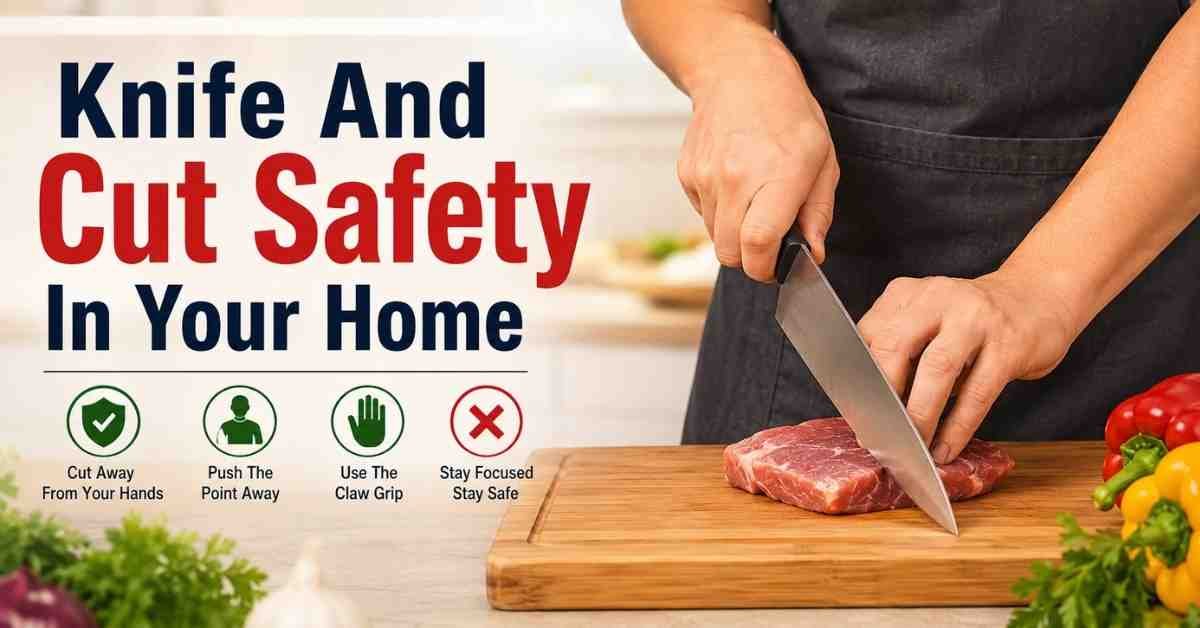
Knife and cut safety is the first rule we must learn. We use sharp tools each day to make our meals. We chop soft fruit and slice hard roots for soup. We must keep our bare hands safe from deep harm. A bad slip can stop the work cold and hurt a lot.
This guide will show you how to use a sharp edge the right way. We will look at how to keep the steel keen and bright. We will find safe ways to hold the food as you chop. We will learn how to store the tools so they do not bite. Let us learn to cut with care and speed.
Sharp Blades Are Safe Blades
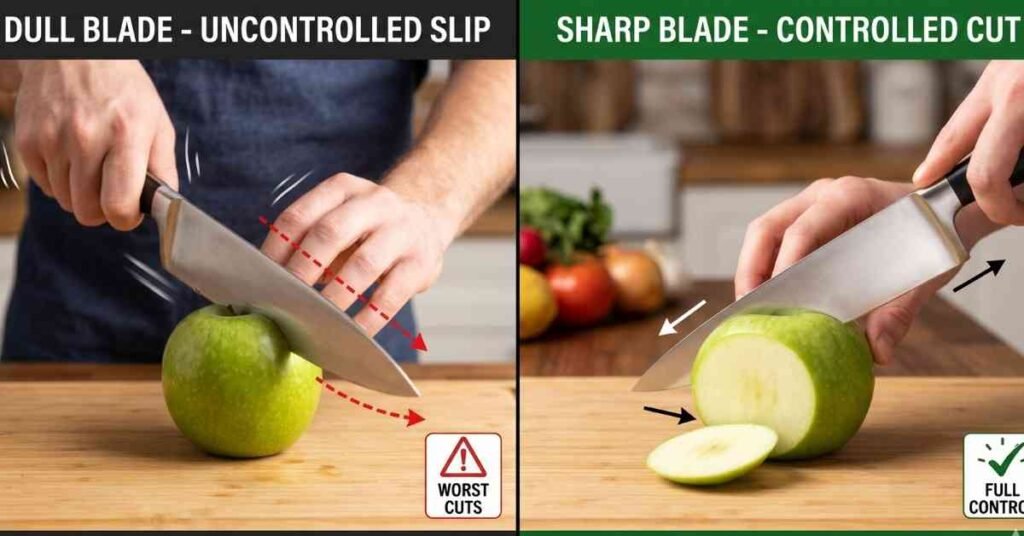
Some folks fear a keen edge when they cook food. You do not need to fear a tool that cuts well. A keen edge is a safe edge for your home work. It does exactly what you want it to do each time. It will not fight you or bounce off the food skin.
Dull Blades Slip And Slide
A dull tool makes you push hard on the round food. When you push down hard, the steel can slip fast. It bounces off the hard shell of the ripe fruit. It speeds right toward your bare hand in a flash. This fast slip is how the worst cuts take place.
A sharp tool bites right in with no hard push. It goes right where you point it on the wood board. You do not have to force it to do the hard job. It does the hard work for you with smooth grace. You stay in full control from the start to the end.
How To Test Your Edge
You must know if your tool is keen and ready. Hold a piece of thin paper up high in the air. Slice down the side edge of the thin white sheet. A sharp tool cuts it clean with a soft hiss sound. A dull one will rip and tear the page in half.
You can also test it on a round red fruit. Rest the blade flat on the top skin of the fruit. Pull it back slow with no hard down force at all. A keen edge will break the skin fast and neat. If it just glides on top, you need to grind it.
Tools To Make It Sharp
You need a good wet stone to make the edge keen. A flat stone grinds a fresh edge on the hard steel. You push the blade down the block with a slight tilt. You do both sides the same way to keep it straight. It takes some time to learn, but it works so well.
Then you use a long steel rod to finish the job. The rod makes the fine edge stand up straight and tall. Use the rod each time you step up to cook a meal. It keeps the cut clean and safe for your hands. It makes the work flow fast and free of stress.
Cut Away From Your Hands
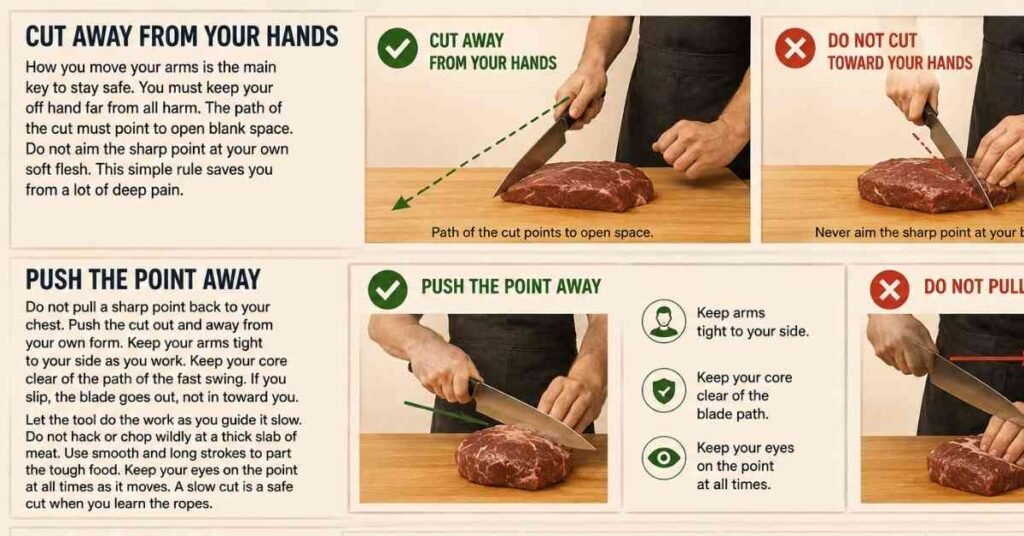
How you move your arms is the main key to stay safe. You must keep your off hand far from all harm. The path of the cut must point to open blank space. Do not aim the sharp point at your own soft flesh. This simple rule saves you from a lot of deep pain.
Push The Point Away
Do not pull a sharp point back to your chest. Push the cut out and away from your own form. Keep your arms tight to your side as you work. Keep your core clear of the path of the fast swing. If you slip, the blade goes out, not in toward you.
Let the tool do the work as you guide it slow. Do not hack or chop wildly at a thick slab of meat. Use smooth and long strokes to part the tough food. Keep your eyes on the point at all times as it moves. A slow cut is a safe cut when you learn the ropes.
Use The Claw Grip
This is a great pro trick that you must learn well. Put your off hand right on top of the food chunk. Curl your finger tips in tight to your warm palm. Hide them deep from the fast path of the sharp edge. This makes a safe wall out of your front hand joints.
Rest the flat side of the blade on your front knuckles. The sharp edge stays low down on the wood board. As you chop, walk your hand back slow and smooth. The sharp part stays safe on the wood the whole time. It can not hit your hidden tips if you do this right.
Make A Flat Base For Food
Round things like to roll fast on a slick wood board. A loose roll leads to a quick slip of the steel. You must make the food stay still on the flat desk. Cut round roots in half straight down the mid line first. Now you have a flat side to rest on the work space.
Lay the flat side down flat on the hard wood board. Now the root will not rock or roll when you push. You can slice it with no fear of a fast wild slip. Always seek a firm flat base for each piece of food. It is a small step, but it is a huge help for safety.
Store Them The Right Way
Where you put a tool down is a very big deal. You must give it a safe home space when not in use. An open blade left out on a desk is a bad trap. Someone might reach out and brush it by pure chance. We must put them away the right way each day.
Do Not Use A Loose Drawer
Do not toss a sharp tool in a dark loose drawer. The thin edge will bang on hard forks and metal spoons. It will chip fast and get dull in just one short week. This ruins the fine edge that you worked so hard to make. A loose bin is a bad spot for a high grade tool.
Worse yet, you will reach your bare hand in quite blind. You look for a wood spoon to stir a pot of hot soup. You hit a sharp tip instead and get a bad cut fast. You pull your hand back fast and cause more deep harm. Keep sharp things out of the dark parts of the home.
Read More: Burn and Heat Safety in Your Daily Kitchen Life
Use A Heavy Wood Block
A thick wood block is a great home for sharp things. It sits flat and firm on the back of the work desk. It has deep dark slots cut right into the top face. Each slot holds just one tool safe and snug inside it. The sharp part hides deep in the wood out of sight.
It can not cut you at all when it sits in the deep block. The edge stays safe from hard chips and rough bumps. Pull it straight out when you need to use it for food. Put it right back when you wipe it clean and dry. Keep the block clean so dust does not build up in it.
Hang Them On A Wall Bar
A long bar on the wall is a neat way to store them. The bar holds a strong pull force on the flat steel. It grabs the tool tight and keeps it up off the desk. The sharp edge points safe to the side wall out of the way. You can grab the right one fast since they are in plain view.
Make sure you place it flat and firm each time you hang it. You do not want it to fall down on your toes. Keep the wall bar up high and far from young kids. This saves desk space if you cook in a small tight room. It looks quite nice and works so well for daily life.
Clean Tools With Deep Care
Soap makes all things slick and hard to hold tight. Slick things fall down fast to the hard floor space. Wash your gear with true care to keep your toes safe. A wet handle can spin in your hand with no warning. We must clean the steel the right way each time we cook.
Wash By Hand Right Away
Do not use the hot wash box to clean a good sharp tool. The high heat and harsh soap ruin the fine thin edge. They crack the wood grip fast and make the rivets rust out. Wash it by hand in the sink basin with a soft wet cloth. Do this right when you are done to keep the stains off.
Hold the grip tight in one hand so it does not slip. Wipe the flat side with a soft wet rag in the other hand. Keep the sharp edge turned out away from the cloth path. Wipe from the spine down to the edge with a slow soft pass. Rinse it with clean warm tap water to wash the soap off.
Do Not Soak In The Sink
This is a firm rule you must use in your house. Do not put a sharp tool to soak in a deep dark sink. The wash water gets dark with old soap and food bits. You will lose sight of the steel deep down in the wet foam. This is a bad trap just waiting to strike a bare hand.
You plunge your hands in to grab a dirty white dish. You hit the hidden blade fast and get a deep red cut. This is a top way folks get hurt right in their own home. Set the dirty tool flat on the desk in plain clear sight. Wash it by itself so you know right where it is at all times.
Dry Them Fast And Well
Water left on bare steel makes red rust spots form fast. Rust eats the steel and kills the keen edge in a few hours. Dry the tool right now with a thick clean dry cloth. Keep the sharp edge point out as you rub the flat sides. Make sure the spot near the wood grip is bone dry too.
Put the dry tool straight back in the wood block slot. Do not leave it wet on the wire rack to dry in the air. Air dry takes too long and leaves spots on the shine. A dry tool is a clean tool that is safe for the next use. Take the time to dry it well and it will last you for life.
Fix The Small Cuts Fast
We learn the rules and try hard to use care each day. But a bad slip can still strike in a flash of an eye. You must act fast to fix the wound and stop the sting. Do not panic or run around the room in a state of fear. Stay calm and take care of the red cut right away.
Wash The Wound Out First
If you get a fast slice, drop the tool flat on the desk. Step back from the work space so you do not bleed on it. Go to the sink fast and turn on the cool clear tap water. Run the cool flow on the cut right now to clean it out. Wash all the raw food juice and dirt out of the fresh wound.
Use a mild clean soap to scrub it just a small bit. Do not use harsh scrub paste that burns the raw skin. Clean it out well so no bad germs stay stuck inside it. Pat it dry slow with a clean white cloth or paper sheet. Do not rub the raw cut hard or it will start to bleed more.
Press To Stop The Blood Flow
Grab a clean dry cloth pad to use for the next step. Press it hard on the red cut and hold it right there. Do not peek for five full ticks of the round wall clock. The firm hard press makes the fast blood flow stop cold. It seals the wound shut so it can start to heal up well.
If it bleeds a lot, keep the firm press on the sore spot. Raise your hand high up in the air past your own heart. This slows the blood flow down fast and makes it stop soon. Once it stops, keep your hand still for a short while. Let the blood clot form a plug to keep the raw skin safe.
Keep It Wrapped Up Tight
When the red flow stops, put a fresh wrap right on it. Make it snug on the skin but not too tight at all. Keep all dirt and dust out of the cut for a few days. Change the wrap each day to keep it nice and clean. If it gets wet, put a new dry one on it right then and there.
If you need to cook more food, put a tight clean glove on. Put the glove right over the wrap on that sore hand. The food must stay clean and free from the fresh blood. If the cut is deep and wide, go get real help from a pro doc. Some cuts need small stitches to close up tight and flat.
Teach Kids To Respect The Blade
Kids watch us cook each day and want to join in the fun. They want to help make the meal and feel like a big grown up. We must teach them the safe way from day one in the home. They need to know that a sharp edge is not a fun toy to toss. We can show them how to help in a slow and safe way.
Set A Clear Safe Zone
Make a firm rule for the young ones in the room. Kids do not touch the wood block at all on any day. If a tool sits out on the desk, they must not grab for it. Tell them what the sharp edge can do to soft bare skin. Be real with them so they know the true full risk.
Give them a safe spot to sit and watch the prep work. They can sit on a tall stool far back from the main desk. They can wash the round fruit or sort the green leaves. Keep them out of the path of the fast sharp swings. This keeps the whole room calm and safe for the young ones.
Show Them The Rules Slow
When they are old enough to help cut, show them how. Give them a dull soft tool first made just for small hands. Let them cut a soft ripe fruit like a sweet brown pear. Teach them the safe claw grip we use to guard our tips. Guide their small hands with a slow and firm touch.
Stand right close to them as they learn the new skill. Watch their form and correct it if they hold it wrong. Praise them when they use the right safe grip on the food. They will build good safe traits that last for a long time. It is a fun way to share the work load in the house.
Choose The Right Tool For The Job
You must use the right shape and size for the daily chore. The wrong shape makes the work hard and unsafe for you. A long thin blade is bad for a tough thick squash. A huge heavy blade is bad for a small red fruit. Match the size of the blade to the bulk of the food type.
Big Blades For Big Jobs
A wide thick blade is for big hard root foods and gourds. It chops thick meat chunks and splits tough hard bones. Its large size gives you huge strength to cut down deep. It cuts straight down to the board with a strong loud thud. Use it for the main hard prep work in the room.
Keep a firm tight grip on the thick wood handle grip. Let the heavy weight of the steel do the hard press down. Keep your off hand in the safe claw shape at all times. Chop with a smooth rock form back and forth on the board. Do not swing it high in the air like a wild chop axe.
Small Blades For Fine Work
A short thin tool is just right for small precise tasks. You use it to peel soft thin skin from a fresh fruit. You use it to dig small dark seeds out of a sweet core. You hold it tight in the palm of your hand close to the top. It feels like a part of your own hand when you hold it right.
Do not use a huge heavy blade for a small fine task. It is clunky and odd to hold for fine tight cuts. It can slip fast from a small food piece and jab your hand. Match the right tool size to the small chore at hand. It makes the work smooth, quick, and quite free of risk.
Pick The Best Wood Boards
You must cut on a good thick wood board each time. The board saves your fine edge and keeps the cuts safe. A bad board will ruin the tool in just one short use. We will look at why wood is the top choice for your house. Do not use thin hard mats that slide on the slick wet desk.
Wood Has A Soft Grain
Wood has a soft grain that takes the sharp edge well. The keen edge slips right in the soft long wood grain. The steel stays keen for a long long time this way. The wood grips the food piece so it does not slide off. A thick wood slab sits flat and firm on the work desk.
Do not cut on a hard glass plate or slick stone top. Glass is far too hard for a fine thin steel edge. It will roll the edge of your steel right out of shape. It ruins the fine tool in one day of hard chop work. Stick to real solid wood to keep your gear safe and sharp.
Keep The Board Clean And Dry
Wash the wood board right when you are done with it. Scrub it in the sink with a bit of soap and hot tap water. Wipe it dry with a rough towel and let the air hit it fast. Do not soak the wood in the sink or it will warp and crack. A bent board will rock on the desk and cause a bad slip.
Rub food safe oil on the wood once a month to keep it nice. The oil keeps the wood strong and stops deep dark cracks. It seals out the raw meat juice and stops bad rank smells. A good board is a key part of your safe tool set at home. Treat it with deep care and it will serve you so quite well.
Keep The Core Grip Clean
A clean tool grip is a safe grip for your bare hand. Wash your hands well first before you touch the sharp gear. Grease on your palm makes the wood grip slip fast. You do not want a wild slip when you hold keen cold steel. Keep the grip tight and firm in your main strong hand.
Wash Your Hands First
Use soap to wash all oil off your hands at the start. Dry them on a fresh towel so no slick wet spots stay on. A dry tight grip is the first key step to safe prep work.
If you touch raw fat meat, wash your hands right away. Do not grab the tool with a hand slick with fresh meat grease.
Hold It With Deep Trust
Wipe the tool grip dry with a rough clean cloth towel. You must hold the tool with deep trust in your own skill. A tight clean grip lets you guide the fast cuts with ease.
Stay smart and use care with each move you choose to make. Cut with full joy and keep all your fingers safe and sound.