Last Thanksgiving, my old pots finally gave up. I was boiling potatoes for a large family dinner. The bottom scorched badly, and the kitchen smelled like burnt starch. I knew I needed a major upgrade fast. I spent weeks testing top brands to find something truly reliable.
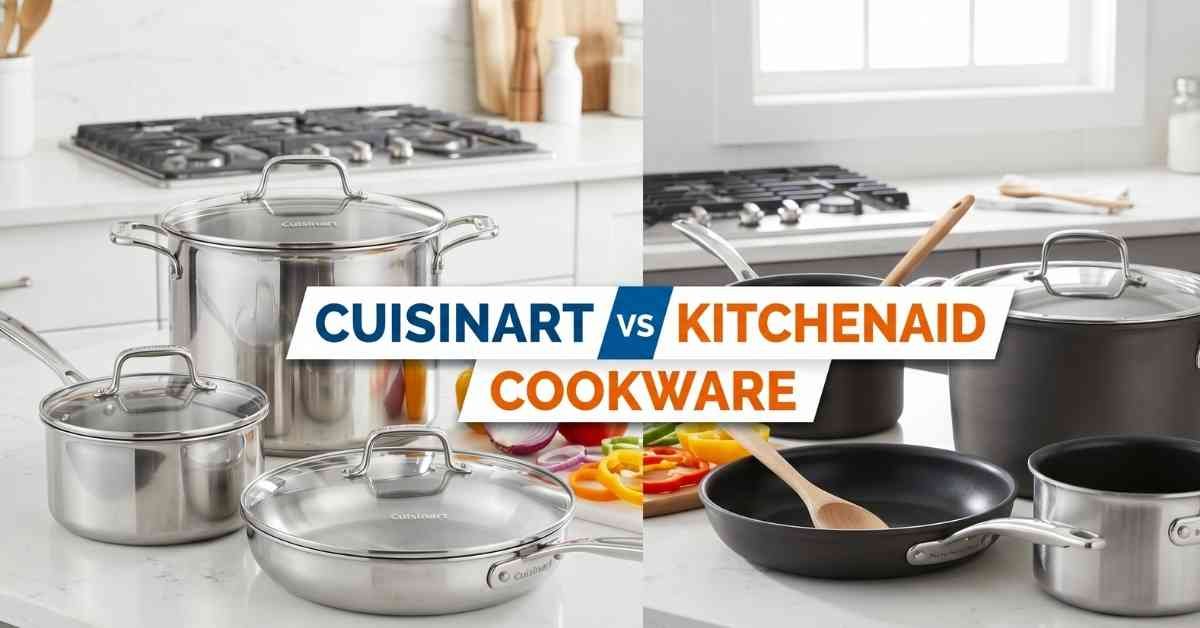
If you are stuck deciding between Cuisinart vs KitchenAid Cookware, I fully understand. Both brands look great on the stove. But they handle heat and daily cooking very differently.
Cuisinart Cookware Review
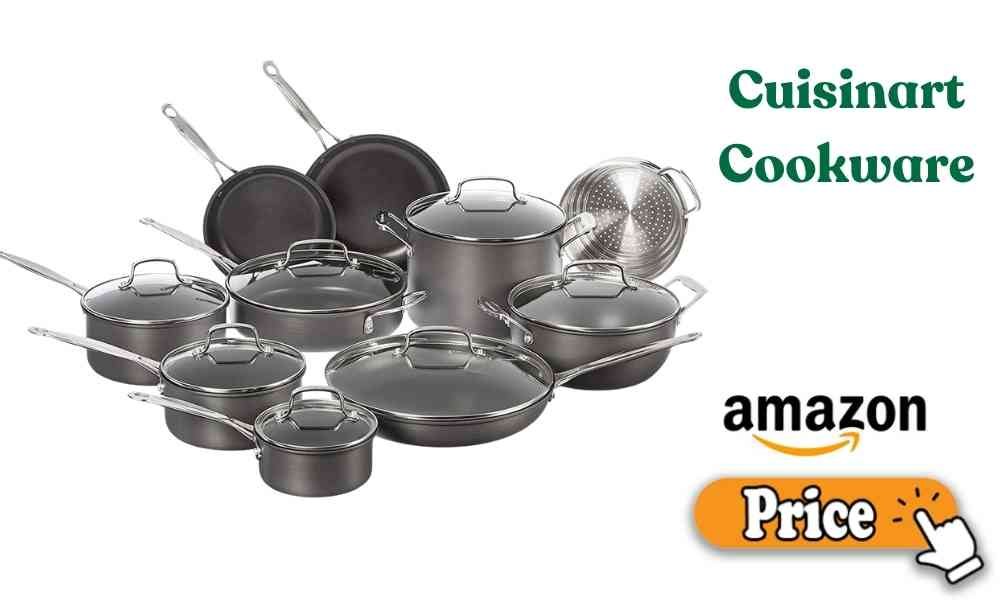
I started with Cuisinart. A baker friend swore by their pots for daily use. Opening the box, the shiny finish caught my eye. They felt light enough to toss pasta easily. Yet, they were heavy enough to sit flat on the burner.
Pros and Cons
Here is a quick look at my thoughts. These are the things I loved and the parts that drove me crazy.
| Pros | Cons |
| Heats up very fast | Food sticks if the heat is too high |
| Handles stay cool to the touch | Metal can discolor over time |
| Very easy to lift and pour | Needs soaking for burnt messes |
Real-World Testing
After using these pots for a few months, cooking feels easy. Dinner is much less of a chore now. I remember searing a steak one cold Tuesday night. The pan got hot so fast. The crust on the meat was perfectly brown. Better yet, the handle stayed completely cool while I cooked.
On the flip side, I had to learn strict heat control. If you crank the burner too high, your morning eggs will stick like glue. But medium heat works absolute magic. Once you learn that trick, cleanup is a total breeze. You just need warm water and a little dish soap.
Recommendation
This set is perfect for home chefs who love fast, even heat. It is not great for folks who hate hand washing or watching the stove closely.
KitchenAid Cookware Review
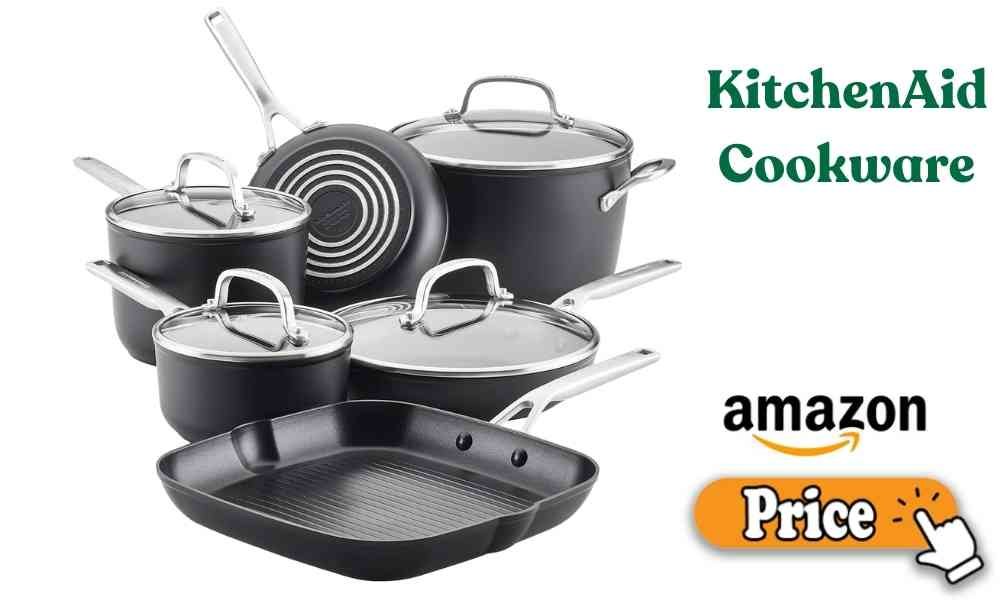
Next up, I tried the KitchenAid set. I have always trusted their stand mixers. So, I had very high hopes for their pots and pans. They felt noticeably heavier right out of the box. They feature thick bases designed to hold heat for a long time.
Pros and Cons
Here are the facts after months of daily use. See what works well and what falls flat.
| Pros | Cons |
| Food slides right out | Very heavy to lift with one hand |
| Thick base stops hot spots | Handle rivets collect food bits |
| Cooks very evenly | Takes longer to heat up |
Everyday Performance
Fast forward a few months. These pans are my top pick for slow Sunday mornings. The thick base cooks pancake batter so evenly. Nothing burns in the center. I really love that the nonstick surface truly works. I can flip delicate fish without making a huge mess.
However, the extra weight is a very big deal. Trying to pour hot soup into a bowl is a real workout. Also, the metal rivets inside the pan catch tiny food bits. I have to scrub those spots hard with a brush to keep them clean.
Recommendation
This cookware is great for cooks who want easy meals with no sticking. It is a bad choice for anyone with weak wrists or heavy lifting limits.
Detail Comparison for Cuisinart vs KitchenAid Cookware
Comparing these two side-by-side shows the absolute truth. Both handle daily meals very well. But they shine in completely different areas. Here is how they stack up in five key categories.
Heat Distribution: Cuisinart vs KitchenAid Cookware
Cuisinart heats up incredibly fast. It has fully clad metal walls that push heat up the sides. KitchenAid takes longer to get hot on the stove. But it holds onto that heat very well once it gets there.
| Brand | Heat Speed | Heat Evenness |
| Cuisinart | Very Fast | Excellent |
| KitchenAid | Slower | Great |
Final Rating: Cuisinart 9/10 | KitchenAid 8/10
Weight & Handling: Cuisinart vs KitchenAid Cookware
Cuisinart is very easy to lift. I can hold the pan with one hand while stirring a thick sauce. KitchenAid is much heavier. It feels strong, but it tires out your arms quickly.
| Brand | Weight Feel | Handle Comfort |
| Cuisinart | Light and balanced | Cool and slim |
| KitchenAid | Heavy and solid | Thick and sturdy |
Final Rating: Cuisinart 9/10 | KitchenAid 7/10
Ease of Use: Cuisinart vs KitchenAid Cookware
KitchenAid wins for lazy mornings. The pan is very forgiving if you get distracted. Cuisinart needs some basic cooking skill. You must watch the heat closely to stop your food from sticking.
| Brand | Best For | Skill Level Needed |
| Cuisinart | Searing and boiling | Medium |
| KitchenAid | Eggs and pancakes | Beginner |
Final Rating: Cuisinart 7/10 | KitchenAid 9/10
Cleaning & Maintenance: Cuisinart vs KitchenAid Cookware
Cuisinart pans sometimes need a long soak. This only happens if I accidentally burn a sauce. KitchenAid mostly wipes clean in seconds. But you must scrub those inner rivets every single time.
| Brand | Sticking Risk | Cleanup Effort |
| Cuisinart | High (if too hot) | Medium |
| KitchenAid | Very Low | Easy (except rivets) |
Final Rating: Cuisinart 8/10 | KitchenAid 8/10
Value for Money: Cuisinart vs KitchenAid Cookware
Cuisinart gives you pro-level metal. The price is very fair for what you get. KitchenAid costs a little bit more overall. You are definitely paying extra for that famous brand name.
| Brand | Price Feel | Long-Term Value |
| Cuisinart | Budget-friendly | High |
| KitchenAid | Premium | Good |
Final Rating: Cuisinart 9/10 | KitchenAid 7/10
Conclusion
Picking the right pots depends entirely on you. I keep the Cuisinart set handy for fast weeknight dinners. But for slow weekends, the KitchenAid pieces always win out. Pick the brand that truly fits your cooking style.