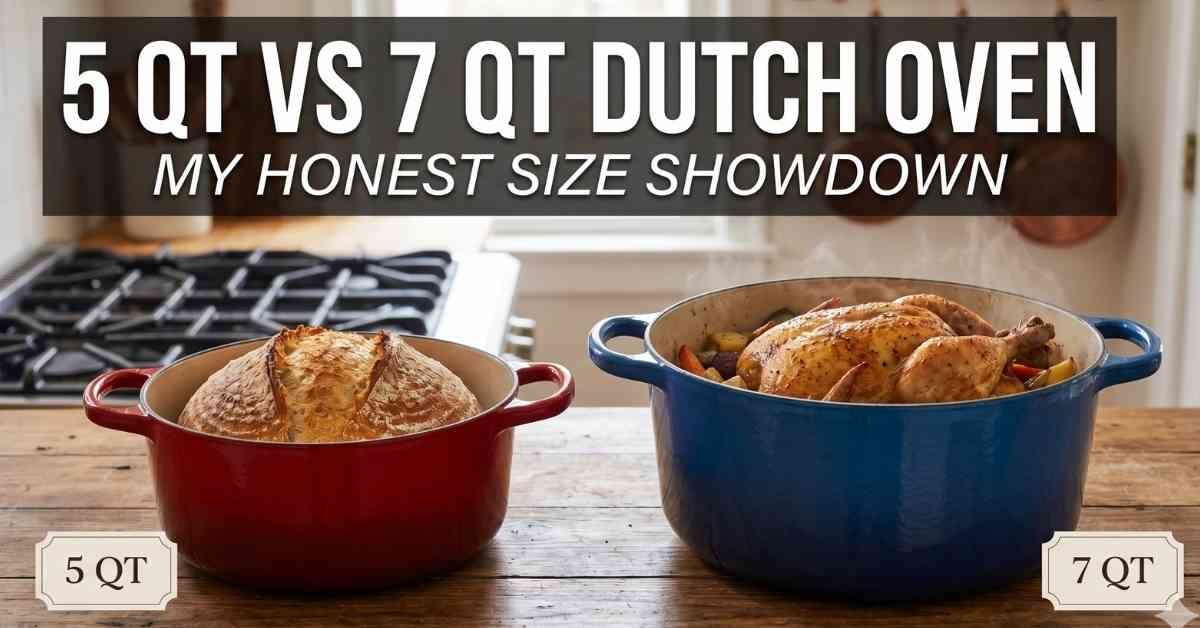
I love baking crusty sourdough bread and simmering hearty stews on chilly weekends. But picking the right pot size used to give me a real headache. My kitchen cabinets are full of pots, but only one cast iron beauty can live on the stovetop.
If you are stuck choosing a 5 Qt Vs 7 Qt Dutch Oven, I get it. Let me share what I learned from cooking with both sizes over the last year.
5 Qt Dutch Oven Review
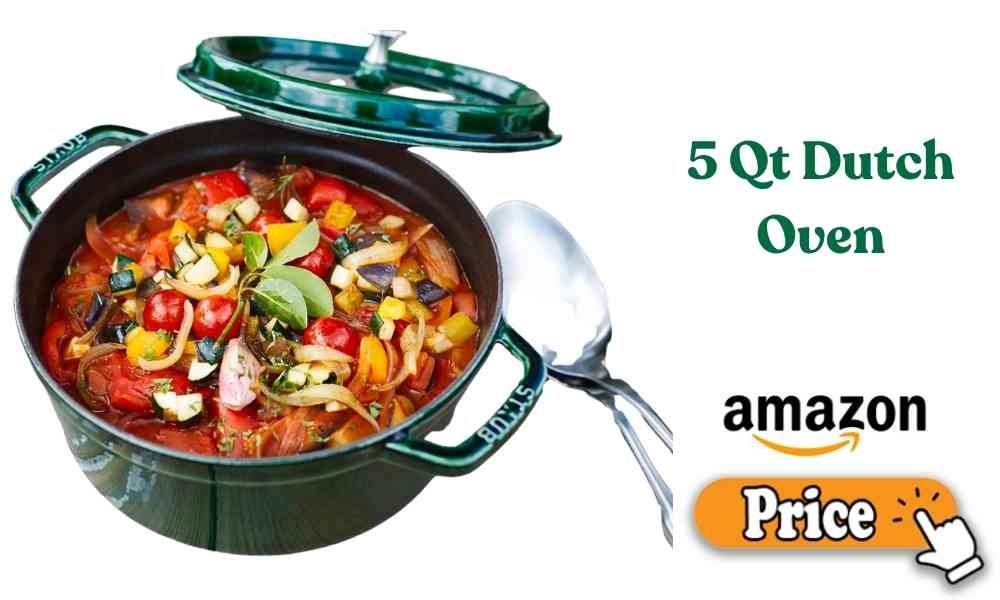
This medium-sized pot quickly became my everyday workhorse for weeknight dinners. It heats up fast and handles a batch of chili without taking over my entire stove. It feels just right for daily use.
Pros and Cons
Here is a quick look at what I love and what bugs me about the five-quart size.
| Pros | Cons |
| Easy to lift and move | Too small for large batch cooking |
| Fits in standard kitchen sinks | Hard to roast large whole birds |
| Perfect for baking a standard loaf of bread | Liquid boils over if filled too high |
| Heats up very quickly on the stove | Crowds meat during searing |
Daily Cooking After Six Months
After lifting this pot every day for months, my wrists are very thankful. I use it mostly to boil pasta, fry chicken, and bake bread. The walls are high enough to catch popping oil, which keeps my stove clean.
However, I ran into a problem last Thanksgiving. I tried to double my beef stew recipe, and the hot liquid bubbled right over the rim. It made a huge, smoky mess in my oven, and I quickly learned its limits.
Recommendation
This pot is perfect for singles, couples, or small families of three. It is not great if you love to meal prep huge batches or host large dinner parties often.
7 Qt Dutch Oven Review
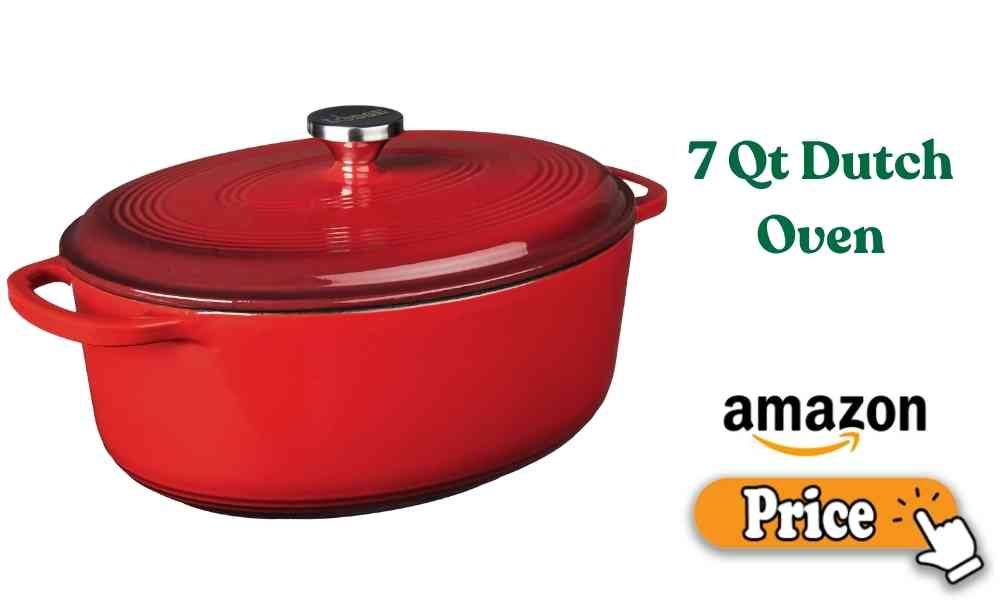
When I pull this massive pot out of the pantry, it means serious cooking is about to happen. It is a heavy beast, but it holds a massive amount of food. I bought this specifically to roast whole chickens and make huge batches of Sunday gravy. It takes longer to heat, but the smells that fill the kitchen are always worth it.
Pros and Cons
Before you buy this heavy-duty pot, check out these strong points and drawbacks.
| Pros | Cons |
| Huge surface area for searing meat | Extremely heavy to lift when full |
| Easily fits a large whole chicken | Takes up multiple stove burners |
| Great for meal prepping big batches | Hard to wash in small sinks |
| Tall sides prevent almost all splatters | Takes much longer to preheat |
Feeding a Crowd After Half a Year
Using this giant pot changed how I prep food for the week. I can toss in a huge pork shoulder, heaps of veggies, and broth without spills. The wide base gives me so much room to sear meat. I never have to cook in small batches anymore!
But washing this thing is a real workout for my arms. Getting it into my sink requires some tricky maneuvering. I usually end up splashing soapy water all over my shirt and the floor before it is clean.
Recommendation
This size is perfect for families of four or more, batch cookers, and folks who love hosting. Skip this one if you have weak wrists, a tiny kitchen, or only cook for yourself.
Detail Comparison for 5 Qt Vs 7 Qt Dutch Oven
Putting these two pots head-to-head helps clear up the sizing confusion. I looked at how they actually perform in my home kitchen. Here is my breakdown of a 5 Qt Vs 7 Qt Dutch Oven based on everyday use.
Weight & Handling: 5 Qt Vs 7 Qt Dutch Oven
A full cast iron pot gets incredibly heavy. The five-quart is easy to pull out of a low cabinet with one hand. The seven-quart needs a two-handed deadlift, especially when it is full of soup.
| Feature | 5 Qt | 7 Qt |
| Empty Weight | Around 11-12 lbs | Around 15-16 lbs |
| Moving from Stove to Oven | Easy with one hand | Needs two hands and caution |
Final Rating: 5 Qt: 9/10 | 7 Qt: 6/10
Cooking Versatility: 5 Qt Vs 7 Qt Dutch Oven
The smaller pot excels at daily tasks like cooking grains and simple side dishes. The larger pot is a hero for whole roasts, big bakes, and deep-frying. The extra surface area on the seven-quart creates a stunning crust on meats.
| Feature | 5 Qt | 7 Qt |
| Searing Meat | Crowded, requires batches | Wide base fits multiple pieces |
| Bread Baking | Shapes a perfect high loaf | Bread spreads out wider |
Final Rating: 5 Qt: 7/10 | 7 Qt: 9/10
Heat Distribution: 5 Qt Vs 7 Qt Dutch Oven
Both pots hold heat like a dream because of the thick cast iron. However, the five-quart heats up much faster on a standard burner. The seven-quart takes longer to reach a searing temp but stays blazing hot.
| Feature | 5 Qt | 7 Qt |
| Preheat Time | Fast | Slow |
| Heat Consistency | Even across the base | Even, but edges take longer |
Final Rating: 5 Qt: 8/10 | 7 Qt: 8/10
Ease of Use: 5 Qt Vs 7 Qt Dutch Oven
I reach for the smaller pot when I am tired after work. It fits perfectly on any stovetop burner and slides into my small oven easily. The larger pot hogs the stove and bumps into my other pans.
| Feature | 5 Qt | 7 Qt |
| Stove Space | Leaves room for other pans | Crowds adjacent burners |
| Oven Fit | Slides onto any rack easily | Needs lower rack adjustment |
Final Rating: 5 Qt: 9/10 | 7 Qt: 6/10
Cleaning & Maintenance: 5 Qt Vs 7 Qt Dutch Oven
Washing heavy cookware is my least favorite chore. The five-quart easily fits in my sink under the faucet. The seven-quart acts like a giant wall, splashing water everywhere during scrub downs.
| Feature | 5 Qt | 7 Qt |
| Sink Fit | Fits easily in standard sinks | Awkward, takes up the whole sink |
| Scrubbing Effort | Quick and manageable | Tiring on the arms and wrists |
Final Rating: 5 Qt: 8/10 | 7 Qt: 5/10
Conclusion
Choosing the right size really comes down to what you cook and who you feed. I use my smaller pot daily, but I rely on the big guy for weekend feasts. Both will last a lifetime if you treat them right. I hope my kitchen struggles help you pick your perfect pot!